REVIEW · CITY TOURS
Walking Tour of the Vatican City with Skip-the-line Tickets & Sistine Chapel
Book on Viator →Operated by Walking Tours of Italy · Bookable on Viator
Lines in the Vatican can ruin your day.
This tour is designed to keep momentum with skip-the-line access and an art historian guide who helps you see what you’re looking at, not just walk through it. You get a tight route through the Vatican Museums, Raphael-related rooms, the Sistine Chapel, and then the big-ticket moments at St. Peter’s.
I especially like the way the guide connects famous artworks to the people and power around them. In the Vatican Museums, you start with ancient Roman and Greek pieces tied to papal collecting, then move through standout rooms like the Gallery of Candelabra and the private spaces associated with Pope Julius II and Raphael’s circle. Then, in the Sistine Chapel, you get the Michelangelo big hits plus context for the smaller-but-crucial scenes from other Renaissance masters.
One thing to plan around: the Vatican can change fast. Due to major events tied to Pope Francis, some areas might close last minute, and the tour may adjust to keep the experience inside the Vatican Museums. Also, the Basilica might be temporarily unavailable because of the Jubilee, with the option to visit after the tour by queuing.
Key highlights worth your attention
- Skip-the-line entry that saves real time at the Vatican Museums and Sistine Chapel
- Art historian guidance focused on what matters in Michelangelo and Raphael works
- A smart, timed route that hits Museums → Sistine Chapel → St. Peter’s Basilica → St. Peter’s Square
- St. Peter’s with “what to look for” details, including the signed Pietà
- Built-in flexibility if parts of the Vatican close due to events
In This Review
- What makes this Vatican tour feel efficient (and actually fun)
- What you’re paying for: the real value of $429.49 per person
- Before you go: dress code, timing, and what can change last minute
- Vatican Museums: ancient art, mosaics, and Raphael’s orbit in one hour
- Sistine Chapel: Michelangelo first, but don’t miss the other masters
- St. Peter’s Basilica: the Pietà, side chapels, and what’s underground
- St. Peter’s Square: Bernini’s statues and the smoke ritual
- Guides and pacing: why Paola is a name worth remembering
- Who should book this Vatican skip-the-line tour
- Should you book it?
- FAQ
- What does the tour include?
- How long is the Vatican City walking tour?
- What should I wear to enter the Vatican sites?
- Is the Vatican Basilica always included?
- What happens if areas close last minute due to Pope Francis events?
- Can I cancel or change the booking?
What makes this Vatican tour feel efficient (and actually fun)
The Vatican is famous for crowds, and crowds are the enemy of art. When you have to fight the line just to enter, you lose the best part: time to look slowly and understand what you’re seeing. This tour solves that with guaranteed skip-the-line tickets, so you start viewing instead of waiting.
The other big advantage is the guide setup. You’re not just moving from room to room. You get a professional art historian guide who points out connections—who commissioned what, what symbol you’re standing in front of, and why certain pieces matter beyond their fame. That turns a quick visit into something that sticks.
Pacing is also realistic. The total time is about 3 hours, and it’s fast by design, so you’ll see a lot without feeling dragged. One practical note: expect it could run a little over the stated time once you’re in the buildings.
For me, the most valuable part is that you leave with a mental map. After St. Peter’s Basilica and the Square, it’s easier to understand how the whole Vatican complex works as a living religious center and an art museum at the same time.
What you’re paying for: the real value of $429.49 per person
At $429.49 per person, this isn’t a budget tour. But the price makes more sense when you break it down into what costs time and effort in Rome: timed entry, skip-the-line access, and expert guidance.
You’re paying for:
- Fast-track tickets that help you bypass long lines at the Vatican Museums, Sistine Chapel, and relevant areas along the route
- A professional guide plus a professional art historian focus (not just a general storyteller)
- A route that includes admission for the main “big rooms” you came for, plus structured time in St. Peter’s Basilica and the underground papal crypt area
If you were to do this on your own, you’d likely spend your best hours figuring out what to see, where to go next, and how to avoid peak-hour lines—especially for the Sistine Chapel. Here, that stress is mostly removed. You still explore at your own pace inside the guided framework, which is a nice middle ground: you get direction, but you’re not herded like luggage.
The best value is for first-timers who want the Vatican’s key highlights without the usual chaos. If you already know your way around museums and you like long museum marathons, you might find this shorter route limiting. But if you want the essentials with interpretation, it’s strong for the money.
You can also read our reviews of more tours and experiences in Rome



Before you go: dress code, timing, and what can change last minute
The Vatican has a strict dress code. Plan for knees and shoulders to be covered for both men and women. That means no shorts and no sleeveless tops. It’s not a suggestion. You can be refused entry if you show up dressed wrong.
Timing matters too. You’ll start at Viale Vaticano, 100 (00192 Rome) and end at St. Peter’s Square (Piazza San Pietro, 00120). The tour is offered in English, and you’ll get a mobile ticket after booking.
The one operational reality you should keep in mind: the Vatican changes around religious schedules and high-profile papal activity. Because of Pope Francis and mass events, some areas might close last minute, and the guide will provide a substitute approach that keeps the focus inside the Vatican Museums.
There’s also a Jubilee-related note: the Basilica might not be accessible as part of the tour due to access restrictions you can’t predict in advance. If that happens, you can still visit after the tour by lining up. That’s a fair workaround, but it does mean you should keep your expectations flexible.
Vatican Museums: ancient art, mosaics, and Raphael’s orbit in one hour
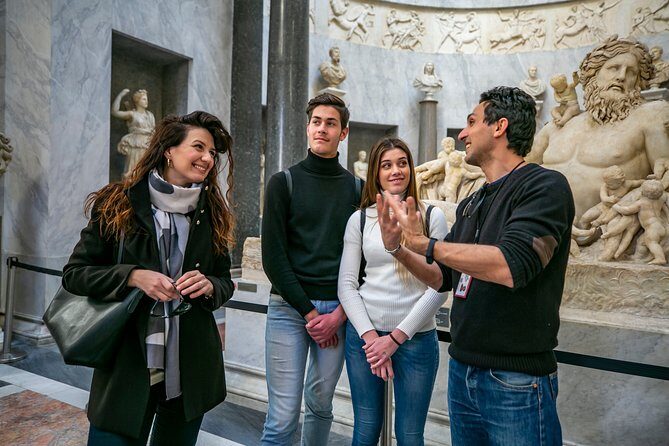
The Vatican Museums are where most people get overwhelmed. This tour avoids that by giving you a curated “must-see route” rather than trying to squeeze in everything.
You meet your guide at the passageway to the Museums. There’s even a chance to leave your things in the cloakroom, which is useful if you’ve got a small backpack or extra layers. Then you start moving.
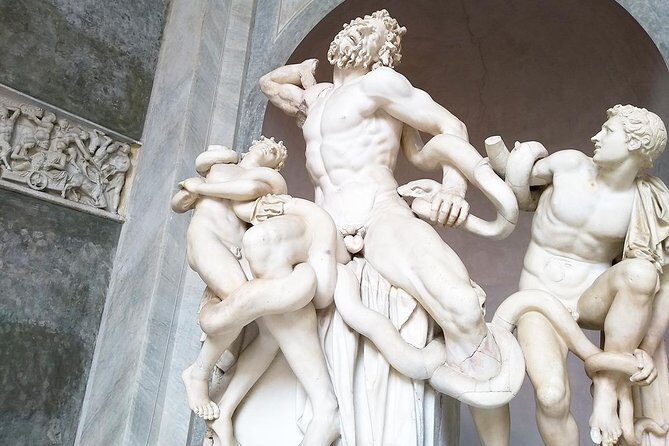
You begin with rooms that hold older works—Roman and Greek art. This isn’t just decoration. The guide helps you understand why the Vatican became such a magnet for finds when the Popes ruled central Italy and held rights to excavated discoveries.
From there, you go through rooms that feel like a greatest-hits tour:
- Room of Animals, which gives a sense of the museum’s narrative beyond only portraits and saints
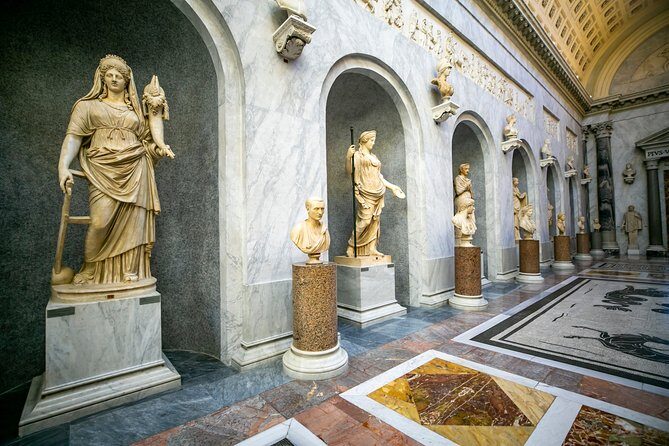
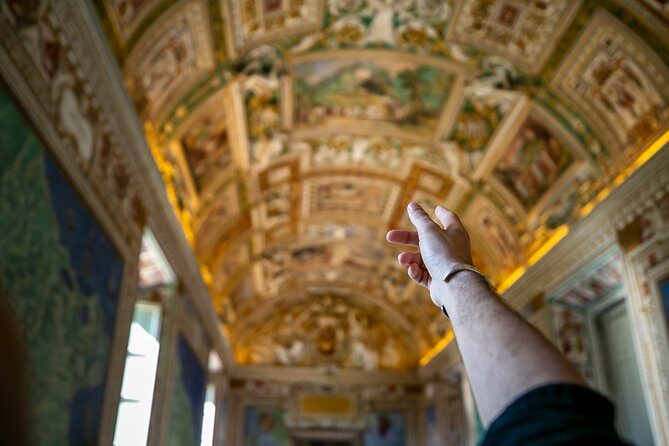
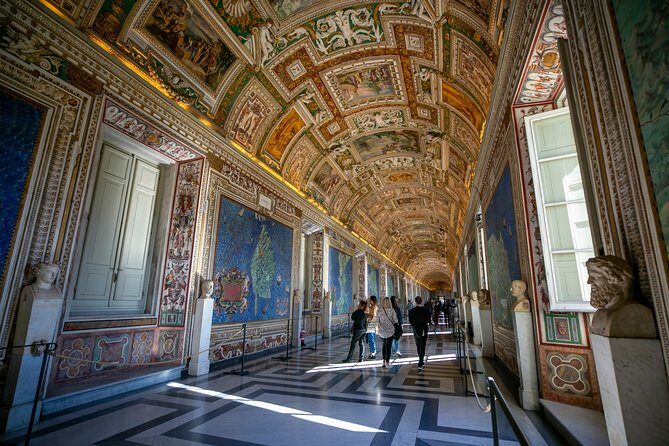
- Gallery of Candelabra, where you’ll see unusual Roman mosaics and a run of statues and figures tied to mythology
You’ll also encounter statues and subjects like Diana of Ephesus and the Muses, plus references to Greek philosophers and intellectual figures. It’s a reminder that “the Vatican” isn’t only Christian art—this collection is built from layers of time.
Then the route shifts toward the papal world. You visit the spaces tied to Pope Julius II, where you can connect the dots to Raphael and his disciples. If you’ve heard of Raphael’s Rooms but never knew what you were looking at, this is where the tour helps. You’re not just staring at famous names; you’re understanding how patronage and politics shaped what ended up on the walls.
A drawback to be honest about: one hour moves quickly. You won’t have time to linger in every room the way a museum lover might. If you want to read every plaque and take slow breaks, you’ll want a return trip later. For a first pass, though, it’s efficient and focused.
Sistine Chapel: Michelangelo first, but don’t miss the other masters
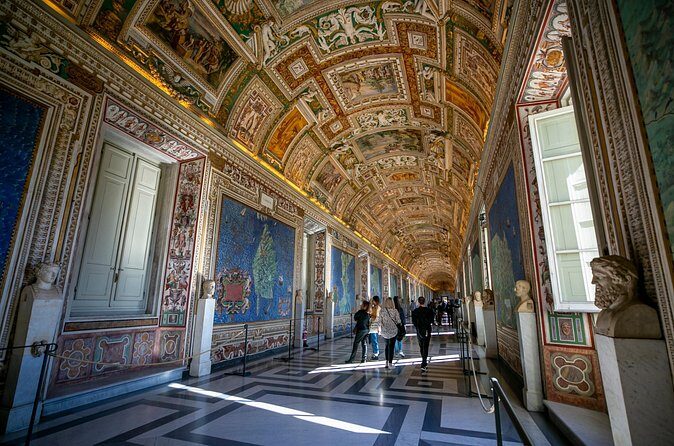
In many visits, the Sistine Chapel becomes a “see it, take a photo, move on” stop. This tour nudges you away from that habit with context.
Your guide walks you through Michelangelo’s key frescoes, including The Last Judgment, The Creation of Adam, and the broader Genesis scenes. You also learn to look at the Stories of Moses and Jesus, where the work includes contributions associated with Botticelli, Perugino, and other Renaissance masters.
Here’s the helpful part: you don’t just hear the names. You get guidance on what to notice as you look up—how scenes connect, what themes show up in different panels, and how Michelangelo’s style dominates while other artists add their own narrative weight.
The tour also points out how the Sistine Chapel is still used for major Vatican rituals, including the moment when the cardinals gather to choose a new Pope. That living function changes the mood. It’s not only art history; it’s a working spiritual space.
One practical consideration: it’s still a chapel, so you’ll want to manage your expectations for movement and noise. The experience is structured and guided, which helps, but you’ll still want to keep your body language respectful. Quick tip: if you’re sensitive to crowding, bring patience. The location is famous, and the line is usually long outside the tour.
St. Peter’s Basilica: the Pietà, side chapels, and what’s underground
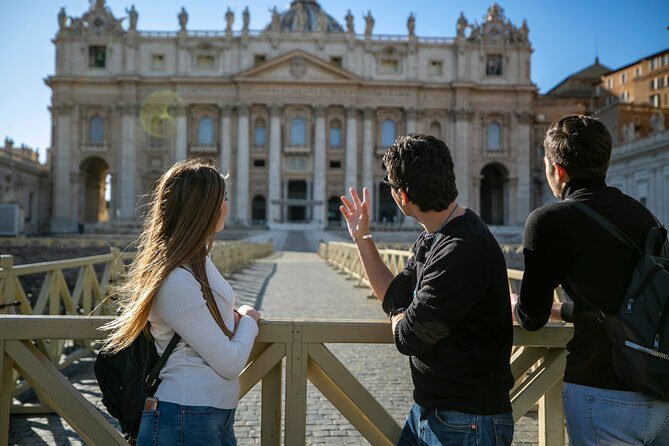
St. Peter’s Basilica is where many first-timers get hit by scale. This tour keeps things from feeling random by giving you specific things to watch for.
You explore the Basilica with time for side chapels and the interesting underground elements. The guide helps you look beyond the main nave and into corners that many visitors ignore.
You’ll see Michelangelo’s Pietà. One detail you’ll likely remember: it’s the only work of Michelangelo that he signed. That’s the kind of fact that feels small until you realize it changes how you look at the piece—like the artist is stepping forward across centuries.
You’ll also get a sense of how Bernini’s altarpiece reflects mastery and ambition in the Baroque era. The tour ties this into Michelangelo’s legacy too, including the idea that he overcame rivals to earn the honor of painting the dome. Even if you don’t go deep on architecture, the guide’s framing makes the Basilica’s visual power easier to understand.
And then comes the part people love because it feels like a secret: you go below ground with your guide to the papal crypt. Over time, many Popes have been interred there, and it’s a site of pilgrimage for many Catholics. It adds a different tone to the visit—less postcard, more solemn, and very grounded in tradition.
Time is limited here—about 30 minutes—so you won’t see every chapel. But the tour does a smart job picking moments that help you orient your understanding fast. If you fall in love (and many people do), you’ll know exactly what to return to on your own.
You can also read our reviews of more walking tours in Rome


St. Peter’s Square: Bernini’s statues and the smoke ritual
After the Basilica, you head into St. Peter’s Square. This is the transition from indoor awe to open-air theater.
You’ll see Bernini’s statues and the architectural setup that includes the overhang people associate with announcements. The guide points out where you’ll look for the white smoke that signals a recently chosen Pope.
The best thing about this part is that it’s not overly rushed. You get short explanations and stories, then the guide leaves you with time for a walk around the square. That free-moving moment matters because the square is designed for sweeping views and dramatic angles. If you’ve only ever seen it from one photo, walking it helps your brain register scale.
If your schedule allows, I recommend taking a few minutes after the tour to just sit or stand and watch. You’ll notice how crowds move, where sight lines are best, and how people naturally orient toward the center.
Guides and pacing: why Paola is a name worth remembering
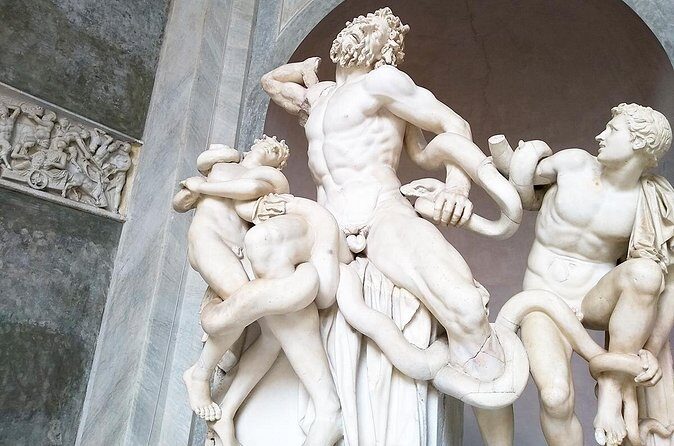
Quality is where this tour really shows itself. One review in particular described a private tour experience with Paola, who greeted the group at the Vatican entrance with names on a sign and brought both knowledge and friendliness to the visit. That kind of welcome matters because the Vatican can feel chaotic at street level.
More importantly, the guide approach across the route is consistently practical. Instead of throwing facts at you, the guide helps you see relationships:
- ancient art connects to papal collecting and power
- Renaissance frescoes connect to patronage and religious storytelling
- Basilica details connect to how art served devotion and awe
- the Square connects the art to ongoing ritual and public moments
Pacing-wise, the tour’s tightness is both a strength and a trade-off. It’s a strength because you can do Vatican highlights in about three hours without losing your day to lines. It’s a trade-off because you may want more time once you’re emotionally hooked—especially in St. Peter’s Basilica.
My suggestion: treat this tour as your entry point. After it ends, you’ll have a clearer sense of what you want to return to when you have more time.
Who should book this Vatican skip-the-line tour
This tour fits best if you:
- want the Vatican’s headline sights in one efficient plan
- like having an art historian explain what you’re looking at
- are short on time and don’t want to lose hours to lines
- appreciate a guided structure with some time to look on your own
You might prefer a different style if you:
- hate quick stops and need long unstructured museum time
- want to read every label and take many photos without guidance
- are planning an extremely packed Rome schedule and can’t handle last-minute access changes
Also, because of the Vatican dress code, it’s smart for anyone who’s unsure about what they’ll wear. Plan your outfit so you’re comfortable and still compliant.
Should you book it?
Yes, if your goal is a focused, high-impact Vatican experience with skip-the-line tickets and expert context. The value is strongest when you consider what you’re buying: time saved and interpretation that makes the art and architecture easier to understand.
Book it with a realistic mindset. Some areas can close last minute due to major papal events, and the Basilica may be restricted during Jubilee conditions. Still, the tour’s built-in alternative plan helps you keep the experience moving rather than getting stuck.
If this is your first time in the Vatican and you want the highlights with brains behind the facts, this is a solid choice.
FAQ
What does the tour include?
It includes a professional guide and a professional art historian guide, skip-the-line access, admission tickets for the main stops, and the guided visits at the Vatican Museums, the Sistine Chapel, St. Peter’s Basilica, and St. Peter’s Square.
How long is the Vatican City walking tour?
The tour is about 3 hours (approx.).
What should I wear to enter the Vatican sites?
You need to follow the dress code: knees and shoulders must be covered for both men and women. No shorts or sleeveless tops.
Is the Vatican Basilica always included?
It is part of the plan, but during Jubilee access rules the Basilica might not be accessible as part of the tour. If that happens, you can visit it after the tour by queuing.
What happens if areas close last minute due to Pope Francis events?
If some areas close, your guide will provide an alternative focusing on the Vatican Museums.
Can I cancel or change the booking?
No. This experience is non-refundable and cannot be changed. If you cancel or request an amendment, the amount you paid will not be refunded.