A phone-led quest can make Rome feel personal fast. This self-guided puzzle walk turns famous Trastevere sights into a moving story, with you solving clues on your phone and getting sent to the next real-world stop.
I like the flexible start idea a lot: there’s no rigid time slot, so you can fit it around meals, gelato stops, or the mood of the day. Another strong plus is that you can do it solo or as a group, and the content comes in multiple languages including English—handy if your crew has different comfort levels.
One thing to think about: it depends on your phone working in the moment. If your connection is spotty or the app struggles to load, the experience can stall, and you won’t have a live guide with you to fix it on the spot.
In This Review
- Key Points That Matter
- A Phone-Led Story Walk Through Trastevere
- How the Luisa Mystery Works (and Why You’ll Actually Use It)
- Route Basics: Flexible Timing, Solo or Group
- Cross Into Trastevere: Ponte Fabricio and Piazza in Piscinula
- Alleyway Puzzles: Vicolo dell’Atleta and Vicolo del Buco
- Roman-Era Corners to Trastevere Homes: Excubitorium and More
- Basilica Time and the Gate Exit: Santa Maria in Trastevere and Porta Settimiana
- Final Stroll to Piazza Trilussa: Via di Santa Dorotea and the Finish
- Price and Value: Low Cost, High Structure
- When It Feels Smooth vs. When It Might Frustrate You
- Who This Puzzle Quest Is Best For
- Should You Book This Trastevere Puzzle Quest?
- FAQ
- How long does the Rome Trastevere puzzle quest take?
- Is there a fixed time slot for starting?
- Do I need a tour guide with this activity?
- What do I need to use the puzzles?
- What locations does the quest visit?
- Are entry tickets required for attractions?
- Is it available on iPhones and Android?
- Is it offered in English?
- Can I cancel for a refund?
Key Points That Matter
- Flexible start time: no strict schedule, so you can start whenever it fits your day
- 15 real-world puzzle challenges: the route is structured, but you still choose your pace
- Luisa’s mystery + Trastevere legends: a story layer that gives meaning to the streets
- No attraction entry tickets required: you’re free to focus on the walk and the clues
- Mobile access code + mobile ticket: you’re set up digitally before you leave
A Phone-Led Story Walk Through Trastevere
Trastevere is the kind of neighborhood where you can wander for hours and still feel like you found something new. This experience adds a simple trick: it gives you a reason to look closely. Instead of only snapping photos, you pause, solve a clue, then move on with purpose.
That’s the core value here. Rome can be overwhelming fast—streets, churches, ruins, fountains, scooters, the whole show. A puzzle route trims the chaos. It nudges you from one landmark to the next while keeping you outdoors and moving at an easy walking pace.
And since it’s designed to be self-guided, you’re not paying for someone else’s talking schedule. If you want slow down for a view, you can. If you need a break, you can. You’re not trying to keep up with a group.
You can also read our reviews of more guided tours in Rome



How the Luisa Mystery Works (and Why You’ll Actually Use It)
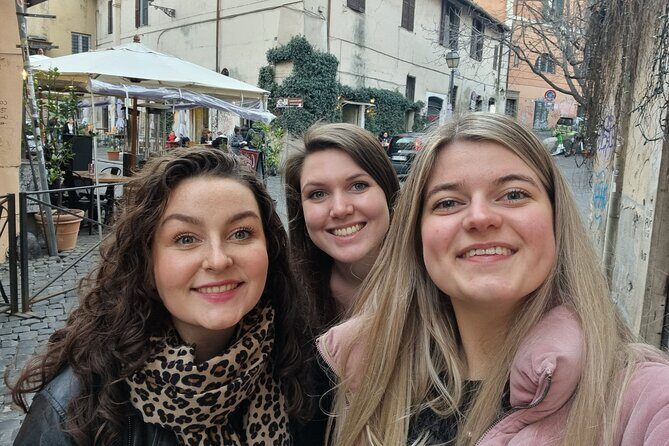
The story component is built around Luisa’s mystery plus Trastevere legends, with puzzle prompts that connect to personal memories and local history. That combination matters because it prevents the typical problem with phone tours: either they’re all facts, or they’re all game.
Here, you’re doing a mix. You’re reading clues, thinking, and then responding to prompts that feel less like a quiz and more like a guided conversation with the place. For kids, that “do something” format can be the difference between active participation and a bored meltdown.
It also helps adults. Even if you’ve been around Rome before, the prompts can reframe what you’re seeing. A bridge becomes a starting point for a challenge. A small lane becomes part of a sequence. A church isn’t just another façade—it’s a waypoint in the story rhythm.
Route Basics: Flexible Timing, Solo or Group

This puzzle quest is designed for flexible start times, with no fixed time slot you must follow. That’s great when your Rome day doesn’t go as planned—because in Rome, it rarely does.
The total time runs about 1 hour 15 minutes to 1 hour 45 minutes. I see this as a sweet spot. It’s long enough to feel like a real activity, but short enough that you can still do a normal evening after—dinner, a stroll, or a final stop for a view.
You can complete it solo or with your group, and it’s private in the sense that only your group participates. Translation: you’re not sharing the route with strangers in a way that forces you to stay together.
Cross Into Trastevere: Ponte Fabricio and Piazza in Piscinula

You begin at Ponte Fabricio, where you get the first clue. This starting choice is smart. A bridge is naturally a landmark you can orient to, and it gives you an immediate “there’s the start” feeling before you slip into smaller streets.
Right after that, you move to Piazza in Piscinula. This stop works well because a small plaza is an easy place to pause. You can pull out your phone, study the clue, and get directions without feeling like you’re blocking traffic in a narrow corridor.
For both stops, the big practical benefit is the rhythm: clue, solve, move. You never wonder what to do next. You’re always working toward the next scene.
Potential drawback: these early moments rely on getting your phone set up fast. So if you want the smoothest start, have the app ready before you step into the first puzzle area.
Alleyway Puzzles: Vicolo dell’Atleta and Vicolo del Buco
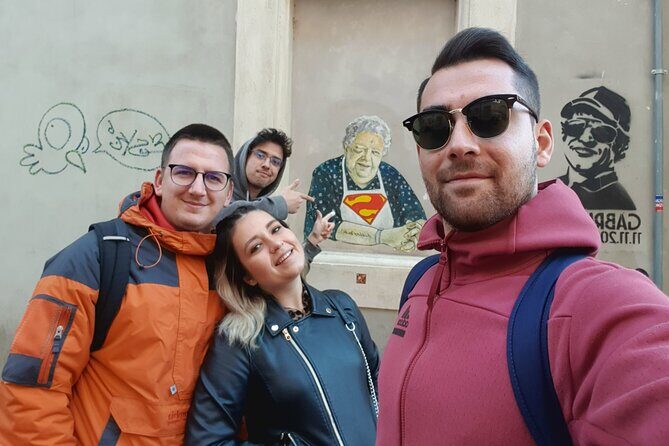
Next you head to Vicolo dell’Atleta. A “vicolo” is exactly what it sounds like: a tight lane, often with a postcard angle if you look up. Here, the clue gives you a reason to slow down and actually read what’s around you instead of just passing through.
Then comes Piazza di Santa Cecilia, followed by Vicolo del Buco, 60. These stops are valuable because you’re not just moving through Rome’s streets—you’re also switching settings. A plaza gives you breathing room. A lane gives you detail work. That variety keeps attention from dropping halfway through the quest.
At Vicolo del Buco, 60, you’ll look up the next clue and follow directions. Locations like this tend to reward careful attention. If you rush, you can miss what the puzzle expects you to notice. So the best strategy is simple: take the clue step seriously, and give yourself enough time to read it without speed-walking.
You can also read our reviews of more tours and experiences in Rome






Roman-Era Corners to Trastevere Homes: Excubitorium and More
At Excubitorium della VII Coorte, you’ll get a new clue, and you can take your time. This is one of the key “slow down and look” segments in the route, because Roman-era sites often feel different once you’re at them rather than only seeing them from a distance.
After that, the quest moves into In Trastevere House. A stop with a name like this typically signals you’re looking at a more specific point tied to the story rather than just a scenic street corner. The main thing you’ll appreciate is that the app keeps you in the flow—clue, directions, pause, continue—without forcing you into a strict schedule.
Then you continue to Vicolo di Santa Maria in Trastevere, where you can enjoy the view and keep exploring at your own pace. This part is great for breaking the game mode and switching to sightseeing mode for a few minutes. I like these segments because they help you recharge before the major religious landmark.
Basilica Time and the Gate Exit: Santa Maria in Trastevere and Porta Settimiana

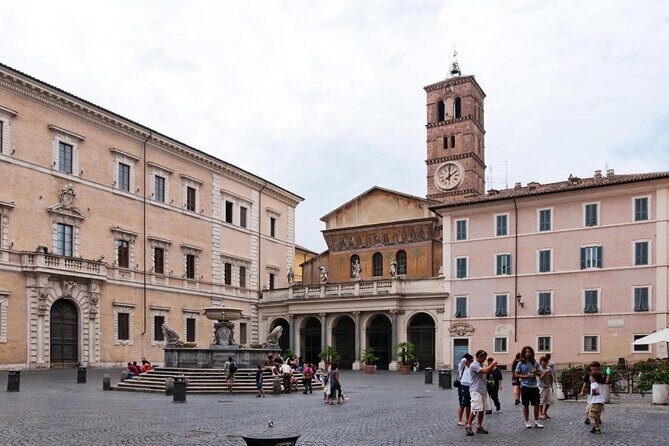
The route brings you to Basilica of Santa Maria in Trastevere. This is the kind of place where you naturally want to stop, look, and soak in details. The puzzle here is a good match. Instead of treating the basilica as a quick photo stop, the quest encourages you to linger while still staying purposeful.
From there, you move on to Porta Settimiana. A city gate is a different kind of Rome. It’s less about the front-of-the-building drama and more about how the neighborhood connects to the larger city story. For the puzzle format, it’s a nice contrast: you switch from church focus to something more structural and historical.
If you’re traveling with kids, this stretch can be a win. They’ll get the payoff of seeing a big landmark and still have something active to do through the clue steps.
Final Stroll to Piazza Trilussa: Via di Santa Dorotea and the Finish
The last stretch takes you along Via di Santa Dorotea. Street-name stops are often perfect for a final “gear shift” because you can walk freely while reading directions and preparing for the last challenge.
Finally, you end at Piazza Trilussa. This is a satisfying finish because it feels like a natural place to regroup. Your story and the puzzle sequence end here, so you can decide how you want to continue your evening—one more wandering loop, dinner nearby, or just sitting for a bit and watching life move through the piazza.
Price and Value: Low Cost, High Structure
At $8.09 per person, this is priced like a budget-friendly way to add structure to Rome without paying for a guided escort. The value comes from what you get for the money: 15 real-world puzzle challenges, storyline content, and a mobile ticket/code system that supports a smooth self-guided experience.
The other value angle is time management. You’re not planning a complicated route map across multiple sights. You’re following a story path that already sequences the stops for you. In Rome, that matters because getting lost is easy, but getting lost plus hungry plus tired is how plans collapse.
When It Feels Smooth vs. When It Might Frustrate You
The concept is straightforward: download the app, follow instructions, solve puzzles, move to the next location. That’s the smooth side.
The only direct issue reported in the provided feedback centers on connectivity and app access. One person couldn’t connect and felt there was no helpful human contact to fix things, leading to regret about the purchase cost. I can’t confirm the cause, but I can tell you what to do to reduce the odds of that happening to you:
- Download and open the app before you start the walk
- Make sure your phone has enough battery for 1–2 hours
- If you rely on mobile data, start in an area where you can get a stable connection
If the app doesn’t load at the start, you’ll feel it quickly because the quest is tied to phone instructions.
Who This Puzzle Quest Is Best For
This experience is a good fit if you want Rome to feel interactive. It’s especially friendly for families because it gives kids a job: solve clues, follow directions, and keep moving through the neighborhood.
It also fits couples and solo travelers who like a guided route but don’t want a live guide. You get a plan without the pressure of a group pace.
And if you’re comfortable walking, it’s a nice way to see multiple landmarks in one chunk of time without treating it like a full-day itinerary.
Should You Book This Trastevere Puzzle Quest?
Book it if you want a structured Rome walk with story-driven puzzles, flexible timing, and a route that brings you through Trastevere’s recognizable highlights without needing entry tickets.
Skip it (or at least plan for a tech backup) if your phone reliability is a concern. Since the whole experience depends on your mobile app, a connectivity hiccup can turn a fun game into a frustrating pause.
If you’re the type who likes doing something while sightseeing—reading clues, solving small challenges, and walking from one meaningful stop to the next—this is a smart use of a couple hours in Trastevere.
FAQ
How long does the Rome Trastevere puzzle quest take?
The experience is listed at about 1 hour 15 minutes to 1 hour 45 minutes.
Is there a fixed time slot for starting?
No. You get a flexible start time with no time slot you must stick to.
Do I need a tour guide with this activity?
No. It’s self-guided, and the listing does not include a tour guide.
What do I need to use the puzzles?
You download the app and use your phone as you follow the instructions. You’ll also receive a mobile access code.
What locations does the quest visit?
The route starts at Ponte Fabricio and ends at Piazza Trilussa, with stops including Piazza in Piscinula, Vicolo dell’Atleta, Piazza di Santa Cecilia, Vicolo del Buco, 60, Excubitorium della VII Coorte, In Trastevere House, Vicolo di Santa Maria in Trastevere, Basilica of Santa Maria in Trastevere, Porta Settimiana, Via di Santa Dorotea, and Piazza Trilussa.
Are entry tickets required for attractions?
No entry tickets are needed. The tour notes that admission tickets are free and not needed to complete the experience.
Is it available on iPhones and Android?
Yes. It’s available on Android and iPhones.
Is it offered in English?
Yes. It’s available in multiple languages, including English.
Can I cancel for a refund?
Yes. You can cancel for a full refund if you cancel up to 24 hours in advance of the experience start time.