REVIEW · ROME
Rome: Immersive Underground and Piazzas Tour
Book on GetYourGuide →Operated by Doooing · Bookable on GetYourGuide
Rome has a second city under your feet. This 3-hour Rome tour takes you from famous Piazza Navona down into the layers people actually built on top of one another for centuries. I love the way the stops connect above-ground landmarks to what you can see underground, and I like how the Pantheon gets explained clearly instead of just treated like a selfie wall. One possible drawback: you’ll still be doing some above-ground walking on Rome’s streets, so wear shoes you trust.
What really makes this outing work is the guide. Many of the guides are archaeologists, and it shows in the kind of questions they’re ready for and the stories they can back up with details. I also like that the route is built for timing—big sights plus underground rooms—so you’re not stuck only in hot open plazas.
Before you go, note the practical stuff. The Pantheon is a church in use, so you need covered shoulders and knees, and the general dress rules say no shorts, short skirts, or sleeveless shirts. Also, this one isn’t for wheelchair users, so plan accordingly if mobility is an issue.
In This Review
- Key highlights worth setting your expectations by
- Starting on Piazza Navona: Rome’s perfect launchpad
- Piazza Navona fountains: Gregory XIII to Bernini in one square
- Stadium of Domitian underground: athletics, then gladiators
- The Pantheon stop: Romulus legend and real-world church rules
- Trevi Fountain photo moment: tradition plus a fresh perspective
- Vicus Caprarius: the City of Water under Trevi
- How the guide makes Rome make sense (and why it matters)
- What to wear and how to pace yourself in Rome heat
- Value check: why this route tends to feel worth it
- Who should book this underground Rome tour
- Should you book this Rome underground and piazzas tour?
- FAQ
- How long is the Rome: Immersive Underground and Piazzas Tour?
- Where does the tour start?
- What sights are included?
- What languages is the guide available in?
- What should I bring?
- Is there a dress code for the Pantheon?
- Is the tour wheelchair accessible?
- Is cancellation free?
- Can I pay later?
- Will the Pantheon always be accessible?
Key highlights worth setting your expectations by
- Piazza Navona’s fountain legends and Bernini’s Quattro Fiumi set the theme before you go underground
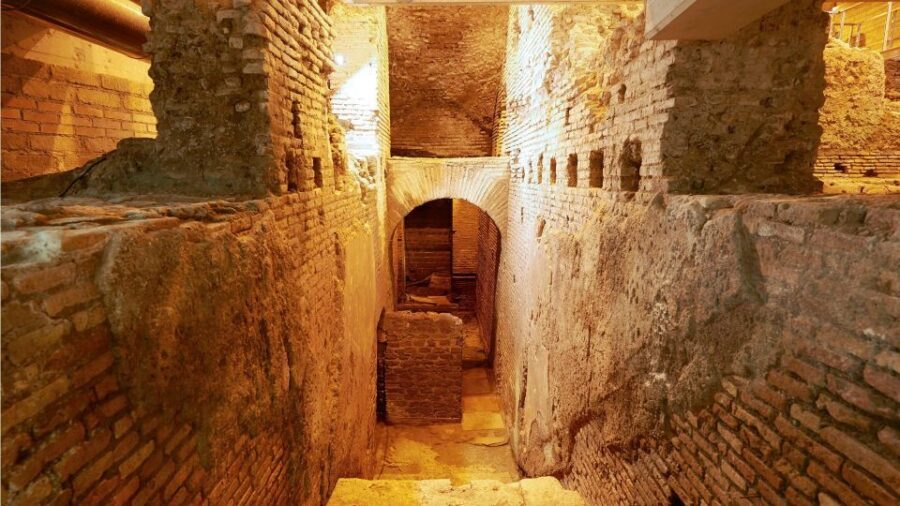
- Stadium of Domitian ruins beneath the square show how everyday spectacle worked in Roman life
- Pantheon stop with Romulus legend and church dress requirements
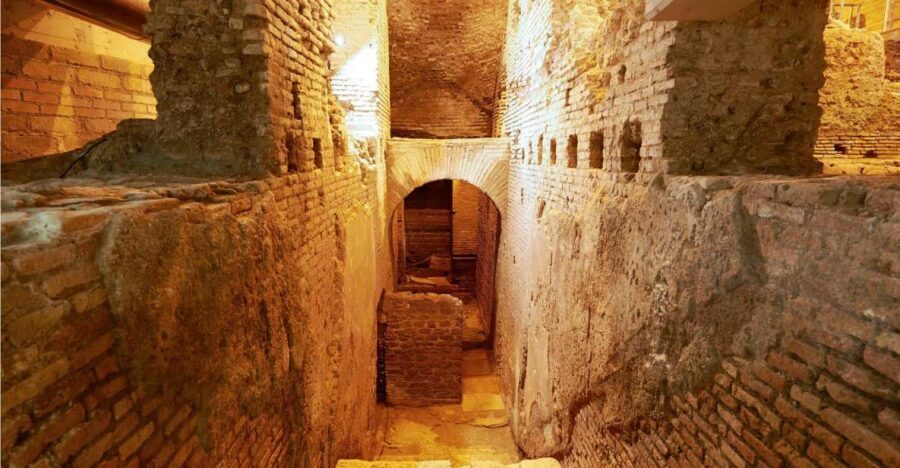
- Vicus Caprarius, the City of Water includes underground remains tied to the Aqua Virgo aqueduct
- Trevi Fountain coin toss with a final photo moment to close the loop
- Archaeology-led guidance in Italian, English, and Spanish with lots of room for questions
Starting on Piazza Navona: Rome’s perfect launchpad
The tour kicks off near two starting options: either the Fiumi Fountain by the National Academy of San Luca, or directly around Piazza Navona itself depending on your booking. Piazza Navona is a smart starting point because it’s central, easy to recognize, and it gets you into the Roman habit fast—people watching, fountains, and quick turns of direction.
From the start, you’re also mentally warmed up for what comes next: the idea that Rome is layered. One street level leads to another, and once you see the logic of those layers, the rest of the route clicks.
The early portion includes a short guided walk, about ten minutes, which helps you avoid wandering around while the group is trying to regroup.
You can also read our reviews of more tours and experiences in Rome.



Piazza Navona fountains: Gregory XIII to Bernini in one square
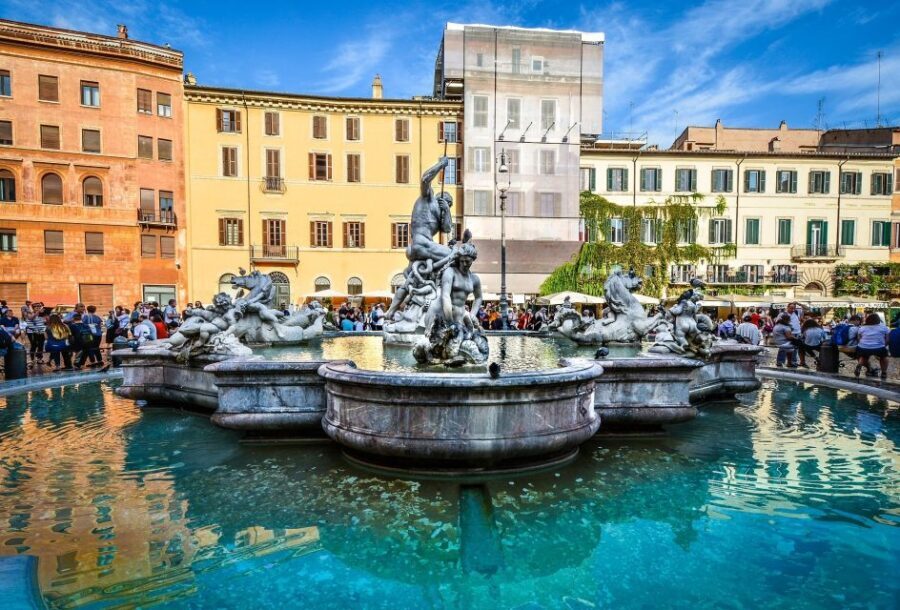
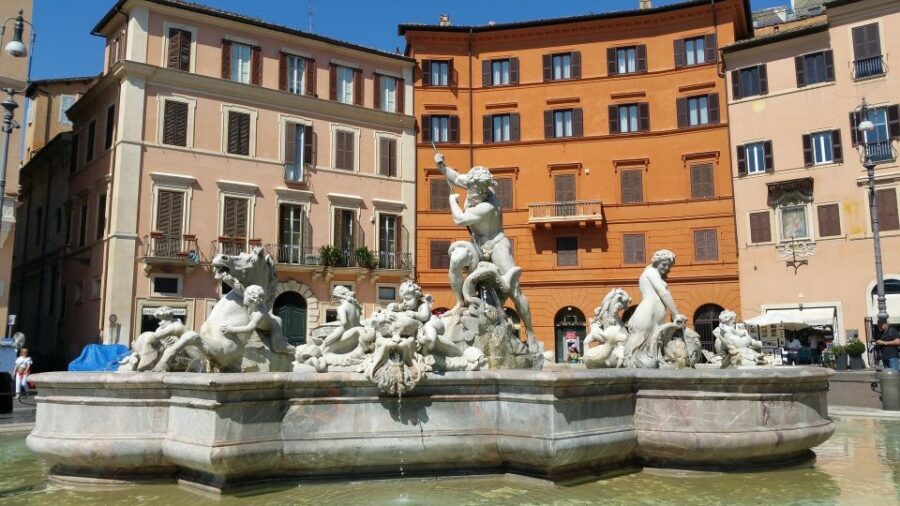
Before you go underground, you’ll look at what makes Piazza Navona one of Rome’s most photogenic public rooms: its three fountains. The fountains date to the papacy of Gregory XIII, giving the square that distinctly “designed” look—perfect for setting up a conversation about how Rome gets remade again and again.
Your key focus is the Fontana dei Quattro Fiumi, which is in the center. It was designed by Bernini and dates to 1651. It’s more than decoration. As you stand there, your guide can point out how artists and rulers used myth and symbolism to keep shaping what people believed the city meant.
This is also where the tour’s pace feels right. You get enough time to orient yourself and take in the big visual notes before you step down.
Stadium of Domitian underground: athletics, then gladiators
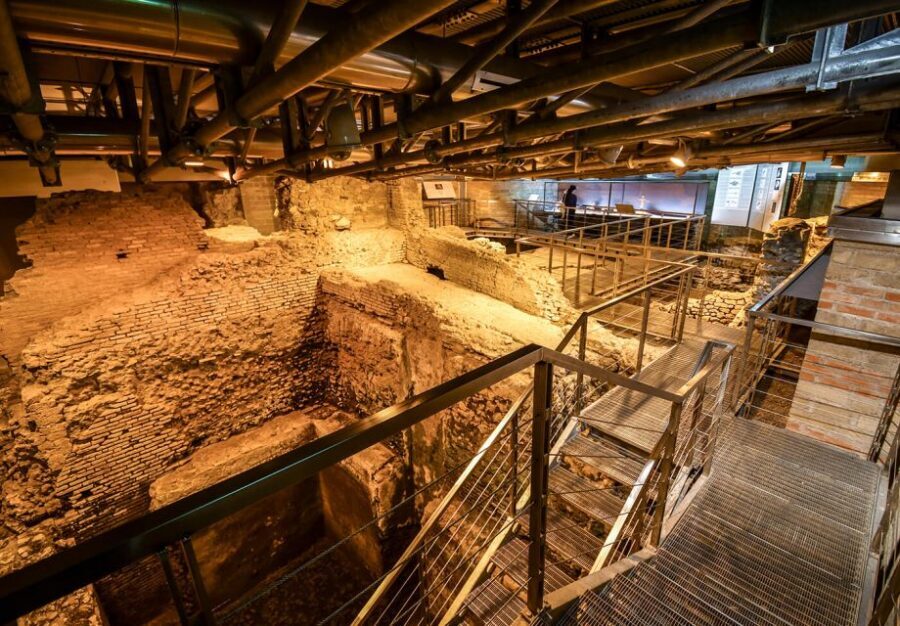
Next comes the part that makes this tour feel different: going down beneath the streets of Piazza Navona. Beneath the square is the site of the Stadium of Domitian, and you’ll learn what Roman entertainment looked like when it wasn’t just theater seats and speeches.
The stadium was used mostly for athletic contests. Then, for a brief period—after damage to the Colosseum in 217 A.D.—it was used for gladiator shows. That detail matters. It shows how flexible Roman spaces could be when major venues suffered setbacks.
In practice, this stop is also a temperature relief. Reviews repeatedly point out that the underground sections are a welcome break from Rome’s heat. If you’re visiting in summer, that cooling effect alone can make the tour feel like a smart timing choice, not just a history choice.
The Pantheon stop: Romulus legend and real-world church rules
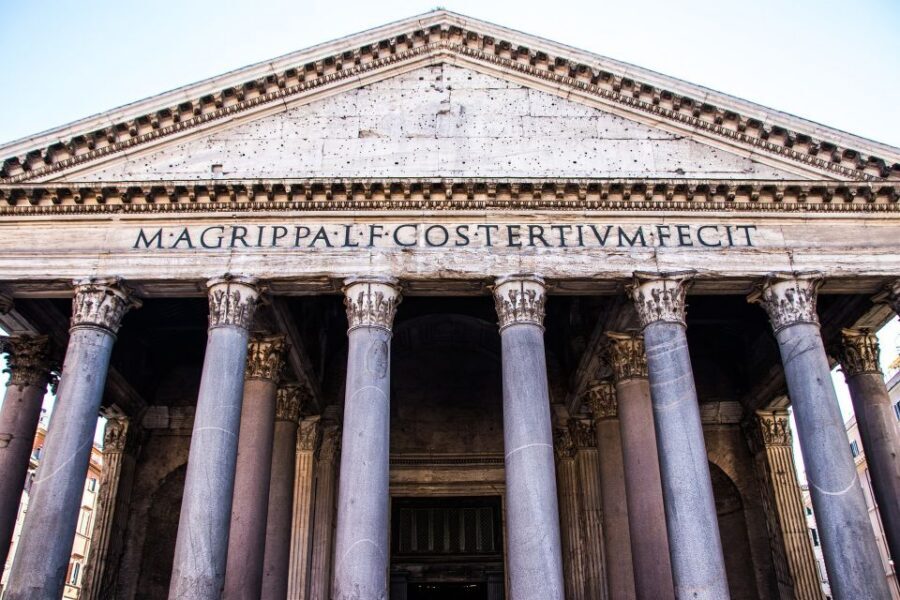
After the stadium ruins, the tour heads back above ground and moves onward to the Pantheon. Here, the vibe shifts from archaeology to one of the most famous buildings on earth—still active as a church, still drawing crowds.
Your guide explains a Roman legend tied to the Pantheon: after his death, Romulus was said to be seized by an eagle and taken into the skies with the gods. Whether you treat legends as history or literature, it’s a great way to anchor your visit in story, not just architecture.
Two things to plan for at the Pantheon:
First, dress requirements are strict because it’s a working place of worship. You need covered shoulders and knees to enter. The tour’s general rules also say no shorts, short skirts, or sleeveless shirts, which means you should choose a respectful outfit even if the rest of Rome seems to run casual.
Second, access can vary. The Pantheon may not be accessible on some days due to religious functions, and the route around monuments can change because of restoration during the Jubilee. If you have a specific date in mind, check your updates before you leave.
One more practical upside: several guides named in the experience feedback are praised for making the Pantheon feel more than a quick stop. You’ll get explanations while you’re there, instead of arriving, looking up, and moving on before the building can tell its story.
Trevi Fountain photo moment: tradition plus a fresh perspective
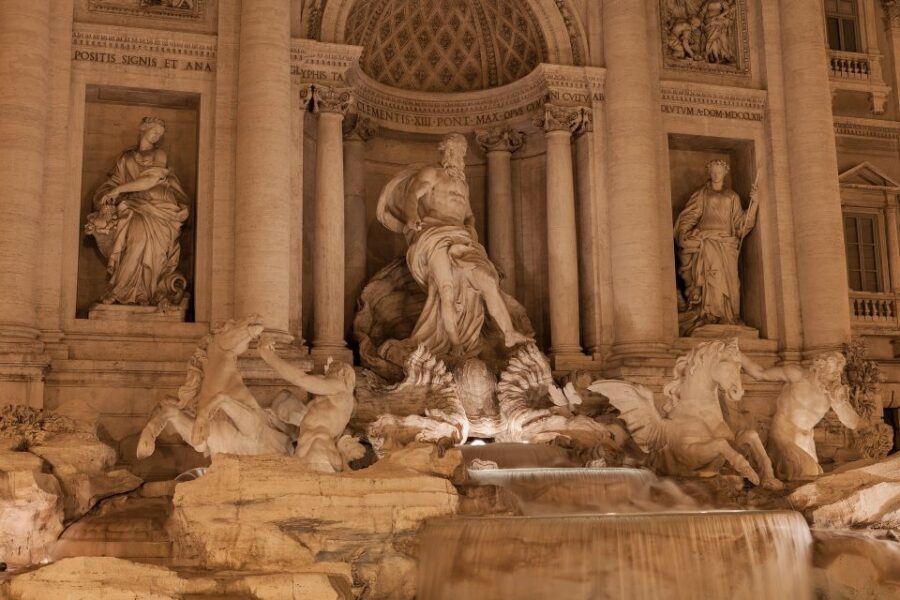
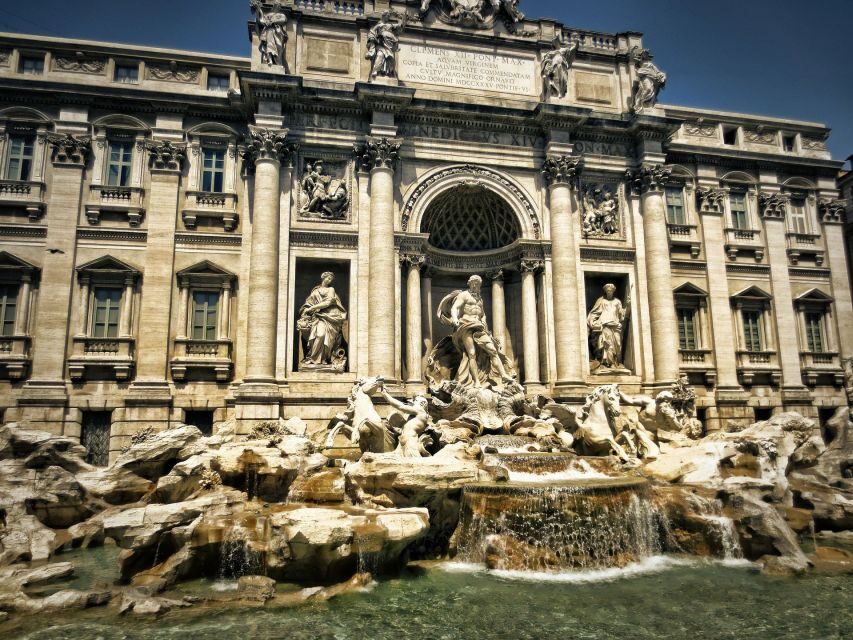
Then it’s on to the Trevi Fountain. You’ll have a photo stop and a short guided moment here, and you’ll hear about the tradition of throwing a coin in the water.
Trevi is usually a crush. What helps this tour is the way it feeds your experience into the next underground section—so you don’t just do the coin and vanish. You can treat it like a checkpoint: marble and crowds above ground, hidden structures below.
One useful detail to expect from the guides: the underground water story ties back to the aqueduct system that served this area. In the guide explanations, you may hear that parts of these water-related remains were discovered in more recent times (around the last couple of decades, based on guide commentary shared in experience feedback). That makes the whole underground sequence feel less like a random dig and more like something connected to Trevi’s own world.



Vicus Caprarius: the City of Water under Trevi
After Trevi, you go down again into Vicus Caprarius, also called the City of Water. This is where the underground archaeology becomes less about one single landmark and more about an entire functioning system of how Rome lived.
Inside the underground archaeological area, you’ll see an intricate labyrinth of remains. Highlights include a domus from the imperial era and elements tied to water storage and distribution—especially the castellum aquae connected to the Aqua Virgo aqueduct.
This stop is valuable for a simple reason: it gives you a physical sense of infrastructure. Most visitors treat aqueducts like distant engineering. Here, you’re looking at the Roman version of the water network in a way that feels close up.
It’s also a good contrast with the stadium ruins earlier. Stadiums show how Rome entertained people. Vicus Caprarius shows how Rome kept them alive. Put those together and the city starts to feel like one system, not a museum of isolated monuments.
How the guide makes Rome make sense (and why it matters)
The guides are a major reason this tour earns a strong reputation. Multiple named guides—like Amanda, Francesca, Alex (Alessandra), Sabrina, Maria, Caterina, and Gloria—are described as enthusiastic, patient, and strong with Roman archaeology and storytelling.
What I’d look for in this kind of tour is not just correct facts. It’s the ability to answer follow-up questions. On this route, you’re bouncing between legends, architecture, and underground remains. A guide who can handle that mix makes the experience feel coherent instead of chopped into stops.
You may also notice a practical difference in how groups are managed. One piece of experience feedback specifically calls out cases where the guide used a microphone and the group had headphones, which can really help in crowded areas like the Pantheon area and moving through busy streets. If that setup is available on your day, take advantage—it makes it easier to stay with the story instead of shouting over the city.
What to wear and how to pace yourself in Rome heat

This is a walking tour, and it mixes above-ground streets with underground sites. Even though some parts are cool, you’ll still want to plan for sun and pavement between stops. Wear comfortable shoes and dress for the Pantheon rules—no bare shoulders, no bare knees.
If you’re traveling in warm weather, bring something breathable but compliant. Since sleeveless tops are not allowed, you’ll need coverage that doesn’t cook you. And because this isn’t for wheelchair users, keep an eye on your energy level if you have any mobility limits.
Timing wise, the total duration is 3 hours, which is short enough to feel doable but long enough that you’ll actually learn the “how it all connects” version of Rome. The itinerary spreads time across the square, the underground stadium, the Pantheon, Trevi, and Vicus Caprarius.
Value check: why this route tends to feel worth it
I measure value in Rome by two things: how much you learn per minute, and whether the route helps you see something that feels hard to assemble on your own.
This tour scores well on both.
First, you get multiple “big name” stops—Piazza Navona, the Pantheon, Trevi—plus underground archaeology tied to specific places (Domitian’s stadium beneath the square and Vicus Caprarius under the area connected to Roman water systems). That’s not just a highlights tour. It’s a theme tour: Rome above and Rome below.
Second, the guide talent matters. When guides are archaeologists or have strong academic backgrounds, the underground becomes more readable. Instead of standing in darkness and guessing, you’re taught what you’re looking at.
A bonus that comes up in the experience feedback is that the Pantheon portion can be managed in a way that helps with lines. Not every day is identical, but the general idea is that your guide helps you avoid turning the Pantheon into a time sink.
If you want a first serious “Rome connections” tour—especially if you’re already thinking about the Forum, Colosseum, and other classical sites—this one gives you a different angle by focusing on what’s literally under your feet.
Who should book this underground Rome tour
I’d book this if:
- You like your Rome guided and explained, not just browsed
- You want underground sites that connect to above-ground landmarks
- You’re comfortable following dress rules for an active church
- You enjoy asking questions and getting straight answers
I might skip it if:
- You hate walking and prefer fully transit-based sightseeing
- You need wheelchair access (this one isn’t suitable)
- You’re on a very tight schedule and can only handle quick stops
Should you book this Rome underground and piazzas tour?
If you want one outing that mixes famous Rome with the parts most people walk over, I’d lean yes. The combination of Piazza Navona, Domitian’s underground stadium area, guided context at the Pantheon, and Vicus Caprarius makes this more than a checklist.
Just be practical: wear compliant clothes for the Pantheon, use solid shoes, and pick your day with the possibility of Pantheon access changes in mind. If you do that, you’ll finish the 3 hours with Rome feeling less like separate postcards and more like one layered city.
FAQ
How long is the Rome: Immersive Underground and Piazzas Tour?
It lasts 3 hours total.
Where does the tour start?
Meeting point can vary by the option booked. Starting options include the Fiumi Fountain or the National Academy of San Luca. The tour also provides coordinates for the meeting area: 41.89896774291992, 12.473087310791016.
What sights are included?
The route includes Piazza Navona, the underground Stadium of Domitian area, the Pantheon, Trevi Fountain (with a photo stop), and the underground Vicus Caprarius area.
What languages is the guide available in?
Live guides are available in Italian, English, and Spanish.
What should I bring?
Comfortable shoes are recommended.
Is there a dress code for the Pantheon?
Yes. You need shoulders and knees covered for Pantheon entry. The tour also states no shorts, short skirts, or sleeveless shirts.
Is the tour wheelchair accessible?
No, it is not suitable for wheelchair users.
Is cancellation free?
Yes. Free cancellation is available up to 24 hours in advance for a full refund.
Can I pay later?
Yes. You can reserve now and pay later to keep plans flexible.
Will the Pantheon always be accessible?
Not necessarily. Due to religious functions, the Pantheon may not be accessible on some days, and Jubilee restoration can affect routes.