REVIEW · COLOSSEUM TOURS
Rome: Colosseum Access with Official AI App & Arena Option
Book on Viator →Operated by ANCIENT AND RECENT · Bookable on Viator
Rome can feel chaotic. This tour is meant to reduce that.
This experience is interesting because you start together for the hard part (security), then you’re free to roam the Colosseum and nearby ruins at your own pace with an official AI audio guide and a paper map. I especially like that your ticket is prearranged for calmer entry, and that you get guided-by-audio context as you walk, rather than being rushed through. One drawback to plan for: you’ll be relying on your phone (charged, app downloaded, and you’ll need your own earphones), and the site can be very crowded with lots of walking.
After you finish the Colosseum, you can keep going on foot to the Roman Forum and Palatine Hill, which turns a quick photo stop into a full “how Rome worked” circuit. The optional upgrades (like Arena access or Underground access) can add value for some people, but only if that matches what you actually want.
In This Review
- Key things I’d watch for
- The real value: official tickets plus self-guided freedom
- Meeting at Via Marco Aurelio and getting into the right rhythm
- Entering the Colosseum: what skip-the-line usually means here
- The Colosseum at your pace: big scale, big emotions
- Roman Forum and Palatine Hill: the story becomes political
- Roman Forum stop
- Palatine Hill stop (with the views)
- Imperial Forums and Circus Maximus: short stops that change your scale
- Circus Maximus (free admission)
- Via dei Fori Imperiali / Imperial Forums (free admission)
- The AI audio guide app: how to make it actually work
- What the app format feels like
- VR and other add-ons at the start (worth asking about)
- Timing, entry windows, and why crowds matter
- Accessibility and comfort: plan for the site, not just the ticket
- Value and what you’re not getting (read this part)
- Practical tips I’d follow before you go
- Should you book this Colosseum access with the AI app?
- FAQ
- Do I get access to the Colosseum Arena?
- Is the Underground included?
- Do I need earphones for the AI guide?
- Where do I meet and pick up tickets?
- Is a map included?
- How long should I plan for?
Key things I’d watch for
- Prebooked entry helps with ticket anxiety, but you still do mandatory security checks on site
- AI audio guide + paper map means you can go at your own pace and still understand what you’re seeing
- Colosseum plus Forum and Palatine Hill access covers the main ancient “Rome power center”
- Arena and Underground are add-ons unless you selected the right option
- Small-group feel (capped at 50) keeps the start more manageable
- You need your own earphones and a phone that’s ready to use
The real value: official tickets plus self-guided freedom
You’re paying for more than a ticket number. The bundle is designed to remove the usual friction around the Colosseum: getting official entry handled in advance, then using the AI audio guide once you’re inside.
At $20.43 per person, it can feel like a bargain for what’s included. You’re getting Colosseum admission (ticket value listed as 18 euros), plus a presale fee (2.44 euros per person) and the experience tools: the AI video guide app, plus a paper map with 3D reconstructions. If you’ve ever stood in a ticket line while time slipped away, you’ll get why this packaging is popular.
What you should expect: you’re not getting a classic live guide who talks the whole time. You’ll start with a small group at the meeting point, walk through security with staff help, then explore independently with the app guiding you scene by scene.
You can also read our reviews of more tours and experiences in Rome



Meeting at Via Marco Aurelio and getting into the right rhythm
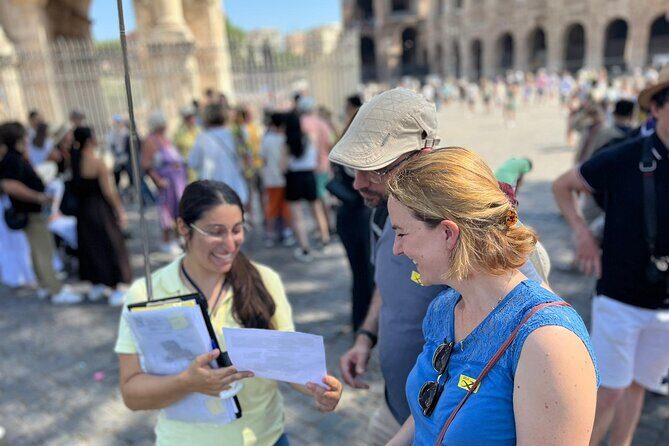
Your start point is Via Marco Aurelio, 19, 00184 Roma RM. The plan is simple: you collect your tickets from staff there, then you’re accompanied to the Colosseum entrance.
This matters because the Colosseum area has a few moving parts. Even with prebooked admission, there’s still mandatory security screening. The operator notes that security and entry procedures can delay departure on national holidays, weekends, and during high season. In other words, show up with breathing room. You don’t want to feel rushed before you even begin.
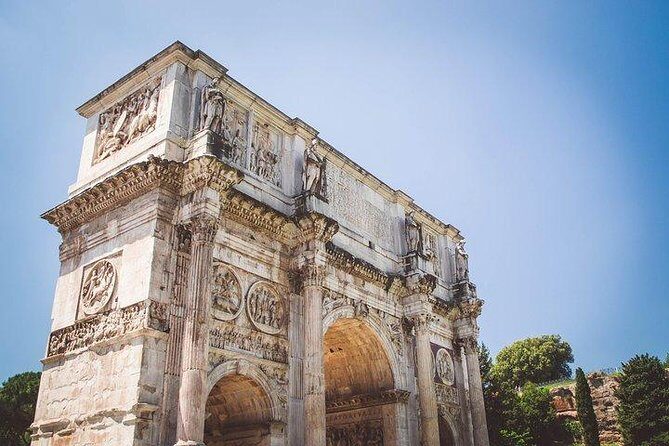
Also, the meeting reference is tied to a very recognizable spot: the Arch of Constantine is the easy landmark where your visit gets going. If you’re stressed about finding the right place in Rome traffic and crowds, that helps.
Entering the Colosseum: what skip-the-line usually means here
Let’s talk straight about the Colosseum’s layout. Prebooking typically helps most with ticket handling, but it does not eliminate everything. You’ll still go through mandatory entry procedures and security checks.
Once you’re past security, you’re free to explore. That’s where the format shines: you’re not stuck pacing with a group that all wants the same photo. You can slow down in the spots that feel important to you, then speed up when you’re moving between viewpoints.
A practical tip from how this experience is set up: don’t treat your visit like a sprint. You have a “guided by time” feel (because your ticket ties you to entry windows), but you have freedom inside. Plan to spend real time looking up at the structure and imagining what the arena looked like in use.
The Colosseum at your pace: big scale, big emotions
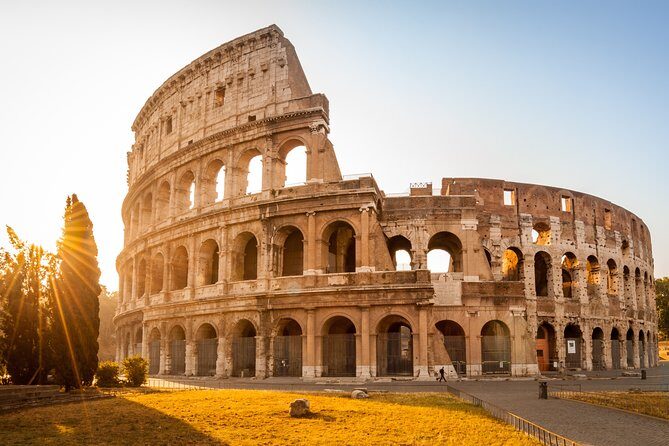
The Colosseum stop is built around one core idea: you’re seeing the largest amphitheater ever built, and Rome’s most famous symbol. You’ll typically spend around one hour here, with admission included.
What I like about doing it self-guided is that the Colosseum rewards your attention. You can pause to study the architecture—levels, openings, and layout—then let the audio guide explain what you’re looking at without forcing you to stand still while someone talks.
If you’ve read about gladiatorial games and wild animal hunts, this is where it turns from words into scale. The site was designed for up to 80,000 spectators, which is hard to picture until you’re in the space.
One more thing: the Colosseum area is an open archaeological park. The operator also notes there aren’t sun or rain covers and there aren’t typical shops to duck into. Bring what you need (especially water) and wear shoes that handle uneven ground.
Roman Forum and Palatine Hill: the story becomes political
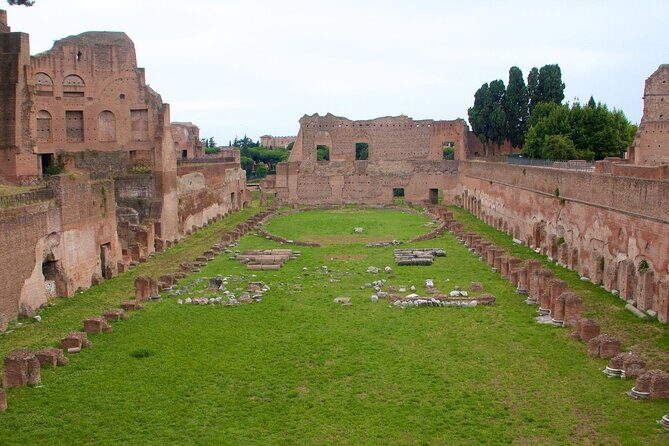
After the Colosseum, you move on to the Roman Forum and Palatine Hill, still under the same access and guided-by-app experience.
This is the part that often separates a “wow, cool building” visit from a “now I understand Rome” visit.






Roman Forum stop
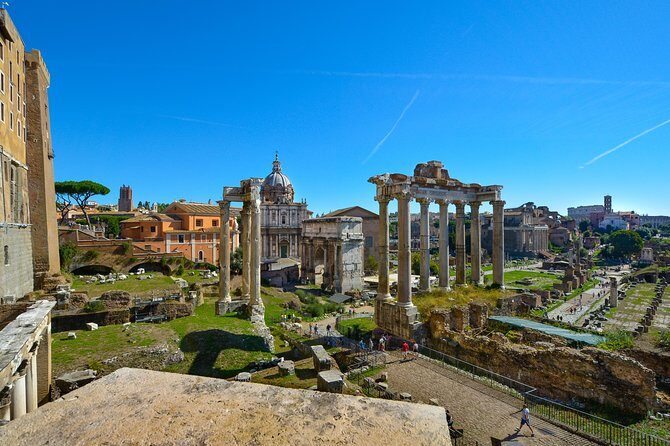
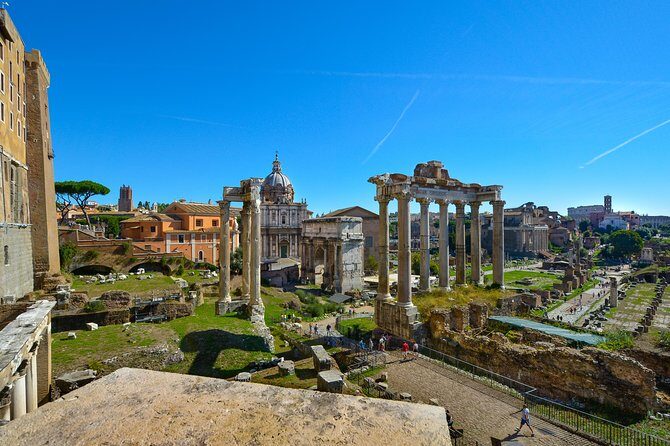
The Roman Forum was the political, religious, and commercial heart of ancient Rome. The audio and map approach helps you connect the dots as you walk the Via Sacra, the main processional route.
You’ll see ruins of temples, basilicas, and triumphal arches. The best way to enjoy this part is to move slowly through the core lanes, then stop at the bigger ruins that look like obvious landmarks. The audio guide is useful here because the Forum has many remnants, and context makes it click.
Palatine Hill stop (with the views)
Palatine Hill is described as the founding core of Rome, linked with the legend of Romulus. Practically, it gives you two big wins:
- deeper understanding of imperial residences
- panoramic views over the Forum and Circus Maximus
It’s also where the Farnese Gardens (Orti Farnesiani) are located, so if you want a calmer moment with scenery, this is usually where you get it. Your suggested time here is about one hour, and I’d keep it. Palatine rewards people who don’t rush.
Imperial Forums and Circus Maximus: short stops that change your scale
Not every part of the itinerary gives you equal time, and that’s okay. Two smaller add-ons help you see the bigger system around the Colosseum complex.
Circus Maximus (free admission)
You get about 30 minutes at Circus Maximus, the massive stadium for chariot racing. What you can appreciate today is the oval imprint where the racing took place. The scale is still obvious, even if the full structure is long gone. If you like Roman sports and spectacle, this short stop adds variety.
Via dei Fori Imperiali / Imperial Forums (free admission)
You also have around 30 minutes for the Imperial Forums along Via dei Fori Imperiali. This is where emperors expanded on the Forum to commemorate victories, and it’s strongly associated with landmarks like Trajan’s Column and remnants of Trajan’s Market.
The value of these quick stops: they prevent your visit from feeling like only one building. Rome’s power center was a network, not a single monument.
The AI audio guide app: how to make it actually work
This tour’s backbone is the AI video guide app on your phone, plus a paper map.
Here’s the key to enjoying it: treat your phone like a flashlight. If it dies, your audio experience dies with it.
What you’ll need:
- Your own smartphone
- Your own earphones (the operator is explicit about this)
- Your phone charged
- The app predownloaded and ready before you arrive
One detail that helps: your ticket pickup staff provide the code to access the app. That’s great if you didn’t download earlier, but you still want the app ready so you don’t fight tech once you’re inside.
Also, cellular reception can be limited inside the Colosseum. That’s not surprising given the structure. The operator states the app is designed to function with low connectivity, and that there’s local support available. Still, I recommend you download fully beforehand to avoid the classic problem: waiting for audio in a place where signal is unpredictable.
What the app format feels like
The AI guide is meant to give you point-by-point explanations as you move. Some people love the freedom this gives, while others find the explanations generic or harder to follow. If you’re the type who wants deep, human storytelling, you may prefer a live guide option. If you’re comfortable learning on your own pace, the app works well.
VR and other add-ons at the start (worth asking about)
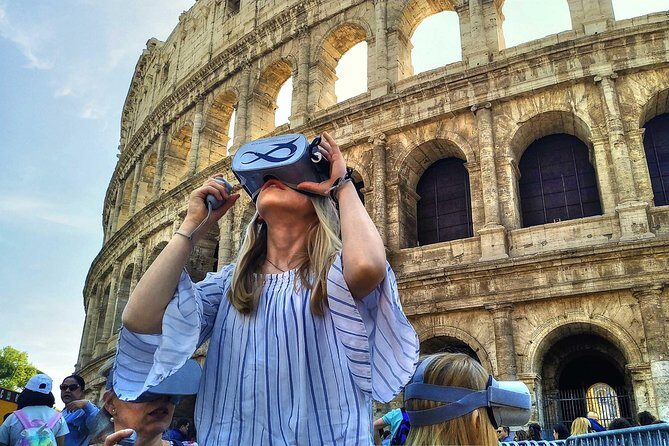
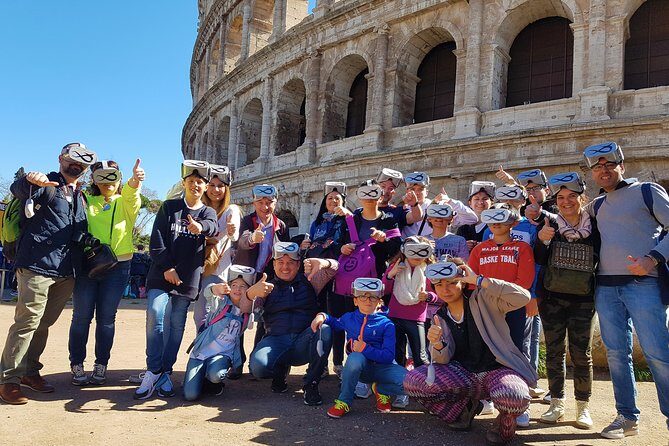
One review notes VR headsets were used to visualize what the ruins looked and sounded like in the past. If your session includes this, it can be a useful warm-up before you enter the Colosseum for real.
Because the info we have doesn’t guarantee VR for every time slot, I’d treat it as a possible extra. If you see the VR step at check-in, it’s a nice way to get your brain in the right mode for what you’re about to see.
Timing, entry windows, and why crowds matter
You can pick either a morning or afternoon entrance time. Your visit duration is listed as 1 to 4 hours, depending on what you do on site and which optional elements you add.
For most people, the practical flow is:
- about 1 hour for the Colosseum
- additional time for Roman Forum and Palatine Hill
- shorter stops at Circus Maximus and Imperial Forum areas
The time you actually get can be affected by mandatory security screening and how busy the site is. Rome in peak season can feel like a theme park—busy, noisy, and constant movement. Even with prebooking, you’ll still feel that energy in the lines and choke points.
The big planning takeaway: don’t schedule the next major thing immediately after your Colosseum slot. Give yourself buffer time to exit, re-group, and walk.
Accessibility and comfort: plan for the site, not just the ticket
The operator warns the Colosseum area isn’t covered for sun or rain, and it’s not designed like a smooth museum with wide, flat paths. The experience is also not set up like a wheelchair-friendly indoor venue.
Based on the information here, this is important to consider if you have mobility challenges. There are notes about the need to carry only necessary items because there’s no luggage storage, and movement inside ancient sites can be tough even for able walkers.
If you know you’ll struggle on uneven ground, in crowds, and with stairs or limited lifts, you may want to pick a different format with more structured accessibility options. For most visitors with average mobility, the self-paced approach is a plus because you can stop often and avoid rushing.
Value and what you’re not getting (read this part)
This ticket package includes:
- Colosseum entry tickets
- access to Roman Forum, Palatine Hill, and Imperial Forum
- the presale fee
- AI audio/video guide app and a paper map
- online and on-site local assistance
It does not include:
- Arena access unless you selected the VIP Arena Ticket option
- Underground access unless you selected the Underground Special Access option
That distinction is crucial. If you think you’re paying for the Arena level, check your option before you go. The arena and underground are genuinely different experiences with different access rules.
Also, there’s an optional upgrade described as a privileged moonlight guided tour of the Colosseum. The info we have says this upgrade does not include Roman Forum or Palatine Hill access. If you’re choosing between “more sights” and “night experience,” decide what you value more.
Practical tips I’d follow before you go
A few things make a big difference for this style of visit:
- Download or verify the AI app before you arrive, and bring your earphones
- Bring water in a non-glass bottle (the operator warns against glass)
- Wear shoes with grip for outdoor stone and uneven surfaces
- Carry valid ID. The operator states ID may be checked at the entrance, and a digital copy is acceptable
- Travel light. There’s no luggage storage and bulky items are forbidden
And one simple mental trick: go in with a plan for how you’ll spend your time. If you only do the Colosseum and rush the Forum, you’ll miss the reason people love this combo.
Should you book this Colosseum access with the AI app?
Book it if you want:
- official entry with less pre-visit stress
- a self-guided pace that lets you linger
- context as you walk, without waiting for a live narration schedule
- a bundle that includes a paper map and the AI guide tools
Think twice if:
- you hate phone-based tours or you don’t like troubleshooting apps
- you don’t want to rely on earphones you provide
- you specifically need Arena or Underground access and you haven’t chosen the add-on
- you expect this to feel like a smooth, low-walking museum visit
If you match the first group, I think it’s a strong value for Rome’s biggest “must-see.” It’s not a live-guide tour, but it is a well-structured way to see the Colosseum complex with less hassle and more freedom.
FAQ
Do I get access to the Colosseum Arena?
No, not with the standard ticket. Arena access is only included if you booked the VIP Arena Ticket option.
Is the Underground included?
Underground access isn’t included unless you booked the Underground Special Access option.
Do I need earphones for the AI guide?
Yes. The AI video guide app requires your own earphones, and you’ll need them to use the audio/video content.
Where do I meet and pick up tickets?
You start at Via Marco Aurelio, 19, 00184 Roma RM. Staff collect your tickets there and accompany you to the Colosseum entrance.
Is a map included?
Yes. You get a paper map with 3D reconstructions.
How long should I plan for?
The experience duration is listed as about 1 to 4 hours. The Colosseum stop is about 1 hour, and then you can continue to the Roman Forum and Palatine Hill, with shorter free stops at Circus Maximus and the Imperial Forum areas.