REVIEW · WALKING TOURS
Walking tour in the Heart of Rome and Pizza Class in a Very Small Group
Book on Viator →Operated by Sublime Tours · Bookable on Viator
Rome in 3 hours? Yes, and it’s fun. This small-group tour pairs a focused walking route through central sights with a hands-on pizza-making class that turns your lunch into part of the experience.
I really like the pace: you get guided commentary at major stops without feeling rushed. Two other strong points are the photo stops at top landmarks and the chance to throw yourself into Rome’s food culture right after seeing the city.
One consideration: with only about three hours total, the route is packed. If you want time for long sits and lots of wandering on your own, you may feel a little time-pressed before the pizza class begins.
In This Review
- Key things to know before you go
- A Rome highlights walk that ends with real cooking
- Why the small group feels better (especially in the crowds)
- Piazza Barberini: the friendly kickoff point
- Trevi Fountain plus the ancient aqueduct story
- Piazza Di Pietra and Hadrian’s temple area
- Piazza Sant’Ignazio and Santa Maria Sopra Minerva
- The Pantheon: where the guide’s context really matters
- Piazza Navona and the dinner-to-cooking transition
- What happens during the pizza-making class
- Timing and route: how to plan your day around it
- Price and value: what $137.62 really buys you
- Who should book this Rome pizza tour
- Should you book it?
- FAQ
- How long is the Heart of Rome walking tour and pizza class?
- Where does the tour start and end?
- What is the group size?
- What’s included in the pizza class and meal?
- Do I get anything to take home?
- Is there free cancellation?
Key things to know before you go
- Small group size (up to 8): easier questions, closer attention, and less standing around.
- Start at Piazza Barberini, end near the Pantheon: convenient for walking onward after the tour.
- Pizza class includes making your own dough and toppings: not just watching.
- Lunch is built in: pizza plus a dessert and drink.
- Stops cover Rome’s best-known icons: Trevi Fountain, Hadrian’s temple area, Bernini’s elephant, and the Pantheon.
A Rome highlights walk that ends with real cooking
This is the kind of Rome plan that works especially well early in a trip. You get a guided sweep through the center, then you shift into something very Italian: making pizza with your hands. It’s a smart combo for first-time visitors who want “where do I go next?” answers without overplanning.
The time window is about three hours, and that matters in Rome. You’ll spend your energy where it counts, then end near one of the city’s most walkable, legendary areas: the Pantheon.
You can also read our reviews of more walking tours in Rome


Why the small group feels better (especially in the crowds)
Rome gets crowded fast, and that can turn sightseeing into obstacle courses. With a group capped at eight people, you move as a unit with enough space to hear explanations and still see what you came for.
This format also helps with small, practical things. You can ask quick questions, get guidance on what to notice at each stop, and you’re not stuck behind a wall of umbrellas or shoulders. The end result is a tour that feels personal, even though you’re in the middle of big, famous places.
Piazza Barberini: the friendly kickoff point
You begin at Piazza Barberini, right in the heart of things. The meeting point gives the guide a chance to set context fast—how the neighborhoods and landmarks connect, and what you’ll be looking for as you walk.
It’s only a short introductory moment, so don’t expect a long briefing. Think of it as getting your bearings so the rest of the walk makes sense as you go.
Trevi Fountain plus the ancient aqueduct story
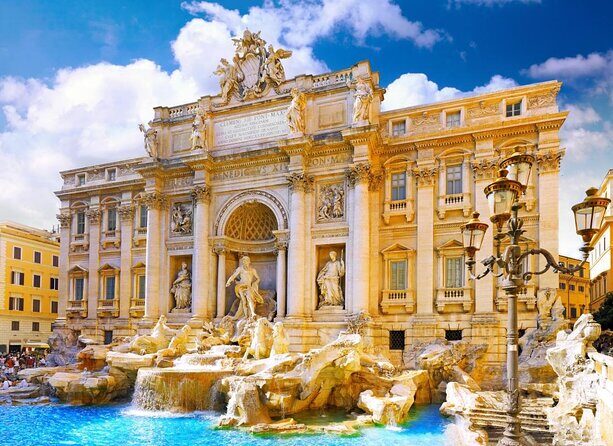
Next comes the walk to Fontana di Trevi, and you’ll pass the ruins of an ancient aqueduct along the way. That’s a great reminder that Rome’s “wow” moments aren’t just about what you see today. The guide’s explanation helps you understand why the fountain is more than a photo backdrop—it’s part of a much longer water-and-city story.
Once you reach the Trevi Fountain itself, you get time to wander and do the classic coin-throwing moment. You also get the chance to take photos without feeling like you’re doing it in a sprint.
A practical tip: plan for a little wait and noise at Trevi. Even with a small group, it’s a high-demand stop—so use the guide’s framing to slow your eyes down.
Piazza Di Pietra and Hadrian’s temple area
At Piazza Di Pietra, you get a brief explanation of the square and the significance of Hadrian’s temple. This is one of those stops that’s easy to speed past on your own, because the area isn’t just one big, obvious landmark.
But with a short guide talk, you start noticing the layers: why this spot mattered and how it fits into Rome’s long timeline. It’s quick, but it changes how you interpret the street-level scenery around you.
You can also read our reviews of more tours and experiences in Rome




Piazza Sant’Ignazio and Santa Maria Sopra Minerva
Two short stops here make a nice change of pace. Piazza Sant’Ignazio gives you the background on the square and the church’s historical and cultural importance, and it helps you place what you’re looking at instead of guessing.
Then you step into Chiesa Di Santa Maria Sopra Minerva, where the famous Bernini elephant comes into play. Even if you don’t know the story in advance, the guide’s explanation turns that odd, memorable detail into something meaningful. You’ll look at the elephant differently once you understand why it’s there.
These brief stops are also a bonus if you’re not trying to do a “marathon museums” day. They keep the walk lively without turning it into nonstop standing.
The Pantheon: where the guide’s context really matters
You’ll reach the Pantheon after the earlier highlights. This is the moment most people recognize instantly, and the guide’s role becomes even more valuable here.
The explanation focuses on historical facts and why the Pantheon influenced later Renaissance masters. That’s exactly the kind of context that makes the building feel bigger than it looks in photos. Instead of seeing a single monument, you see a design that echoed through centuries.
You get about 15 minutes at the Pantheon area, and that’s enough time to orient yourself and take a steady look. Don’t rush your eyes; the details are part of the payoff.
Piazza Navona and the dinner-to-cooking transition
Then you arrive at Piazza Navona, one of Rome’s most beautiful squares. The guide gives historical context so it’s more than an open-air stage for performances and selfies.
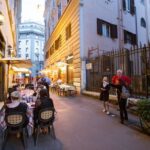
After the walk, the experience continues in a local restaurant where you move from sightseeing mode to pizza mode. That transition is one of the smartest parts of the day. You’re already hungry, already warm from walking, and you’ve just learned enough about the city to make the meal feel tied to the place.
What happens during the pizza-making class
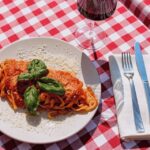
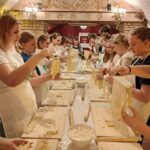
This is the heart of why many people book the tour. You make your own pizza, from dough to toppings. That means your meal isn’t just something you consume—it’s something you build step by step.
The class includes lunch of pizza plus a dessert and a drink. So you’re not squeezing in a separate meal later, and you won’t have to search for something that fits your budget or timing after your walking tour ends.
You’ll also receive recipes so you can make the perfect pizza dough back home. I like that detail because most food tours stop at the bite. This one gives you at least a starting point to recreate what you learned.
Timing and route: how to plan your day around it
Because the tour is about three hours, it’s a strong choice for a short day plan. You can book it early, then spend the rest of your time wandering at your own speed.
It starts at Piazza Barberini and ends close to the Pantheon (Piazza della Rotonda). That ending location is convenient if you want to keep exploring immediately afterward—there’s lots of walking access from there, and it’s one of the best areas to reconnect with other sights.
If your schedule is tight, this timing works because the day’s biggest hits are already grouped together. You’re not hopping across distant neighborhoods.
Price and value: what $137.62 really buys you
At $137.62 per person for roughly three hours, you’re paying for more than a guided walk. You’re paying for a small-group guide plus an included pizza lunch experience with dessert and drink.
In Rome, that “all-in” structure matters. Many tours either give you a snack and call it lunch, or they tack on food later at prices that can feel inflated. Here, your meal is part of the program, and the class adds real hands-on time.
You also get recipe handouts, which can stretch the value beyond the day itself. If you care about food as much as sights—and most people do in Rome—this combo tends to feel like a fair trade.
Who should book this Rome pizza tour
I’d point you toward this tour if you’re:
- Visiting Rome for the first time and want a guided starter route through central icons.
- Short on time and want the Pantheon, Trevi, and Piazza Navona all within one plan.
- Interested in Italian food culture, not just eating somewhere famous.
- The type who enjoys small groups and a guide who can explain as you walk.
It’s also a solid pick for couples and friends who want a shared activity that’s more interactive than a museum visit.
If you’re chasing hours of free time at each stop, or you hate structured moments in general, you might feel the schedule is tight. But if you like compact and efficient sightseeing that ends with a fun meal, this fits well.
Should you book it?
Yes—this is a great call if you want a first-day Rome hit with a food payoff that’s actually participatory. The small group size makes the walking part feel relaxed, and the pizza class turns the whole experience into something you remember beyond photos.
One final way to decide: if you’re choosing between doing sights only or doing sights plus an activity, pick the pizza version. It gives you a practical reason to pause, eat well, and learn something you can try again later.
FAQ
How long is the Heart of Rome walking tour and pizza class?
The experience lasts about 3 hours.
Where does the tour start and end?
It starts at Piazza Barberini and ends close to the Pantheon at Piazza della Rotonda.
What is the group size?
The tour is limited to a maximum of 8 travelers.
What’s included in the pizza class and meal?
You get a pizza-making class, lunch with pizza, plus a dessert and a drink.
Do I get anything to take home?
Yes. You receive recipes to help you make pizza dough back home.
Is there free cancellation?
Yes. You can cancel for a full refund up to 24 hours in advance of the experience start time. If the minimum number of travelers isn’t met, you’ll be offered a different date/experience or a full refund.