REVIEW · HALF-DAY
Trastevere and Rome’s Jewish Ghetto Half-Day Walking Tour
Book on Viator →Operated by Nicom Tours · Bookable on Viator
Rome rewards slow walking.
This tour links Trastevere and Rome’s Jewish Ghetto in one smooth, story-driven route. You start where ancient Rome literally changed history, then move through quieter lanes and big public squares, watching how different eras overlap in the same streets.
I especially like two things: the guide-led focus on what you can actually see (ruins below street level, church and synagogue landmarks, and the way daily life fits into older layers), and the small-group feel with headsets. One real consideration: it is a walk with a moderate pace and uneven old-stone footing, so come wearing comfortable shoes and plan for about three hours on your feet.
In This Review
- Key highlights to watch for
- Why Trastevere plus the Jewish Ghetto works so well at 6 PM
- Largo di Torre Argentina: the meeting point where Roman legend starts
- Piazza Mattei and Fontana delle Tartarughe: stepping into Jewish Rome
- Seeing ancient Rome below your feet
- Crossing toward Isola Tiberina: river views and a synagogue exterior moment
- Trastevere after the ghetto: Santa Maria in Trastevere, if you catch the schedule
- Ponte Sisto to Campo de’ Fiori: finishing where dinner happens
- Guides and pacing: what makes the tour feel special
- Price and value: what you get for about $66.38
- Who this walk fits best (and who should choose differently)
- Practical tips for a smoother evening walk
- Should you book this Trastevere and Jewish Ghetto walking tour?
- FAQ
- What is the duration of the tour?
- What time does the tour start?
- Where do we meet and where does the tour end?
- How much does the tour cost?
- Is the tour in English?
- Is the synagogue interior included?
- Is Santa Maria in Trastevere visited inside?
- Are headsets included?
- What is the maximum group size?
- What is the cancellation policy?
Key highlights to watch for
- Largo di Torre Argentina: begin at the ancient heart of Rome, near the Julius Caesar assassination site
- Piazza Mattei and Fontana delle Tartarughe: learn the marble details and why romance and rumor stick to places
- Jewish Ghetto context: understand the neighborhood through the layers of Roman, medieval, Renaissance, and baroque Rome
- Isola Tiberina views: cross to the river island for classic bridge-and-city panoramas
- Santa Maria in Trastevere interior (if open): one of Rome’s oldest church stories, depending on schedules
- Campo de’ Fiori landing spot: finish where you can instantly keep exploring on your own
Why Trastevere plus the Jewish Ghetto works so well at 6 PM
Trastevere and the Jewish Ghetto are often treated like two separate trips. This tour stitches them together, and that makes the day feel smarter. By late afternoon into early evening, you get a nicer mix of street life without the mid-day crush.
The big win is the way your eyes are guided. Instead of just passing famous sights, you learn how to read the streets. You’ll notice remnants from ancient Rome that sit below today’s ground, and then you’ll spot the later church, synagogue, and architecture that re-framed the area over centuries.
You can also read our reviews of more walking tours in Rome


Largo di Torre Argentina: the meeting point where Roman legend starts
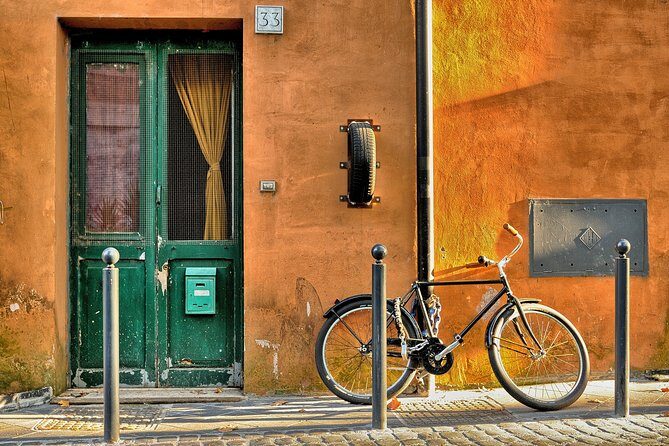
You meet at Largo di Torre Argentina, a key historic square in Rome. It’s also close to the famed assassination site of Julius Caesar, which gives the whole walk an immediate hook. Before you even move far, your guide sets the stage: how this area became a turning point, and how archaeology helps us picture what was here long before you arrived.
From there, the tour builds a rhythm. You pause often, and you’re not just looking at one landmark at a time. You’re learning why the landmarks matter and how the neighborhood’s history shaped what came next. It’s a great approach if you like context, but you still want to keep walking.
Piazza Mattei and Fontana delle Tartarughe: stepping into Jewish Rome
Your route heads into the ghetto area via Piazza Mattei, and then you stop by the famous Fontana delle Tartarughe. This fountain is worth slowing down for even if you already know it by name. The details matter: you’ll learn about its three types of colored marble and the kind of romantic lore that tends to gather around fountains in Rome.
More importantly, this is where the tour’s tone settles into neighborhood history. The Jewish Ghetto is not just a museum setting. It’s a residential area that has lived through big changes, and your guide helps you connect the people who lived here with the Roman city around them.
If you like walking tours that make you feel like you understand a place instead of just ticking off stops, this section is a strong start.
Seeing ancient Rome below your feet
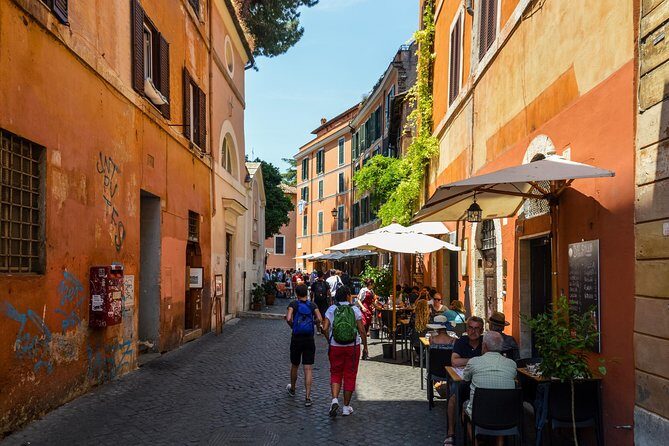
One of the most useful parts of this walk is how it trains your attention on layers. Rome loves to show you one era at a time, but this tour keeps reminding you that older remains are often waiting under the modern streets.
You’ll hear how remnants from ancient Rome can sit below today’s street level, and you’ll also get pointers on later architectural styles across medieval, Renaissance, and baroque periods. The payoff is that you stop treating Rome like a list of separate attractions. You start seeing one city with many versions stacked on top of each other.
It’s also a smart way to avoid a common walking-tour problem: getting the story, but not getting the visuals. Here, the guide keeps tying information to what you’re standing near.
Crossing toward Isola Tiberina: river views and a synagogue exterior moment
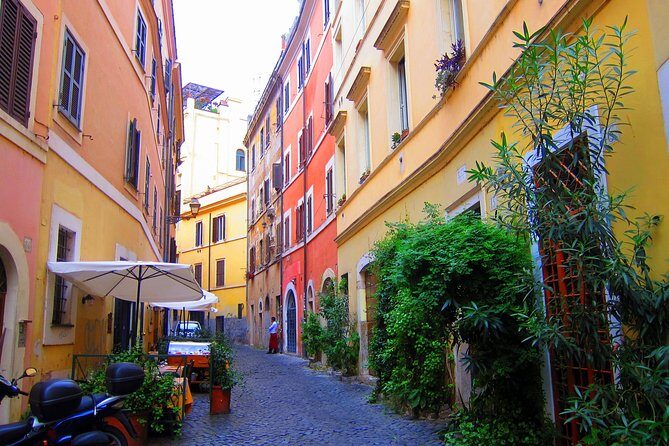
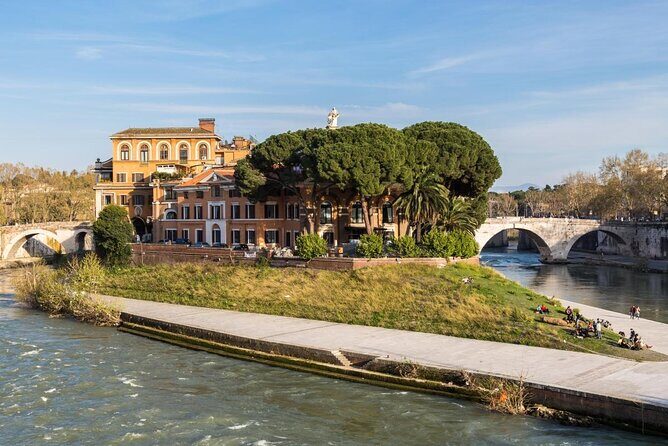
The tour takes you past the synagogue area and then over to Isola Tiberina (Tiber Island). This is a quick walk and a rewarding one, because the river gives you a change of pace and better views.
Crossing the river on foot is one of my favorite ways to get orientation in Rome. You can look outward, not only at façades. From the bridge and river island area, you’ll see Rome’s bridges and get a wider sense of how all these neighborhoods connect.
The other key point: you’ll see the Synagogue of Rome from the outside. The structure dates to the early 1900s, and while the interior visit is not included, the exterior stop still makes the ghetto story feel grounded. You’re not just talking about history; you’re seeing a real civic landmark that still belongs to the neighborhood.
You can also read our reviews of more tours and experiences in Rome





Trastevere after the ghetto: Santa Maria in Trastevere, if you catch the schedule
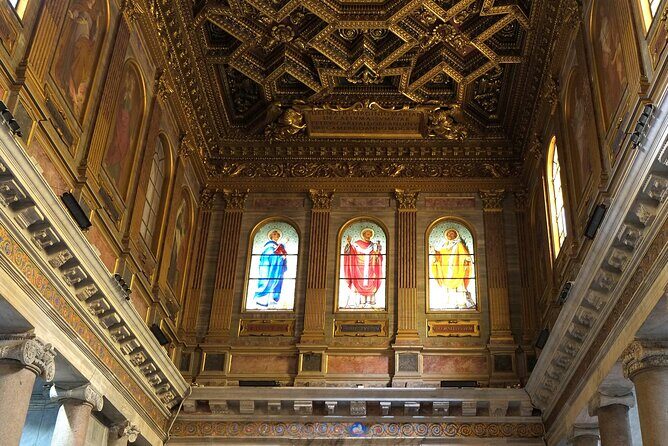
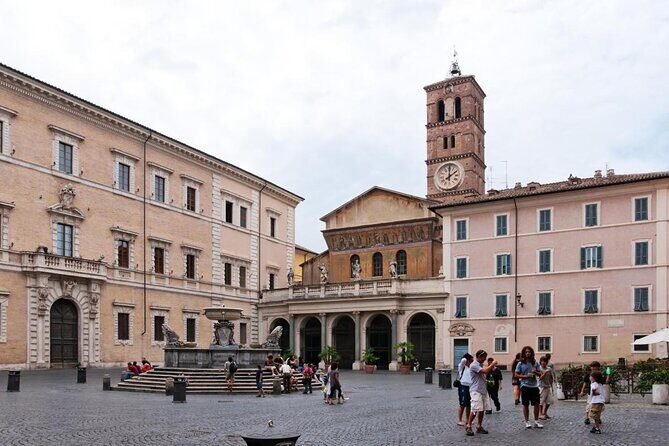
Once you arrive in Trastevere, the tour shifts into a more local-feeling section of Rome. This is the bohemian quarter people often associate with artists, authors, and evening energy. Even if you don’t come here for nightlife, the neighborhood has personality—side streets, church fronts, and that sense of Rome living its own life while tourists orbit the big squares.
A key highlight is the visit to Basilica of Santa Maria in Trastevere. The interior visit depends on the church’s schedule, so this isn’t a guaranteed indoor moment in every case. Still, this stop is a big deal because the church history goes back to the 340s AD, which makes it one of Rome’s older sacred sites.
Even when you can’t get inside, you’ll come away with a much better grasp of why Trastevere earned its reputation. A lot of tourists see Trastevere from the edges. This helps you understand what’s driving the neighborhood.
Ponte Sisto to Campo de’ Fiori: finishing where dinner happens

After more wandering and people-watching, you cross back over the Tiber via Ponte Sisto. The route also passes Piazza Farnese Palace, though the palazzo interior is not included.
Then you end at Campo de’ Fiori, one of Rome’s busiest squares. This ending point is practical. You’re dropped into a central place where you can pivot immediately—grab a meal, continue walking, or browse whatever’s happening in the square.
One small planning tip: if you want dinner, think of Campo de’ Fiori as your landing zone. You’ll already have the neighborhood context from the walk, so choosing where to eat will feel easier and more confident.
Guides and pacing: what makes the tour feel special
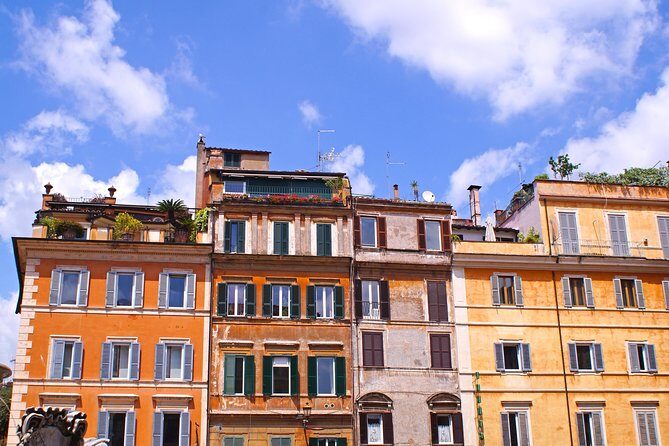
The quality of this experience is closely tied to your guide. In the groups I looked at, guides like Irene, Jeannette, Claudio, Paolo, and James show up again and again in terms of delivery style: fun, smart storytelling, and a relaxed pace that still covers a lot.
I like that the tour is set up for listening comfort too. Headsets are included, which matters on busy streets where voices can get swallowed. With a max group size of 15, it’s usually easier to ask questions without the usual crowd chaos.
If your goal is to leave Rome with a better mental map and a clearer sense of how Jewish and Trastevere neighborhoods evolved side by side, this guide format is a good match. The best tours here don’t just show you where to stand; they help you understand what you’re seeing.
Price and value: what you get for about $66.38
At $66.38 per person for about 3 hours, the value comes from three places:
First, you’re paying for guided interpretation, not just motion through a route. The walk connects ancient and modern Rome, plus the Jewish Ghetto context, plus Trastevere’s local feel. That kind of “why this place looks like this” storytelling costs time and expertise.
Second, the included headsets reduce the frustration factor. If you’ve ever struggled to hear on a crowded Rome sidewalk, you’ll appreciate this.
Third, you’re getting a mix of exterior and (sometimes) interior access. The synagogue visit here is exterior only, but Santa Maria in Trastevere’s interior is included if the church schedule allows it. That chance to see inside one of Rome’s oldest churches can be worth a lot, even if it doesn’t always happen.
So yes, it’s not a budget tour. But for three hours, with a pro guide and equipment, it sits in a sensible mid-range price bracket—especially if you’ll actually use the context to explore afterward.
Who this walk fits best (and who should choose differently)
This tour is best for you if:
- you want history that is tied to streets, not just plaques
- you like smaller groups and conversation-friendly guiding
- you’re planning to spend time in Trastevere and want a foundation before you eat and wander
It may feel less perfect if:
- you want a strictly museum-style schedule with multiple indoor stops that never change
- you need a lot of guaranteed accessibility accommodations, since you’ll be walking for about three hours on uneven surfaces
- you dislike being out at dusk, since it starts at 6:00 pm and runs into early evening
Also, note the tour is English. That’s usually helpful, but if you want maximum Italian immersion, you might prefer something different.
Practical tips for a smoother evening walk
A few things will make your experience better on the ground:
- Bring comfortable shoes. Old streets can be rough, and you’ll walk for hours.
- Plan on moderate physical fitness. This is not a quick drive-between-spots tour.
- Expect a busy meeting zone at Largo di Torre Argentina. Give yourself a few minutes to find the group.
- If you’re traveling light, remember there is no luggage storage.
- Use public transport to reach the area. The meeting spot is listed as near public transportation.
One more small mindset tip: this is a listening tour. If you pause to look at every doorway and ignore the guide, you’ll miss the point. If you listen while walking, the area becomes much easier to remember.
Should you book this Trastevere and Jewish Ghetto walking tour?
I’d book it if you want a guided way to connect two sides of Rome that often get separated in planning: Trastevere’s street life and the Jewish Ghetto’s layered story. The pairing makes sense, the route gives you both quieter corners and major squares, and the included headsets keep the experience comfortable.
If your top priority is guaranteed indoor visits, or you prefer a purely self-guided approach, you may want to compare options. But if you like smart, human storytelling and want a solid evening foundation for exploring afterward, this is a strong choice.
FAQ
What is the duration of the tour?
The tour lasts about 3 hours.
What time does the tour start?
The start time is 6:00 pm.
Where do we meet and where does the tour end?
You meet at Largo di Torre Argentina, 00186 Roma RM, Italy and the tour ends at Campo de’ Fiori, 00186 Roma RM, Italy.
How much does the tour cost?
The price is $66.38 per person.
Is the tour in English?
Yes, the tour is offered in English.
Is the synagogue interior included?
No. The tour includes an exterior visit of the synagogue.
Is Santa Maria in Trastevere visited inside?
Yes, an interior visit is included, but it depends on the church schedule.
Are headsets included?
Yes. Headsets are included.
What is the maximum group size?
The tour has a maximum of 15 travelers.
What is the cancellation policy?
Free cancellation is available up to 24 hours in advance for a full refund. If you cancel less than 24 hours before the experience starts, the amount paid will not be refunded.