REVIEW · PRIVATE
Rome: Trastevere Jewish Quarter Private Walking Tour
Book on GetYourGuide →Operated by LivTours - We craft tours, you live them · Bookable on GetYourGuide
Few neighborhoods tell stories like this.
This private 2-hour walk threads together Trastevere’s narrow cobblestones, the Golden mosaics at Santa Maria in Trastevere, and the calmer sweep of the Tiber. You’re not just ticking off stops; you’re learning how Jewish life shaped (and was shaped by) the city across centuries.
I especially like how the route balances big landmarks with smaller, street-level details—like the maze-like lanes that make you slow down and look. I also appreciate the focus on specific “where and why” moments, including the cross to Isola Tiberina and the exterior views that set up the later Ghetto stops. It’s a great way to get oriented without feeling rushed.
One possible drawback: the Great Synagogue of Rome is viewed from the outside, and if you want to go inside you’ll likely need a separate plan. Also, at this price point, you’ll want to be sure you’re happy with a shorter, story-focused route rather than a long, super-deep historical walkthrough.
In This Review
- Key highlights to know before you go
- Trastevere Starts the Story in Piazza Trilussa
- Ponte Sisto to Santa Maria in Trastevere: Architecture You Can See
- Tiber Island (Isola Tiberina): A Short Walk With Big-Time Context
- Teatro Marcello Detour: Ancient Walls Without the Long Detour
- Jewish Ghetto, Rome: Small Squares, Tight Streets, Heavy Meaning
- Great Synagogue of Rome: Outside Views and an Important Planning Note
- Portico d’Ottavia: The Remains That Connect Streets to Temples
- Coffee or Gelato on Us: A Small Treat With Real Value
- Price and Value: What You’re Paying For in $169.93
- Guide Style and What It Means for Your Experience
- Who This Tour Is Best For
- Should You Book This Trastevere and Jewish Quarter Private Tour?
- FAQ
- How long is the Rome: Trastevere Jewish Quarter Private Walking Tour?
- Where does the tour start?
- Is the Great Synagogue of Rome visited inside?
- What language is the tour offered in?
- What dress code is required?
- Is coffee or gelato included?
- Is the tour wheelchair accessible?
- Is there free cancellation?
Key highlights to know before you go
- Private 2-hour pacing that keeps you moving through Trastevere and the Ghetto without tour-bus energy
- Santa Maria in Trastevere and its famous golden mosaics as a visual anchor early on
- Isola Tiberina and stories about Rome’s origins while you cross the Tiber
- Teatro Marcello area for a quick detour that shows what’s left of ancient Rome
- Portico d’Ottavia remains—including a sense of what those temple walls once meant in daily life
- Coffee or gelato included, a nice reset before you finish
Trastevere Starts the Story in Piazza Trilussa

Your walk begins at Piazza Trilussa, in front of the stairs. This is a smart start point because it immediately puts you in the rhythm of modern Rome. You’re not starting on a lonely monument hill. You’re starting where locals still gather.
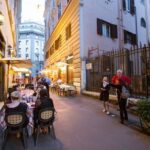
From there, the tone stays practical: you’re guided through streets that are easy to wander off in on your own, but you get the benefit of someone pointing out what matters. Trastevere is the kind of area where the city’s layers show up at street level—signs, church facades, narrow passages—and the guide helps you connect those layers to Jewish-Roman life.
If you like tours that feel like a walk with context—rather than a lecture—this format works well for you. The route is designed for comfort too: 2 hours means you see more than you would on a self-guided stroll, but you don’t drain your whole day.
You can also read our reviews of more walking tours in Rome


Ponte Sisto to Santa Maria in Trastevere: Architecture You Can See
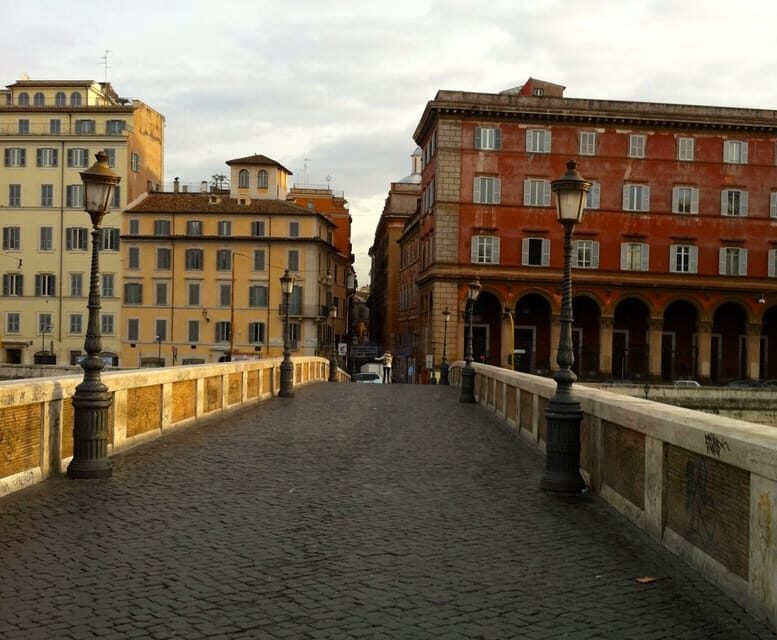
Next up is Ponte Sisto, which functions like a quick “chapter change” across the river. You get the classic Rome motion—walking across a bridge—then you settle into the church stop that brings a lot of visual impact early.
Then comes Santa Maria in Trastevere. The big reason to put this on your list is the church’s golden mosaics, which are the sort of detail that makes you look up even if you’ve seen plenty of Roman churches before. Your guide’s job here is to connect the church setting to the broader neighborhood story—what the area looked like, how religious life coexisted with the city’s changing politics, and why Trastevere mattered.
A practical tip: even if you know the church is important, give yourself time to actually look. Mosaics reward that. If you’re the type who rushes, this is the stop where you’ll want to slow down.
Tiber Island (Isola Tiberina): A Short Walk With Big-Time Context
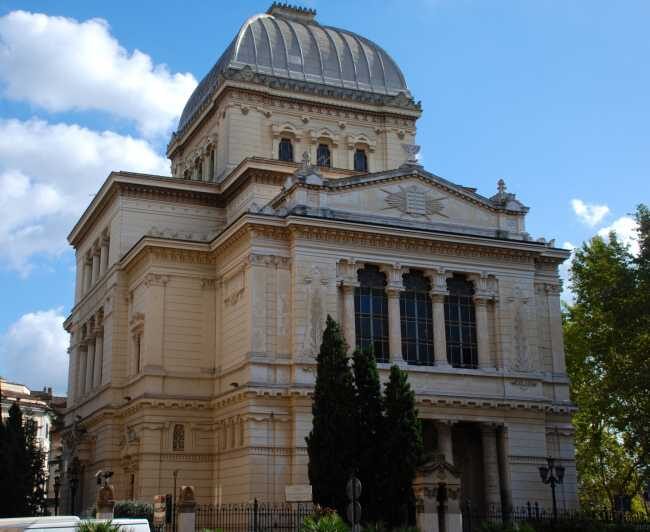
After Trastevere, you cross to Isola Tiberina, the Tiber Island. This is where the tour’s geography becomes more than pretty scenery. The island is a small stage, but your guide will use it to explain secrets of Rome’s early origins—how this part of the river shaped movement, settlement, and the kind of stories that grew around the city.
It’s also a nice pacing break. Trastevere’s lanes can feel like a maze. The river area gives you airflow and space to reset your eyes before you enter the more enclosed feeling of the Ghetto streets later.
If you’re visiting Rome in busy conditions (and you probably are), this stop helps you “recalibrate” your visit. You’ll leave it seeing the river as a route and a landmark, not just a photo spot.
Teatro Marcello Detour: Ancient Walls Without the Long Detour
Right after the island, the tour includes a short visit around the Teatro Marcello. This detour works because it gives you a direct taste of ancient Rome without turning the day into a full excavation tour.
Here’s what to expect: you’ll see what remains of the walls and get a guided sense of how Roman spaces were used—and how those old structures became part of later city life. For many people, Teatro Marcello is one of those “I know this looks old, but now I get why it’s important” moments.
It’s also an efficient choice. In a 2-hour private route, you need stops that pay off visually and contextually. This one does.
Jewish Ghetto, Rome: Small Squares, Tight Streets, Heavy Meaning
Once you reach the Jewish Ghetto, the tour shifts from landmarks to atmosphere. The streets become more modest, the squares smaller, the alleyways tighter. That physical feel matters because it helps you understand the difference between a neighborhood you stroll through and a community that lived under restrictions.
Your guide will walk you through the area’s layout and explain how it functioned as a walled community under unjust conditions and severe poverty. The goal isn’t to sensationalize it; it’s to show how urban space was used to control people—and how Jewish culture persisted anyway.
This is also where your tour’s focus becomes very clear: it’s built to help you see the Ghetto not only as an old map mark, but as a lived space. If you’re hoping for every detail of every century, you might feel the time limit. If you want a guided orientation plus enough story to keep your own reading grounded, this works nicely.
You can also read our reviews of more private tours in Rome






Great Synagogue of Rome: Outside Views and an Important Planning Note
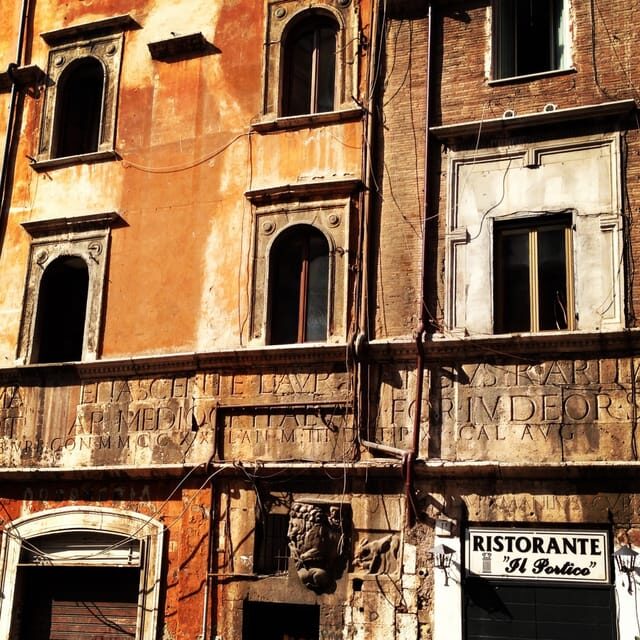
At the heart of the Ghetto, you’ll see the Great Synagogue of Rome. Important detail: the tour visits it from the outside only. It is easily accessible if you want to go inside after your tour, but that’s not part of this specific walking experience.
This is the one place where you should match your expectations to the format. If you strongly want interior views—especially for architecture and interior artifacts—plan a separate stop before or after your walk.
A note to keep your day smooth: you’ll want to pack for dress code too, since this tour includes places of worship. Shoulders and knees covered is required, so avoid tank tops and short dresses. It’s one of those rules that keeps the day stress-free if you follow it from the start.
Portico d’Ottavia: The Remains That Connect Streets to Temples
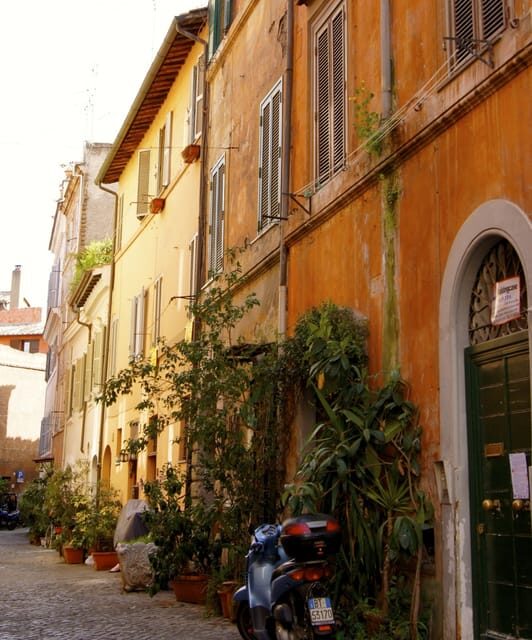
Near the end, you’ll reach Portico d’Ottavia (also referred to as Portico d’Ottavia/Porta Otavia in the tour naming). This is one of the more quietly powerful stops because you’re looking at the remains of structures that once held major meaning.
Your guide will show the remains of the temples of the Portico d’Ottavia. Even if you’re not an archaeology person, you’ll likely appreciate the way your eyes can track the “shape” of what used to be there. This is the kind of stop that turns a street corner into a timeline.
You also end nearby—finishing at Via del Portico d’Ottavia, 00186 Roma RM—so the tour closes in a way that feels coherent. You don’t get dropped randomly far away; you’re placed right where the neighborhood’s story remains visible.
Coffee or Gelato on Us: A Small Treat With Real Value
Before you finish, you’re offered a coffee or gelato as a “reset.” It’s not a throwaway perk. After walking cobblestones, across river transitions, through tight lanes, and then back into open sight lines, a pause helps you actually absorb what you’ve just learned.
Also, it’s a nice signal that this company wants the experience to feel human and relaxed. It makes the tour feel less like a checklist and more like a guided walk you can breathe inside of.
Price and Value: What You’re Paying For in $169.93
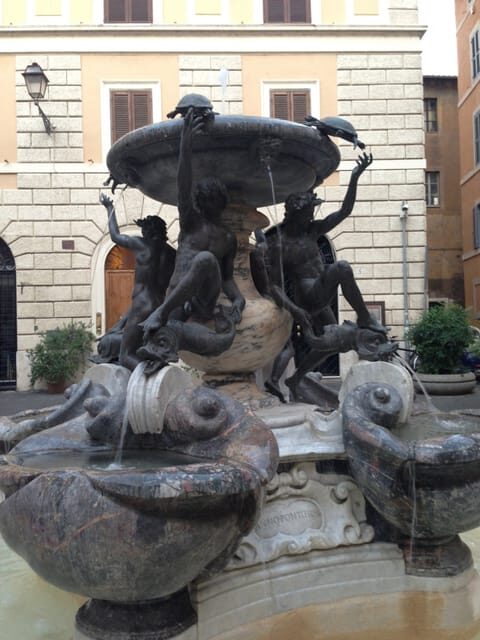
At $169.93 per person for a 2-hour private tour, the value depends on what you want from the time.
You’re paying for:
- a private, guided route that connects multiple neighborhoods you’d otherwise struggle to connect on your own
- admission-free touring at several key sights and viewpoints
- guided storytelling that links Trastevere’s Jewish-centered chapters to modern Rome
- a included coffee or gelato
You’re not paying for:
- a long, multi-hour deep dive
- a guaranteed interior visit of the Great Synagogue of Rome
- a huge number of additional museum stops
So here’s the practical way to decide: if you’re the kind of traveler who wants strong orientation plus memorable “anchors” (Santa Maria mosaics, Ghetto layout, synagogal exterior views, Portico remains), you’re likely to feel it’s worth it. If you need lots of indoor time and maximum historical detail for every period, you may feel the 2 hours is tight.
Guide Style and What It Means for Your Experience
This tour includes a live guide in multiple languages (English, Italian, Spanish, French, Portuguese). It’s also described as private, which matters: you can ask questions as you walk, and the guide can keep the pace aligned with your group.
One small real-world detail you should know: the guide may not be of Jewish heritage, though they’ll still bring informed perspective on Jewish culture and the neighborhood’s story. That’s not a deal-breaker—Rome is full of excellent guides who approach history thoughtfully. Still, if you have a strong personal preference for guides with specific lived experience, it’s worth considering.
In one instance, the guide Jade was noted as smiling and attentive. That kind of energy usually translates into a tour that feels steady, not rushed.
Who This Tour Is Best For
This experience is a strong fit if you:
- want a private walk through Trastevere plus the Jewish Ghetto in a short time
- like historical context that’s tied to streets and architecture
- want a mix of major sights and neighborhood texture (not just big monuments)
- prefer guided pace over self-guided wandering
It may be less ideal if you:
- are specifically seeking a detailed, century-by-century Jewish history lecture
- need interior access to the Great Synagogue included in your tour time
- are trying to stretch maximum value out of a very short itinerary with lots of indoor stops
Should You Book This Trastevere and Jewish Quarter Private Tour?
I’d book it if you want a focused, well-timed walking route that connects Trastevere’s look and feel to the Jewish Quarter’s meaning—then ends with a simple treat and a clean place to continue your day. The strongest part is how the tour turns geography into understanding: bridge to basilica, river to island, ancient remains to Ghetto streets, synagogal exterior to Portico ruins.
I’d hesitate if your top priority is getting inside the Great Synagogue as part of the tour, or if you know you want a longer, deeper historical route with more visible Jewish presence across many eras. In that case, you might want to pair this walk with an additional plan for synagogue interior time.
FAQ
How long is the Rome: Trastevere Jewish Quarter Private Walking Tour?
It’s a 2-hour private walking tour. Starting times depend on availability.
Where does the tour start?
You’ll meet at Piazza Trilussa, in front of the stairs.
Is the Great Synagogue of Rome visited inside?
The tour shows the Great Synagogue of Rome from the outside. If you want to enter, it’s described as easily accessible if you arrange it after the tour.
What language is the tour offered in?
The guide is available in English, Italian, Spanish, French, and Portuguese. You can specify your language in additional notes.
What dress code is required?
For places of worship, you must have shoulders and knees covered. That means no tank tops or short dresses.
Is coffee or gelato included?
Yes. The tour includes a coffee or gelato for you to savor before the end.
Is the tour wheelchair accessible?
Yes, the tour is listed as wheelchair accessible.
Is there free cancellation?
Yes. You can cancel up to 24 hours in advance for a full refund.