REVIEW · MUSEUMS
Wheelchair Accessible Vatican Museums & Sistine Chapel PrivateTour
Book on Viator →Operated by Nicom Tours · Bookable on Viator
This tour solves the biggest Vatican headache fast. You get a step-free route with a guide who keeps you moving toward the real “wow” moments, including the skip-the-line Sistine Chapel entrance. I’m seeing how much this matters in real life from guides like Antonio and Ian, who were praised for being attentive and accommodating with wheelchair comfort.
The two parts I especially like are the built-in audio (you get a headset so you actually catch the explanation) and the pacing that works better than trying to chart the museums on your own. One thing to consider: the Vatican has strict rules and some physical logistics still exist, so you’ll want to plan for security time and the required dress code.
In This Review
- Key Highlights You’ll Feel Immediately
- Why This Wheelchair Tour Works Better Than DIY
- Meeting Point, Security, and the Dress Code Reality Check
- Vatican Museums: How You’ll Spend Your Best 3 Hours
- Pinacoteca Gallery: Famous Paintings, Explained in a Way You Can Catch
- Chiaramonti Museum: The Statue Hall That Keeps Pulling You Forward
- Sistine Chapel: What to Look For and How to Time Your Own Gaze
- Price and Value: Is €Worth $2,845.99 Per Person?
- Practical Stuff to Know Before You Go (So You Don’t Lose Time)
- Should You Book This Wheelchair Accessible Vatican & Sistine Chapel Tour?
- FAQ
- Is the Vatican route step-free for wheelchair access?
- Do I get skip-the-line access?
- How long is the tour?
- What’s included in the tour price?
- Is St Peter’s Basilica included?
- Do I need to show a disability identification card?
- What dress code do I need for the Vatican Museums?
- How many people are in the group?
- Can I cancel and get a full refund?
Key Highlights You’ll Feel Immediately
- An entirely step-free route designed to protect your time and energy
- Skip-the-line entry to Vatican Museums and the Sistine Chapel
- Headsets included, so commentary stays clear even in loud crowds
- Pinacoteca + Chiaramonti + Sistine Chapel in one tight 3-hour visit
- Small max group size (up to 10), which helps the guide adjust to your pace
- Real guide support for accessibility, praised by people traveling with wheelchairs and walkers
Why This Wheelchair Tour Works Better Than DIY
The Vatican can feel like two different trips at once. There’s the art you came for, and then there’s the stress of moving through crowds, stairs, and vague directions. This tour is designed to reduce that second trip by using a specially planned step-free path, so you’re not constantly negotiating curbs, gaps, and bottlenecks.
What makes it especially practical is that it’s not just “wheelchair accessible” in theory. You get guided routing through major stops that many first-timers struggle to string together. You also get a headset, which changes everything for understanding. In the Vatican, the room can be loud, and you can lose key details if you’re relying on hearing your guide from a distance. With the headset, you can sit back, roll forward, and still follow the story.
You’ll also benefit from a small-group vibe. The tour is capped at 10 travelers, and while it’s described as a private tour experience, that small size is what makes it easier for the guide to help you adjust. People have specifically called out guides like Monica, Sarah, and Linda for navigating smoothly through heavy crowds while keeping the group moving.
The one drawback to keep in mind is that the Vatican still has rules and security. Even with skip-the-line, you will pass through metal detectors, and you need the correct clothing. Plan for that, and this tour feels like a big relief.
You can also read our reviews of more museum experiences in Rome



Meeting Point, Security, and the Dress Code Reality Check

Your tour begins at Via Germanico, 8, 00192 Roma RM. That location matters because it’s close to local transit options, which helps if you’re arriving by bus or taxi and don’t want to fight Rome traffic logistics.
Before you reach the art, you’ll face a very real Vatican moment: security screening. The information you should take seriously is that you can expect to wait 20–30 minutes to clear security at the metal detectors. That’s not about this tour being slow; it’s about the Vatican’s security process. The good news is that the guide’s job is to keep you from losing the rest of the time once you’re through.
Then there’s the dress code. Knees and shoulders must be covered for everyone, and it’s enforced strictly. You don’t want to show up in shorts or a strapless top and discover the worst possible surprise. If you’re traveling with a wheelchair, you’ll often dress for comfort, so double-check your outfit the day before.
Finally, bring your required paperwork. You must present a valid disability identification card on the day of your tour. If your disability level is less than 74% (or you do not have walking disabilities as defined by the tour rules), you may need to pay an entrance fee (about €23 for adults or €16 for children) in cash at the start of the tour. This is worth confirming before you go, because it can change the true cost of your day.
Vatican Museums: How You’ll Spend Your Best 3 Hours
This tour is built around a simple idea: don’t waste your limited time. You move through the Vatican Museums with fast access and a guide’s commentary from the moment you enter.
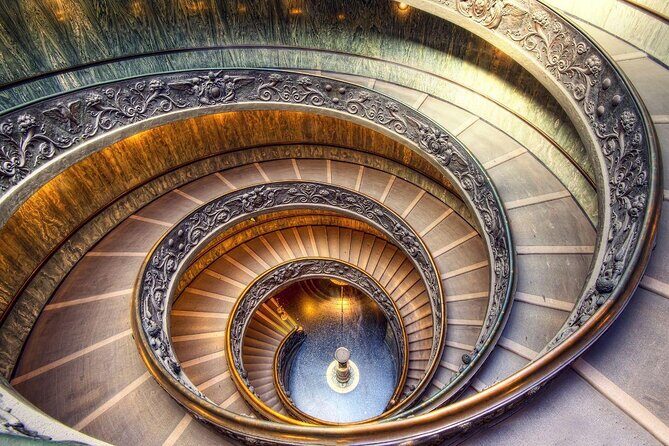
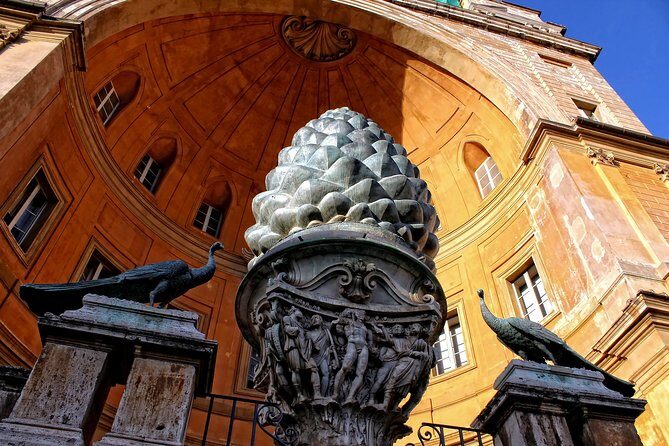
A typical highlight flow includes rooms that first-timers love, like the Gallery of Maps and the Gallery of Tapestries, plus major Renaissance art. You’ll also see other renowned works tied to the museum collection, with the guide helping you connect what you’re seeing to why it exists.
Here’s what I’d pay attention to as you roll through these rooms: the guide isn’t just pointing at objects. The commentary is meant to give you a “mental label” for each area—who commissioned it, what it represents, and why it matters historically. That’s especially helpful in the Vatican because the scale can be overwhelming. Without context, a museum day can turn into a blur of rooms and crowd density.
Also, the tour includes time built for a wheelchair-friendly pace. Because the route is designed to stay step-free, you’re less likely to hit those stop-and-start pauses that happen when stairs or elevator changes slow everyone down. In real-world terms, that reduces fatigue and lets you actually enjoy the art instead of bracing for the next obstacle.
One practical bonus: you get bathroom access and a recharging station for devices. That sounds small until you’re a couple of rooms in and you realize your phone battery is dying while you’re trying to take notes and remember what you just saw.
Pinacoteca Gallery: Famous Paintings, Explained in a Way You Can Catch
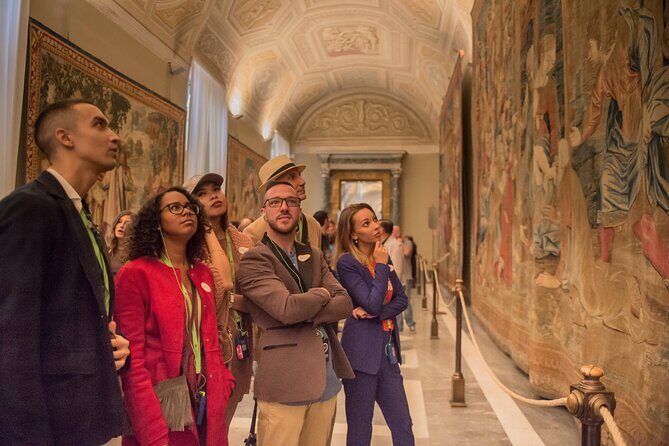
Your first major art stop inside is the Pinacoteca Gallery. This is a smart choice for a short tour because it focuses on paintings and storytelling rather than only on sculpture gardens of faces and marble bodies.
You’ll see standout works named right in your visit, including Raphael’s Transfiguration, Caravaggio’s Deposition from the Cross, and Leonardo da Vinci’s unfinished St Jermone. Those are heavy hitters. But the tour is more useful when you’re not just seeing names on a wall—when someone connects the pieces to their setting and purpose.
You’ll also get background on why the Pinacoteca exists. It was created for Pope Pius XI, and the guide’s explanations aim to translate that into something you can visualize: what the Pope wanted to preserve, how the gallery fits into the Vatican Museums’ role, and why these particular works are remembered.
A headset is the key here. Pinacoteca rooms can be crowded, and art commentary can get swallowed by noise. With the headset, I’d treat it like a walking lecture that still lets you look at the art without straining to hear every word.
One more thing I like: this part of the tour sets you up to understand the Sistine Chapel better later. When you’ve just been absorbing art through a guide’s lens, walking into Michelangelo’s fresco space is less like a random climax and more like the payoff you earned.
Chiaramonti Museum: The Statue Hall That Keeps Pulling You Forward
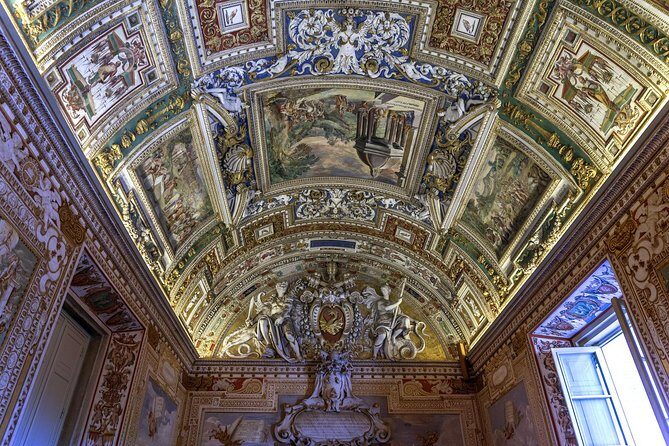
Next comes the Chiaramonti Museum, known for its long, arched gallery of sculptures. The visit is described in terms of scale: you’re looking at around 1,000 statues and sculptures, featuring cherubs, gods, and emperors.
This is the stop where art lovers often do a surprising thing: they slow down. Even if you’re moving as a wheelchair user at a comfortable pace, the rhythm of the gallery encourages you to take in recurring motifs—faces, bodies, expressions, and symbols. You might not memorize every figure, but you’ll start noticing patterns in how the museum displays Roman themes.
You’ll also hear why this gallery is special. It was founded in the early 1801800s by Pope Pius VII. That historical anchor helps you see the Chiaramonti Museum as more than decoration. It’s part of how the Vatican shaped its public collections over time.
What’s practical for you: the guide will highlight specific pieces along the way. This matters because, with so many statues, it’s easy to get lost in counting. If you only have a short window, listening for what the guide points out is the fastest path to a satisfying experience.
And because the route is planned to be step-free, you’re less likely to face those awkward pauses that can happen in museums where the “accessible route” is technically accessible but not comfortable to travel in. You’re still in crowds, but the tour design helps remove some of the friction.




Sistine Chapel: What to Look For and How to Time Your Own Gaze
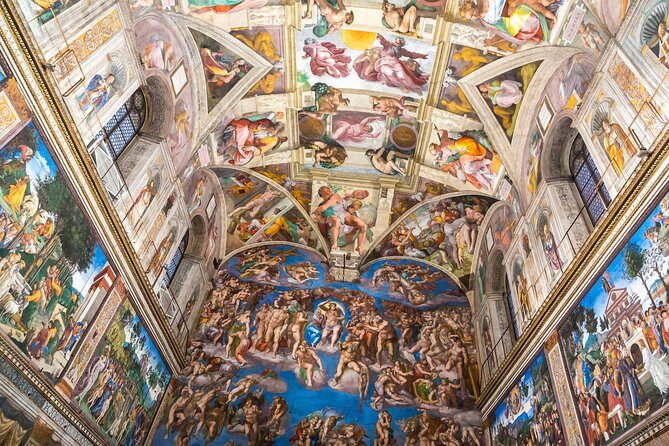
The Sistine Chapel is where the tour earns its reputation. You’ll spend about 30 minutes inside after your guide gives you context before you enter.
The guide will provide a quick primer on what matters inside. That’s important because once you walk in, the room asks for a specific kind of attention: you’ll be looking up at the ceiling and scanning scenes that reward patience.
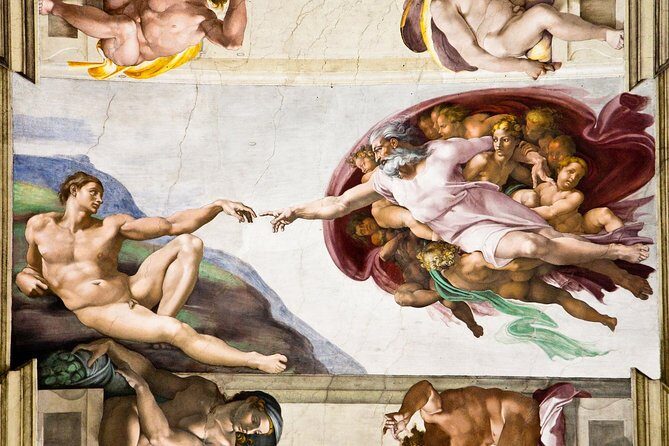
You’ll see Michelangelo’s world-famous frescoes, including The Creation of Adam and The Last Judgement. You’ll also hear about the Chapel’s religious and cultural significance, including the fact that it’s the place where cardinals gather when it’s time to elect new popes.
One crucial rule: talking isn’t permitted in the Chapel. That’s not a problem if you’re listening through the headset outside the Chapel or right before entering. It also means you can get a more reflective experience without needing to compete with other people’s voices.
Crowds can be intense, so I’d treat this stop as a two-step process:
1) Let the guide set the scenes before you go in.
2) Use your time inside to focus on the big narratives the guide just named—ceiling and key wall scenes—rather than trying to see everything at once.
People have praised guides like Ian and Davide for making sure wheelchair users could still see what mattered, including pushing wheelchairs when needed and keeping the pace realistic. That kind of support can be the difference between feeling stuck and feeling like you got the full experience.
Price and Value: Is €Worth $2,845.99 Per Person?
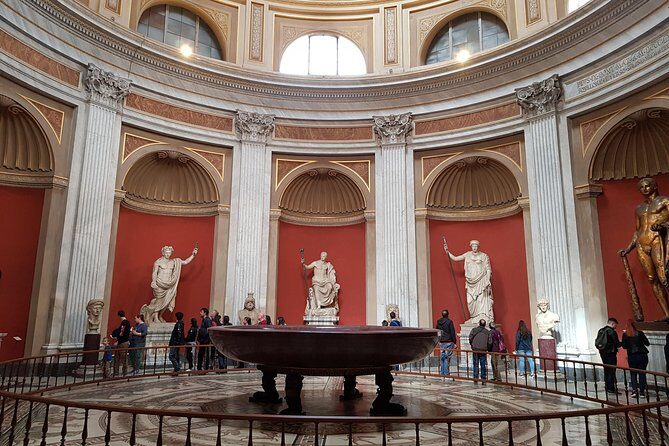
At $2,845.99 per person, this is not a casual add-on. You should view it as a premium day with several value drivers stacked together.
Here’s what you’re paying for, based on the included pieces:
- A professional guide for the full museum route
- Headsets, so the commentary stays clear
- Skip-the-line entrance tickets for the Vatican Museums and the Sistine Chapel
- Museum admission included for the main stops you’re visiting
- A wheelchair-focused step-free routing designed to help you avoid time-wasting detours
You’re also traveling in a small group (max 10), and the tour is positioned as private-style in feel, which can matter a lot when you’re managing mobility needs. When you add up those elements, the price starts to make sense as a “buy back your time and stress” purchase.
That said, you’ll want to be honest about your own priorities. If you want to do everything at the Vatican including extra areas and you’re comfortable managing crowds with minimal guidance, you might prefer a cheaper option. But if your goal is to hit the real showstoppers on a planned, accessible route without losing your whole afternoon to lines and navigation, this tour is built for that job.
Practical Stuff to Know Before You Go (So You Don’t Lose Time)
A few details can make or break a smooth day, especially with accessibility needs:
No luggage storage. If you have bags, you’ll need to plan for what you’ll carry through security and between stops. Keep essentials accessible.
You pass metal detectors. Even with skip-the-line, expect security screening. Build in time and don’t plan a late lunch with a tight schedule right afterward.
Dress code is enforced. Cover knees and shoulders. This is strictly enforced, and entry can be refused if you don’t comply.
St Peter’s Basilica isn’t included. Your tour ends at the Sistine Chapel. You can visit St Peter’s Basilica independently after the tour, and you can ask your guide for direction, but the tour itself doesn’t include it.
Tour ends at the Sistine Chapel. That’s good news if you want a focused day. It also means you should plan your next step in advance, especially if you’re traveling back to your hotel or meeting someone who isn’t joining the Vatican route.
One extra tip from what people experienced in the field: even with a wheelchair tour, there can still be some real-world distance issues related to rentals or getting positioned. One traveler specifically said the Chapel involves a distance to wheelchair rental and that bringing a pusher can help. If you rely on another person to help with ramps or tighter moments, I’d plan that support rather than assuming everything will be perfectly effortless.
Should You Book This Wheelchair Accessible Vatican & Sistine Chapel Tour?
If you want the Vatican Museums and Sistine Chapel, but you need a day that’s planned for wheelchair travel, I’d strongly consider booking. This is one of the better styles of touring because it’s designed around what usually goes wrong: lines, wrong turns, stair detours, and noise that blocks the story. The headset and the step-free route turn a chaotic place into something you can actually understand in a short window.
I’d especially recommend it if:
- Your mobility needs make long self-navigation exhausting
- You want to focus on the top highlights instead of trying to see everything
- You value a guide who stays adaptive to comfort (people have praised guides like Antonio, Monica, and Sarah for that kind of care)
I’d think twice if:
- You’re hoping to see lots of extra Vatican areas beyond the main highlights in this short time
- You don’t meet the disability identification requirements and would be surprised by the possible additional entrance fee
- Your schedule is extremely tight, since security still creates a real waiting window
Overall, if you’re going to the Vatican for Michelangelo and the museum art, this tour gives you a structured, accessibility-friendly path that keeps the day enjoyable instead of stressful.
FAQ
Is the Vatican route step-free for wheelchair access?
The tour is designed to follow an entirely step-free route. While parts of the Vatican Museums complex may be less accessible, this specific tour focuses on an accessible path so you don’t have to miss the main highlights.
Do I get skip-the-line access?
Yes. Skip-the-line entrance tickets are included for both the Vatican Museums and the Sistine Chapel, so you can go past the entrance line and begin more quickly.
How long is the tour?
It runs about 3 hours total, with approximately 2 hours 30 minutes in the Vatican Museums and about 30 minutes in the Sistine Chapel.
What’s included in the tour price?
Included items are a professional guide, headsets, skip-the-line entrance tickets for the Vatican Museums and Sistine Chapel, free Wi-Fi at the meeting point, bathroom access, and a recharging station for devices.
Is St Peter’s Basilica included?
No. The tour does not include a visit to St Peter’s Basilica, though you can visit it independently after the tour.
Do I need to show a disability identification card?
Yes. A valid disability identification card must be presented on the day of the tour. If you don’t have walking disabilities or your disability level is less than 74%, you may be required to pay the entrance fee (around €23 adult or €16 child) in cash at the beginning.
What dress code do I need for the Vatican Museums?
You must have knees and shoulders covered for both men and women. This dress code is strictly enforced, and you can be refused entry if you don’t comply.
How many people are in the group?
This tour has a maximum of 10 travelers, which helps keep the experience more manageable.
Can I cancel and get a full refund?
Yes. You can cancel up to 24 hours in advance for a full refund. If you cancel less than 24 hours before the start time, the amount paid is not refunded.