REVIEW · NAPLES
Naples: Ipogeo dei Cristallini Guided Tour
Book on GetYourGuide →Operated by Ipogeo dei Cristallini · Bookable on GetYourGuide
If you like old stories, this one works. I love how the tour turns art into a time machine: ancient Greek painting in a real underground setting, with myths and symbolism explained in plain language. Two things I especially liked were the focus on fresco details you can actually see up close, and the moment you meet the painted-sculpted Medusa—properly strange and memorable. One drawback to plan for: the route involves stairs and low light, so you’ll want steady footing.
This is also a smart way to spend a short chunk of time in Naples. You go down into Neapolis, see four decorated Hellenistic tombs, and connect Greek origins with later Roman artistic additions. It’s compact—perfect for 45 minutes—but that also means it moves briskly, so come ready to pay attention.
In This Review
- Quick hits before you go
- Rione Sanità to the Underground: how the tour feels in real life
- 12 meters down: the streets and tombs you’ll see underground
- Frescoes and polychromy: why these tomb paintings feel different
- Medusa in the tomb: the moment everyone remembers
- The 1889 discovery story and why it matters
- Greek origins meet Roman additions: what to look for
- The guide and the videos: how to make 45 minutes work
- Price and value: is $21 worth a 45-minute tomb visit?
- Who this tour suits best (and who should plan extra care)
- Should you book Ipogeo dei Cristallini?
- FAQ
- Is this tour in English and other languages?
- How long is the Ipogeo dei Cristallini guided tour?
- How many people are in the group?
- How far down do you go during the visit?
- What will I see underground?
- What makes the artwork special on this tour?
- Is there a video during the tour?
- Are there age limits for children?
- Is the site accessible for visitors with disabilities?
- How much does it cost?
Quick hits before you go
- 12-meter descent to an underground view of ancient Neapolis
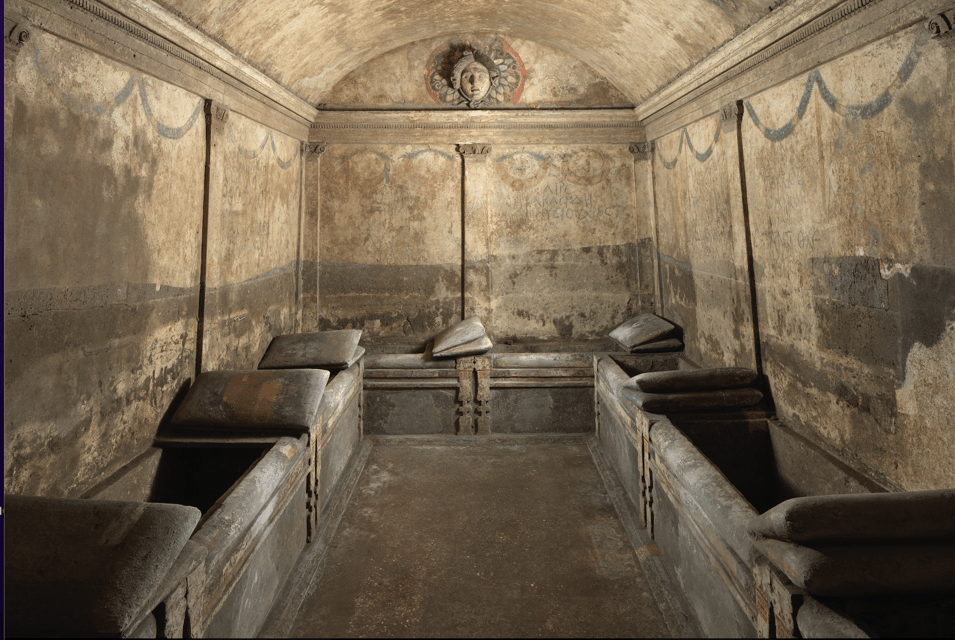
- Four Hellenistic tombs with carved and painted walls
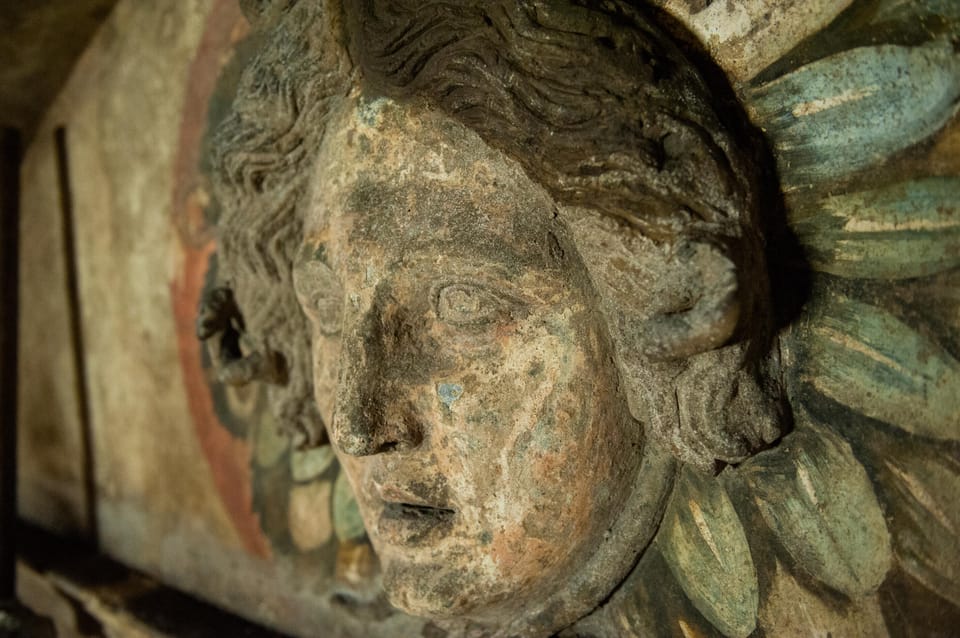
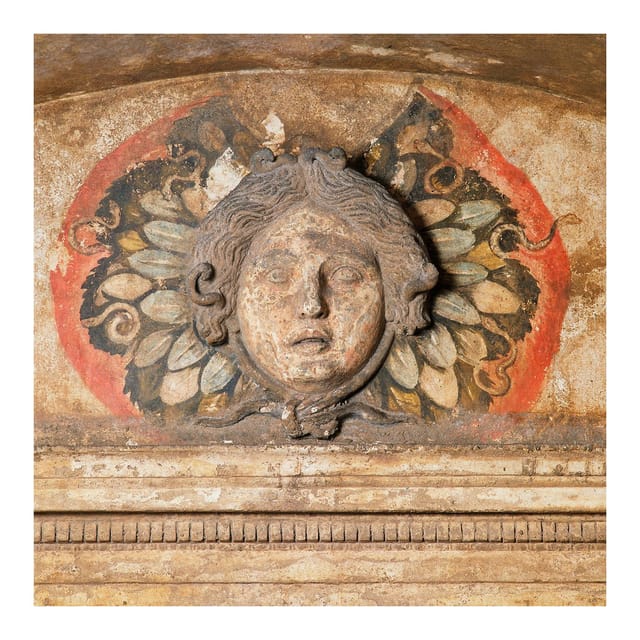
- Medusa, described as an exceptional painted and sculpted example
- A story that starts with a chance discovery in 1889 by Baron Giovanni di Donato
- A short video with virtual reconstruction to help you picture the original site
- Small group size, limited to 10 participants, so the guide can manage the pace
Rione Sanità to the Underground: how the tour feels in real life
This tour starts in the heart of Rione Sanità, a neighborhood that lives close to its past. The vibe is intimate rather than museum-quiet. You’ll join a small group (up to 10) for a 45-minute guided walk that’s designed to get you oriented fast and then focused on what matters underground.
One practical detail that shapes the experience: you’ll meet and get instructions before you go down. In my view, that’s key here, because once you’re underground you don’t have much margin for guessing where to look. The guides do a good job of giving you bearings, and in a couple of accounts I read, people specifically called out how the guide pointed out what to watch for at the steps and along the route.
You should also know the language setup is flexible. Tours are offered with live guides in Italian, English, French, and Spanish, so you’re not stuck matching your day to a single language schedule. That matters, because the site is all about interpretation—what you’re looking at and why it mattered to the people who built it.
You can also read our reviews of more tours and experiences in Naples.



12 meters down: the streets and tombs you’ll see underground
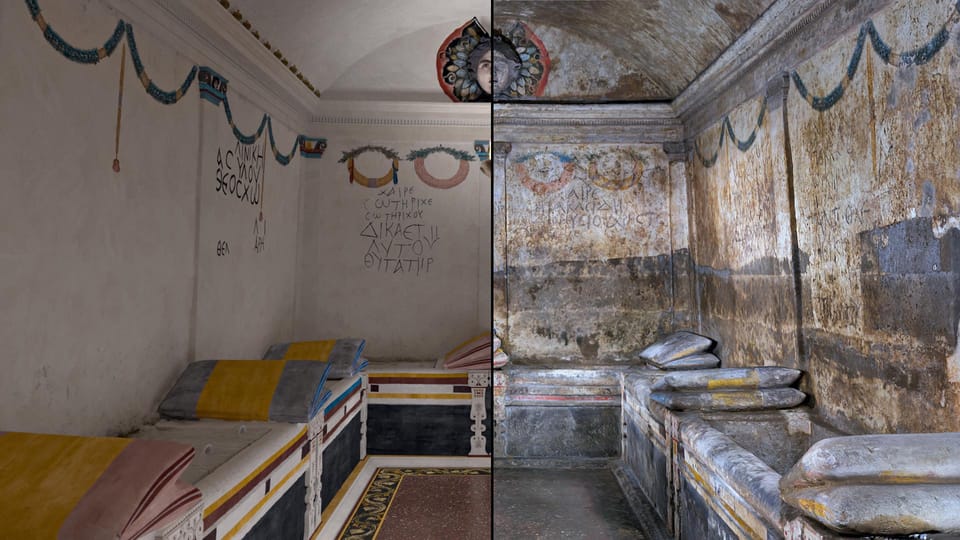
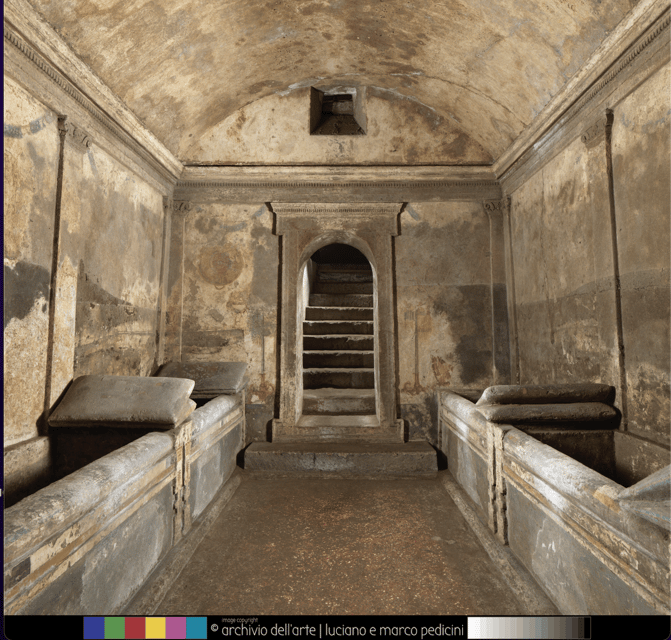
The big headline is the descent: you go 12 meters deep into Naples’ underground world. That alone is a “wow, we’re really below the city” moment. But what makes it worth the effort is what you find down there: a rediscovery of Neapolis and its original street, plus four Hellenistic tombs.
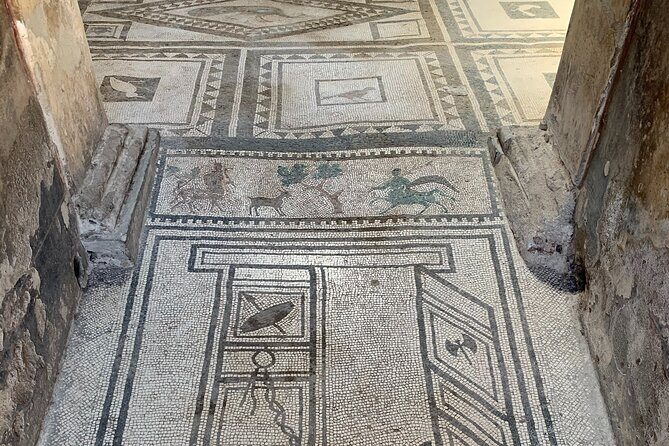
From there, the tour becomes very visual. You’re not just handed general history. You’re guided through the architecture and decoration—carved and painted surfaces meant for a very specific purpose: marking burial spaces and telling stories about life, death, family, and care.
The site is described as having architectural barriers, which is important for planning. It’s historic architecture, not a modern elevator-and-ramps situation. If you’re bringing mobility aids or you’re unsure about stairs and uneven transitions, you’ll need to check with the provider in advance so you can assess access with their team.
What about the physical reality? Expect stairs and limited light. One traveler noted the need to pay attention to the steps because it can feel dim. Another traveler mentioned bad knees and said the guide helped them step by step. So the experience is manageable for many people, but it’s not a “stroll in the park” walk.
Frescoes and polychromy: why these tomb paintings feel different
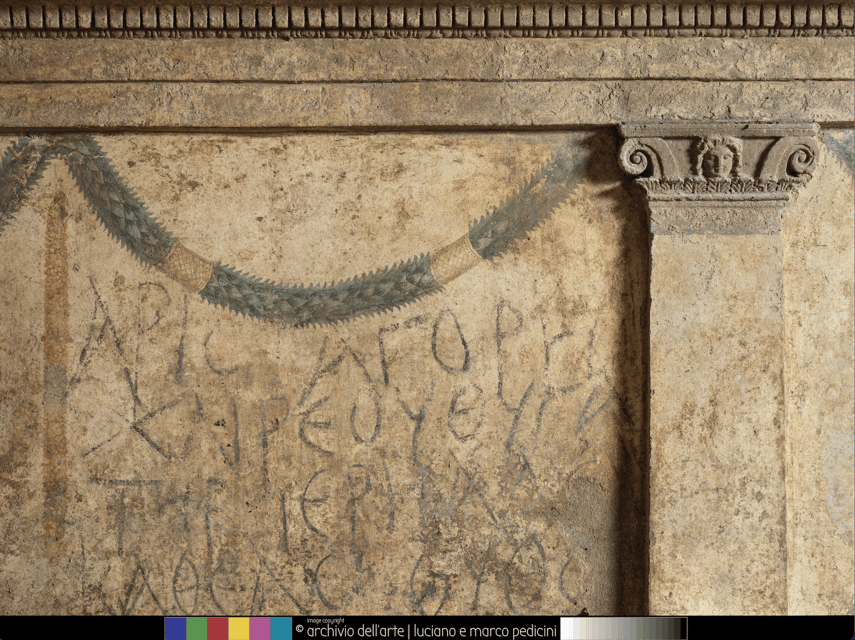
Ipogeo dei Cristallini is famous for ancient Greek painting and art from the 4th century BC—a detail that instantly upgrades your expectations. Paintings from that era are not something you casually bump into. Here, they’re part of the tomb architecture, which means you experience the art where it was made to be seen.
A standout point for me is how the tour encourages you to look slowly at the frescoes rather than treating them like background. The guides highlight the craftsmanship: where color sits, how scenes are composed, and how the tomb structure frames the imagery.
Polychromy is not just a word on a label here. It’s the reason the place feels alive. Painted surfaces help you “read” the space: you can follow story elements more easily when the tones and figures are described and pointed out.
And yes, you’ll get context. The guides explain what you’re seeing in terms of myths and symbolism, and that turns the art from pretty to meaningful. The tour’s tone is reflective—about how people understood life cycles and relationships—without getting so heavy that it kills the wonder.
One detail you might find surprising: the tombs are old and the skeletons are gone because they were taken for analysis. So you don’t experience a “horror house” atmosphere. Instead, you get the art and architecture plus the historical explanation of what’s missing and why.
Medusa in the tomb: the moment everyone remembers
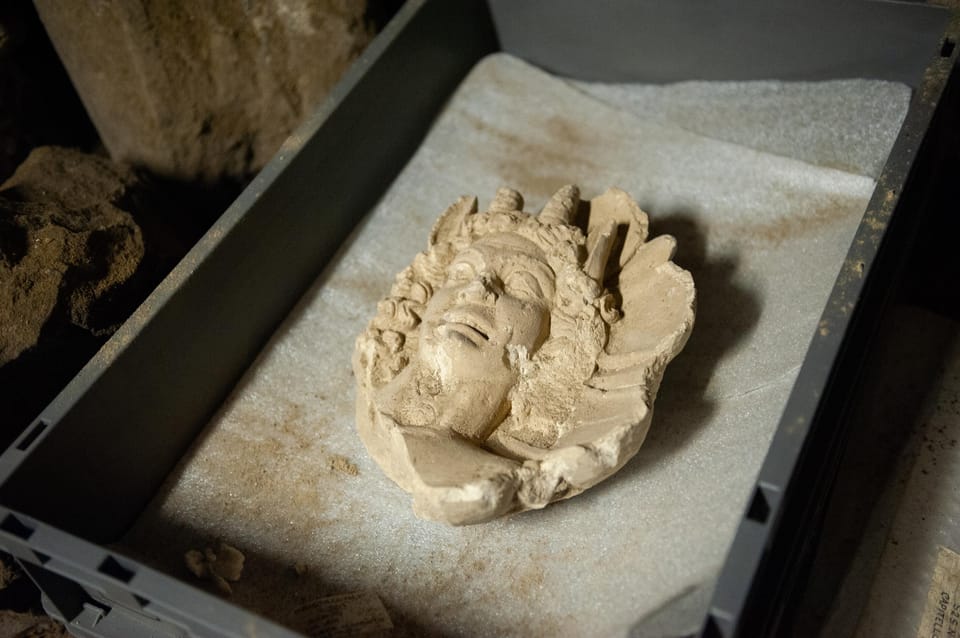
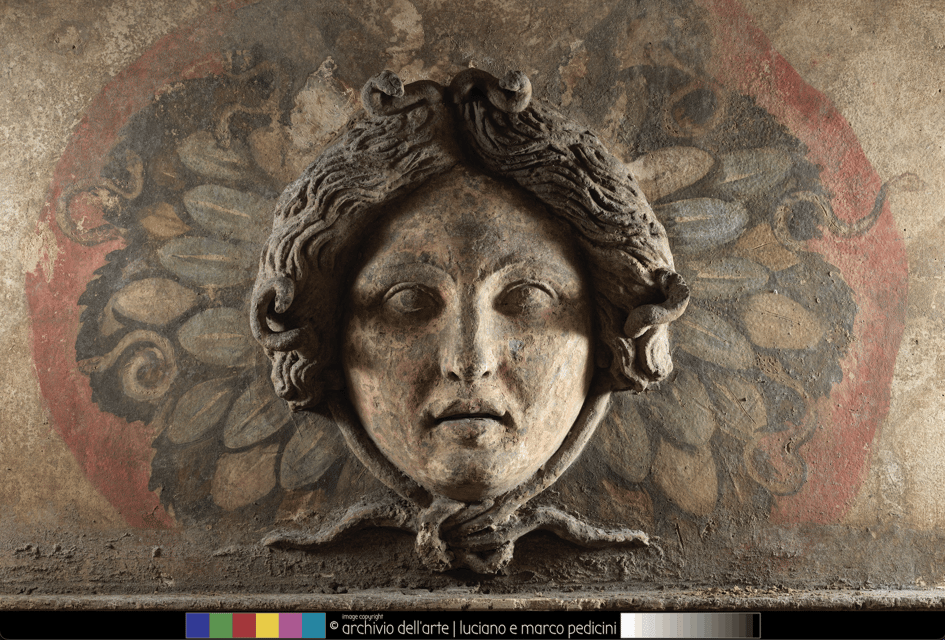
If there’s a single image people talk about after, it’s Medusa. The tour highlights an unbelievable Medusa that is described as sculpted and painted by the ancient Greeks—and that combo is part of the impact. It’s not just a flat painting. It’s presented as an example that blends sculpture-like presence with painted detail.
This is the kind of feature that changes how you view everything else. Once you’ve seen Medusa here, you start noticing how the tomb art communicates ideas—fear, protection, transformation, and the boundary between ordinary life and the afterlife. The guide’s job is to connect the visual to the story, and that’s exactly what you should hope for on a site like this.
One more reason it hits: Medusa is a myth people feel they know already. Seeing her in an ancient Greek context inside a real burial space makes her feel less like a cartoon and more like a message from a specific community.
The 1889 discovery story and why it matters
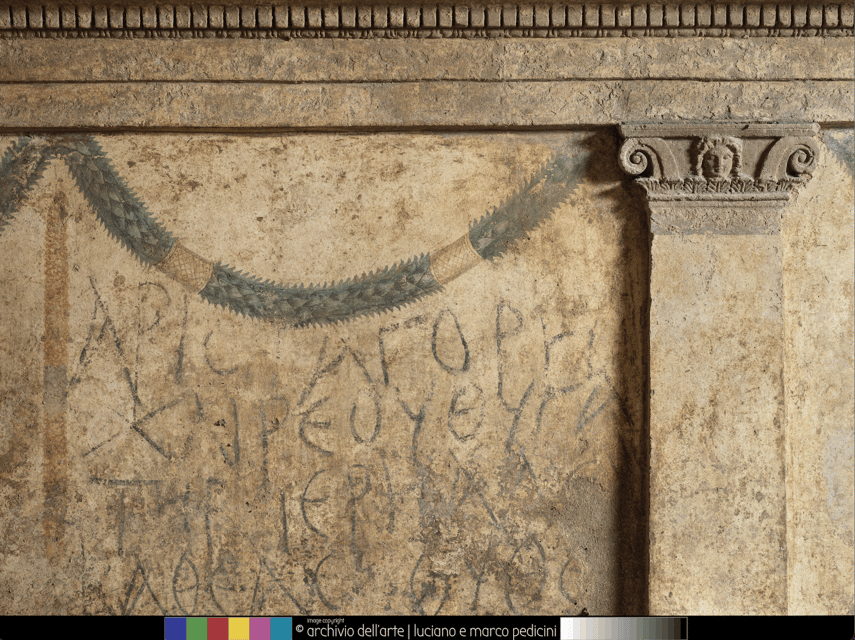
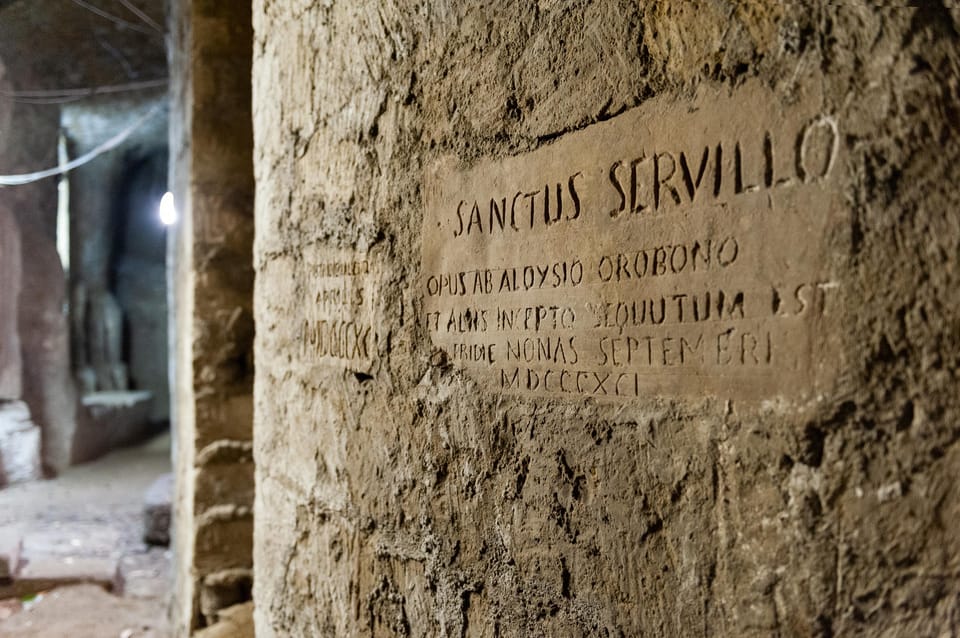
This tour doesn’t stop at what you see today. It also tells you how this place was found. The story runs to 1889, when Baron Giovanni di Donato discovered the Ipogeo in a chance event.
Why should you care about that? Because it affects how the site exists now—how it’s interpreted, preserved, and presented. A “found by accident” history often means the discovery is surrounded by curiosity, explanation, and later research. That’s part of what the guide brings to you: not only the paintings, but the human chain of events that led to their survival.
In a short tour, the discovery story does a useful job. It gives you a timeline, which helps your brain organize what you’re seeing: ancient world creation, burial purpose, long passage of time, then modern uncovering.
It also keeps the tour from feeling like a checklist. You’re following a narrative from discovery to interpretation to the visual details in front of you.


Greek origins meet Roman additions: what to look for
One of the most interesting ideas in the tour is Greek origins with Roman artistic additions. You’re not just watching one culture freeze in time. Instead, you’re seeing how art changes when different peoples and eras leave their marks.
In practice, this means the frescoes can feel like a conversation across centuries. The guides explain how the tomb art shows a fusion of approaches—Greek storytelling and visual traditions interacting with later Roman additions.
This is also why the tour is only 45 minutes but still feels substantial. The guide isn’t trying to teach you everything about Naples. They’re giving you a focused lens: look at the art, understand the myth layer, then notice how later Roman influence appears in the same space.
If you tend to get bored by lectures, you’ll probably like the way the tour handles this. The points land because you can connect them to what you’re seeing in the moment.
The guide and the videos: how to make 45 minutes work
You’ll spend a short time underground, so pacing matters. The tour includes videos—one account specifically mentioned a film intro that previews what you’re about to see. That’s not fluff. In a dim underground site, a quick visual preview helps your eyes catch up once you’re there.
You’ll also see a video with virtual reconstruction of the archaeological site. I like this tool for two reasons. First, it helps you picture the layout beyond the immediate walls you’re facing. Second, it prevents the “I saw paintings, but I can’t picture the whole place” feeling that can happen on small sites.
As for the live guide: the biggest consistent theme is clarity and help. One person noted that the guide was very skilled and specifically warned them about the steps and low light. Another said the guide was lovely and assisted them carefully with mobility challenges.
Here’s my practical advice to get the most out of it:
- Arrive ready to slow down your eye movement. You have time for key details, not every tiny spot.
- Pay attention at the first stairs. That’s where people trip—not the art.
- If you’re in a language other than English, listen for the guide’s “story threads.” The myths are easier to follow when you hear the guide’s structure.
Price and value: is $21 worth a 45-minute tomb visit?
At $21 per person for 45 minutes, this is priced like a focused “special access” guided experience, not a long museum day. For me, value comes from three things you get here: access to a rare painted Greek site, a trained guide who explains the myths and architecture, and a format that doesn’t waste time.
You’re paying for:
- a real interpretive walkthrough in a difficult-to-understand setting,
- the chance to see painted Greek art and a prominent Medusa example,
- and the short videos that give you reconstruction and context.
The main reason I’d say it’s good value is that the site is compact, and the tour is designed to fit it. You won’t feel like you spent money on a generic overview. You’ll feel like you visited something specific, and you’ll likely leave with one image—Medusa—and a clearer sense of how Greek and Roman influences overlap.
Who this tour suits best (and who should plan extra care)
This tour is a good fit if you like:
- ancient art you can actually see and talk about,
- Greek myths and symbolism,
- small guided groups where you can ask questions and get real explanations,
- and a quick, high-impact activity in Naples.
It’s also ideal for travelers who don’t want an all-day commitment. Underground can be tiring, and 45 minutes keeps it from overstaying its welcome.
You should think twice—or prepare carefully—if:
- you have limited mobility or strong sensitivity to stairs and low lighting,
- you need step-free access,
- or you get stressed in dim spaces.
The good news is that guides can be supportive with pacing, as some accounts explicitly mention help on the steps. Still, the site’s historical barriers are real, so plan your comfort level honestly.
Should you book Ipogeo dei Cristallini?
I’d book it if your Naples trip includes time for one “different” experience—something off the usual big sightseeing loop where you trade crowds for craft, stories, and painted details you won’t forget. The combination of ancient Greek tomb art, the Medusa highlight, and the guide’s interpretation makes the short duration feel intentional rather than rushed.
Pass, or schedule it with extra care, if stairs in dim settings are a deal-breaker for you. Otherwise, this is exactly the kind of Naples add-on that feels like you discovered something specific, not generic.
FAQ
Is this tour in English and other languages?
Yes. Live guides are available in Italian, English, French, and Spanish.
How long is the Ipogeo dei Cristallini guided tour?
The duration is 45 minutes.
How many people are in the group?
It’s a small group, limited to 10 participants.
How far down do you go during the visit?
You descend 12 meters into the underground world of Naples.
What will I see underground?
You’ll visit the underground area connected to Neapolis and original street, plus four Hellenistic tombs with carved and painted decoration.
What makes the artwork special on this tour?
The site is known for a rare ancient Greek painting and art tradition, including frescoes and a standout Medusa described as sculpted and painted.
Is there a video during the tour?
Yes. You will also see a video with a virtual reconstruction of the archaeological site.
Are there age limits for children?
Yes. Visit is free for children between 8 and 12 years old, and entry is not permitted for children under 8.
Is the site accessible for visitors with disabilities?
The visit has architectural barriers due to the site’s historical nature. You’re invited to contact the provider in advance to assess the possibility of access together.
How much does it cost?
The price is $21 per person.