REVIEW · COOKING CLASSES
Rome: Hands-on Fettuccine, Ravioli & Tiramisu Cooking Class
Book on Viator →Operated by Bella Vita Food Tours · Bookable on Viator
Fresh pasta in Rome, with real coaching.
This hands-on class is interesting because it keeps the group tight (max 14) and puts you at a working table with Chef Giuseppe and other instructors who guide you step by step. You’re not just watching. You’re making fettuccine, ravioli, and tiramisu from scratch, then eating it together.
I love the focus on fresh pasta dough skills. You practice kneading, shaping, and stretching, and you leave with a method you can actually repeat at home. I also love that dessert is built the classic way: tiramisu layered with mascarpone and espresso-soaked ladyfingers.
One possible drawback: you need to be comfortable with a hands-on, fast-paced kitchen rhythm. With a ~3-hour time window, there’s limited downtime, so if you want a long, slow cooking chat, this may feel like a bit of a sprint.
In This Review
- Key things that make this Rome cooking class worth your time
- A small-group kitchen class on Via Firenze 8
- Fresh pasta dough: the real skill you’ll reuse at home
- Making fettuccine in a hands-on way (not just rolling it)
- Ravioli: filling, shaping, and getting it to close well
- Tiramisu in three parts: espresso, mascarpone, and layering
- The group meal: where the class clicks socially
- Price and value: what $71.38 covers in real terms
- What could bother you (and how to plan around it)
- Who this Rome pasta-making and tiramisu class is best for
- Should you book this Rome hands-on fettuccine, ravioli & tiramisu class?
- FAQ
- What is the duration of the Rome cooking class?
- How many people are in the class?
- What dishes will we make?
- What is included in the price?
- What is not included?
- Can I get a refund if I cancel?
Key things that make this Rome cooking class worth your time
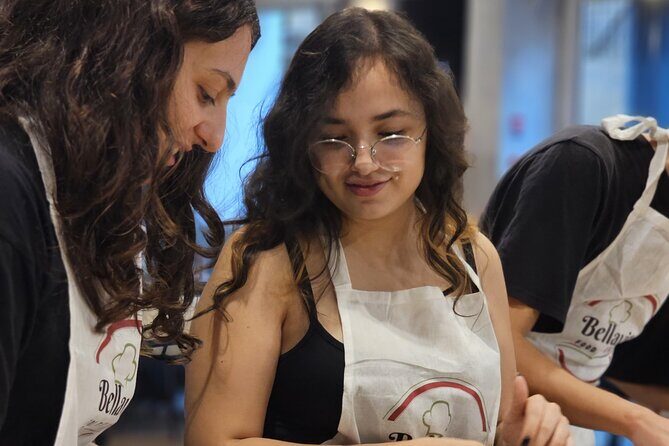
- Max 14 people means real attention while you knead and shape pasta
- Hands-on fettuccine and ravioli taught from dough to finished plates
- Classic tiramisu technique using mascarpone and espresso-soaked ladyfingers
- You eat your own meal at a shared, set table with the group
- Professional chef instruction + all tools so you’re not hunting for anything
A small-group kitchen class on Via Firenze 8
This Rome cooking class starts at Via Firenze 8, 00184 Roma, and it ends back at the same spot. The location is described as near public transportation, which matters in Rome, where getting across town can turn into a walking-and-stopping game.
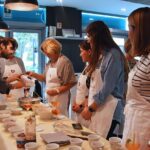
The big reason this class feels good is the size. You’re capped at 14 people, which is rare for popular food experiences in a city this busy. A smaller room changes everything: you can ask questions mid-task, get corrections before you bake in mistakes, and actually learn rather than just “participate.”
The lesson lasts about 3 hours, so you should plan this as a main event daypiece, not something to stack with another activity right before. Think of it like getting a cooking plan for your evening. You’ll be in the kitchen enough that you’ll want to keep your schedule simple.
And it’s worth noting the booking demand: on average it’s booked around 35 days in advance. If you’re visiting in a high-demand week, grabbing a slot sooner is smart.
You can also read our reviews of more cooking classes in Rome
Fresh pasta dough: the real skill you’ll reuse at home
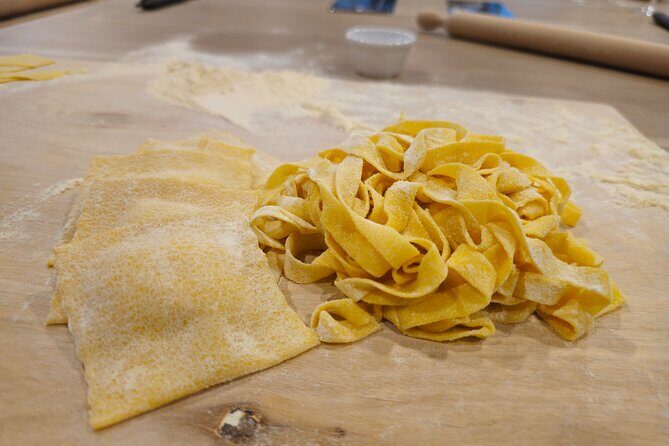
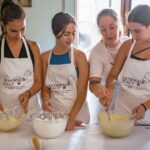
Most “pasta experiences” teach you the story. This one teaches you the technique. You start with fresh pasta dough, and the class walks you through the process in a hands-on way: kneading, then shaping and stretching it into pasta.
Why this matters: fresh pasta is mostly about feel. Flour weight, hydration, kneading pressure, and resting time all affect texture. If you only watch someone else work, you don’t learn what good dough feels like. When you make the dough yourself—under guidance—you start understanding how to fix it when it’s too dry or too sticky.
In the feedback, Chef Giuseppe (and other instructors like Danilo) get praised specifically for helping with kneading and stretching. That’s not a minor point. Kneading is where gluten develops, and stretching is where you learn how thin is thin enough. You’re not just copying steps. You’re building a sense you can carry into your own kitchen.
You also get the tools and setup covered. The class includes ingredients, equipment, and an apron plus utensils. That means you can show up with your camera and appetite, not with a grocery list.
Practical tip: if you have long sleeves, bring something you can roll up. Kitchens like this run warm, and you’ll be working with your hands. Also, expect flour. It happens.
Making fettuccine in a hands-on way (not just rolling it)
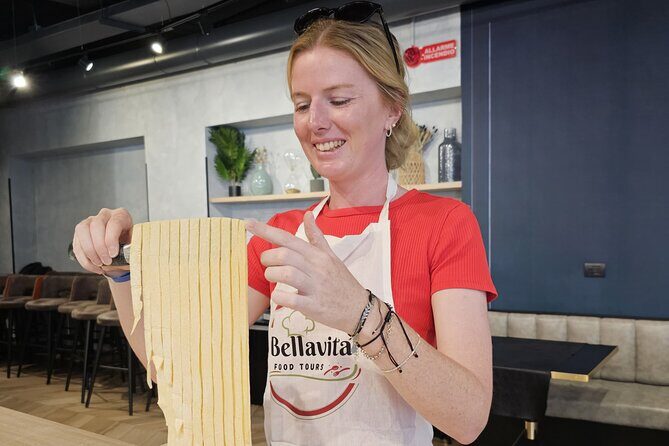
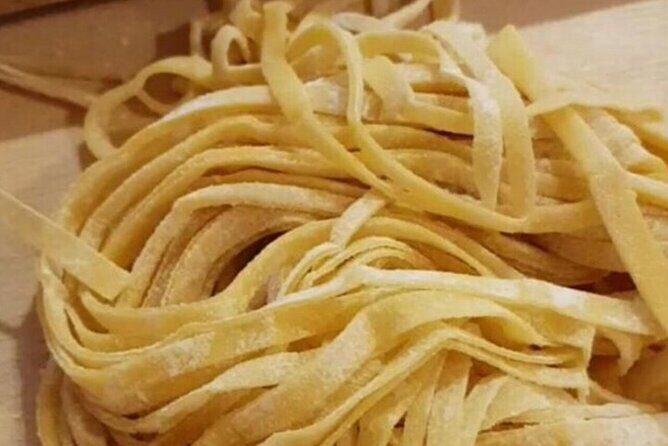
Fettuccine is a straightforward concept—flat, thick ribbons of pasta—but doing it well is not as automatic as it sounds. Here’s what you can expect: after learning dough basics, you’ll transform it into fettuccine, working through the shaping steps with the chef guiding you.
Two things make this part valuable.
First, you learn the pacing. Pasta dough changes while you work. It dries at the edges, it relaxes during rest, and it behaves differently once you’ve handled it. The class structure helps you avoid the common mistake of rushing dough that hasn’t settled.
Second, fettuccine is a great confidence builder. It’s visible. When your ribbons are even, your plate looks right. When the thickness varies, you can see it right away. That fast feedback helps you correct quickly.
If you’ve made pasta at home sometimes, this is still useful. The class is designed for different cooking levels, and the guidance is aimed at giving you tips and tricks you can bring back to your own setup.
Ravioli: filling, shaping, and getting it to close well
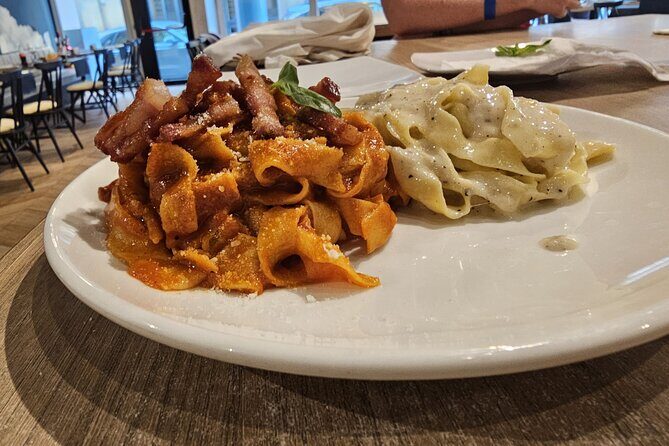
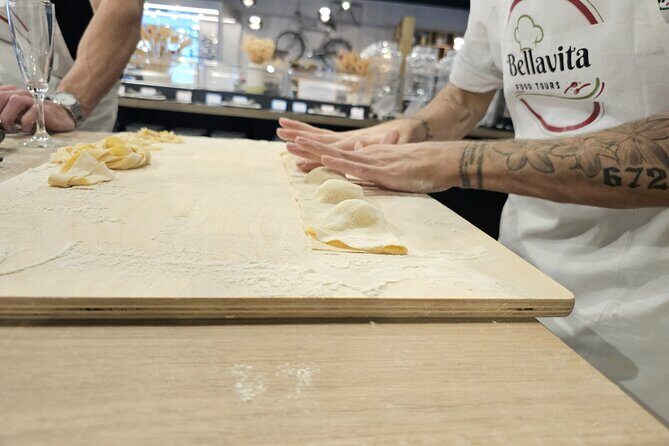
Then you move to ravioli, the stuffed pasta that looks impressive but is usually all about technique. The class helps you go from prepared dough to shaped ravioli, including the filling step and the work needed to seal each piece.
What you’ll learn here is the “make it hold together” part. Ravioli sealing can be tricky: too little seal and they open; too much and the texture gets weird. Having someone show you how to shape and close helps you stop guessing.
The class format also means you can ask for help while you’re doing it, not after the fact. That’s a big advantage in a class limited to 14. You don’t wait for a turn while your dough dries.
One more practical note: ravioli is a multi-step dish. It takes more hand motions than fettuccine. If you like hands-on craft work—pinching, forming, smoothing—this section is the kind of activity you’ll remember because your hands did it, not because someone told you about it.
Tiramisu in three parts: espresso, mascarpone, and layering
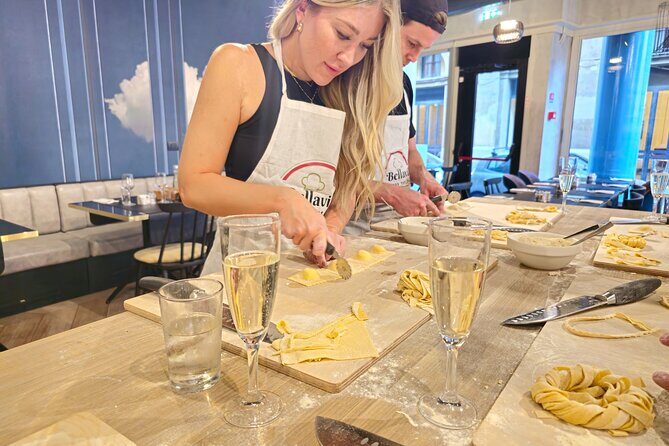
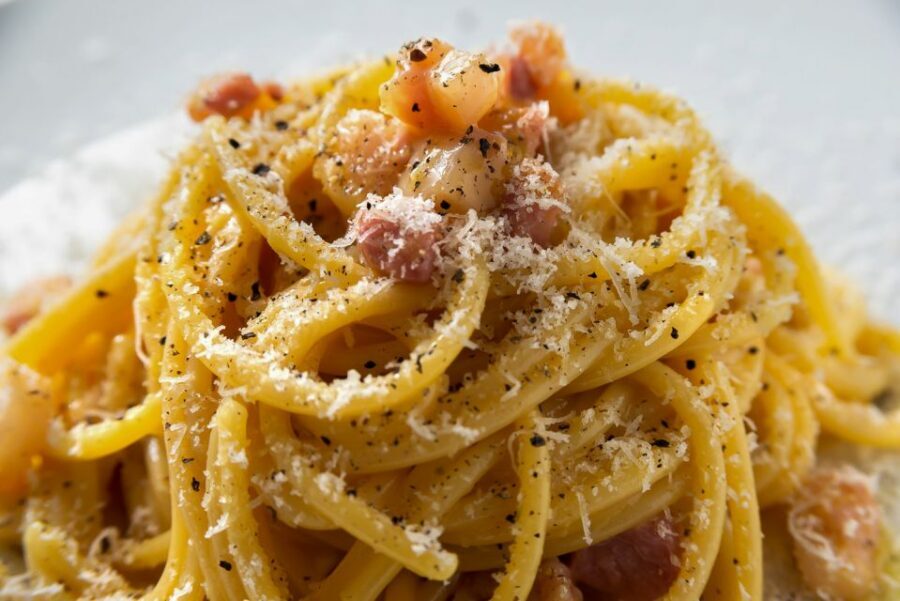
After the pasta work, the class turns to dessert: tiramisu. You’ll craft a classic version by layering mascarpone and espresso-soaked ladyfingers, then assemble it in the familiar order.
Why this section is worth doing as a cooking class: tiramisu depends on timing and texture. If ladyfingers get too wet, the dessert turns sloppy. If they’re under-soaked, it can taste dry. Mascarpone also matters—how it’s mixed and how it holds shape.
In the feedback, this dish shows up as a highlight again and again. People call out that the final tiramisu was excellent, and that the chef guided the process clearly, even when English wasn’t the traveler’s strongest language. That’s a good sign if you’re worried about communication. You can still follow the steps, and the chef can demonstrate what correct looks like.
Also, dessert feels like a reward after pasta work. You finish the meal you built, and you don’t have to choose between learning and eating.
You can also read our reviews of more tours and experiences in Rome

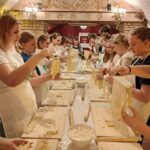
The group meal: where the class clicks socially
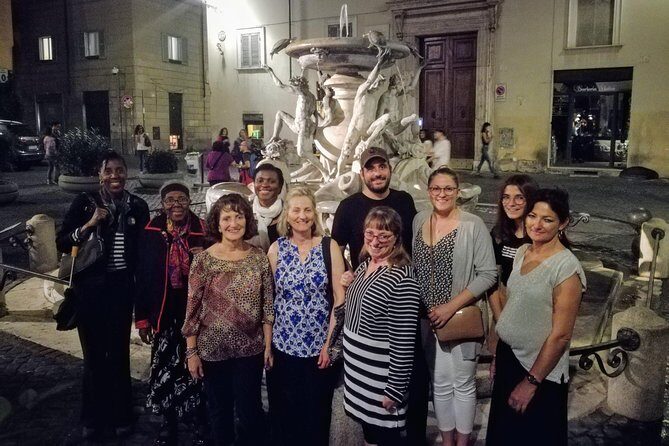
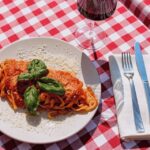
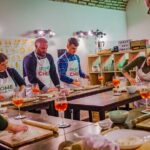
Once your pasta and tiramisu are ready, you sit down to enjoy what you made with the group. The meal is part of the package, and it’s shared in a convivial setting with a table setup that people describe as beautifully set.
This is where the experience becomes more than a cooking workshop. You’re working side-by-side, so conversation starts naturally. Then you eat together, and the food tastes better because you know what went into it.
There’s also a mention in feedback of wine being part of the experience, often alongside a drink on arrival. The formal inclusions list the meal (pasta and tiramisu) but doesn’t explicitly list wine, so I’d treat alcohol as a “check when booking” item. If you do drink, it’s a nice bonus to ask about ahead of time so expectations match reality.
Practical tip: if you’re traveling with a kid or teen, this format is usually a win because the meal comes from their own effort. One review even described the class as a great break during a busy Rome day, which makes sense. It gives you a structured activity and a sit-down meal without the guesswork.
Price and value: what $71.38 covers in real terms
At $71.38 per person, this isn’t a cheap “just try a thing” experience. But it also isn’t paying for a single plate of food. You’re paying for:
- Professional chef instruction
- All ingredients and equipment
- An apron and utensils
- Hands-on cooking time
- A meal featuring the pasta you make and your tiramisu
If you compare the real cost of ingredients and tools for fresh pasta and tiramisu, plus professional time, the price starts to make sense. You’re buying a compact skill session and then eating the results.
The value gets better because the class is capped at 14 people. Chef attention is part of what you’re paying for. A larger class would lower that value fast, and that’s not what this experience is built for.
It also helps that the overall rating is 5 out of 5 with 204 reviews. High scores don’t guarantee perfection, but a consistent pattern usually shows something right: teaching quality, friendliness, and a final meal that lands.
What could bother you (and how to plan around it)
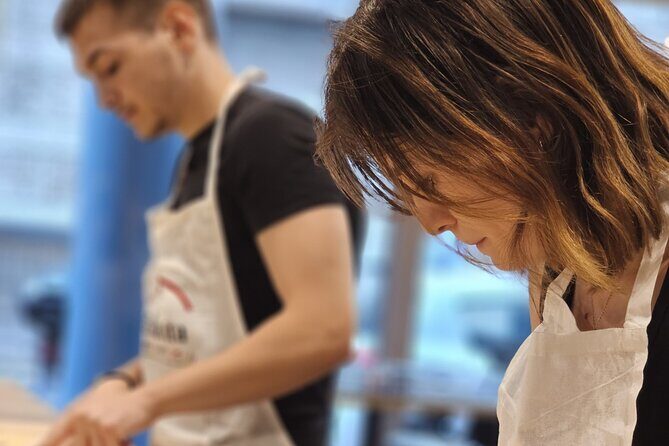
Most people will love this kind of class. Still, it’s honest to flag what might not fit everyone.
- You’re in a working kitchen for about 3 hours, so it’s not a relaxed stroll activity.
- You may need to work through language gaps. The class is in an international city, and communication is often handled with a mix of clear instruction and demonstration. In the feedback, a few people mentioned worries about English or French comprehension, and things still went fine. Still, if you need fully translated instructions, plan to ask what language the class will be taught in when you book.
- It’s hands-on craft work. If you hate sticky flour or you get stressed when you make messes, you might want to mentally prepare. This is normal for fresh pasta.
The good news: the class is designed to get you to the finish line. Everyone sits down to eat what they made.
Who this Rome pasta-making and tiramisu class is best for
This is a strong fit for you if you want a practical souvenir. Not a magnet. A repeatable skill.
It’s especially good for:
- First-time cooks who want a step-by-step guide and a chef who corrects you
- People who already cook some pasta and want better technique
- Families with older kids or teens, since the format is active and then rewarding with a meal
- Small groups of friends who want a structured, social evening
It may be less ideal if:
- You want only sightseeing time and minimal hands-on work
- You’re dealing with a strong allergy situation (the data here doesn’t list allergen handling details)
- You hate being in the kitchen while others learn and laugh together
One thing I like about the class style is that it works across cooking levels. The chef teaching approach is praised as supportive, so you’re not stuck feeling lost.
Should you book this Rome hands-on fettuccine, ravioli & tiramisu class?
If you want a Rome food experience with skill, not just samples, I think it’s a solid booking choice. The biggest reasons are the small group size (max 14), the hands-on dough work, and the fact that the meal you eat is the work you just did.
The class also delivers two things people want in Rome: comfort food made correctly, and a chance to slow down for a shared meal in a calm setting. And at about $71.38, it’s priced like a real lesson, not a vague tasting.
I’d book this if you’re excited to get your hands floury, learn kneading and shaping, and finish with a dessert you can recreate. I’d skip it if your ideal vacation day is mostly walking and zero mess.
If you do book, read closely on languages offered and ask about wine if you care about it. Then show up with a good attitude and time to cook.
FAQ
What is the duration of the Rome cooking class?
The experience runs for about 3 hours.
How many people are in the class?
The class has a maximum of 14 travelers.
What dishes will we make?
You’ll make fresh pasta for fettuccine and ravioli, then you’ll also make tiramisu.
What is included in the price?
Included are a professional chef instructor, all ingredients and equipment, hands-on cooking experience, an apron and utensils, and the meal (the pasta and tiramisu you make).
What is not included?
Transportation is not included, and personal expenses like additional food or beverages aren’t included. Additional meals or drinks beyond what’s provided are also not included.
Can I get a refund if I cancel?
Yes. You can cancel for a full refund up to 24 hours before the experience starts. If you cancel less than 24 hours before, the amount paid won’t be refunded.