REVIEW · COLOSSEUM TOURS
Small Group Tour: Colosseum & Roman Forum with Arena Floor Access
Book on Viator →Operated by Roman Vacations · Bookable on Viator
Walk the Colosseum floor, then rewind Rome.
This tour is interesting because it doesn’t stop at photos: you get arena-floor access through the Gladiator’s Gate, then your guide ties it all together with the nearby Roman Forum and Palatine Hill. I especially love the small group feel, capped at 15 people, which makes it easier to hear, ask questions, and actually follow the story.
I also like how guides bring the sites to life with energy and humor, from Angela and Mitch to Fay, Mircea, Pablo, and Tiberio. The main drawback to plan for is motion: there’s a lot of walking and steep stairs in the Colosseum, so it can feel long if you need lots of sitting breaks.
In This Review
- Key highlights to look for
- Why the Colosseum Arena Floor Changes Everything
- Roman Forum First: Politics, Temples, and Street Life
- Palatine Hill: Emperor Palaces, Romulus, and Big Views
- Colosseum Entry and the Arena Floor Experience
- Small Group Size, Headsets, and the Q&A Factor
- Timing: Morning or Afternoon and How That Affects Your Visit
- Price and Value: What $62.88 Really Buys
- Getting There, Meeting Point, and What to Bring
- Who This Tour Suits Best (and Who Might Need Another Plan)
- Should You Book This Colosseum & Roman Forum Tour?
- FAQ
- How long is the tour?
- What stops are included?
- Is arena floor access included in the ticket?
- What language is the tour offered in?
- Where does the tour start and end?
- What ID do I need?
Key highlights to look for
- Gladiator’s Gate arena-floor entry that puts you at the center of the spectacle
- Roman Forum + Palatine Hill connection so emperors, politics, and everyday life click together
- Max 15-person group for better hearing and real Q&A time
- Headsets when appropriate to keep the guide clear in crowded areas
- Stair-and-stand viewpoints after the arena floor for great angles and photos
- Guide personality matters with names like Angela, Mitch, and Mircea showing up repeatedly in standout experiences
Why the Colosseum Arena Floor Changes Everything
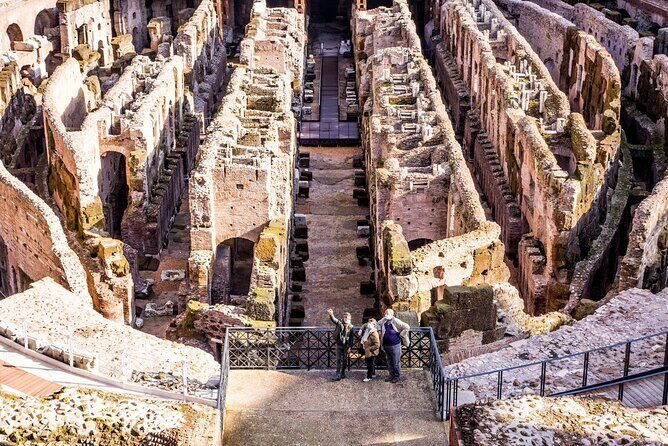
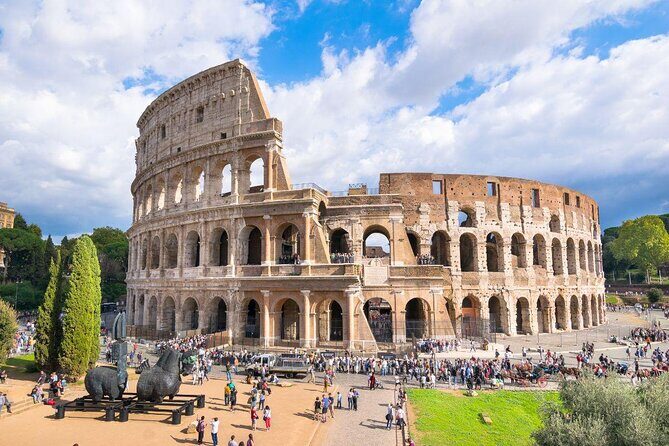
Most Colosseum visits stop at eye level. This one lets you step onto the arena floor using the special Gladiator’s Gate access. That changes the whole feel of the place. You’re no longer just looking at history; you’re standing where the show happened.
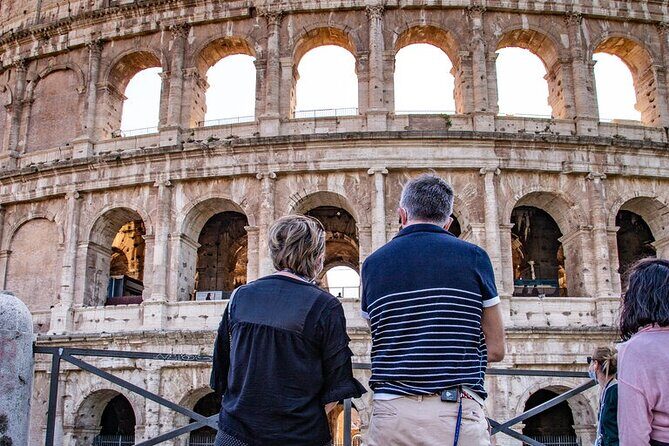
Once you’re inside, you look up into a stadium that once held over 50,000 spectators. Your guide explains what you’re seeing and what the games were really like, including different gladiator fighting styles and what daily life could look like for gladiators. It’s also a natural moment for photos because you get angles most people never manage.
One practical note: you should treat the arena floor moment as a highlight that still moves quickly. You’ll get time to absorb it, then you’ll transition upward into the stands for another viewpoint.
You can also read our reviews of more tours and experiences in Rome.



Roman Forum First: Politics, Temples, and Street Life
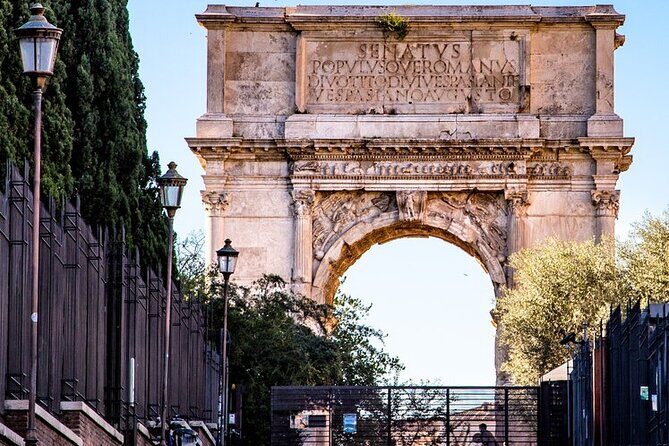
Starting in the Roman Forum makes smart sense. It’s the oldest part of the city in the tour, and your guide builds a picture of how Rome worked day to day. In about 45 minutes, you’ll see government buildings, temples, and ancient roads that help you visualize daily movement through the area.
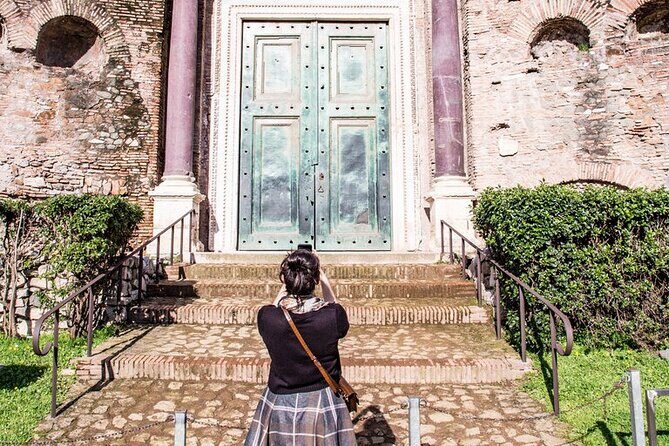
You’ll pass by places like the senate house, the Temple of the Vestal Virgins, and the Temple of Julius Caesar, where his ashes were laid to rest. The guide also walks you along the road built by Emperor Augustus, which is a great way to understand how the city evolved from earlier Rome into the imperial era.
What makes this stop valuable is that ruins here can feel confusing if you’re wandering alone. On a guided route, you’re not just reading stones. You’re getting a storyline: power, religion, and politics all tied to real locations you can still see.
The only consideration: 45 minutes is fast. If you like to linger, you’ll want to keep your expectations realistic and plan to do a bit of independent roaming afterward if you fall in love with one specific corner.
Palatine Hill: Emperor Palaces, Romulus, and Big Views
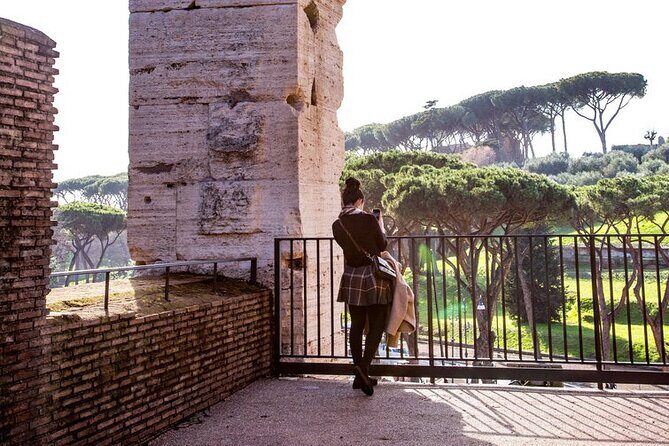
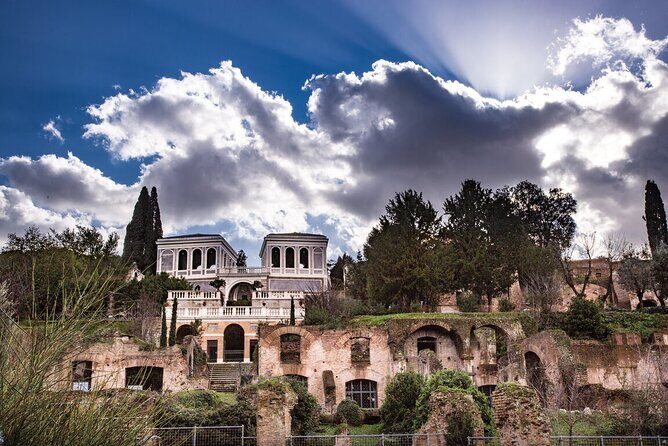
Next comes Palatine Hill, another 45 minutes that shifts the mood from civic life to imperial power. This is the place tied to Rome’s origin—your guide explains how it’s associated with Romulus and why emperors later built their palaces here.
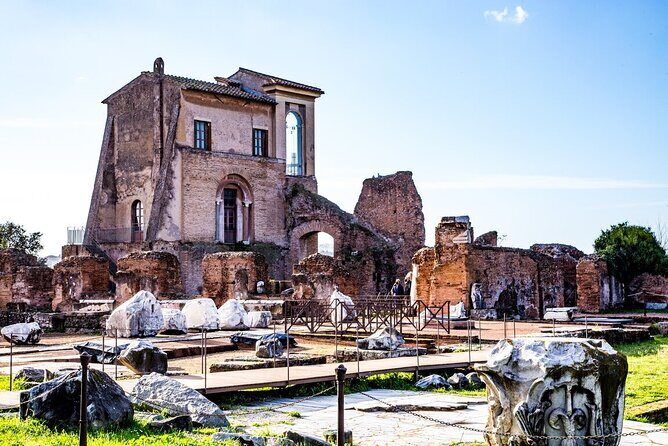
As you walk through the ruins, you’ll learn why Palatine matters across Roman history: emperors were born and died on this hill, and over time it became a concentrated symbol of authority. The stories your guide tells help the space feel less like scattered walls and more like a living setting.
You’ll also get a peek at major nearby landmarks: the Circus Maximus, where chariot races took place, and Emperor Domitian’s private stadium on top of Palatine Hill. That “peek” is useful because it gives context beyond the exact ruin you’re standing in. You start noticing the bigger map of entertainment and power spreading across Rome.
The drawback to keep in mind here is physical comfort. Palatine involves walking on uneven surfaces. If your legs tire easily, wear supportive shoes and pace yourself through the whole route.
Colosseum Entry and the Arena Floor Experience
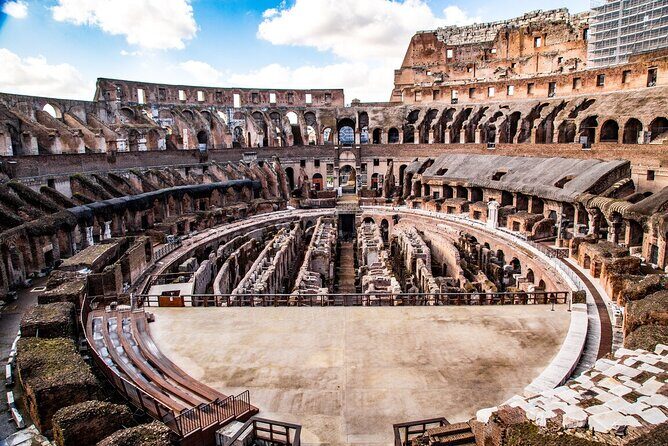
The Colosseum stop is where the tour earns its name. You’ll enter and go directly onto the arena floor through the special access Gladiator Gate. Your guide frames the moment like a before-and-after comparison: most visitors only see the upper levels, but you’re seeing the fighting space and imagining the events from the ground up.
On the floor, you’ll look up at seating where more than 50,000 people once gathered. Then you’ll learn what happened in the games, including animal parades, exotic animal hunts, and public executions that could occur around lunchtime. The guide explains these as part of the day’s schedule, not as random trivia.
After the arena floor, you’ll proceed up into the stands. This is where you get a classic fan perspective—an excellent chance for photos because the view feels dramatic from the interior seating.
One detail worth planning for: the Colosseum interior includes steep stairs. A couple reviews specifically called out that walking and stairs are a real factor. So if you’re hoping for a relaxed stroll with lots of sitting, this may not match your ideal pace.
Small Group Size, Headsets, and the Q&A Factor
This tour is built around staying human-sized. The group max is 15 travelers, which is a big deal in Rome’s busiest ruins. In a smaller group, you get less time “lost” and more time listening, and the guide can actually answer questions without racing to the next timed entry.
Headsets are included when appropriate, which helps a lot in noisy crowds and echoing stone corridors. Even if you have decent hearing, it’s reassuring to know you won’t have to strain every time someone asks something.
The guide factor shows up again and again. People mentioned names like Angela, Fay, Mitch, Pablo, Italo, and Mircea, and the themes were consistent: high energy, clear explanations, and good humor. Some guides even went beyond the script—helping with ticket problems or giving local food suggestions.
Still, there’s a trade-off. With timed access and a tight route through Forum, Palatine, and the Colosseum, the experience can feel more efficient than leisurely. You may move along quicker than you’d like if you want long pauses at every ruin.



Timing: Morning or Afternoon and How That Affects Your Visit
You can pick a morning or afternoon tour time. That flexibility is useful because it helps you sync with other Rome plans, like museums, dinner reservations, or a pre-dinner wander.
Timing also matters for comfort. The Colosseum and Palatine Hill can feel much more intense with extreme heat or heavy rain. The good news: guides handle real conditions, including bad weather. One experience notes torrential rain, but the tour kept going with the guide’s energy doing a lot to keep spirits up.
If you’re choosing between times, I suggest going with the slot that reduces stress for you. No one enjoys sightseeing when they’re also rushing across town.
Price and Value: What $62.88 Really Buys
The price is $62.88 per person, and the value comes from what’s bundled. You’re not just paying for a guide walking beside you. Entry to the Colosseum, Roman Forum, and Palatine Hill is included, and you also get the arena access reservation that makes Gladiator’s Gate possible.
The included ticket items are specifically listed as:
- Colosseum entrance ticket with arena access valued at €24
- Colosseum reservation fee valued at €2
So yes, the admission components matter. But the bigger value is coordination: getting you through the right access points, keeping the group moving at the right pace, and having an expert guide explain what you’re seeing (including the events and daily life details that make the arena floor mean something).
If you try to DIY this, you might successfully visit all three locations. But you’ll struggle to recreate the arena-floor access plus a guided storyline that links Forum, Palatine, and the Colosseum in a single coherent outing.
Getting There, Meeting Point, and What to Bring
The tour starts at Via dei SS. Quattro, 81, 00184 Roma RM, Italy. You’ll redeem your ticket at Roman Vacations at the same address, and the tour ends at Arch of Constantine (Piazza del Colosseo, 00184 Roma RM, Italy).
It’s also noted as being near public transportation, which is great because the route ends closer to where many people want to linger afterward.
Bring the right identification. You must provide the full names of all travelers at booking, and each person needs a valid passport or ID document that matches those names. If names don’t match exactly, entry can be denied at the ticket office.
Comfort tips that will make your day easier:
- Wear shoes you trust on uneven ground and steep stairs
- Expect long standing/walking time
- If weather looks iffy, add a lightweight rain layer to your day bag
Who This Tour Suits Best (and Who Might Need Another Plan)
This is an excellent fit if you want the “big three” of central Rome—Colosseum, Roman Forum, and Palatine Hill—with a guide connecting them into one narrative. It’s also ideal if you care about seeing the Colosseum from more than one level, including the arena floor and then the stands.
It can work well for families, including kids in the 9–17 range, as one experience noted. That said, it’s still a walking-heavy route. If your group needs frequent seating, or if steep stairs are a challenge, you may want a version with fewer vertical steps.
Language is English, and the small-group structure helps non-Italian speakers follow the full explanation without guessing.
Should You Book This Colosseum & Roman Forum Tour?
If arena-floor access is on your Rome wish list, this tour is a strong choice. The structure is tight, but the payoff is huge: Gladiator’s Gate first, Forum context second, and Palatine’s imperial backstory to make it all click. With a rating of 4.8 from 773 reviews and 95% recommended, you’re buying into a proven format.
I’d book this if:
- You want the Colosseum experience to feel hands-on, not just observational
- You like asking questions and hearing answers in a smaller group
- You want a guide to explain what you’re looking at instead of trying to piece it together alone
One last decision helper: the tour has a 2 hours 30 minutes (approx.) runtime. If your day can handle that much movement, you’ll likely love it.
And if your plans change, you can cancel up to 7 days in advance for a full refund.
FAQ
How long is the tour?
It runs about 2 hours 30 minutes.
What stops are included?
You visit the Roman Forum, Palatine Hill, and the Colosseum (including arena floor access).
Is arena floor access included in the ticket?
Yes. The tour includes Colosseum entrance with arena access, and you enter via the Gladiator’s Gate.
What language is the tour offered in?
The tour is offered in English.
Where does the tour start and end?
It starts at Via dei SS. Quattro, 81, 00184 Roma RM, Italy, and ends at the Arch of Constantine, Piazza del Colosseo, 00184 Roma RM, Italy.
What ID do I need?
You must bring a valid passport or ID document, and the name must match the full names provided at booking.