REVIEW · CITY TOURS
Rome City Center Walking Tour and GelatoTasting- Up To 6 People
Book on Viator →Operated by Italy In Love Tours · Bookable on Viator
Rome by foot is the best kind of plan. This Rome city-center walking tour pairs classic sights with a couple smart detours, then threads it all together with a gelato tasting as you go. You’ll cover major landmarks in a slow, manageable rhythm, while your local guide points out details most people miss. Semi-private also matters here: with up to 6 people, you get a real back-and-forth pace instead of a big herd.
Two things I especially like: the mix of big-name Rome (Spanish Steps, Pantheon-area views in the route, Piazza Navona, Trevi Fountain) plus lesser-seen stops like Trajan’s Market and the art nouveau Galleria Sciarra, and the fact that gelato is built into the walk rather than an afterthought. One possible drawback: without headsets at this small group size, it can be harder to catch every word if you’re not near the guide.
If you like walking tours that feel personal and practical, this one is a good fit.
In This Review
- Key things to know before you go
- Why this Rome walking tour works in 2 hours 30 minutes
- Getting your bearings at Trajan’s Market and the Imperial Forums area
- Galleria Sciarra: the easy architecture win most people miss
- Spanish Steps: using 35 minutes smartly
- Piazza Navona and Bernini’s Fountain of the Four Rivers
- Trevi Fountain plus gelato: finishing with momentum
- Price and value: what $230.29 is buying you
- Group size and pacing: what it feels like on the ground
- Who should book this tour
- Meeting point to finale: the route end in Piazza Navona
- Should you book this Rome City Center walk with gelato?
- FAQ
- How long is the Rome city center walking tour?
- How big is the group?
- Where does the tour start and end?
- What food is included?
- Is gelato included, or just a general dessert stop?
- Are admission tickets included for Trajan’s Market or the Museo dei Fori Imperiali area?
- Is Galleria Sciarra free to visit?
- Are alcoholic beverages included?
- What’s the cancellation policy?
- Are service animals allowed?
Key things to know before you go
- Up to 6 people keeps the pace relaxed and the route easier to follow
- Gelato is included, with sweet breaks timed through the day
- Trajan’s Market adds a real “Rome used to shop here” angle
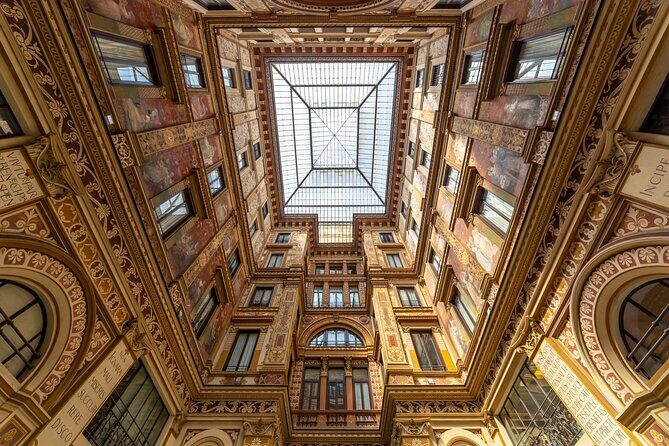
- Galleria Sciarra lets you see a glass-and-cast-iron ceiling in the city center
- Piazza Navona gets context for Bernini’s Fountain of the Four Rivers
- Trevi Fountain includes the coin-toss tradition moment (no admission fee included)
Why this Rome walking tour works in 2 hours 30 minutes
Rome can feel like two cities at once: the postcard scenes and the layers underneath them. This tour is designed to cover both without turning your day into a sprint. It’s about 2 hours 30 minutes total, and the stop timing is generous enough that you can actually look, not just pose.
The small group size is a big deal for value. With 6 people max, you’re more likely to hear your guide’s explanations clearly and to move at a pace that matches real viewing time. You also get fewer “traffic-control pauses” that happen on larger tours.
The route is city-center heavy, which means less time figuring out logistics and more time enjoying the sights. You’ll be walking between some of the most famous squares and fountains, but you’ll also get a quieter architectural pause and an archaeology stop that changes the way you read the city streets.
You can also read our reviews of more walking tours in Rome


Getting your bearings at Trajan’s Market and the Imperial Forums area

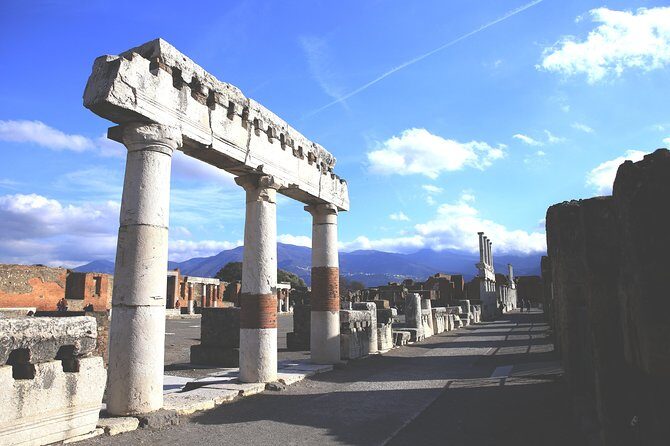
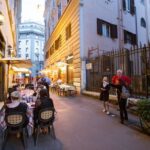
The tour starts near Mercati di Traiano (Trajan’s Market) and the Museo dei Fori Imperiali area. Even if you don’t go inside, you’re in the right zone to understand Rome as a functioning city, not just a photo backdrop. Trajan’s Market is described as an archaeological complex tied to Rome’s first shopping center, which is a useful mental shift when you’re walking through ruins that feel ancient—but were built for everyday life.
You also get context for Trajan’s Column, a monumental tribute to Emperor Trajan’s triumph in the Dacian Wars. The key idea your guide will likely highlight is the storytelling method: the reliefs aren’t just decoration. They’re a visual record of military success, and they also show how Roman power wanted to be remembered.
Why this stop is valuable for you: it gives you a “Rome runs on stories” lens early on. After you understand the imperial messaging here, the later Baroque and 19th-century details start to make more sense in the overall timeline.
Practical consideration: the stop is only about 10 minutes and the ticket for admission isn’t included. So treat it as orientation and outside viewing time—perfect for learning, not for a deep museum session.
Galleria Sciarra: the easy architecture win most people miss
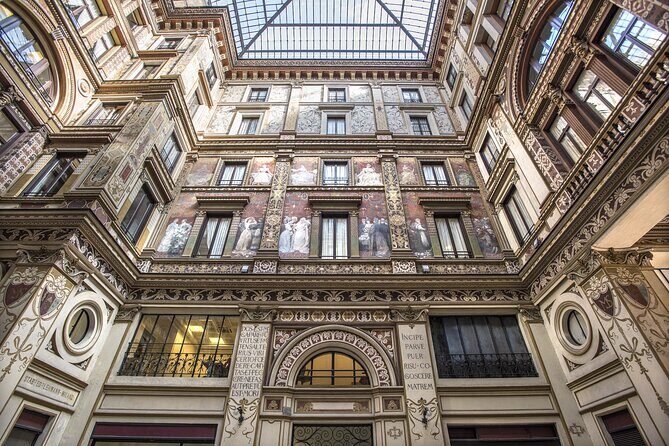
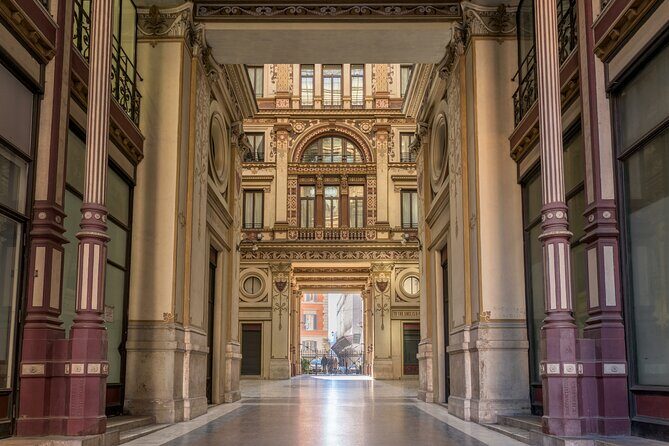
Next comes Galleria Sciarra, an architectural pocket that feels like a hidden corridor, even though it’s right in the center. Construction ran from 1885 to 1888 as part of Palazzo Sciarra Colonna. What catches your eye fast is the vaulted ceiling made of glass and cast iron—late 19th-century design that mixes light, structure, and elegance.
This stop is about more than admiring a ceiling. It helps you notice how Rome keeps changing style while reusing the city fabric. When you later see the dramatic compositions in Baroque squares, it’s easier to understand how different periods tried to control light and drama in their own ways.
Time check: you’ll have around 10 minutes. That’s short, but it’s enough to reset your brain between larger landmarks. And it’s free to visit.
If you’re traveling with a “we like seeing one cool unexpected thing per hour” mindset, you’ll probably love this segment.
Spanish Steps: using 35 minutes smartly
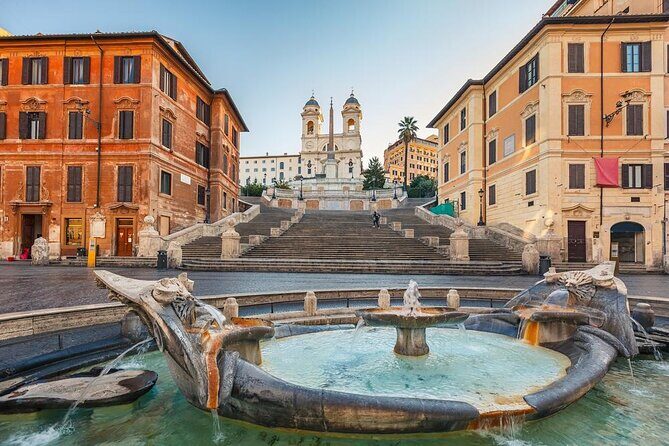
The Spanish Steps stop gives you the classic Rome scene linked with A Roman Holiday—Audrey Hepburn and Gregory Peck. Even if you’re not a movie buff, the location is a great teaching moment because it shows how tourism, architecture, and pop culture reinforce each other across decades.
You’ll have about 35 minutes here, which is a solid chunk of time for photos, people-watching, and a bit of sitting if you want to rest your feet. The trick is to plan your viewing angles quickly. You can get the iconic upward view, but also try stepping sideways so you see how the steps connect the streets and terraces. That helps you understand the space, not just capture it.
Drawback to consider: this area is a magnet for crowds (and that’s true on most days). Your best bet is to use the guide’s timing and stay flexible, so you’re not spending your entire half hour waiting for the view to clear.
If you want a calmer moment, keep moving. The Spanish Steps are best experienced as a flowing scene, not a single static picture.
Piazza Navona and Bernini’s Fountain of the Four Rivers
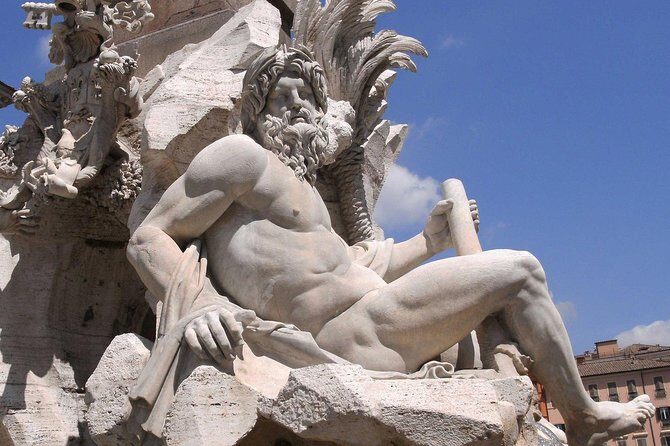
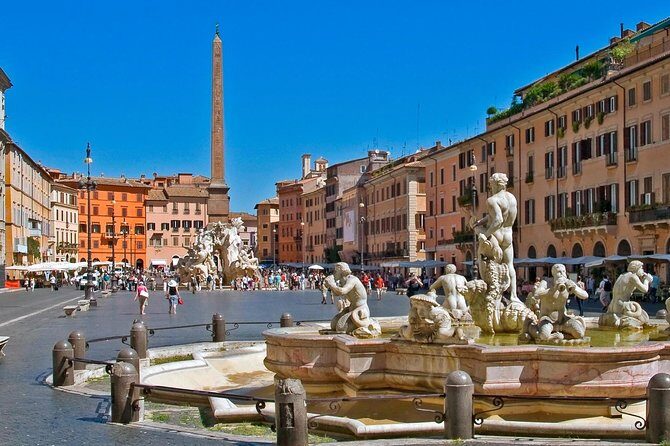
Piazza Navona is one of those places where the square itself is the attraction. You’ll have around 35 minutes, and it’s easy to understand why: the architecture frames the space, street life funnels through it, and Bernini’s Fountain of the Four Rivers acts like the visual anchor.
The fountain’s symbolism is where the guide adds real value. The four rivers shown are the Danube, Nile, Ganges, and Río de la Plata—rivers tied to the known world at the time. If you look closely, the sculpture program makes more sense as political and cultural messaging, not only art. It was Rome telling the story of its worldview, with myth and geography blended into stone.
Why this stop is a strong use of your time: you’re getting a landmark plus context. It’s one thing to know the name Piazza Navona. It’s another to understand why a fountain becomes a statement about power, knowledge, and reach.
Practical note: the square is free to enter, so the only “cost” is your time and attention. This is where I’d slow down. Sit for a moment if you can, then walk the perimeter once to see how the edges of the square shape movement.
You can also read our reviews of more city tours in Rome



Trevi Fountain plus gelato: finishing with momentum
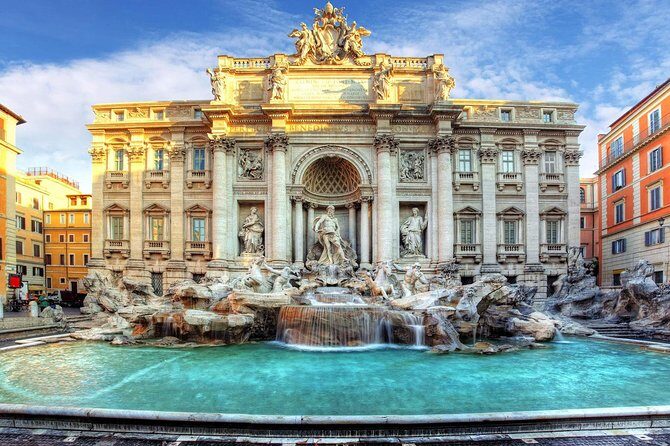
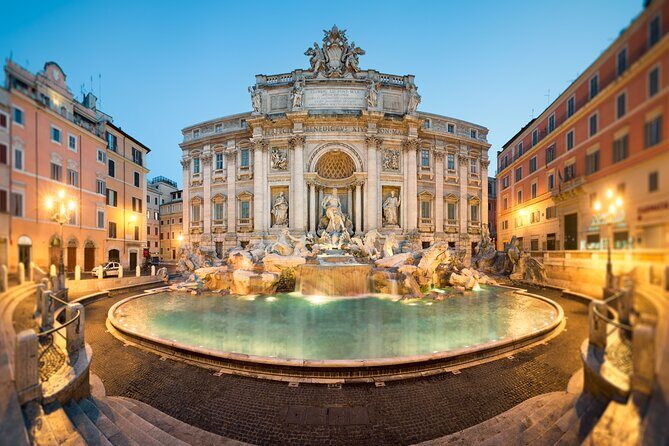
The endgame is Fontana di Trevi, one of Rome’s biggest must-sees. You’ll spend about 35 minutes here, and the fountain’s Baroque design does the job immediately: it’s all motion in stone, all detail in the figures, all drama in the composition.
Then comes the tradition. You’ll likely be guided to participate in the custom of tossing a coin into the fountain. The belief is that it helps ensure you’ll return to the Eternal City. It’s touristy, yes—but traditions survive for a reason: they turn a “look at it” moment into a small ritual you remember later.
This segment also ties in with the included sweets. Your tour includes ice cream, and the walk is paced so you’re not chasing gelato while everyone else is sprinting to the next landmark. In a city where “food breaks” can derail a schedule, building it into the itinerary is genuinely practical.
Ticket note: the admission ticket is listed as not included for this stop. Trevi Fountain itself is a public monument area, so you’re not paying for access as part of this tour—just expect that your time is your main commitment.
How to make the most of your 35 minutes:
- Get your coin toss early if you want space for photos later.
- Walk the edges once so you catch the fountain from a slightly different angle.
- If you’re sensitive to noise, position yourself a bit aside from the tightest cluster.
Price and value: what $230.29 is buying you
At $230.29 per person, this is not a bargain-basement tour. So I’d judge it on three value points: time saved, guide quality, and convenience.
First, you’re paying for a plan that moves through Rome in a way that’s easy to execute. The itinerary strings together major landmarks (Spanish Steps, Piazza Navona, Trevi Fountain) with two meaningful off-the-beaten-track stops (Trajan’s Market area and Galleria Sciarra). You’re not paying to stand in lines alone—you’re paying to know what to notice and where to look.
Second, the guide is a core part of the value. You’re paying for interpretation: the stories behind Trajan’s Column, the meaning behind Bernini’s four rivers, and the architectural reasons Galleria Sciarra matters. That’s the difference between seeing Rome and understanding it.
Third, the included gelato/ice cream makes the tour feel less like sightseeing-only. It keeps energy up and helps you avoid the common trap of “we’re touring all day, then we’re hungry and cranky.” Small comfort, big effect on how enjoyable the afternoon feels.
You’ll still want to budget for personal spending, including tips and any alcoholic drinks (not included). If you’re the type who likes to eat like a tourist on purpose, you’ll probably spend a little more anyway. But the main structured costs are controlled.
Group size and pacing: what it feels like on the ground
This is a small-group tour capped at 6 people. That matters for real-life moments: taking photos without waiting as long, hearing the guide more easily, and having room to move around clusters of people at the Spanish Steps and Trevi.
The pacing is also described as slower, more relaxed. In practice, that means you’re not being rushed between monuments every 5 minutes. You have time to look up at details and to stop for gelato without breaking the flow.
One listening consideration: at this group size, headsets may not be provided. One piece of feedback notes that headsets are available for groups larger than 8, which implies this smaller group might not use them. If you rely on clear audio, choose a spot closer to the guide and don’t get stuck at the very back.
Who should book this tour
I’d steer you toward this tour if:
- You want a guided walk through Rome’s center without long museum commitments.
- You like classic landmarks but want at least two stops that add variety.
- You’d like gelato/ice cream included, with built-in breaks.
- You prefer small groups and a slower pace.
I’d think twice if:
- You want lots of indoor time or deep museum access. This plan focuses on short, sharp stops and outdoor viewing.
- You’re extremely hard-of-hearing and need guaranteed headsets. At a max group size of 6, that’s not listed as included.
Good to know: some venues can close at the last minute. If that happens, the tour may extend to keep the total time near the planned length.
Meeting point to finale: the route end in Piazza Navona
You start at Italy In Love Tours on Via del Cardello, 31 (near public transportation). You end at Piazza Navona. That end location is handy because Piazza Navona is a great hub for your next move—dinner nearby, a stroll afterward, or an easy connection to other parts of central Rome.
The meeting point being in a practical central area also helps. You’re not trekking across the city to start, which keeps your walking day focused on the sights you booked.
Should you book this Rome City Center walk with gelato?
Book it if you want a well-timed city-center overview with real context. The route balances recognizable highlights with two stops that make Rome feel fresh again: Trajan’s Market area for a commercial-and-imperial angle, and Galleria Sciarra for architecture you can actually point to and remember.
Skip it if you already have a tight itinerary with minimal time for walking, or if you want big museum interiors and guided ticketed entry as the main event. This is a walk-and-look tour with storytelling and included ice cream.
If you’re happy spending part of your afternoon learning where the city’s layers meet, this one is a strong value for a small group.
FAQ
How long is the Rome city center walking tour?
It runs about 2 hours 30 minutes.
How big is the group?
The tour is a safe and semi-private group with a maximum of 6 travelers.
Where does the tour start and end?
It starts at Italy In Love Tours, Via del Cardello, 31, and ends at Piazza Navona.
What food is included?
Ice cream is included.
Is gelato included, or just a general dessert stop?
The tour includes gelato/ice-cream as part of the experience during the walk.
Are admission tickets included for Trajan’s Market or the Museo dei Fori Imperiali area?
No. Admission tickets are not included for that stop.
Is Galleria Sciarra free to visit?
Galleria Sciarri is listed as free to visit on the tour.
Are alcoholic beverages included?
No. Alcoholic beverages are not included.
What’s the cancellation policy?
Free cancellation is allowed up to 24 hours in advance for a full refund.
Are service animals allowed?
Yes, service animals are allowed.