REVIEW · EVENING EXPERIENCES
Rome by Night Walking Tour
Book on Viator →Operated by Nicom Tours · Bookable on Viator
Night walks in Rome feel different.
This Rome by Night Walking Tour is a smart way to see the big monuments without baking in the afternoon sun. You meet in the early evening, then move on foot through some of the most photogenic parts of the city as the lights start to come alive. I especially like the small-group setup—it’s capped at 15 people—plus the focus on history and architecture from a real guide, not just a phone map.
Two big wins for me: the route is paced so you’re beating the heat, and the guide helps you understand what you’re looking at as you go. One thing to consider: this is still a street walk, so you’ll want to come with comfortable shoes and be ready for possible minor timing shifts if weather turns or the group moves quickly.
- Small group (max 15) means you’re less lost in the crowd and more likely to get real attention
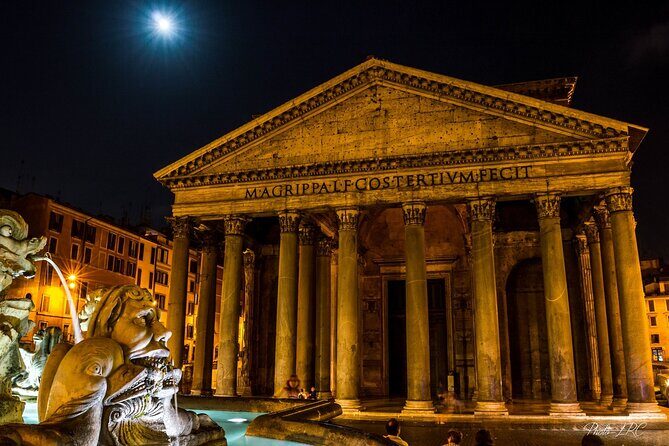
- Pantheon at night puts the dome in a totally different mood than daytime photos
- Trevi Fountain lit up feels like a movie set, and the fountain has been restored to look its best
- Capitoline Hill and Piazza Venezia give you classic Rome views and a major monument stop (Altare della Patria)
- Colosseum exterior look lets you appreciate the scale without waiting for inside tours
- Piazza Navona adds Bernini fountains and lively stories to close out the night
In This Review
- Why an evening walk is the easiest way to “learn” Rome
- Meeting at Piazza del Colosseo: find the group early
- Piazza Venezia and Altare della Patria viewpoints
- Trevi Fountain after dark: the lighting does half the work
- Pantheon under the dome: the “wow” is immediate
- Up toward Capitoline Hill and the Roman Forum area
- Piazza Navona: three fountains and the best kind of crowd energy
- Colosseum exterior: see the scale, then move on with your night
- Pacing, audio, and why “3 hours” can feel different
- Who this tour is best for (and who should choose something else)
- Value: $54.31 for a guided night that strings major sights together
- Should you book Rome by Night Walking Tour?
- FAQ
- How long is the Rome by Night Walking Tour?
- What is the price per person?
- Where does the tour start and end?
- What time does the tour start?
- Is the tour offered in English?
- How large are the groups?
- What’s included in the price?
- Is food or drinks included?
- Is luggage storage available?
- Can I cancel for a full refund?
- What happens if the minimum number of travelers isn’t met?
- Do I need to note accessibility needs?
Why an evening walk is the easiest way to “learn” Rome
Rome can be tough on your schedule. Daytime sighting means heat, lines, and the constant feeling you’re chasing a checklist. This tour is designed for the moment when the city slows down—right as the sky cools and the lights begin to pop on stone and marble.
You’ll love how the timing works. Rome’s monuments are built to be seen from multiple angles, and walking lets you catch those details in motion: the way facades frame narrow streets, the way squares suddenly open up, and the way night lighting changes colors. I also like that you’re not just wandering. A professional guide ties the stops together so you’re not standing in front of the Pantheon or Trevi Fountain thinking: Great, it’s big. You’ll get context for what you’re seeing.
There’s also a practical angle: since this is a 3-hour format, it fits well into your first day or your last evening. You can get your bearings fast, then use what you learned to plan the next day on your own.
Meeting at Piazza del Colosseo: find the group early
The tour starts at Piazza del Colosseo (00184 Roma RM) and finishes back near the same meeting point. That’s convenient because you’re starting in a landmark area you can recognize—even if your first evening in Rome is chaotic.
Still, pay attention to timing. Some guides and tours can be hard to spot at busy landmarks. Plan to arrive a bit early, not right on the dot. If you’re even a few minutes late, you risk missing the group’s departure pace, especially in narrow streets where the meeting point can feel less straightforward once everyone disperses.
Also note what you’re not dealing with: there’s no luggage storage, so keep bags small if you can. The good news is that the meeting point is described as near public transportation, so getting there shouldn’t be a big headache.
You can also read our reviews of more walking tours in Rome

Piazza Venezia and Altare della Patria viewpoints
One of the stops is Piazza Venezia / Ancient City, including time at Altare della Patria—a major Rome monument with bold, central presence. Even if you’ve only seen it in photos, it hits differently in person when you’re standing in the square and realizing how it anchors the skyline.
This stop is more than a photo break. It gives you a sense of Rome’s layers—modern monuments and historical areas close together. On an evening walk, the lighting helps too: stone catches shadows, and the monument feels less flat than it does under midday sun.
If you like architecture, this is where you’ll start connecting the dots. You’re not just collecting stops; you’re building an internal map of where things sit in relation to each other—especially helpful once you head into areas like the Forum/Capitoline zone later.
Trevi Fountain after dark: the lighting does half the work
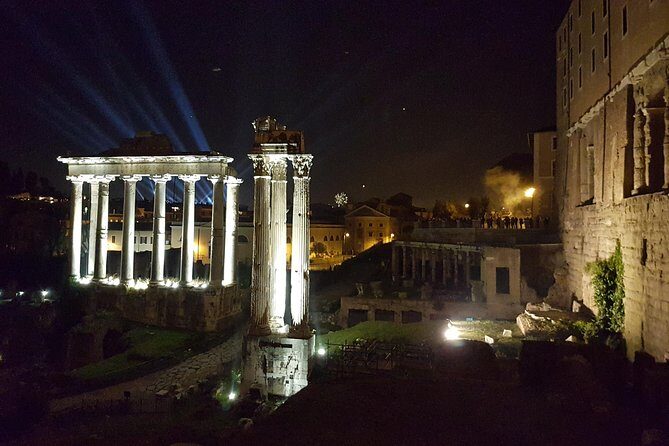
Next up is Fontana di Trevi, and the whole point is that it looks stunning at night. The fountain’s one of the city’s most famous icons, so you might expect it to feel crowded—but evening lighting can still make it feel like you’ve arrived at something special rather than just a tourist photo wall.
You’ll have a longer look here—about 45 minutes—which matters. You can move around, find a good angle, and actually take in the details instead of rushing. There’s also the option to do the classic coin ritual for luck, though it’s an own expense choice. No pressure, but it’s one of those Rome moments that many people enjoy once—especially in the evening glow.
One careful note: Trevi is one of those places where sound and conversation can get swallowed by the crowd. If you’re trying to hear every explanation, position yourself where you can face the guide and still get a view of what they’re pointing at. Some groups have used small headsets/mics to help with audio, which can make it easier to hear through the street noise.
Pantheon under the dome: the “wow” is immediate
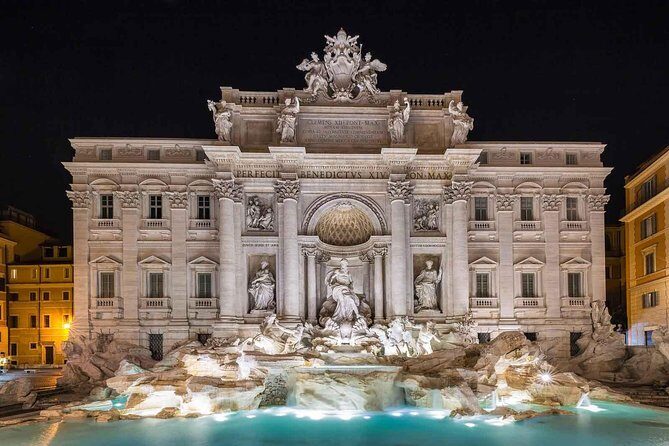
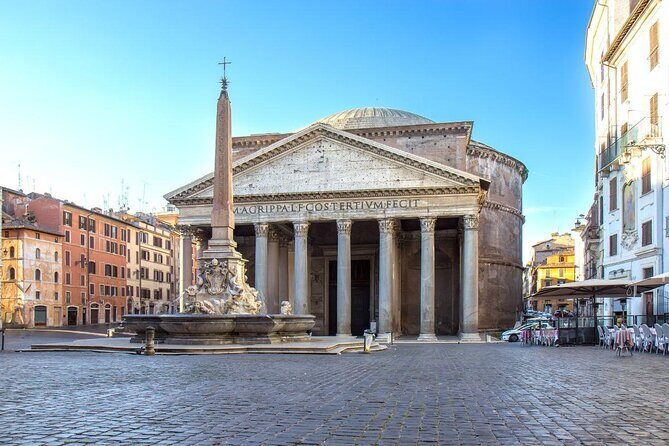
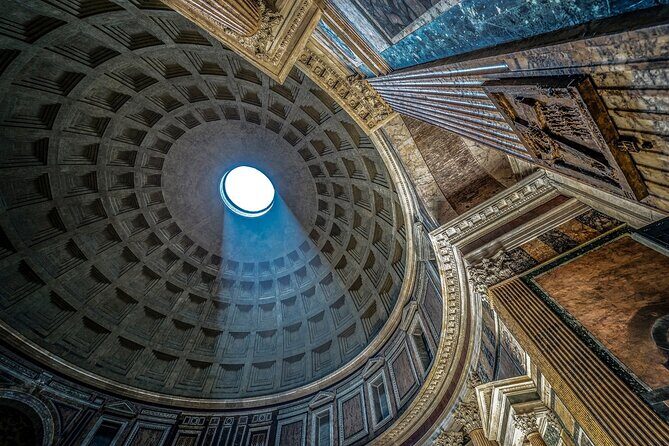
Your route includes the Pantheon, with time around 30 minutes. The tour focuses on it in a nighttime setting—so you’re seeing that iconic dome and opening in a quieter, more dramatic atmosphere than in daytime rush hours.
This stop works because the Pantheon is one of those buildings where understanding comes from looking slowly. Night lighting can make the shape feel even more precise, and your guide can point out the architectural choices that made it such a standout in its era.
If you’re doing Rome for the first time, this is a must-see moment. It’s also a good anchor stop: once you’ve seen the Pantheon at night, the rest of your evening feels more cohesive, because you’re already in the right mental mode—Roman engineering, Roman scale, Roman ideas.
Up toward Capitoline Hill and the Roman Forum area
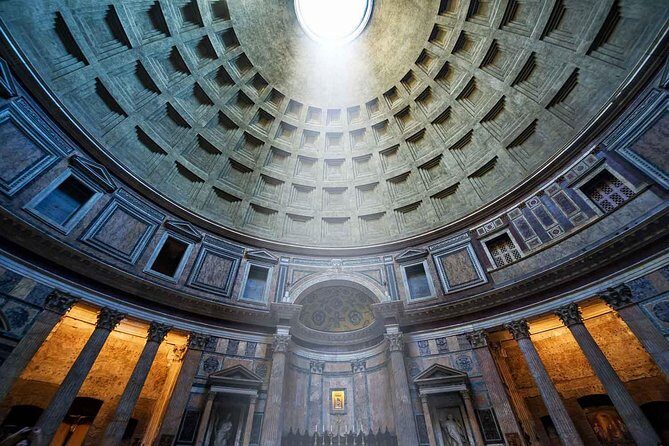
The tour continues toward Capitoline Hill, with a glimpse of the Roman Forum and ruins—the kinds of landmarks you’ve seen in films and textbooks, but rarely in a real, walkable context.
In plain terms, this is where you’ll feel the weight of “where Rome happened.” Even if you’re not stepping deep into every ruin area, just catching the view gives you a stronger sense of the empire’s footprint. At night, it’s easier to stay focused too, because your eyes aren’t trying to escape heat shimmer and bright daytime crowds.
This is also a good moment for questions. If you’re the type who wants the story behind the stones—who ruled, what buildings did what, and why the layout matters—this is exactly where a good guide earns their fee.
You can also read our reviews of more evening experiences in Rome


Piazza Navona: three fountains and the best kind of crowd energy
You’ll finish the sightseeing run with Piazza Navona, including time of about 30 minutes. This square is famous for its three fountains by Bernini, and the tour framing matters: you’re there to understand the symbolism and the anecdotes, not just to stand in the center.
In the evening, Piazza Navona feels like Rome at social volume. It’s a place where you can pause without feeling like you’re losing time. It’s also a strong “closing scene” after the heavier monuments earlier. You go from grand architecture to a lively square—same Roman genius, different expression.
If you care about photos, it’s also a practical stop. Squares give you open sightlines, and you can take pictures without weaving through nonstop foot traffic.
Colosseum exterior: see the scale, then move on with your night
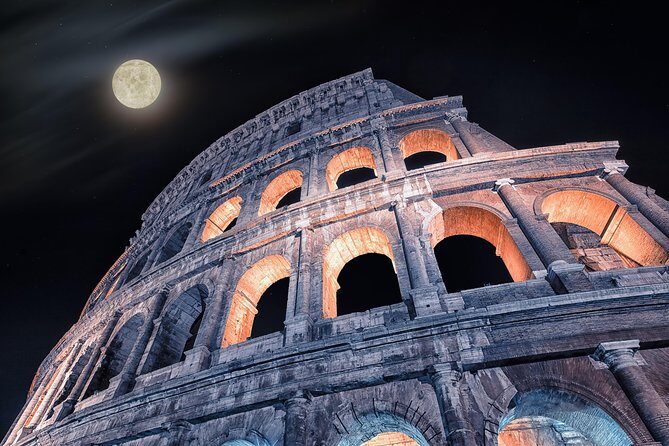
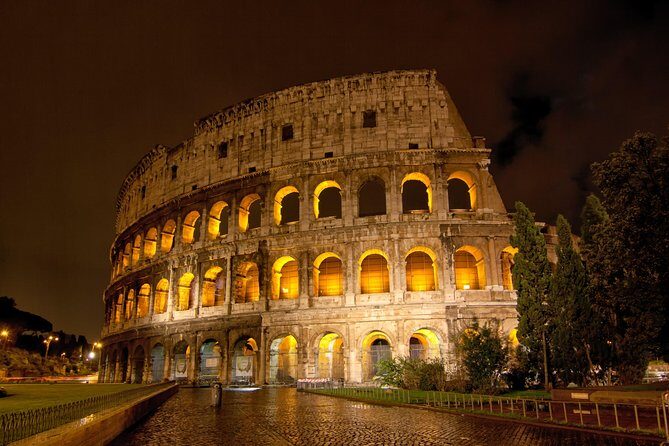
The tour’s last major landmark is the Colosseum, with an exterior-focused look. That matters if you’re trying to balance Rome’s must-sees without turning your evening into a line-waiting marathon.
Seeing the Colosseum from the outside is still powerful. You get the scale, the rhythm of the structure, and the sense of why it was such a spectacle. Even if you don’t go inside, you’ll leave with a clearer idea of how it functioned and why people were drawn to it.
The guide often shares little-known facts—stuff you won’t get from a quick glance. And because it’s at night, the edges and shapes look sharper, especially once surrounding lights frame parts of the arena.
One consideration from real experiences: not every guide or group handles the same audio level in the street. Some people have wished for clearer volume or better hearing. If this is a concern for you, try to stay close to the front of the group so you can catch explanations.
Pacing, audio, and why “3 hours” can feel different
On paper, you’re out for about 3 hours. In practice, the time can feel better or worse depending on weather, crowd flow, and how the group holds together.
Some nights run as expected with a smooth rhythm from stop to stop. Other evenings can shorten if it rains hard near the end. If you show up on a wet night, dress for it and expect your guide to make practical calls about what’s still worth doing.
Audio is another variable. Some guides use headsets/ear pieces with a mic that helps you hear clearly. Others may rely more on normal voice volume. Either way, you’ll have the best experience if you stay engaged and don’t treat it like background entertainment.
If you’ve got limited energy, this still might be a good choice because the walk is described as a leisure pace—more passeggiata than military march. Just don’t plan on comfortable sneakers being optional.
Who this tour is best for (and who should choose something else)
This experience is a good fit if you:
- want a first-night orientation to Rome that still feels meaningful
- love walking and want to beat the heat while seeing iconic sights
- enjoy architecture and historical context tied directly to what you’re seeing
- want a guide-driven evening without adding extra planning stress
It may be less ideal if you:
- need a very predictable, rigid schedule (street timing can flex)
- have trouble hearing in busy outdoor spaces unless your guide uses a mic/headset setup
- expect to see everything with zero walking effort
If you’re traveling with older family members, or you’re sensitive to uneven sidewalks, it’s worth thinking through your comfort level before committing. The tour indicates that people with disabilities should note it on booking, which is a good sign they want to account for needs ahead of time.
Value: $54.31 for a guided night that strings major sights together
At $54.31 per person, you’re paying for something important: a professional guide who connects Pantheon, Trevi Fountain, Capitoline Hill/Forum viewpoints, Piazza Navona, and the Colosseum exterior into one coherent evening.
That value is strongest if you would otherwise spend money and time piecing it together yourself. A night-only route also saves energy. You’re not forced to do these stops across multiple hot daytime afternoons or break your day into too many separate plans.
It’s also worth the price because the tour is built around prime photo moments. Trevi Fountain and the Pantheon at night aren’t just convenient—they’re part of the experience, not an afterthought.
Just remember what’s not included: food and drinks. If you want dinner after, plan for it. The tour length is short enough that you can still find a meal afterward.
Should you book Rome by Night Walking Tour?
Book it if you want an efficient, guide-led way to experience Rome’s top sights at night—especially if this is your first trip and you want help learning what you’re looking at. The small group size and the emphasis on evening timing make it a strong choice for travelers who want comfort without losing the wow factor.
Skip it or switch plans if you:
- hate walking long distances on uneven pavement
- rely on very quiet audio and fear outdoor noise
- are traveling when rain is likely and you’d rather keep a flexible indoor plan
If you do book, do one simple thing: arrive early at Piazza del Colosseo and wear shoes that can handle cobblestones without drama. Then lean in—ask questions, point out what you’re curious about, and enjoy Rome after dark the way it’s meant to be seen.
FAQ
How long is the Rome by Night Walking Tour?
It lasts about 3 hours.
What is the price per person?
The price is $54.31 per person.
Where does the tour start and end?
It starts at Piazza del Colosseo, 00184 Roma RM, Italy and ends back at the meeting point.
What time does the tour start?
The start time is 6:00 pm.
Is the tour offered in English?
Yes, it’s offered in English.
How large are the groups?
The group size is limited to a maximum of 15 travelers.
What’s included in the price?
A professional guide is included.
Is food or drinks included?
No. Food and drinks are not included.
Is luggage storage available?
No. luggage storage is not available.
Can I cancel for a full refund?
Yes. You can cancel up to 24 hours in advance for a full refund.
What happens if the minimum number of travelers isn’t met?
If the experience is canceled because the minimum isn’t met, you’ll be offered a different date/experience or a full refund.
Do I need to note accessibility needs?
If you have accessibility requirements, you must note it on your booking.