REVIEW · EVENING EXPERIENCES
Rome by Night Private Walking Tour
Book on Viator →Operated by Rome Guides · Bookable on Viator
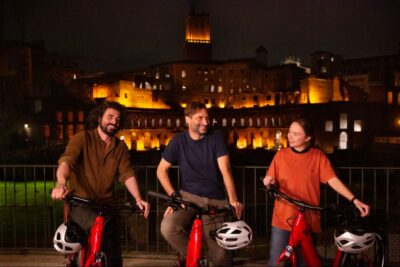
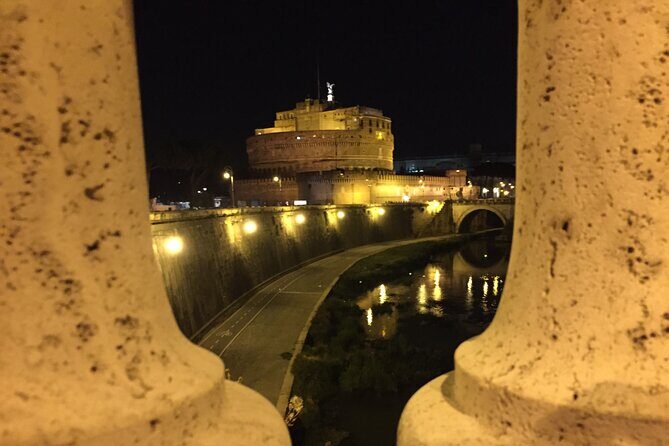
Rome looks different after dark. This private night walk strings together the big names—Colosseum area, Forum ruins, Pantheon, and Piazza Navona—so you get a clearer story than you will with daytime wandering. I especially like the night perspective on places most people rush through.
Two things I’d bet you’ll love: the Forum-to-Capitol views with the monuments lit up, and the way the guide explains what you’re actually looking at instead of tossing dates at you. One consideration: it’s a 2.5-hour walk on darker streets and uneven ancient surfaces, so come with moderate physical fitness and comfortable shoes.
In This Review
- Key highlights to watch for
- Why Rome at night feels smarter than daytime
- Meeting at Piazza del Colosseo at 8:30 pm: what to expect
- Roman Forum ruins at night: from Romulus to the fall
- Trajan’s Column and the art of imperial power
- Piazza del Campidoglio: Michelangelo’s Renaissance statement
- The area of Julius Caesar’s assassination
- The Pantheon: Roman engineering and belief, side by side
- Piazza Navona after dark: Baroque art you can see
- Guides make the difference: Barbara and Vincent’s style
- Walking time, pace, and value for $157.28 per person
- Who should book this night walk (and who might skip)
- Should you book the Rome by Night Private Walking Tour?
- FAQ
- Where does the tour start and end?
- What time does the Rome by Night tour begin?
- How long is the tour?
- Is this tour private?
- What language is the tour offered in?
- What’s included in the price?
- Is hotel pickup or transportation included?
- What should I bring for a nighttime walking tour?
- Are there accessibility notes?
- What is the cancellation policy?
- Are service animals allowed?
Key highlights to watch for
- A myth-to-empire storyline that makes the Forum feel less like ruins and more like a timeline
- Trajan’s Column used as a jumping-off point for how Rome grew its power
- Michelangelo’s Piazza del Campidoglio plus an excellent night view over the Forum
- A stop tied to Julius Caesar’s assassination and why it mattered
- The Pantheon as living engineering, not just a pretty old building
- Baroque Rome at Piazza Navona with art-history talk you can see in front of you
Why Rome at night feels smarter than daytime
Rome at night is calmer. You still get the drama of famous monuments, but the mood is less frantic, and you can actually hear your guide. Starting in the evening also changes how the sites read: shadows soften the stones, and the lighting helps you notice shapes, arches, and alignments that blur in daylight crowds.
I like that the tour is built around contrasts. You’ll move from imperial scale (columns, forums, monumental architecture) to human scale (squares, streets, and the art on building facades). It’s an easy way to see how Rome went from myth-making to empire-building to a city shaped by Renaissance and Baroque architects.
You can also read our reviews of more walking tours in Rome

Meeting at Piazza del Colosseo at 8:30 pm: what to expect
The walk starts at Piazza del Colosseo, 21, with the tour beginning at 8:30 pm. The meeting point is in the Colosseum area, and the info notes it’s close to two taxi stations, which can help if your plan changes and you need a quick grab.
The tour ends at Piazza Navona. That matters for your night plan: you’re not walking back across the city after you’re tired. Piazza Navona is also a convenient base for your last course of the evening—dinner, dessert, and a bit more strolling without needing a transport rescue.
This is a private tour/activity, so it’s only your group with your guide. That usually means you can ask follow-up questions and set your pace a bit more naturally than on big group tours.
Roman Forum ruins at night: from Romulus to the fall
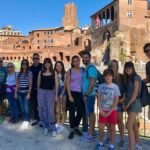
Your first major stop takes you by the ruins of the Roman Forum. This is where the tour does its best job turning Rome into a story you can follow.
You’ll hear the outline from Rome’s mythological beginnings—starting with Romulus—and how that sense of origin feeds into how Romans later understood their greatness. Then the guide connects the dots through real political power, showing you the arc that leads toward the fall of the Roman Empire.
Why this stop works at night: the Forum’s scale is easier to grasp when you can see the outline of buildings and corridors without constant daytime distractions. You’ll still be surrounded by stone, but the lighting helps you “frame” what you’re looking at—where movement once happened, where power was displayed, and how public life filled these spaces.
One practical note: since you’re walking by archaeological areas, expect uneven ground and be ready to pause for explanations. If you’re the type who likes to keep moving, ask your guide to point out the most important vantage points so you don’t miss key details while walking.
Trajan’s Column and the art of imperial power
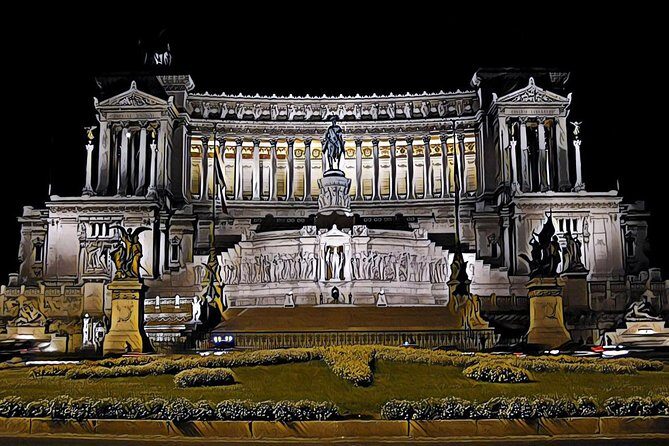
Next comes a lesson in how Rome advertised its own ambition: the Trajan’s Column. The tour ties this monument to major emperors—using Trajan as an example of how Rome enlarged its reach through conquest.
The value here isn’t only the statue-or-column photo. The real payoff is learning how Rome communicated power in a way ordinary people could read. A column like this isn’t just decoration; it’s a message carved in stone.
At night, Trajan’s Column is a good “break” from the bigger open spaces. It’s a more focused stop, so you can slow down, look up, and let the guide explain what you’re seeing and why it was designed that way.
Piazza del Campidoglio: Michelangelo’s Renaissance statement
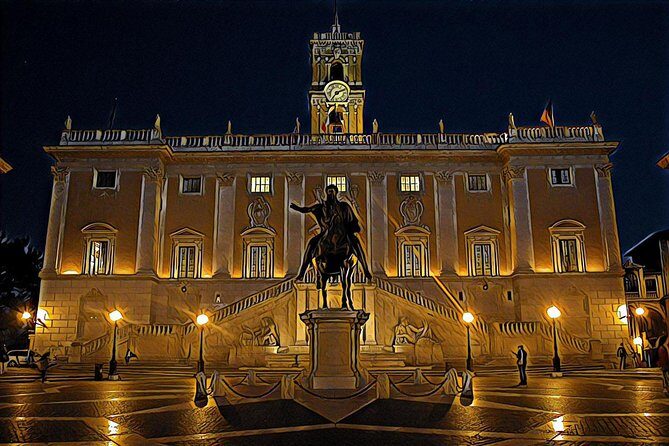
The tour then shifts to Renaissance architecture at Piazza del Campidoglio, created by Michelangelo. Even if you’re not a design nerd, this is one of those places where you can feel the planning. The square gives you a cleaner stage than the Forum ruins, and that contrast is useful: you’re seeing how later artists tried to “organize” Rome’s past.
You’ll also get an incredible view over the Roman Forum from here. At night, that view is especially good because the lights bring out structure rather than making it all blend into darkness.
If you’re planning your photos: this is where you’ll want to slow down and aim for a few different angles. The Forum lights can look flat from street level, but from this viewpoint the layout reads better. Ask your guide where the best angles are before you move on.
You can also read our reviews of more private tours in Rome

The area of Julius Caesar’s assassination
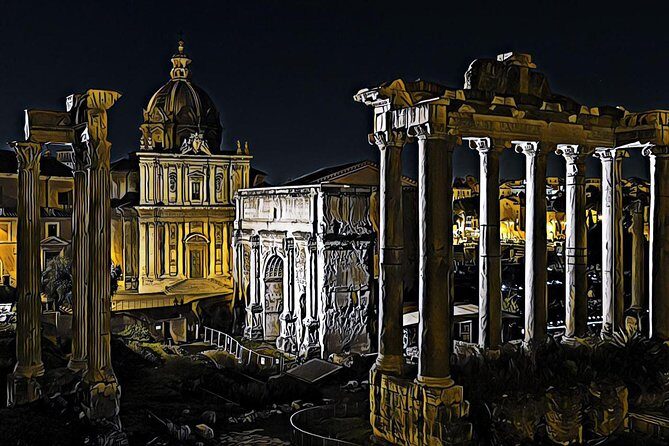
Walking through the archaeological area related to the real place of Julius Caesar’s murder, you’ll get the “why” behind one of the most famous moments in ancient history. The tour frames Caesar as a Roman hero and explains the reasons that made him such a pivotal figure.
This stop isn’t about horror-movie drama. It’s about consequences. Caesar’s death didn’t just end a life; it reshaped politics and the direction Rome took next. With your guide’s narration, the setting becomes more than a point on a map—it becomes a key moment in how power shifts.
At night, you may notice how much the mood depends on lighting and your guide’s pacing. If your group tends to rush, you’ll want to remind everyone to stop and look where the guide gestures. Caesar-related history is one of those topics where the meaning is strongest when you’re standing in the right space.
The Pantheon: Roman engineering and belief, side by side
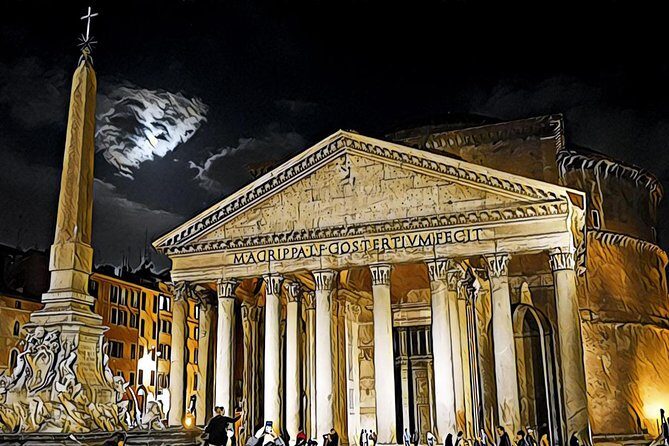
The Pantheon is often a must-see, but this stop is designed to make you notice what’s actually impressive. It’s described as the best preserved building of ancient Rome, and your guide will use it to explain Roman engineering, architecture, and religion.
Here’s what makes the Pantheon work on a night tour: you’re not just admiring a landmark. You’re learning how Romans built something that has survived. That can make you look differently—at the scale of the interior, the logic of its form, and the way religion and public life were tied together.
If you want a simple way to get more out of it, do this: before you go in (or during the explanation), ask yourself what you expect a building like this to do—keep a crowd safe, honor a deity, reflect power—and then see how the structure supports that idea.
Piazza Navona after dark: Baroque art you can see
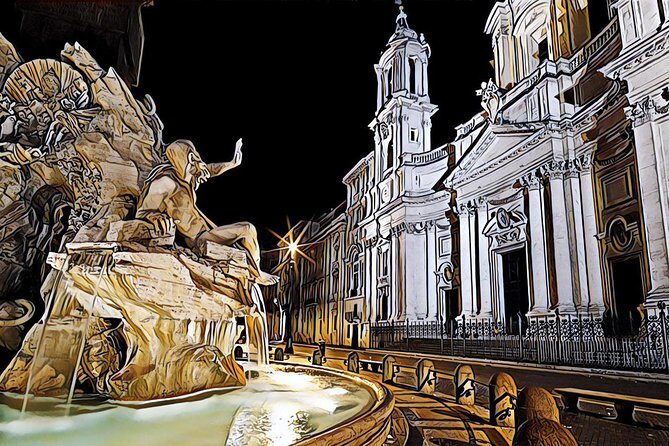
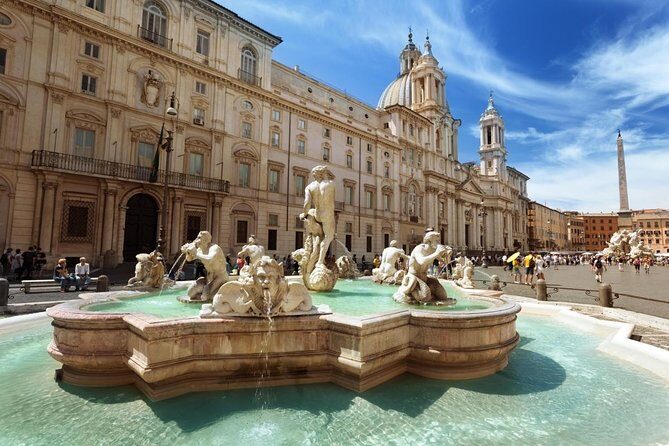
To end, you’ll reach Navona Square, a strong example of Baroque Roman style. The tour connects the square to major artists, specifically Bernini and Borromini, and explains art history in a way that links the buildings to the artists and the life of Rome at the time.
This stop feels good after ruins and imperial monuments. It’s more human-scale and more playful—less about stone leftovers and more about design, detail, and how people once used public space.
What I like here is that your eyes get a new job. Instead of scanning for dates and names in the dark, you’ll look at decoration, façade structure, and the kind of artistic choices that helped Baroque architecture pull people in.
Guides make the difference: Barbara and Vincent’s style
This tour includes a professional guide and a local guide, which helps keep the storytelling tight and the logistics smooth. The biggest win is how the guide keeps the group engaged—asking questions, responding to curiosity, and shaping the pace to match the people walking with them.
I also like the practical kindness that tends to show up on this kind of night tour. In examples from past groups, guides such as Barbara have led people to a gelato spot when asked and shared advice on where to get outstanding tiramisu. Another guide, Vincent, was highlighted for engaging both history lovers and people who were only lukewarm about the topic at first.
If you have teens or a group with mixed interests, this is the kind of structure that can help everyone stay with it. Night tours have a built-in temptation to drift off—good guides pull everyone back in.
Walking time, pace, and value for $157.28 per person
At about 2 hours 30 minutes, this is long enough to feel like a real experience, not a quick stop-and-go “highlights reel.” It’s also short enough that you won’t feel trapped in the evening. The tour is offered in English, and the info lists mobile ticket delivery, plus service animals are allowed.
Let’s talk value. $157.28 per person isn’t a bargain price, but for Rome it can be fair when you consider three things:
- you’re paying for a guide who explains what you’re seeing, not just a route,
- it’s private, so you’re not sharing the best parts of the explanation with a crowd,
- and the tour hits multiple major sites in one evening, with smoother flow between them.
The tour also notes group discounts, which can make a bigger difference than you might think. If you’re traveling with family or friends, splitting the cost across a small group usually turns this into a strong deal compared with paying separately for multiple single-site tours.
One consideration: it’s still a walking tour at night, and the info asks for moderate physical fitness. If your group struggles with uneven surfaces or longer standing still for photos, you’ll want to set expectations early and wear solid shoes.
Who should book this night walk (and who might skip)
This tour is a great fit if you:
- want a coherent Rome story instead of a checklist of landmarks,
- like night photos but also want explanations that make the photos mean something,
- are traveling with mixed interests (history buffs and people who just want to see great places),
- want to reduce crowds by seeing big sights at a calmer hour.
You might consider skipping if:
- you hate walking or you’re sensitive to darker streets and longer pauses,
- you only want one or two landmarks and prefer a lighter, shorter plan,
- your group’s history interest is extremely low and you won’t engage with narration.
One more planning tip: the tour is commonly booked far in advance (about 98 days on average). If you have a specific evening in mind, you’ll save yourself stress by locking it in early.
Should you book the Rome by Night Private Walking Tour?
I think you should book it if your goal is understanding, not just sightseeing. The route connects Forum politics, imperial messaging, Renaissance planning, Caesar’s turning point, and then the Pantheon and Baroque art that shaped later Rome. That mix makes the city feel like one big, continuous conversation.
For the best experience, show up ready to walk, ask questions, and give your guide a chance to steer you toward the best viewpoints. If you do that, this night route can make Rome click in a way daytime wandering often doesn’t.
FAQ
Where does the tour start and end?
It starts at Piazza del Colosseo, 21, 00184 Roma RM, Italy, and it ends at Piazza Navona, 00186 Roma RM, Italy.
What time does the Rome by Night tour begin?
The start time is 8:30 pm.
How long is the tour?
It’s approximately 2 hours 30 minutes.
Is this tour private?
Yes. It’s a private tour/activity, so only your group participates.
What language is the tour offered in?
The tour is offered in English.
What’s included in the price?
Included items are a professional guide and a local guide.
Is hotel pickup or transportation included?
No. Hotel pickup and drop-off and private transportation are not included.
What should I bring for a nighttime walking tour?
Wear comfortable shoes and have a moderate fitness level, since it’s still a walking tour on city streets and archaeological areas at night.
Are there accessibility notes?
The tour info states you should have a moderate physical fitness level.
What is the cancellation policy?
Free cancellation is available. You can cancel up to 24 hours in advance for a full refund.
Are service animals allowed?
Yes, service animals are allowed.