REVIEW · PRIVATE
Private Walk Through the Jewish Ghetto in Rome
Book on Viator →Operated by Roman Vacations · Bookable on Viator
Rome’s ghetto tells the story in stone. This private walk links major landmarks like Trajan’s Column and the Capitoline area to the real lived history of the Jewish Quarter, and you also get authentic kosher gelato. I also like that it ends at Tiber Island, a smart spot for dinner afterward. The main drawback: it’s a walking tour with a few uphill stretches, so wear comfy shoes.
You’ll get an expert certified guide leading just your group, in English. Depending on the day, you might be guided by someone like Jamie, James, or Angela—people who clearly know how to connect the ghetto to the wider Roman story and keep it fun instead of lecture-y.
Below is what you can expect, stop by stop, plus whether the price makes sense for your Rome plan.
In This Review
- Key highlights before you go
- Trajan’s Column to Piazza del Campidoglio: setting the stage
- Teatro di Marcello: the little Colosseum (without the violence)
- Fontana delle Tartarughe and a kosher gelato break
- Tempio Maggiore di Roma: 1555, restrictions, and survival through culture
- Portico d’Ottavia and Isola Tiberina: finishing at the border of Rome
- Price and value: what $84.11 buys you in Rome time
- Pace, comfort, and how to make the walk easy
- Should you book this private Jewish Ghetto walk?
- FAQ
- How long is the Private Walk Through the Jewish Ghetto in Rome?
- What language is the tour offered in?
- Is gelato included?
- Do I need to pay for any museum or site entries during the walk?
- Where does the tour start and end?
- Is this tour private?
Key highlights before you go
- Trajan’s Column and Piazza del Campidoglio first: you start with Roman power, then pivot into the ghetto story.
- Teatro di Marcello, the little Colosseum: same Roman “vibes,” older in date, with a different purpose.
- Kosher gelato and the Turtle Fountain: quick breaks that still feel tied to place and time.
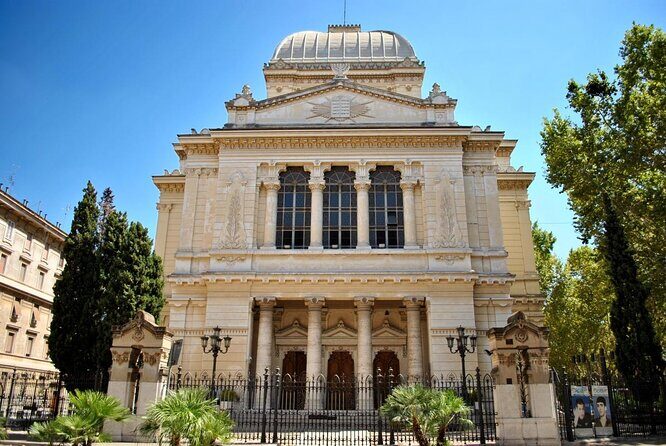
- Tempio Maggiore di Roma visit: you see the oldest ghetto Jewish structure described as dating to 1555, and the synagogue still active today.
- Portico d’Ottavia marks the entry point: Augustus’s monumental structure leads you straight into the ghetto area.
- Tiber Island finish: you wrap up at a historic island hospital site with easy routes onward.
Trajan’s Column to Piazza del Campidoglio: setting the stage
You start at Foro di Traiano, right by Trajan’s Column. It’s a strong opening because it puts you inside the Rome that built the empire—before you get to the Jewish Quarter. Trajan’s Column is the sort of landmark that makes you slow down, not rush, and your guide’s job is to connect that imperial setting to what comes later.
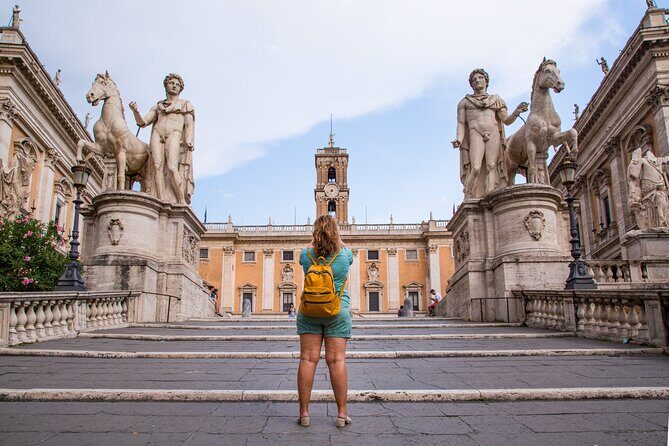
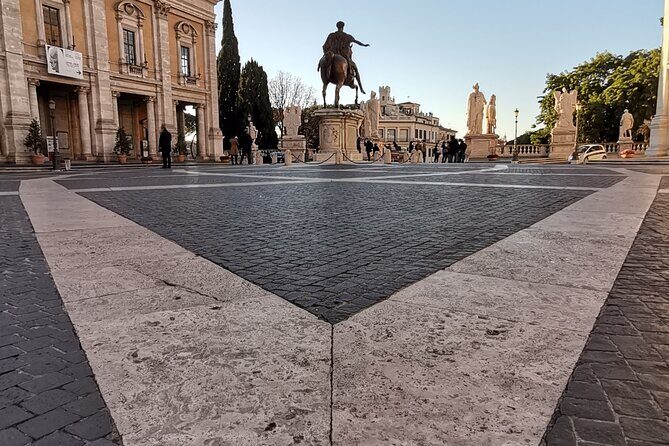
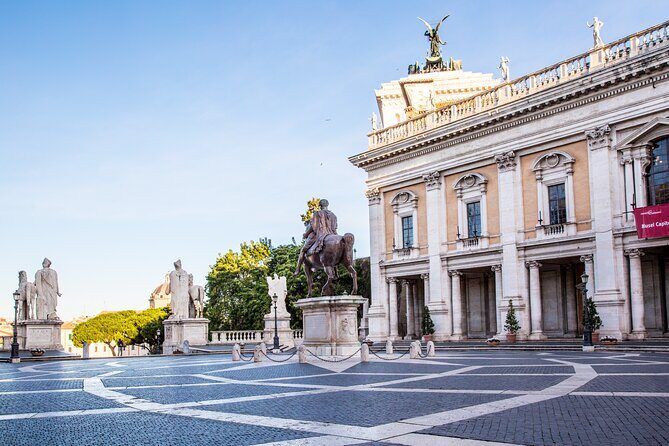
After that, you move toward Piazza Venezia and then up a gently sloping run of steps to Piazza del Campidoglio. This isn’t just a pretty viewpoint stop. Piazza del Campidoglio is tied to Michelangelo’s design, and it gives you a clean “world view” moment: you see how planned spaces and architecture shaped daily life in Rome.
Then you’re set up for the Capitoline area. The tour notes that the Capitoline museums are nearby and free at this stage, which matters because you’re not paying extra for every little detour. Even if you don’t go into the museums, the framing helps you understand what you’re seeing when you shift into the Jewish Ghetto’s streets afterward.
What I like for you here: this start gives context fast. It helps the ghetto portion feel like history that sits inside the same city, not a separate theme park.
You can also read our reviews of more walking tours in Rome


Teatro di Marcello: the little Colosseum (without the violence)
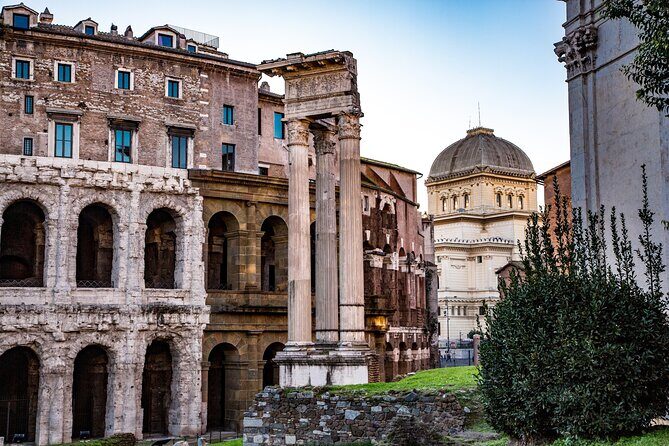
Next you head to Teatro di Marcello, often nicknamed the little Colosseum. You’ll spot the architectural similarity right away—the layered stonework and Roman scale—but you also learn why it isn’t the same story. This theater dates back to 12 BC, which makes it one of those Rome landmarks you can’t quite believe is that old.
The tour includes a quick explanation that it didn’t host blood sports. That’s a useful detail because it changes what you expect from a “Colosseum-looking” structure. It also helps you compare different Roman entertainment styles: what people watched, why buildings were built, and how the city’s priorities shifted over time.
One of the practical surprises: the theater now has residents living in apartments above it. That’s the most “alive” kind of Rome fact—history still tucked into everyday life. You don’t just look at ruins; you see how a living city uses older shells.
Tip for you: take a minute to look for angles where the scale hits you. The theater can look like a normal façade until you step into the right sightline.
Fontana delle Tartarughe and a kosher gelato break
As you walk, you’ll pass neighborhood restaurants in the area. That’s not fluff; it’s how you get oriented. You’re moving from major monuments into a street grid where food, daily errands, and community life matter.
Then comes a short stop: traditional kosher gelato. The tour says gelato or coffee is included, so you’re not forced into spending extra to get a “reward” for walking. This is a small inclusion, but it’s the right kind of travel value—treats that make the area feel specific, not generic.
After the gelato, you reach Fontana delle Tartarughe, the Turtle Fountain. This fountain is described as a late Italian Renaissance masterpiece, and the tour highlights something people love to hear: it was famously constructed in just one day. That one-day detail adds a human pace to the artwork—someone planned it, worked it, finished it, and handed it to the city like a deadline.
Even if you’re not a fountain fanatic, this stop works because it punctuates the walk. You get shade, a view point, and a break right before moving into deeper ghetto history.
Tempio Maggiore di Roma: 1555, restrictions, and survival through culture

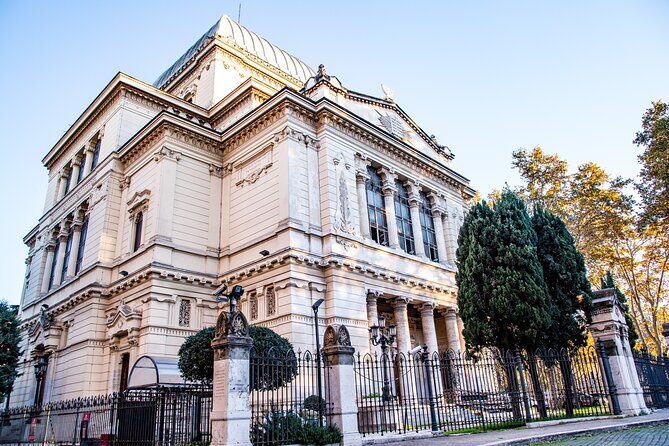
This is the heart of the walk. The tour takes you to Tempio Maggiore di Roma, constructed in 1555, described as the oldest Jewish Ghetto. You’ll learn what the pope did to the Roman Jewish community after rights had previously been granted—revoking those rights and barring Jews from many activities, including trade and the ability to own real estate.
That’s heavy material, so I’m glad the tour keeps it grounded in what you can see. You don’t just hear abstract facts. You’re in the right area, looking at the right places, and the guide connects restrictions to daily realities.
The tour also includes the key counterpoint: despite those limits, the Jewish community thrived inside the walls. The information provided talks about business trade, unique cuisine, and even a distinct dialect of Italian. That mix is important. It shows that a ghetto wasn’t only confinement; it was also a system people built with their own food, language, and commerce.
You’ll also hear about the Great Synagogue still functioning today as a place of prayer and as a major cultural reference point. The tour specifically notes it’s the third largest in Europe, which helps explain why this isn’t a museum-only stop.
One practical note: admission to Tempio Maggiore di Roma is not included. The tour time on this stop is about 15 minutes, so you’ll want to budget for any entry cost if you plan to go inside.
What I like for you here: the guides’ big strength is turning big history into something you can feel in the street layout and buildings. That kind of framing can make the difference between memorizing facts and actually understanding a place.
Portico d’Ottavia and Isola Tiberina: finishing at the border of Rome
From the synagogue area, you make a short walk to Il Portico di Ottavia (Porticus Octaviae). This is a huge structure built by Augustus in honor of his sister Octavia. The tour notes it served as Rome’s fish market from the 15th century through the early 20th century—another reminder that the ghetto story sits inside a city economy that kept changing around it.
Then comes a critical moment: it’s where you enter the Ghetto itself. That’s a smart way to do it. Starting from a monumental Roman structure, then crossing into the ghetto area gives you an immediate before-and-after feeling.
The last stop is Isola Tiberina, Tiber Island. The tour ends there, and it’s one of the best “wrap-up” ideas in Rome. The island was used as a hospital in ancient Roman times, with the river acting as a natural barrier to help limit disease spread. The tour also notes that a major hospital still exists on the site today.
So the island is both ancient and modern in function. You also get a river view and the sense that you’re crossing from one neighborhood mood to another. The tour specifically points out that Tiber Island sits between the ghetto area and Trastevere, and it’s convenient for getting back around—especially along the Lungotevere bus routes.
Practical value for dinner: ending at Tiber Island is a shortcut to food options. You’re right between areas that are easy to walk around after the tour ends.
You can also read our reviews of more private tours in Rome






Price and value: what $84.11 buys you in Rome time
At $84.11 per person for about two hours, this isn’t the cheapest walking option in Rome—but it doesn’t price itself like a premium “must-do” either. The value comes from three things you actually feel during the experience:
- Private group with an expert certified guide
You’re not competing for hearing the story. You can ask questions as you go, and the guide can tailor pacing.
- Specific landmark sequence, not random stops
Trajan’s Column, Piazza Venezia/Campidoglio, Teatro di Marcello, Fontana delle Tartarughe, then into ghetto landmarks like Tempio Maggiore, before finishing at Tiber Island. It’s a logical progression from empire power → neighborhood life → community history → modern Rome.
- Included kosher gelato or coffee
This is a real perk because it prevents the common problem on walking tours where the “treat” becomes another charge. You already budgeted for it.
On top of that, the tour description indicates group discounts, a mobile ticket, and English language. It’s also listed as near public transportation, which matters if you’re mixing it with museum visits or another walking plan.
Pace, comfort, and how to make the walk easy
This is sold as a walking tour around central Rome monuments and neighborhood streets, so build in that reality. The itinerary notes a gentle slope up toward Piazza del Campidoglio, and you’ll spend your time walking between major points. Two hours passes fast when you’re actually learning and seeing.
Here’s how I’d set you up for comfort:
- Wear shoes you trust. Rome sidewalks can be smooth in spots and annoying in others.
- Plan a light pace at the start. Once you’re at the Campidoglio area, you’re already working with stairs and sightlines.
- Bring a water bottle if the weather is warm. The stops are short, so you don’t want to run out halfway through.
Because it’s private, your group sets the practical rhythm. If you’re traveling with mixed ages or you want a calmer pace for photos, this private format usually makes it easier than fixed-group tours.
Also, the tour says service animals are allowed, and most travelers can participate. That suggests the route isn’t described as extreme, but you should still treat it as a walk with real city distance.
Finally, it’s best to book with a bit of lead time. The tour is noted as commonly booked about 48 days in advance on average, which tells you it fills.
Should you book this private Jewish Ghetto walk?
If you want Rome’s ghetto story told in a way that connects to the wider city—imperial Rome, architecture, neighborhood life, and then the community’s experience—this is a strong choice. I’d book it if you like history that has street-level detail and if you want a guide who can handle questions and keep the vibe human. The standout value is the way the guide ties the ghetto into the broader Roman timeline while still pointing out what you can actually see around you.
Skip it if you hate walking or you only want museum-only experiences. Also, because Tempio Maggiore admission isn’t included, check whether you want to go inside and plan for that added cost.
If your Rome trip is short and you want one guided walk that hits big landmarks plus the heart of the Jewish Quarter, this is the kind of tour that makes your whole itinerary feel more connected.
FAQ
How long is the Private Walk Through the Jewish Ghetto in Rome?
The tour lasts about 2 hours.
What language is the tour offered in?
It is offered in English.
Is gelato included?
Yes. You get authentic Italian gelato or coffee included in the tour.
Do I need to pay for any museum or site entries during the walk?
Most listed stops are free to visit, but admission to Tempio Maggiore di Roma is not included.
Where does the tour start and end?
It starts at Foro Traiano, 84, 00187 Roma RM, Italy and ends on Tiber Island, 00186 Rome, Metropolitan City of Rome Capital, Italy.
Is this tour private?
Yes. It’s a private tour/activity, so only your group participates.