REVIEW · ORVIETO
Private Tour of Orvieto including Duomo (Cathedral)
Book on Viator →Operated by Umbria con Me · Bookable on Viator
Orvieto can feel like a puzzle box. This private tour helps you put the pieces together fast, with an official local guide guiding you through the old streets and into the Duomo di Orvieto area without the usual wandering-and-wringing-your-hands routine.
I especially like two things: the time-saving, short format (about 2 hours) and the way the guide connects art and architecture to Orvieto’s deeper story—Etruscan roots, tufa city life, and why the Duomo matters in Europe. The pacing is also adjustable for real-life needs, from families to slower walkers.
One thing to plan for: cathedral entry tickets aren’t included, and parts of the experience rely on staying properly covered for church entry (no shorts or sleeveless tops). If you’re hoping for hours of museum time, this tour may feel tight.
In This Review
- Key highlights worth your attention
- Orvieto’s winding streets made simple with a private guide
- Centro Storico Orvieto: the setting that makes everything else click
- Duomo di Orvieto: the gold façade and Signorelli’s artistic impact
- Cappella di San Brizio: when the tour’s short timing still hits hard
- Tower view: Orvieto’s medieval power seen from above
- Sant’Andrea e Bartolomeo: the architecture stop most people skip
- How long is enough time? The real pacing of a 2-hour private tour
- Price and value: when a private group tour makes sense
- Best for families, history lovers, and “I just need the highlights” travelers
- Dress code and on-the-ground practicalities you shouldn’t skip
- Should you book this private Orvieto Duomo tour?
- FAQ
- What’s included in the private tour?
- Are Duomo and Cappella di San Brizio tickets included?
- How long is the tour?
- Where does the tour start and end?
- What dress code is required?
- Is this a private tour?
Key highlights worth your attention
- Private guiding so you’re not stuck with a rushed crowd
- Duomo focus with the gold-and-mosaic façade and Luca Signorelli fresco context
- Short and efficient timing that leaves room to shop and explore after
- Tower view for a fast, big-picture look at Orvieto and the valley below
- Small logistics win: you won’t waste time guessing turns in the narrow lanes
- Guide quality signals: past groups have mentioned guides such as Elena, Emanuela, Viviana, Begona, Michele, and Alessandra
Orvieto’s winding streets made simple with a private guide
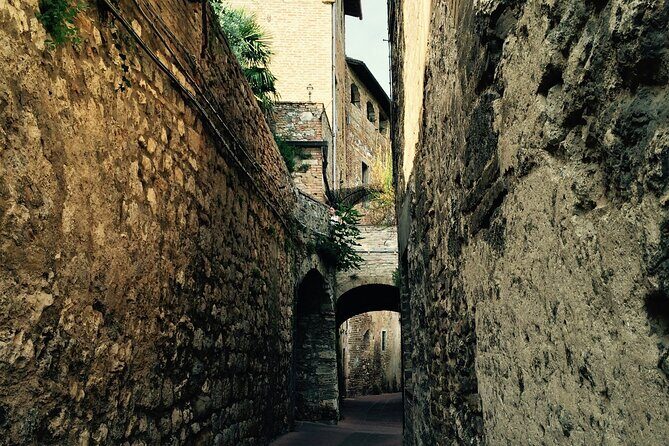
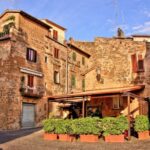
Orvieto is built on a tufa outcrop about 300 feet above the Paglia valley. That alone explains the town’s personality: it’s dramatic, compact, and full of uneven steps, small squares, and alleyways that all look like they belong in the same painting.
A private guide matters here because Orvieto’s charm comes with a trap: it’s easy to take the wrong turning, then spend 20 minutes “recovering.” With a local guide, you keep momentum and still get the good stuff—big landmarks, small details, and the in-between corners that make the town feel real.
This tour is in English and is priced per group (up to 15). That’s important for value. If you’re traveling as a family or with friends, you can spread the cost and still get one guide’s attention for the full walk.
You can also read our reviews of more private tours in Orvieto
Centro Storico Orvieto: the setting that makes everything else click
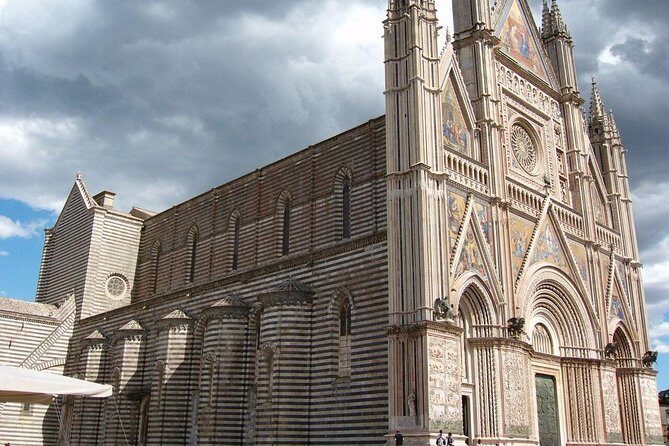
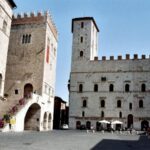
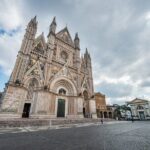
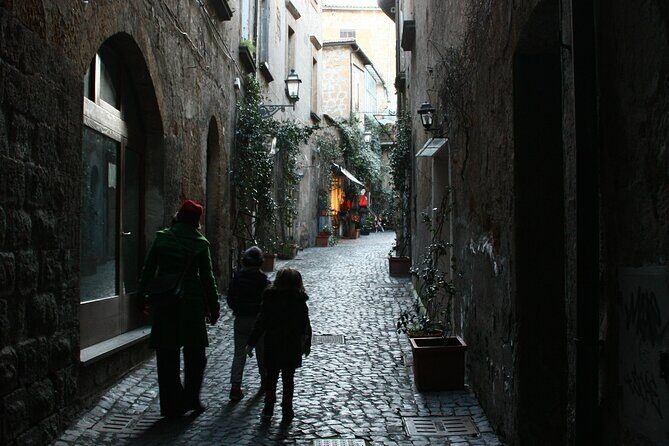
The tour starts in Piazza Duomo, which is exactly where you want to be. From there, you’ll move into the Centro Storico on foot—past narrow lanes and small squares—getting oriented to Orvieto’s layout quickly.
What I like about this opening is that it gives the “why” before the “wow.” Orvieto is known for the Duomo, yes. But the town is also tied to its long timeline: Etruscan roots, later medieval power, and the centuries of art and museum culture that grew out of that status. Even if you only have a couple hours, getting the context early makes the cathedral stop hit harder later.
You’ll also hear practical pointers you can use after the tour. For example, your guide can steer you toward the kind of streets where it’s easiest to keep moving, so you don’t burn your spare time zigzagging uphill and down again.
And yes, Orvieto is the kind of place where you’ll want to linger afterward. The tour naturally sets you up for an Umbrian meal and time for a glass—or two—of Orvieto Classico (not included), without feeling like you’ve rushed past the town’s mood.
Duomo di Orvieto: the gold façade and Signorelli’s artistic impact
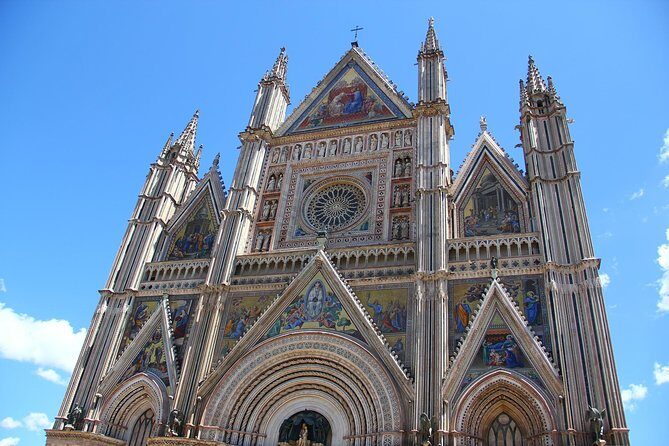
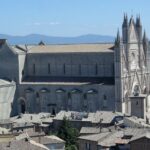
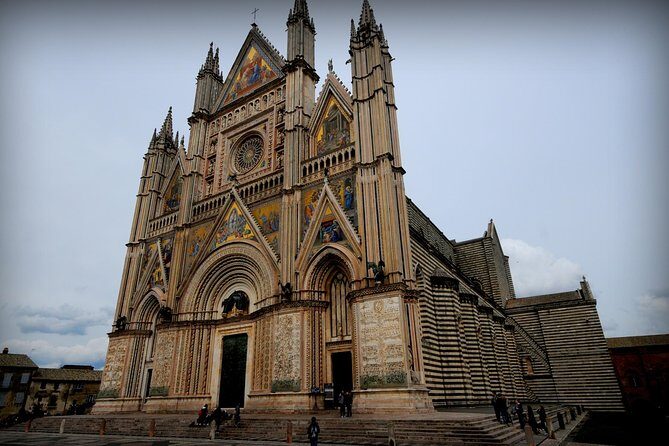
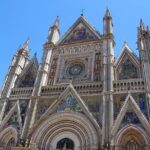
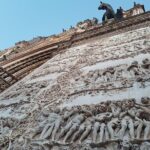
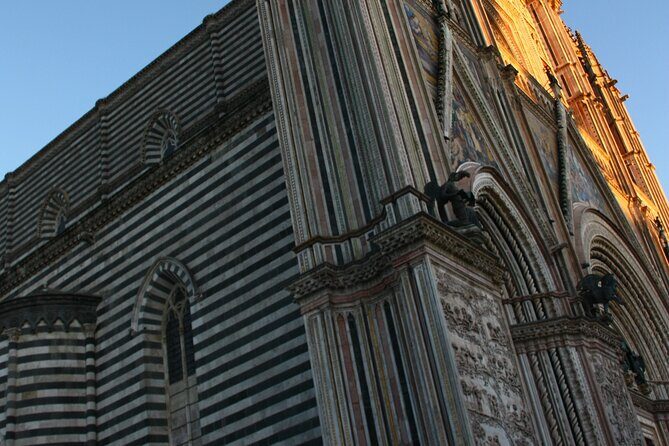
Now for the main event: Duomo di Orvieto. The cathedral is famous for its gold-and-mosaic Gothic façade, but the real value of a guided visit is understanding what you’re looking at and why it’s so influential.
A key point your guide will connect for you: the Duomo’s fresco work by Luca Signorelli helped shape the visual language that later shows up in Michelangelo’s Sistine Chapel. That’s a big claim, but it’s the kind of connection that makes the Duomo more than just pretty—it becomes part of the Renaissance conversation.
You’ll spend about 30 minutes in this area. That’s enough for the façade impression and to absorb the major interior highlights with meaning, but it’s not an all-day museum pass. If you want to sit and read every label, you’ll likely need extra time on your own after the guide leaves.
Practical heads-up: cathedral entry tickets aren’t included, so you’ll want to budget for that. Also, church dress code is enforced—no shorts, no sleeveless tops, and knees and shoulders must be covered for men and women.
Cappella di San Brizio: when the tour’s short timing still hits hard
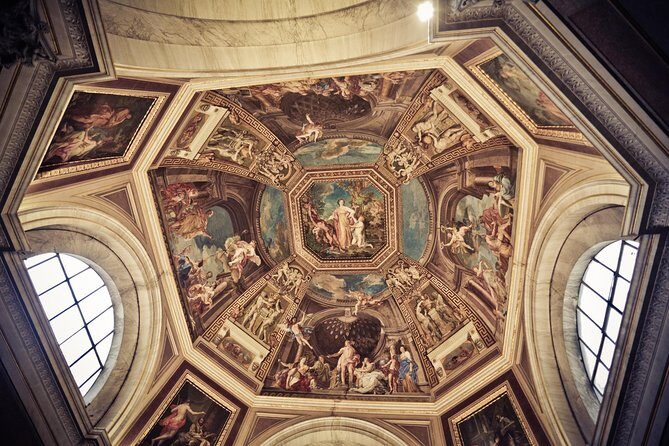
Next comes Cappella di San Brizio, often described as one of the prettiest chapels in Italy. This is the stop where a guided visit pays off fast, because the chapel is visually intense. Without guidance, it can become a blur of details; with a guide, it becomes a story you can track.
Expect about 20 minutes here. In that time window, the goal is not to “finish” the chapel like a textbook. It’s to see what makes it special, then understand the themes enough that your brain can hold onto what you saw.
Again: entry tickets aren’t included, so factor that in. If you’re the kind of traveler who already has museum-entry logistics handled, you’ll breeze through. If you’d rather avoid any extra payment decisions mid-tour, check this early so it doesn’t slow you down.
Tower view: Orvieto’s medieval power seen from above
One of the tour’s smartest moves is the bird’s-eye view from a medieval tower. The cathedral is the headline, but the tower helps you read the whole town at once.
From up high, you’ll see hamlets and castles spread across the horizon—visual proof of the medieval city’s reach and power. This is the moment where Orvieto stops being just “a beautiful place you walked around,” and becomes a place you can understand in terms of how people lived, defended, and organized themselves across the hills.
What makes this practical is that tower time is fast. You don’t need hours to get the “big picture.” You just need a good vantage point—and a guide who tells you what you’re actually looking at.



Sant’Andrea e Bartolomeo: the architecture stop most people skip
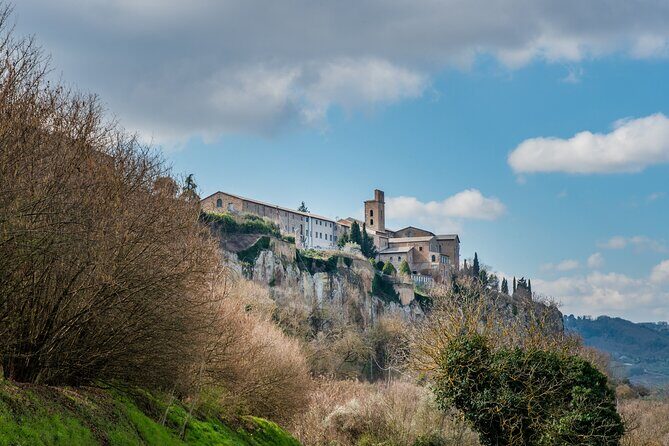
The tour also includes Chiesa di Sant’Andrea e Bartolomeo, which is exactly the kind of side stop that makes a guided tour feel worth it.
This church uses a Latin cross plan with three naves and a transept plus semicircular apse. Even the materials get a quick architectural explanation: tuff for the perimeter walls and marble for the floor, along with wooden trusses in the naves and cross vaults supported by beam pillars.
There’s also a distinctive feature: a dodecagonal tower connected to the church. It’s described as being similar to the one at the Abbey of Saints Severus and Martyrius. That kind of comparison helps you see churches as part of a wider regional design language, not just isolated monuments.
You’ll spend about 10 minutes here, and the best part is that this isn’t just “more walking.” It’s a quick architectural palate-cleanser after the Duomo intensity, and it helps you end the tour with a broader sense of Orvieto’s design choices.
How long is enough time? The real pacing of a 2-hour private tour
This tour runs about 2 hours. That timing is short by design. In Orvieto, shorter often wins because it gives you the feeling of having seen the essentials without leaving you exhausted.
Still, you should match your expectations to the format:
- If you want a fast orientation plus meaningful cathedral time, this is a strong fit.
- If you’re hoping for deep museum study, long café breaks, and slow wandering all day, you might find the cathedral and chapel portions too brief.
The upside is that the tour leaves you free after to shop and explore at your own pace. You’re not locked into a schedule once you’re back at the meeting area.
Also, since it’s private, the guide can better handle small group dynamics. Some groups in the past have mentioned that the guide adapted pacing for mobility needs and family questions, keeping everyone comfortable and included.
Price and value: when a private group tour makes sense
The price is $277.10 per group for up to 15 people, with an English-speaking official local guide included. That sounds like a lot—until you calculate per person.
- If you use the full group cap (15 people), the cost works out to about $18.47 per person.
- With 8 people, you’re around $34.64 per person.
- With 4 people, it’s about $69.28 per person.
So the value depends on your group size. If you’re a couple, you may pay more per person than a standard group tour, but you’ll likely make up the difference in convenience: you skip the map work, you don’t waste time finding entrances, and you get meaning attached to what you see.
One more value factor: tickets for the cathedral aren’t included. That can nudge the final total upward, depending on what you choose to enter and how you plan to handle those charges.
Bottom line: this is best when you want guided structure but still want freedom afterward.
Best for families, history lovers, and “I just need the highlights” travelers
This tour fits a few traveler types especially well:
- Families who want a guided overview without a full day commitment (and a guide who can handle questions).
- History and art travelers who want connections explained quickly—especially around the Duomo and Signorelli.
- People who dislike getting lost and prefer a straightforward walk that covers the major sites.
If you’re someone who loves to self-tour and reads guidebooks like novels, you can do Orvieto on your own. But the whole point of this experience is to get you oriented and moving correctly so your time stays fun, not frustrating.
Dress code and on-the-ground practicalities you shouldn’t skip
For church entry, plan ahead. Dress code requires covered knees and shoulders—no shorts and no sleeveless tops for both men and women. If you show up even slightly underdressed, entry can be refused.
The tour is near public transportation, which helps if you’re combining it with other Umbria stops. You’ll also receive a mobile ticket.
The meeting point is Piazza Duomo, 05018 Orvieto TR, Italy, and the tour ends back there—useful if you’re heading directly to a lunch spot nearby.
Should you book this private Orvieto Duomo tour?
Book it if you want:
- a 2-hour guided plan that gets you oriented fast
- a clear focus on the Duomo and chapel highlights
- a local guide who can connect details to the bigger story
I’d hesitate if you:
- want hours inside museums beyond the cathedral core
- dislike paying extra for cathedral entry tickets
- need long breaks and a very slow pace (this tour is built to move)
If your priority is seeing Orvieto’s top landmarks with context, without map stress, this is the kind of guided walk that makes the rest of your day easier.
FAQ
What’s included in the private tour?
You get an official local guide. Some parts you’ll visit have free admission, but cathedral-related entry tickets are not included.
Are Duomo and Cappella di San Brizio tickets included?
No. Entry tickets for the cathedral area and Cappella di San Brizio aren’t included.
How long is the tour?
It’s about 2 hours.
Where does the tour start and end?
It starts at Piazza Duomo, 05018 Orvieto TR, Italy and ends back at the same meeting point.
What dress code is required?
You must have knees and shoulders covered. No shorts or sleeveless tops for both men and women.
Is this a private tour?
Yes. It’s private, so only your group participates, up to 15 people.