REVIEW · ORVIETO
Orvieto Walking Tour including Duomo tickets
Book on GetYourGuide →Operated by UMBRIA CON ME · Bookable on GetYourGuide
Orvieto packs a lot into just two hours. This hill town sits on tufa volcanic rock above the Paglia valley, and the walking route ties big art and medieval landmarks together fast. I especially like the way this tour uses the Duomo di Orvieto as the anchor, then turns the day into a moving story with Luca Signorelli’s frescoes. Another standout for me is the climb up Torre del Moro, because the payoff is real: sweeping views over the countryside and Orvieto’s newer town below.
One thing to plan for: you’ll walk and you’ll climb. Torre del Moro involves 250 steps, and churches require a dress code (no shorts or sleeveless tops; knees and shoulders covered).
In This Review
- Key highlights you’ll feel right away
- Orvieto’s tufa cliff: why the town feels like a viewpoint
- Duomo di Orvieto: Gothic facade, mosaics, and Signorelli’s Last Judgment
- Chapel of San Brizio and the Chapel of the Corporal: art tied to belief
- Torre del Moro climb: 47 meters high with 250 steps to reset your view
- Sant’Andrea and its twelve-sided bell tower: Romanesque-Gothic with older roots
- Piazza del Popolo: the civic center where you can slow down
- Price, time, and value: why $94 can make sense here
- Who should book this walk (and who might reconsider)
- Tips so you enjoy it more (without overthinking)
- Should you book the Orvieto Duomo walking tour with tickets?
- FAQ
- What is the duration of the Orvieto walking tour?
- How much does the tour cost?
- What is included in the price?
- Where does the tour start?
- Is the tour in English?
- What sights will I see during the tour?
- How many steps are there to climb in Torre del Moro?
- Is there a dress code?
- Can I cancel and get a refund, and can I pay later?
Key highlights you’ll feel right away
- Skip-the-line Duomo entry so you spend time inside the art, not waiting outside.
- Luca Signorelli’s Last Judgment frescoes in the Chapel of San Brizio, with the drama you expect from the subject.
- The Chapel of the Corporal, tied to the Miracle of Bolsena relic story.
- Torre del Moro at 47 meters with a climb that’s short-but-worth-it for photos and orientation.
- A Romanesque-Gothic church stop at Sant’Andrea, including its twelve-sided bell tower and older layers beneath.
Orvieto’s tufa cliff: why the town feels like a viewpoint
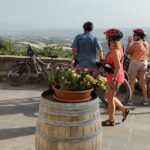
Orvieto doesn’t feel flat or simple. It’s dramatic by design: a steep hill of tufa volcanic rock with wide views out over the valley. That matters, because the walk isn’t just about seeing buildings. It’s about building your bearings.
Before you get to the big-ticket interior sites, you’re already surrounded by the town’s vertical character. From higher points, you can also see how Orvieto is split between older medieval streets and the more spread-out “new town” areas below. On this kind of guided walk, that visual contrast helps things click. You’ll start understanding the geography instead of just ticking off stops.
You can also read our reviews of more tours and experiences in Orvieto
Duomo di Orvieto: Gothic facade, mosaics, and Signorelli’s Last Judgment
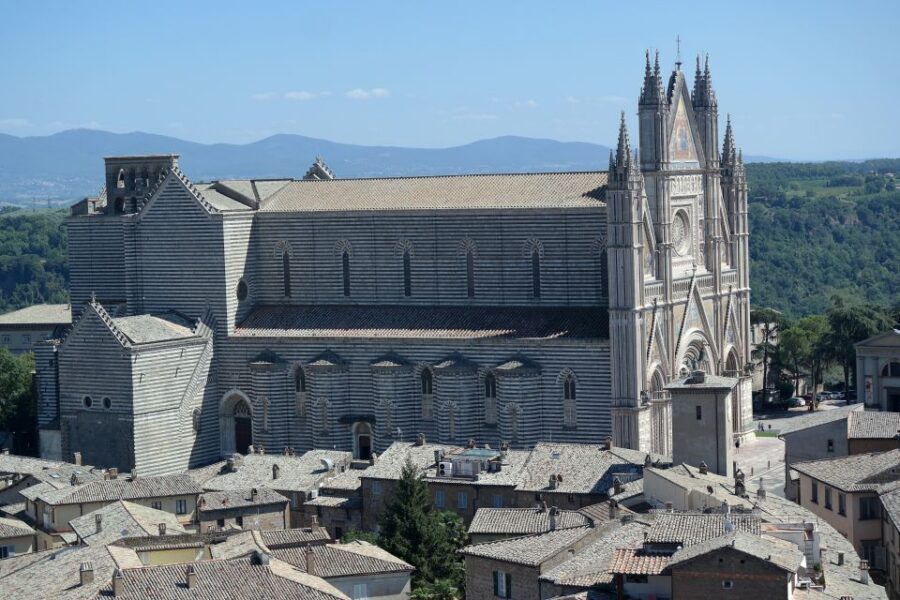
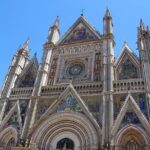
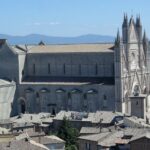
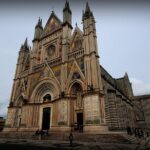
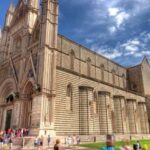
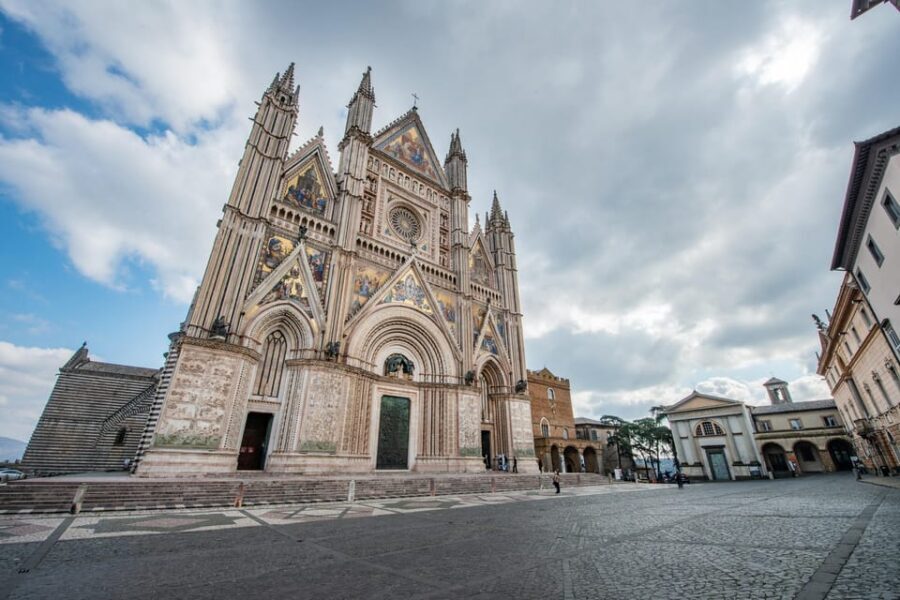
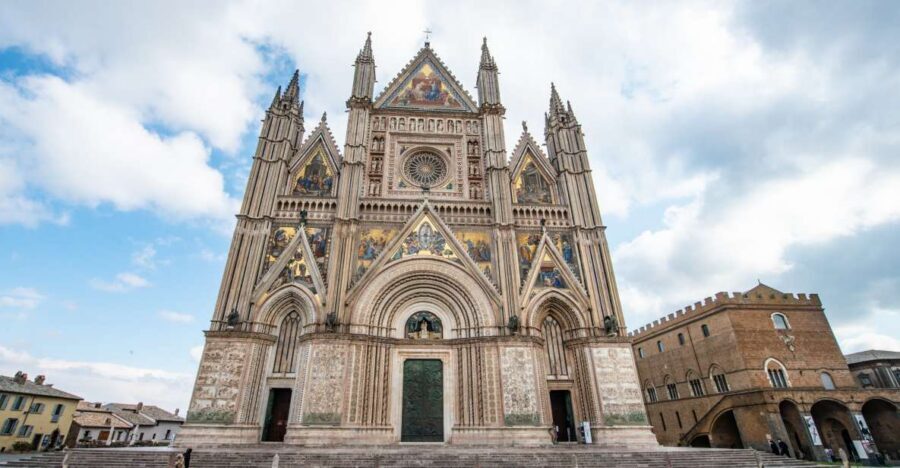
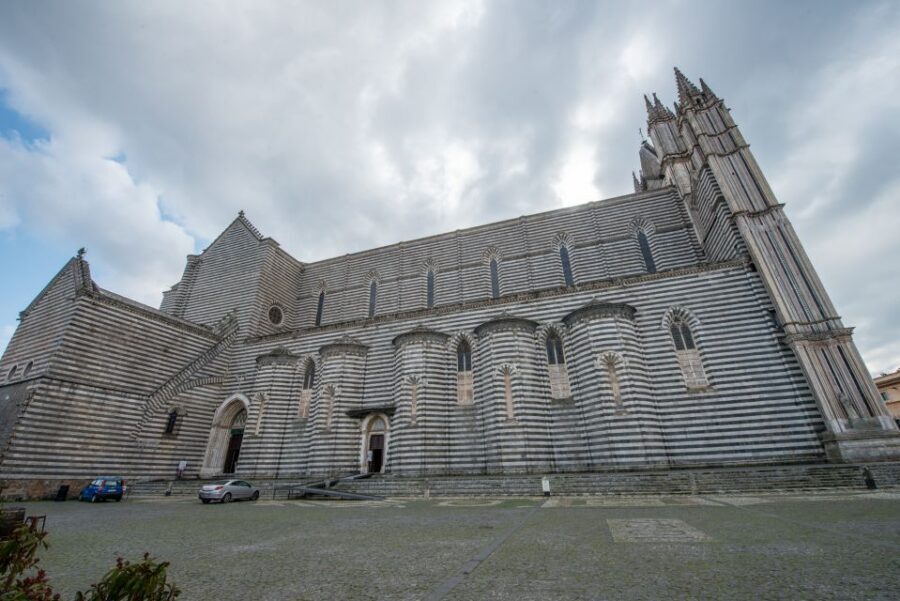
The tour centers on the Duomo di Orvieto, and it’s a smart choice. The cathedral is built on a grand scale, and its 14th-century Gothic facade is loaded with carved detail—mosaics, sculptures, and bas-reliefs. Even before you step inside, the building gives you a sense of ambition. Orvieto clearly wanted a statement church.
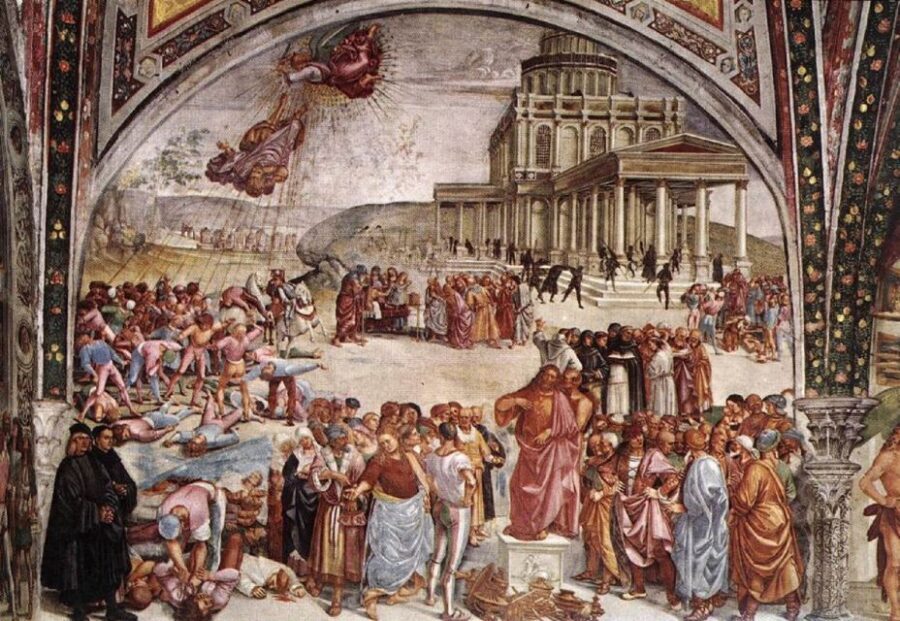
Inside is where the Duomo turns into the kind of stop you remember. The main focus is the Chapel of San Brizio, home to frescoes by Luca Signorelli. If the Last Judgment theme sounds familiar, that’s normal—this is the kind of subject that art masters treat as theater. The frescoes depict scenes from the Last Judgment, and with a guide’s framing, you can understand the emotional intent, not just the imagery.
Practical note: church interiors can be cooler and dimmer than the street. If you want steady photos, bring a phone/camera you can hold without rushing, and give yourself a minute to let your eyes adjust before you focus on details.
Chapel of San Brizio and the Chapel of the Corporal: art tied to belief
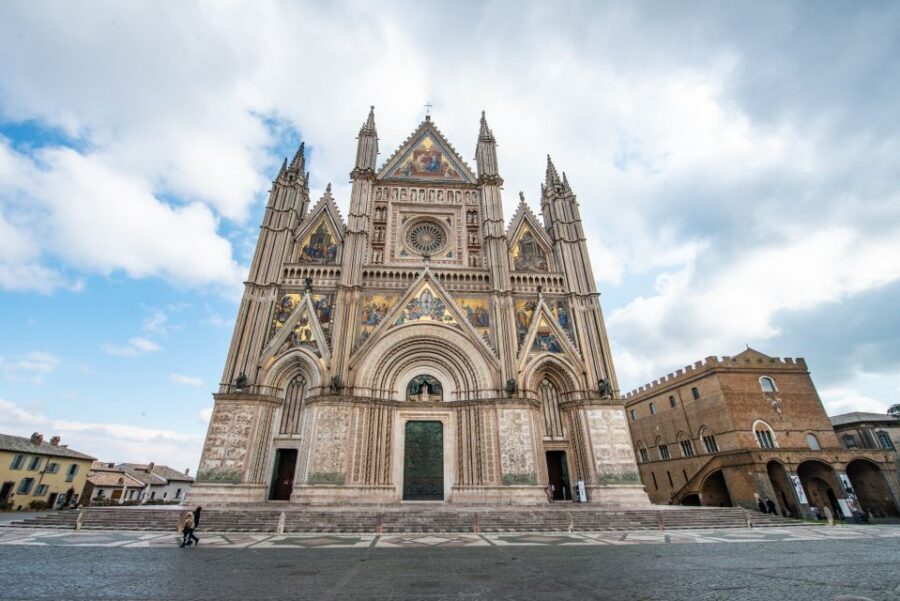
Two chapels make the Duomo stop feel more complete: San Brizio and the Chapel of the Corporal.
San Brizio is the one with Signorelli’s fresco cycles. The guide-led approach is helpful here because the chapel isn’t just a pretty room—it’s a visual narrative. You’re not only looking at figures; you’re watching the story of judgment play out through composition and expression.
Then there’s the Chapel of the Corporal, which holds a relic connected to the Miracle of Bolsena—a central event in Catholic history. Even if you’re not following the story closely, this part of the tour gives context for why people treat this space as spiritually significant. It also changes the mood. The Duomo isn’t just “museum art.” It’s a place of worship and memory.
If you enjoy religious art that’s more than decoration, this is the sweet spot of the whole walking tour.
Torre del Moro climb: 47 meters high with 250 steps to reset your view
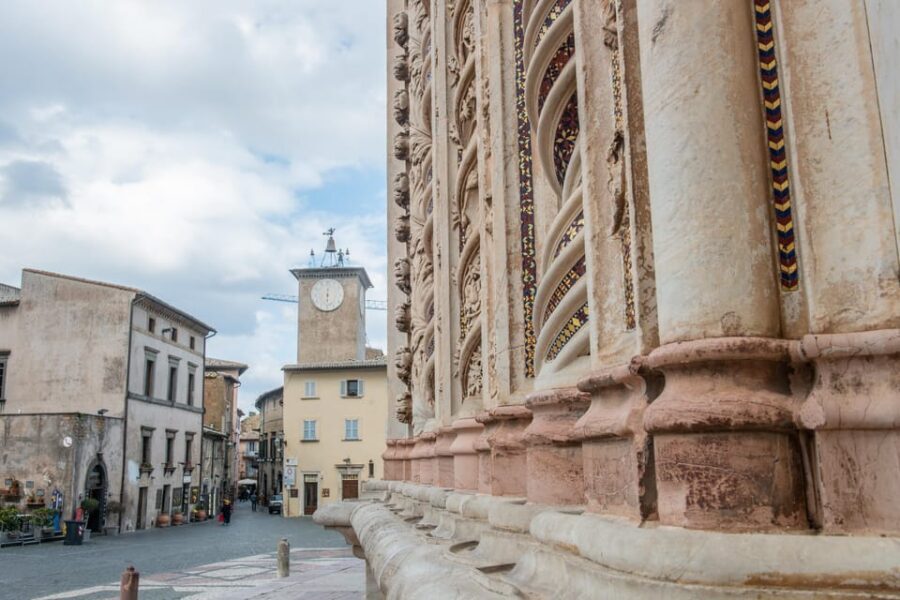
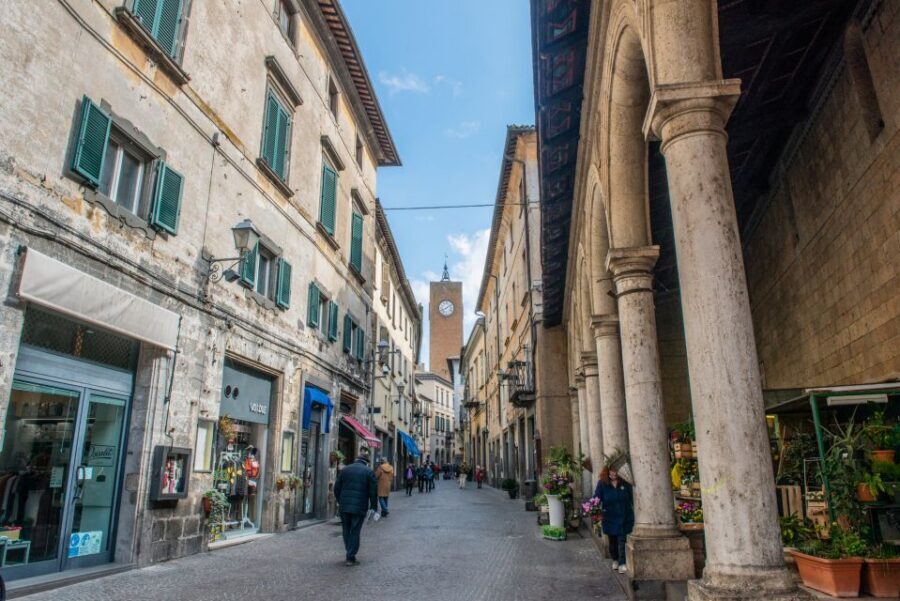
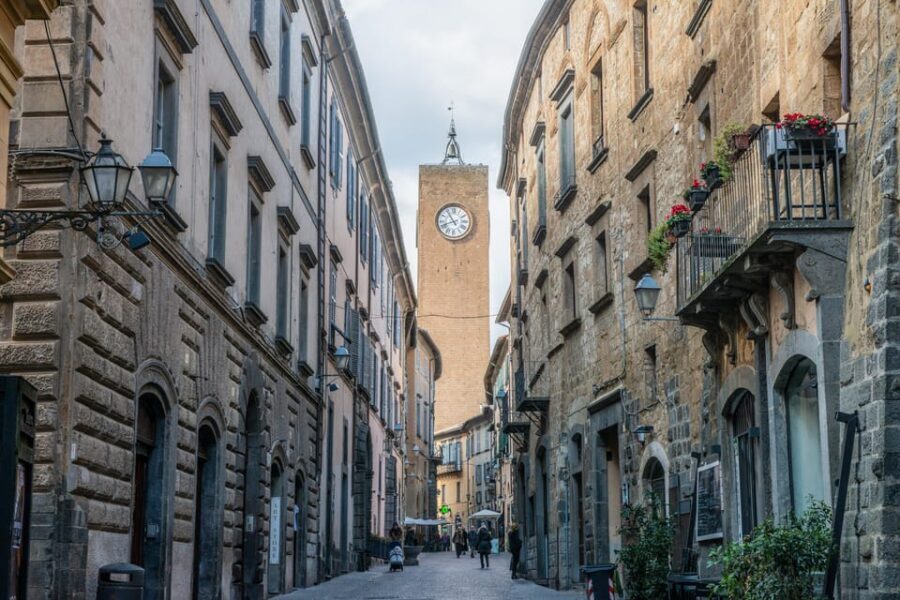
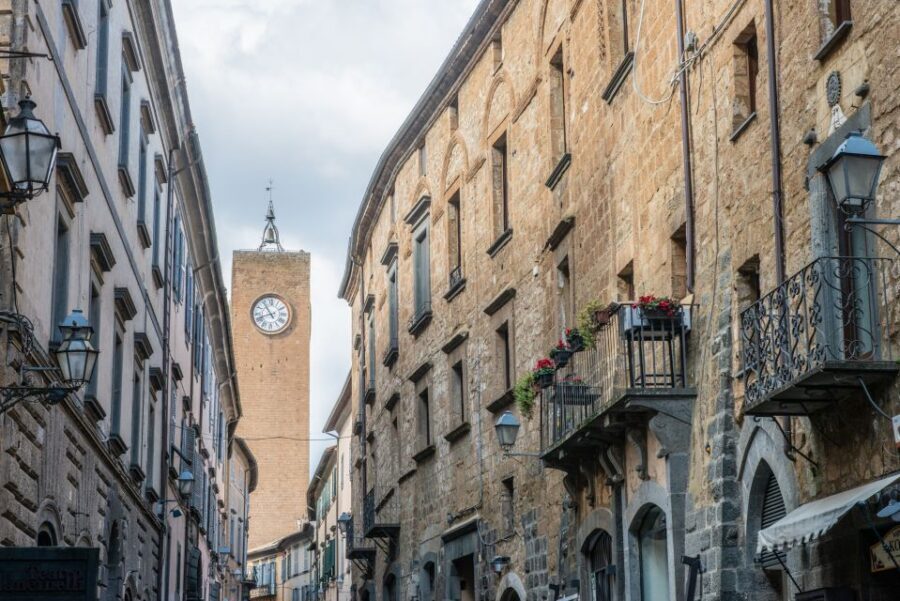
After the Duomo, you head to Torre del Moro, Orvieto’s historic clock tower. It’s a short walk, but it plays a big role in the day.
First, it sets you above the town enough to understand where you’ve been. Torre del Moro was built in the 13th century and stands about 47 meters high. Then comes the practical payoff: the climb is around 250 steps. That’s not a marathon, but it’s also not nothing—especially in summer or if you’re sensitive to stairs.
Once you’re at the top, you’re rewarded with panoramic views of the Umbrian countryside and Orvieto’s medieval streets. This is one of those moments where you don’t just get photos; you get orientation. After that, the later stops feel less like separate dots on a map and more like part of one compact hillside city.
Tip: wear shoes with solid grip. The tower climb is the only “big exertion” piece on the route, so it’s worth preparing for it.
Sant’Andrea and its twelve-sided bell tower: Romanesque-Gothic with older roots
Next up is the Church of Sant’Andrea, close to the tower. What I like about this stop is that it’s both ancient and specific.
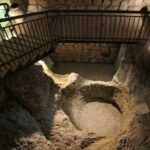
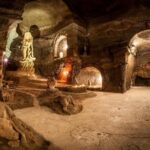
The church dates back to the 12th century, but its origins go even deeper because it was built on earlier Etruscan and Roman structures. That layering is the whole point: Orvieto didn’t start with one civilization and then stop. It kept reusing and reshaping the same ground.
Sant’Andrea is known for its striking twelve-sided bell tower, plus its Romanesque-Gothic architecture. Inside, the atmosphere is more restrained than the Duomo, and that contrast is good. You’ll see an interior that’s simple yet elegant, with frescoes and a crypt that reveals those historical layers.
If you like your architecture with footnotes—how one era literally sits on top of another—this is a strong second act.
You can also read our reviews of more walking tours in Orvieto
Piazza del Popolo: the civic center where you can slow down
The tour ends in Piazza del Popolo, Orvieto’s civic heart. After cathedral drama and a tower climb, a plaza ending feels right. It’s your chance to stand still, take in street life, and reset your pace.
The square is home to the Palazzo del Popolo, a medieval palace that hosted important political meetings. Even if you don’t plan to go inside, just being in the right place helps you understand the town as more than a church-and-views destination.
This is also where you can treat yourself. Grab a coffee or a glass of local Orvieto wine and let the walk settle into your memory. The best part of an ending like this is that it doesn’t rush you into the next thing—you can linger without worrying you’re falling behind.
Price, time, and value: why $94 can make sense here
At $94 per person for a 2-hour experience, the value comes from three parts that add up quickly:
- Professional local guide
The guide’s job here isn’t just “point and say.” The stops are art-heavy (Signorelli and church chapels) and context-heavy (Miracle of Bolsena and earlier Etruscan/Roman layers). Without that framing, you’d likely spend the time staring at details but missing why they matter.
- Duomo entrance tickets included
You’re paying for actual access to the cathedral areas highlighted on the route.
- Skip the ticket line
In historic centers, waiting can eat your schedule. Cutting the line makes this tour feel like it moves with your time instead of against it.
Two hours is also a smart duration for Orvieto. It’s long enough to hit the core sights—Duomo, tower, Sant’Andrea, and Piazza del Popolo—but short enough that you can still explore on your own afterward (especially helpful if Orvieto is one stop in a longer Umbria plan).
Who should book this walk (and who might reconsider)
This experience fits you well if:
- You want a focused route that hits Orvieto’s most meaningful landmarks without dragging.
- You care about art stories, not just architecture photos.
- You’re comfortable with church dress rules and a short climb of 250 steps.
You might reconsider if:
- You have mobility limits that make stairs hard.
- You dislike places of worship with dress requirements (you’ll need knees and shoulders covered).
For everyone else, this tour offers a clean mix: spiritual art at the Duomo, panoramic orientation from the clock tower, then a quieter historical layer at Sant’Andrea before easing into Piazza del Popolo.
Tips so you enjoy it more (without overthinking)
- Dress for churches first. Bring a top that covers shoulders and pants/skirts that cover knees. It’s not optional here.
- Plan for the stair moment. Torre del Moro is the one time you’ll feel the climb. If you’re a slow walker, tell yourself ahead of time you’re going to move steadily and take it one section at a time.
- Let the Duomo chapels breathe. Don’t rush the fresco areas. If the guide slows down, follow that pace—those chapels are the point.
- Use the tower views to orient yourself. After you’re up top, look back at Orvieto’s street pattern. It will help the rest of your walking around town later.
Should you book the Orvieto Duomo walking tour with tickets?
Yes, if your goal is a high-impact Orvieto experience in a short window. The Duomo stop is built around major art: Luca Signorelli’s Last Judgment frescoes in San Brizio, plus the Chapel of the Corporal and its Miracle of Bolsena connection. Then you get a real viewpoint from Torre del Moro and a historically layered counterpoint at Sant’Andrea.
I’d book it if you like guided context and want to understand Orvieto’s “why,” not just its “what.” The only real reasons to pass are the dress code and the stairs.
FAQ
What is the duration of the Orvieto walking tour?
The tour lasts 2 hours.
How much does the tour cost?
It costs $94 per person.
What is included in the price?
The price includes a professional local guide and entrance tickets to the cathedral. Skip-the-ticket-line service is included.
Where does the tour start?
The meeting point is in front of the information point.
Is the tour in English?
Yes, the live tour guide is in English.
What sights will I see during the tour?
You’ll visit the Duomo di Orvieto, Torre del Moro, the Church of Sant’Andrea, and end in Piazza del Popolo.
How many steps are there to climb in Torre del Moro?
The tower climb is about 250 steps.
Is there a dress code?
Yes. You must cover knees and shoulders. No shorts or sleeveless tops are allowed, and refusal of entry is possible if you don’t follow it.
Can I cancel and get a refund, and can I pay later?
Free cancellation is available up to 24 hours in advance for a full refund. There is also a reserve now & pay later option so you can book without paying right away.