REVIEW · ROME
Rome: Roman Army Experience
Book on GetYourGuide →Operated by RES MILITARES SRLS · Bookable on GetYourGuide
How often do you throw a Roman javelin in Rome?
This experience turns ancient warfare into real body-and-breath training inside the Res Militares Museum. I love the hands-on tactics and the realistic reproduction weapons, so you don’t just watch—you practice. It’s built for a small group (max 6), with an instructor who teaches in English and Italian and keeps things lively as you learn the logic behind each move.
One thing to consider: it’s physical, including handling gear and forming a testudo, so comfortable shoes and readiness to move matter.
In This Review
- Key Things I’d Block Time For
- A 60-Minute Roman Drill: How the Session Flows
- Res Militares Museum: Artisan Reproductions You Can Actually Use
- The First Half-Hour: Legion Life, Armor Types, and Battlefield Logic
- Courtyard Training: Gladius, Shield, and Close Clash Tactics
- Testudo Formation: Building a Defensive Wall Together
- Pilum Throw Practice: Why the Javelin Went First
- Gladiators vs Legionaries: A Simple Difference That Helps You Sort It Out
- Price and Value: Is $41 Worth One Hour?
- Who This Is Best For (and Who Should Skip It)
- Practical Tips So You Don’t Waste Your Training Time
- Should You Book Roman Army Experience in Rome?
- FAQ
- How long is the Rome Roman Army Experience?
- Where does the tour take place?
- How many people are in a group?
- What languages are available?
- What will I do during the training?
- What should I bring?
- Is smoking allowed?
- Is it suitable for everyone?
Key Things I’d Block Time For
- Pilum throw practice: learn how the Roman javelin was used before the charge
- Gladius + shield coaching: you get hands-on instruction, not just explanations
- Testudo formation challenge: max 4 people per formation, so you’ll actually take part
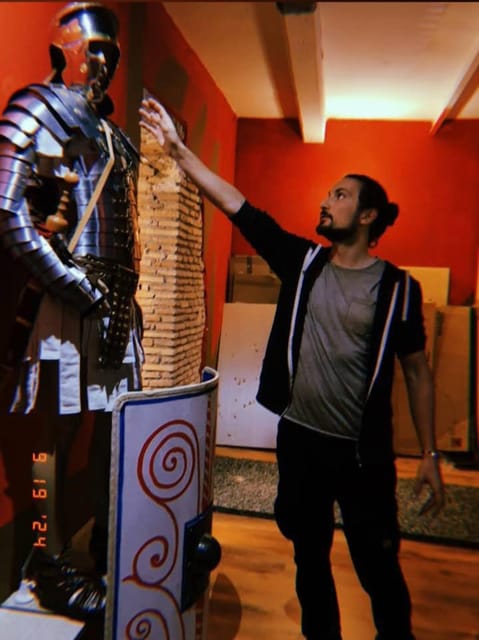
- Museum-grade reproductions: armor and weapons made by artisans based on archaeological finds
- Close-quarters tactics: you learn what mattered in the clash between two armies
- Small group intensity: limited to 6 participants, so the instructor can correct your technique
A 60-Minute Roman Drill: How the Session Flows
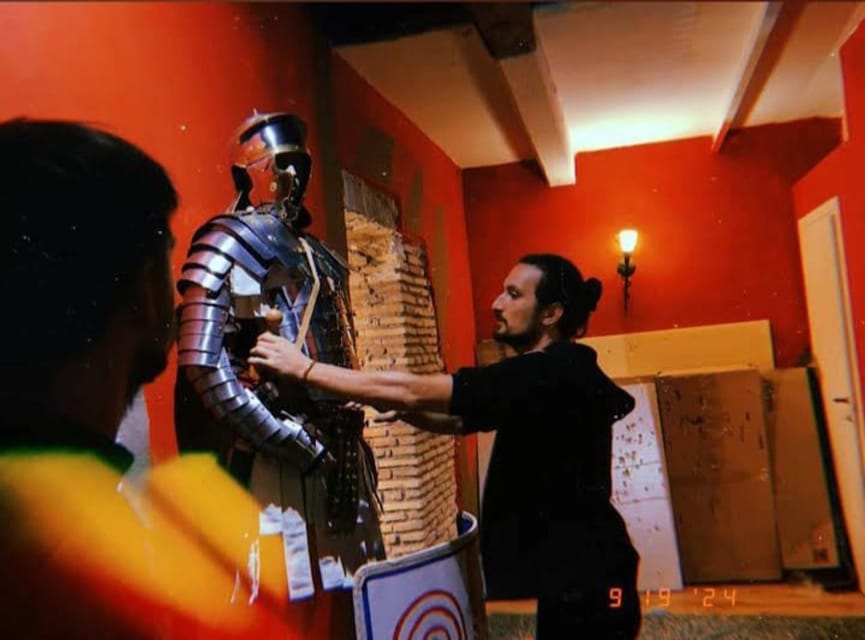
The tour is short on purpose: one hour that mixes a quick history briefing with practical training. You start with a guided overview of Roman military life, then you move into active work—wearing gear, practicing stance and technique, and trying key moments from battlefield tactics.
What makes this format work is the pacing. You get enough context to understand what you’re holding and why, then you jump into the action while it’s still fresh. The practical portion also has a clear rhythm: gladius and shield instruction first, then testudo formation, and later the pilum throw.
This is also the kind of experience where small details matter. For example, the course breaks training into steps (learn, try, adjust), so you can get past the initial “what do I do with this?” moment fast.
You can also read our reviews of more tours and experiences in Rome.



Res Militares Museum: Artisan Reproductions You Can Actually Use
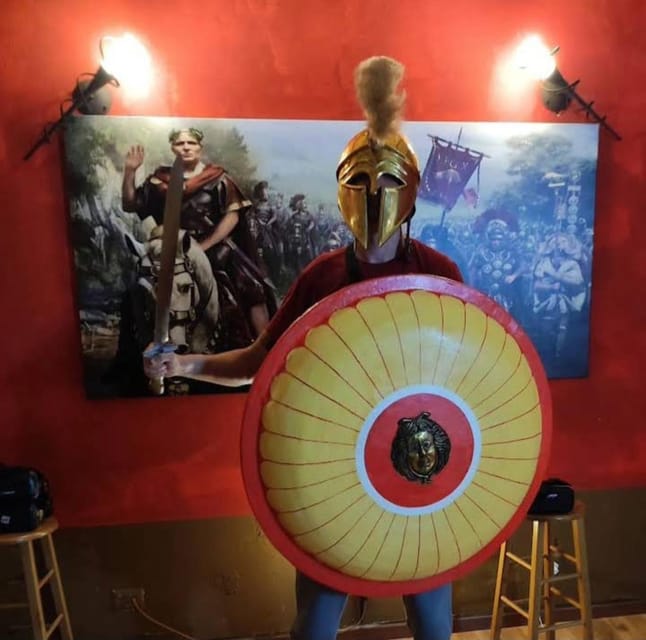
At the Res Militares Museum, you’ll see armor and weapons laid out in a way that helps you understand change over time. The gear you handle and try isn’t random costume stuff—it’s described as faithful historical reproductions made by artisans, following archaeological finds from major excavation sites.
That matters because Roman military equipment varied by period. When you can compare helmets, swords, and shields side by side (instead of seeing only one famous outfit), the differences start to click. It stops being “Roman armor” as one generic thing and becomes a toolbox that evolved.
Even the setting supports the training vibe. You don’t just wander through displays; at a key point you move to an internal courtyard area where instruction becomes physical. That courtyard shift is where the museum turns into a workshop, and you start learning by doing.
The First Half-Hour: Legion Life, Armor Types, and Battlefield Logic
The tour includes a half-hour historical overview before you start real practice. You’ll learn about Roman soldiers’ lifestyle with facts and curiosities, plus how tactics shaped what equipment was carried and how formations worked.
This briefing isn’t meant to replace a guidebook. It’s designed to give you a working mental model so the later combat drills make sense. If you’ve ever wondered why the Romans built certain shield patterns or fought in particular formations, this is where the “because” gets explained.
You also get an overview of different kinds of armor and weapons in one place. That kind of concentrated comparison is handy in Rome, where famous sites can eat your day and your energy. This lesson is designed to fit neatly into your schedule while still feeling substantial.
Courtyard Training: Gladius, Shield, and Close Clash Tactics
The practical portion includes a moment where you go outside to the museum’s internal courtyard area. That’s where you’ll learn how to use the gladius and the shield, and you’ll hear about the main tactics used in close clashes between two armies.
This is where you stop thinking like a spectator. You start thinking like a fighter: grip, balance, foot placement, and coordination with the shield. The goal isn’t Hollywood swordplay—it’s controlled practice based on how these tools were used in real combat situations.
You should also expect the instruction to be interactive. The tour is built for participation, so the instructor isn’t just describing angles and movements. You’ll physically try the techniques, and the session explains weapon effectiveness as you work with the props.
One plus: the instructor is reported as engaging and funny while staying knowledgeable. That combination helps, especially if the topic is new to you.
Testudo Formation: Building a Defensive Wall Together
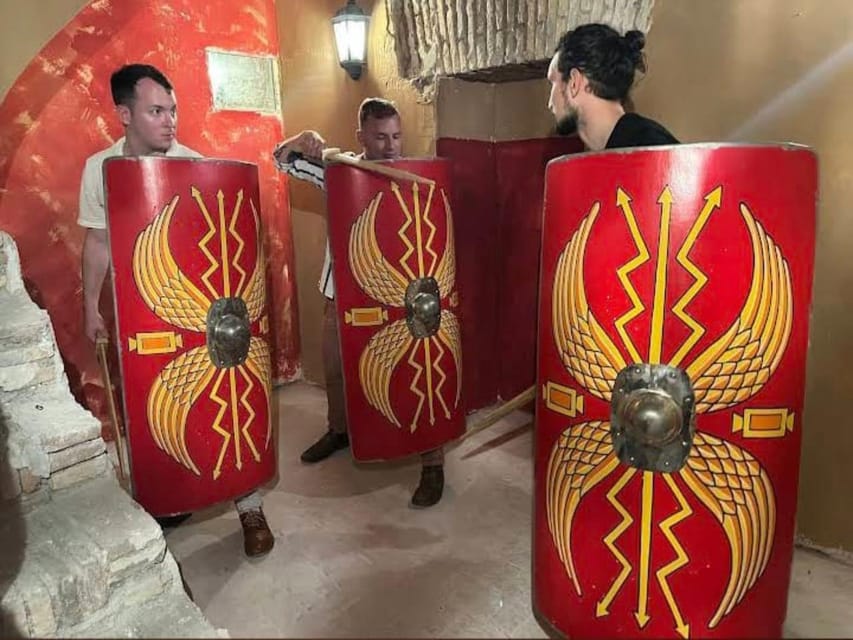
Halfway through the route, you’ll focus on testudo, the Roman defensive formation. The tour description makes it clear you’re not just told what it looks like—you’ll be taught how to do it, then asked to gather and try.
There’s also a key practical rule: maximum of 4 people per testudo formation. That’s good news for your experience because it prevents the “line of people standing around” problem. You’ll likely be close to the center of the action, not stuck at the edges of a crowd.
Then comes the part that turns it from a cool concept into a challenge: your testudo gets tested. That “tested” piece is the difference between passive learning and real training, because it forces you to understand how the formation supports defense as a unit.
If you’re visiting with kids or teens, this is often the moment that feels most game-like while still being historically grounded. Just keep expectations realistic: you’ll be making a formation with physical effort, not acting in a movie.



Pilum Throw Practice: Why the Javelin Went First
After gladius and shield training, you’ll move to the pilum—the Roman javelin. The tour explains the sequence in a way that helps it click: the pilum was thrown before the two lines of armies charged against each other.
You’ll get instruction and then try the throw. The tour also explains the effectiveness of the weapons in detail as you practice, which helps you understand the pilum as more than just a pointy stick. It’s a weapon designed to disrupt and set conditions for the next phase of combat.
If you like hands-on activities, the pilum moment is likely the part you’ll remember. The format gives you a chance to do something physical and technical, and the explanations make the trial feel purposeful rather than random.
Also, this part happens outdoors during the activity flow, so you’ll want to have your hat and water ready.
Gladiators vs Legionaries: A Simple Difference That Helps You Sort It Out
One of the nice teaching tools here is clarity around the roles you hear about in Roman culture. The tour highlights differences between gladiators and legionaries:
- Gladiators were entertainers—often enslaved fighters seeking glory and freedom
- Legionaries were Roman soldiers who protected the borders, usually citizens serving Rome, its homeland, and its system
This isn’t a deep academic comparison, but it’s useful. It gives you language to untangle what you see in Rome—why certain arenas and memorials point to one world, while military sites and uniforms point to another.
Once you have that split, you’ll notice more on your own around the city. It helps you avoid mixing up gladiatorial spectacle with military service.
Price and Value: Is $41 Worth One Hour?
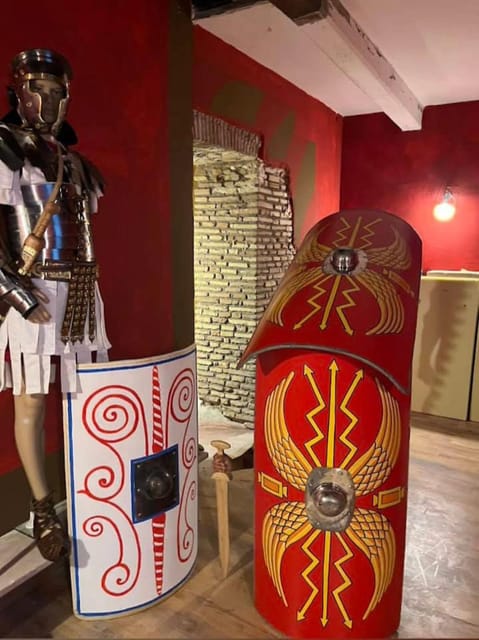
At about $41 per person for a 1-hour small-group experience, the value comes from two things: hands-on participation and the quality of the props. If you’ve ever paid museum admission and felt like you spent most of the time reading labels, this is a different deal. Here, you’re given the equipment and taught how to use it.
You also get structured content that includes:
- a half-hour historical overview
- practical demonstration and participation in tactics
- use of historical reproduction weapons and armor
The small group size (limited to 6) is a big part of the value. It increases the chance you’ll get real coaching instead of just watching someone else train. And because the session is tight and focused, you’re not looking at a half-day commitment just to learn a handful of concepts.
If you’re a history enthusiast, it’s an easy “yes” because you’ll learn while doing. If you’re visiting with family, it can also be a smart choice when you want something that feels active without needing a long travel day.
Who This Is Best For (and Who Should Skip It)
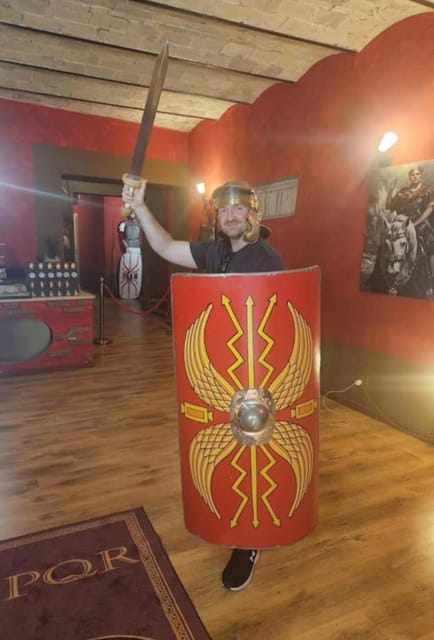
This experience fits history enthusiasts and families, especially if you want a break from the usual walking and photos. It’s also a strong option for teens because the training feels like a challenge rather than a lecture.
You should also consider the format requirements:
- Wear comfortable clothing and shoes suitable for physical activity
- Bring water, sunscreen, and a hat for outdoor parts
- The activity isn’t suitable for people with back problems
- People over 95 years aren’t suitable
That last point matters. Even if you could stand around, some parts involve physical participation and formation work, so it’s best not to force it.
If you’re someone who likes to learn by practice—holding a shield, feeling how a stance works, trying a throw—this will land well. If you strongly prefer sitting and reading, you might find it too active.
Practical Tips So You Don’t Waste Your Training Time
Plan for comfort and heat. The tour recommends comfortable shoes, plus a hat, sunscreen, and water. Since you’ll spend time outdoors during the session flow, it’s worth treating this like a light workout.
Also note the no-smoking rule. It’s a small detail, but it keeps the environment pleasant.
For the formation portion, remember the testudo limit of 4 people per formation. Even if you’re not in every drill, you’ll likely get a chance to participate within that small structure. Wearing clothing that lets you move—without being restrictive—will help.
Finally, if you want the most from the session, show up with curiosity. Ask questions in the moment. The teaching is interactive, and the instructor uses English and Italian, so you can usually follow even when your Italian is basic.
Should You Book Roman Army Experience in Rome?
I’d book this if you want Rome to feel hands-on. You’re not just learning about Roman warfare—you practice key elements like gladius and shield use, build a testudo, and throw the pilum with explanation behind each step.
Skip it if you need a fully passive, low-movement activity. The training is physical, and it’s not suitable for people with back problems. If mobility is a concern, you’ll likely struggle with the practical portion.
One more tie-breaker: the experience is built for small groups, and the instructor approach is described as engaging, humorous, and genuinely invested in teaching. If you want your history tour to feel like a workshop with a sense of fun, this one is hard to beat.
If your schedule allows only one “active history” stop, make it this.
FAQ
How long is the Rome Roman Army Experience?
It lasts 1 hour.
Where does the tour take place?
It happens in Rome at the Res Militares Museum, in the Lazio area.
How many people are in a group?
The group is limited to 6 participants.
What languages are available?
The instructor speaks English and Italian.
What will I do during the training?
You’ll get a historical overview, then practical instruction and participation using historical reproduction armor and weapons. You’ll practice gladius and shield tactics, learn testudo formation, and try a pilum javelin throw.
What should I bring?
Wear comfortable shoes, and bring a hat, sunscreen, and water.
Is smoking allowed?
No, smoking is not allowed.
Is it suitable for everyone?
It’s suitable for history enthusiasts and families, but it isn’t suitable for people with back problems or people over 95 years.