REVIEW · ROME
Rome: Small-Group Colosseum, Roman Forum & Palatine Hill
Book on GetYourGuide →Bookable on GetYourGuide
That huge Colosseum is only the start.
This small-group tour gets you past the long ticket lines with priority entry, then keeps things moving with an official guide who explains what you’re seeing as you walk through the site’s key areas. You’ll connect the engineering, the politics, and the day-to-day spectacle into one clear story—first in the arena, then across the Roman center of power.
Two things I really like about this experience: you get skip-the-line priority to save time, and you’re not just looking at ruins. The tour includes a guided walkthrough of the Colosseum’s first and second levels, followed by the Roman Forum and Palatine Hill. One practical consideration: the sites still require mandatory security checks, and during peak times that wait can be separate from the ticket-line advantage.
In This Review
- Key takeaways (the best parts)
- Why Priority-Colosseum Entry Changes Your Morning
- Colosseum Tour: Arches, Levels, and Gladiator-Season Stories
- Roman Forum: Constantine to Titus, Plus Caesar’s Final Rest
- Palatine Hill: The Legends of Romulus and Remus, Made Walkable
- What a Small-Group Tour Changes on the Ground
- Price and Logistics: Is $56.82 Good Value?
- Timing, Weather, and the Comfort Stuff That Actually Matters
- When This Tour Fits Best (and When It Might Not)
- Should You Book This Colosseum, Roman Forum & Palatine Hill Tour?
- FAQ
- How long is the Colosseum, Roman Forum & Palatine Hill tour?
- Is this tour really skip-the-line?
- What’s included in the ticket price?
- What do I need to bring for entry?
- Are food and transportation included?
- What languages are the live guides available in?
Key takeaways (the best parts)
- Priority entrance helps you avoid the longest Colosseum ticket lines.
- Small group size makes it easier to ask questions and keep a steady pace.
- Roman Forum stops that matter: Arch of Constantine, Arch of Titus, House of the Vestal Virgins, and Julius Caesar’s burial site.
- Palatine Hill context around Romulus and Remus, where Rome’s legend and reality overlap.
- Guides that bring it to life, with standout names in reviews including Magda, George, Scott, and Ilaria Croca.
Why Priority-Colosseum Entry Changes Your Morning
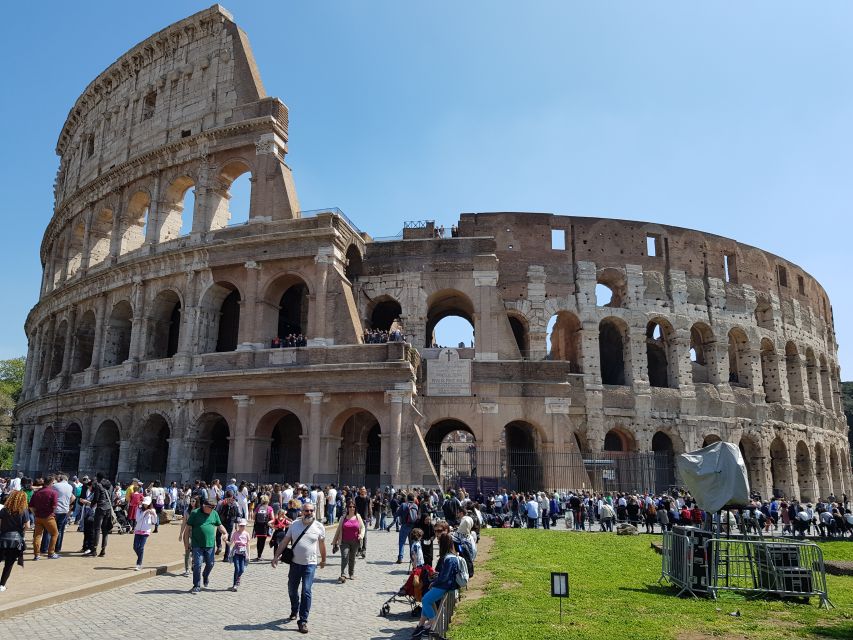
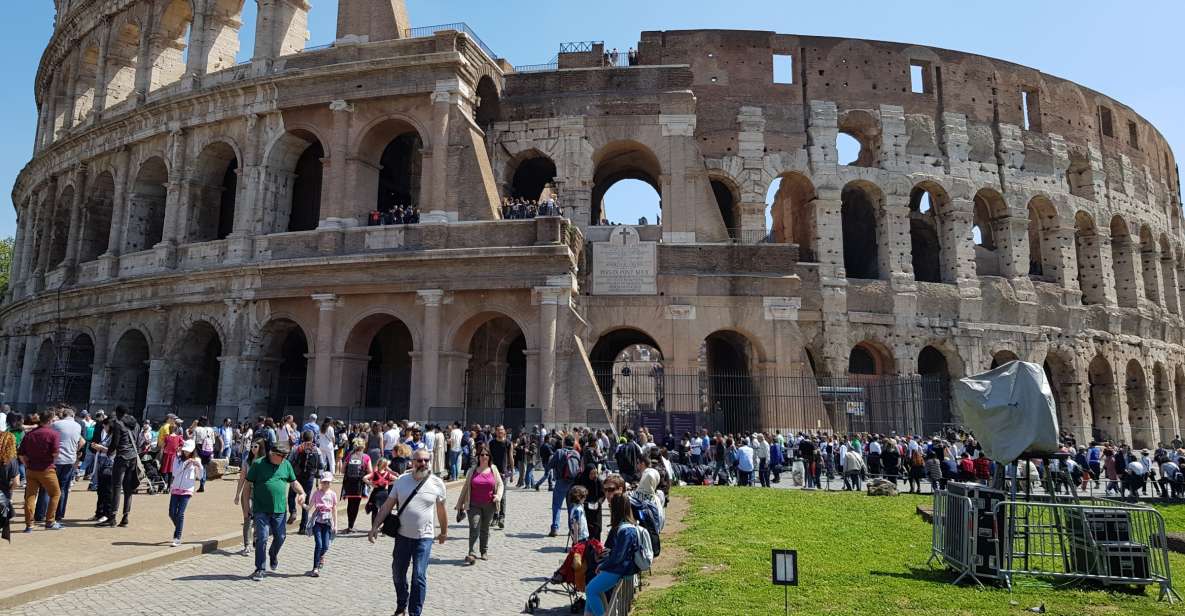
The Colosseum is popular enough that lines can eat up your time fast. What makes this tour worth a look is that it uses skip-the-line priority entrance via a separate route, so you spend less time standing around and more time inside the monument.
Still, do not assume this means zero waiting. The tour notes that there are mandatory security checks at all entry points. In busy seasons, that security wait can be considerable and has nothing to do with the ticket line. Think of the priority entrance as time saved on ticketing, not a guarantee that you’ll breeze through every checkpoint.
The other big win is timing. The tour runs for about 2.5 hours, and starting times vary by availability. That length is long enough to see the Colosseum meaningfully and reach the Forum/Palatine highlights, but short enough that you’re not stuck all afternoon in the busiest part of Rome’s ancient core.
Colosseum Tour: Arches, Levels, and Gladiator-Season Stories
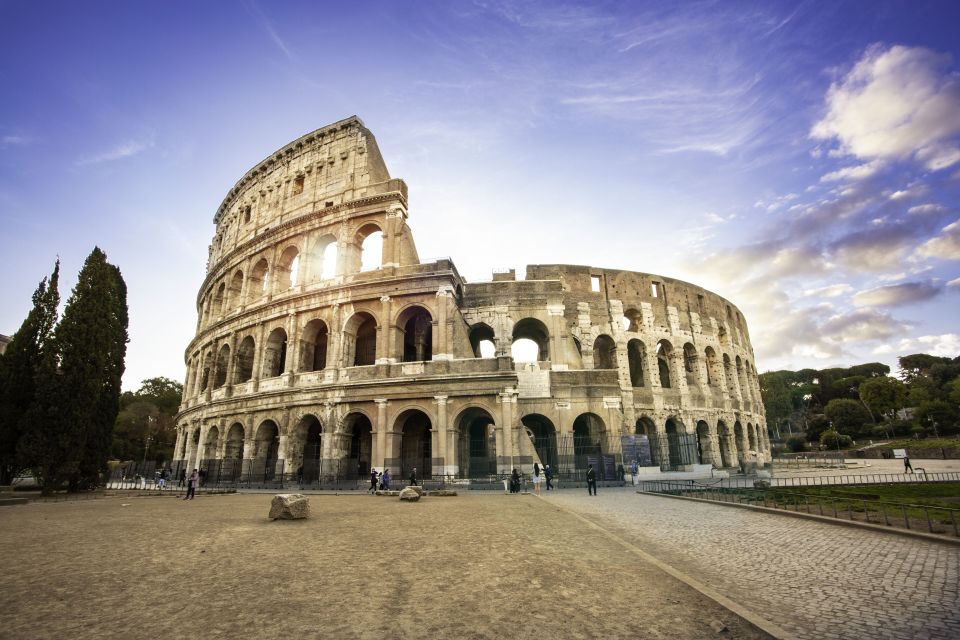
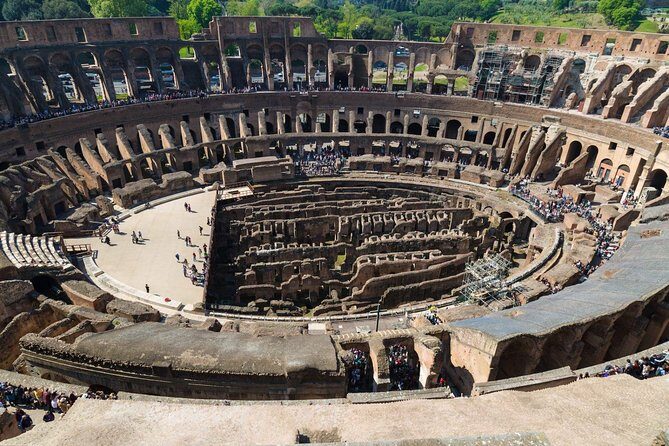
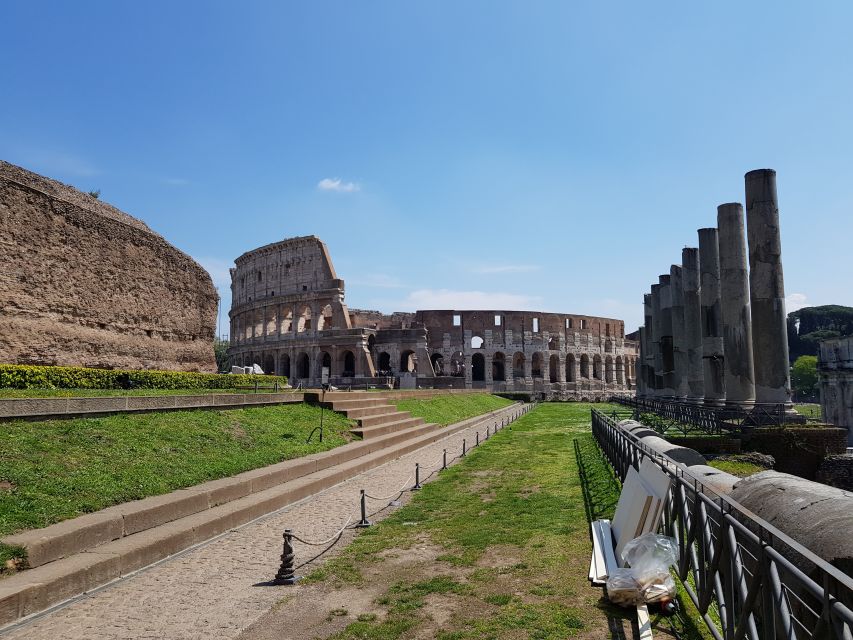
Inside the Colosseum, the guide-led portion is built around what you can actually observe—construction, layout, and the kinds of events that made it famous. You’ll enter and get an introduction that focuses on why the Colosseum is still considered an engineering marvel.
One neat detail you’ll likely notice as you go: your guide leads you past the arches marked with Roman numerals. It’s a small visual cue, but it helps you keep track of where you are as the talk shifts from architecture to the human stories that used to play out here.
Then comes the part most people care about: you explore the first and second levels. That matters because the arena is only half the experience. Higher levels help you understand the structure as a whole—the way levels, seating, and access routes worked together. It also gives you different angles for reading the site.
As you move, the guide brings to life the stories of emperors, gladiators, and famous battles, so the place stops being just stone and starts feeling like a machine built for spectacle. Based on repeated feedback in reviews, guides often keep the pacing steady and the explanations clear, including guide names such as Magda, George, and Scott. One reason those guides get praised so often is that they don’t just list facts; they connect them so you can follow what you’re seeing without getting lost.
Practical note: this is still a monument built for walking—uneven steps, crowd flow, and the need to keep moving. If you get motion-sick easily, wear comfortable shoes and pace yourself early. If you hate crowds, aim for the gentlest start time you can find.
Roman Forum: Constantine to Titus, Plus Caesar’s Final Rest
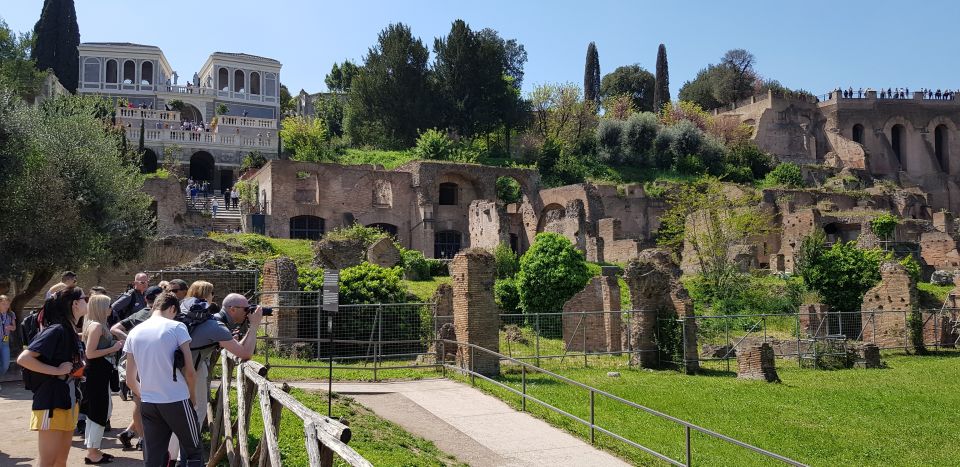
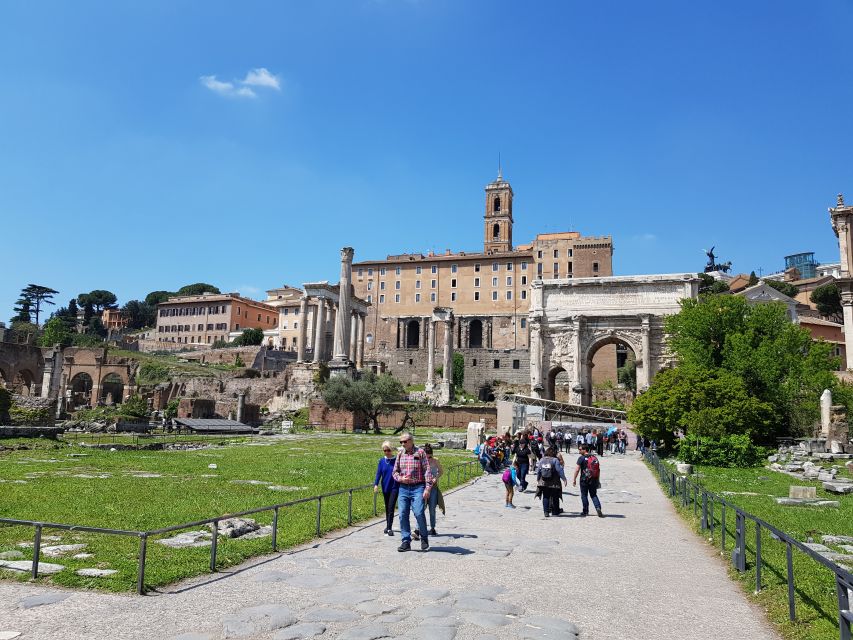
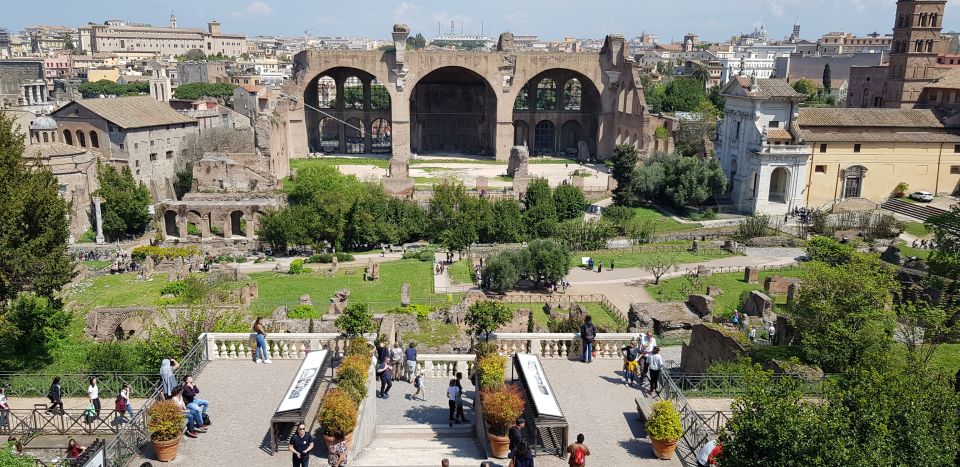
After the Colosseum, you transition into the Roman Forum and Palatine Hill area—Rome’s political and ceremonial nerve center. Here, your guide’s job is especially important, because the Forum can feel like a scattered collection of stones if you don’t have a storyline.
You’ll pass several iconic landmarks that anchor the timeline:
- Arch of Constantine: a major stop that ties directly into the story of Rome’s birth and legends around Romulus and Remus. Even if you’ve heard the myth before, the guide’s narration tends to make it feel more grounded in the city’s layout.
- Arch of Titus: a quick but meaningful marker inside the Forum area that helps you connect conquest, power, and public memory.
Then you’ll reach interior-style Forum points where it’s easier to picture daily life:
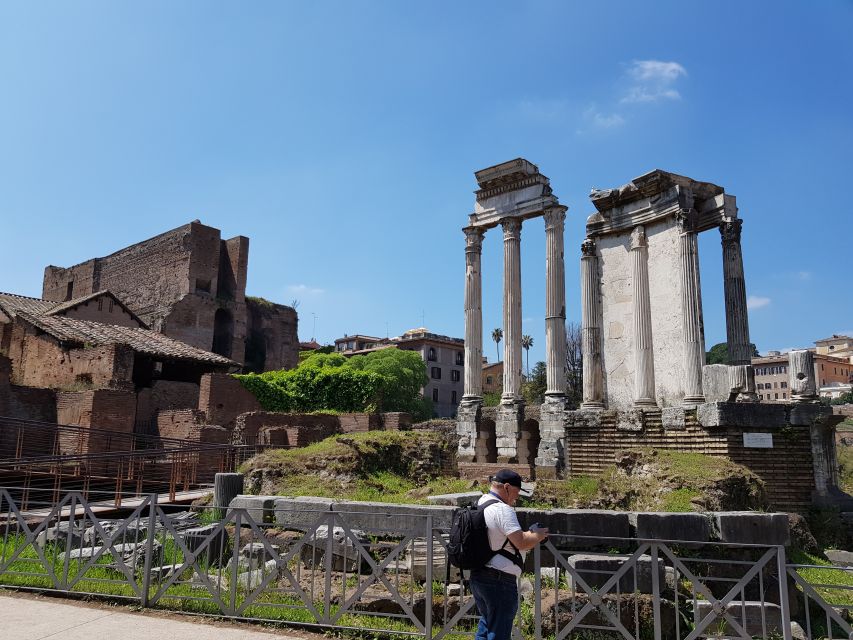
- House of the Vestal Virgins: a stop that highlights the unique role of the Vestals and the way religion and state power overlapped.
- Burial site of Julius Caesar: this is one of the emotional moments of the route. Standing near where people associated with Caesar were laid to rest, you’ll understand why Rome kept memorializing its leaders in stone and ritual.
One detail I appreciate in the way this tour frames the area: the Forum sits on ground that was once described as a vast swampland. That single point helps you reimagine the Forum as something transformed by Rome’s engineering and ambition—not just a timeless open-air museum.
And yes, the guide keeps talking while you walk. In a few experiences described in feedback, groups used headsets or similar audio support so commentary could stay clear while moving. If that’s offered with your departure, it’s a smart comfort feature, especially in loud crowd conditions.
Palatine Hill: The Legends of Romulus and Remus, Made Walkable
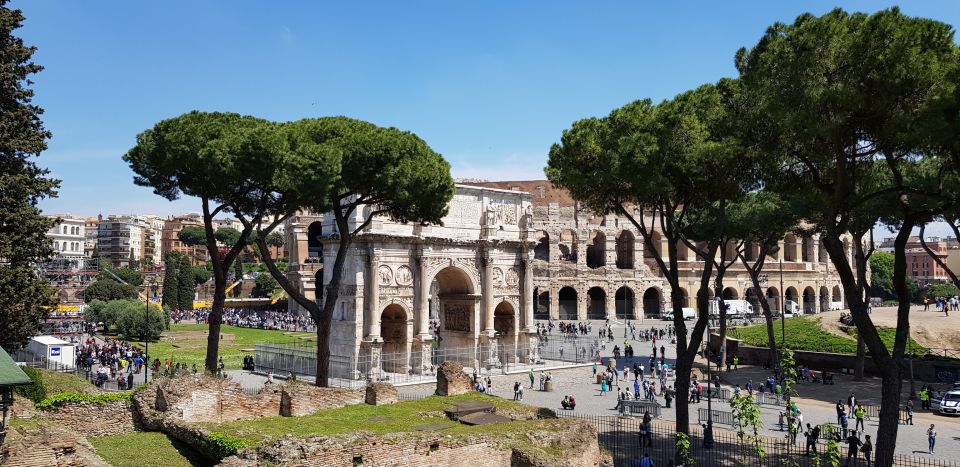
Palatine Hill is where Rome’s origin stories begin to feel physical. You’ll walk with your guide past the Roman Forum stops, and then into the Palatine Hill portion, with narration that connects legend to place.
The tour highlights focus heavily on Romulus and Remus, Rome’s legendary twins. The value here is not only hearing the story—it’s learning how the hill and its surroundings relate to the idea of Rome as a city built from myths and political claims. When your guide ties Palatine to the earlier Constantine stop, it helps you understand why early Rome wanted to link rulers to destiny.
Palatine is also a great place to spot what “ancient Rome” actually feels like: layered viewpoints, shifting perspective as you climb and descend, and ruins that sit in an order you can read if you’re guided. If you like history but get impatient when tours wander, this portion tends to stay focused on the major nodes.
Also, the Palatine area can feel exposed to sun. If you’re going in warmer months, bring a hat and water, even though food and drinks aren’t included. (More on what to bring soon.)
What a Small-Group Tour Changes on the Ground
The Colosseum and Forum are hard sites to do on your own at the speed most people want. That’s why I like the small-group approach here: you get an intimate group setting with a professional guide, and you’re less likely to get separated or stuck watching someone else’s private conversation while the route waits.
From the feedback, one theme stands out: the guides often manage pacing well for mixed ages and walking comfort. Names that came up repeatedly include Magda, Tonya, Ilaria Croca, Gabriel, and Marija, with many notes about how guides adjusted their pace, kept explanations engaging, and stayed patient with questions.
Another small practical advantage: you’ll usually have a clearer flow through the monument, including where to look and what to notice. In the Colosseum section, the tour specifically guides you past key visual markers like the Roman-numeral arches, which helps your brain stay oriented.
Still, remember what small-group really means at the Colosseum: you’re still moving through crowds, and the site is not built for wide spacing. If you’re sensitive to crowding, go early in the day when possible.
Price and Logistics: Is $56.82 Good Value?
At $56.82 per person, this tour is competing with two kinds of options: basic Colosseum tickets and other guided packages that may not combine the Forum and Palatine highlights. What makes this one feel like value is the combination of items that usually cost you extra time or extra money when booked separately:
- Admission tickets and reservation fees are included.
- Priority entrance to the Colosseum is included (the main time-saver).
- You get a professional live guide plus the Roman Forum and Palatine Hill tour segment.
You’re also getting an experience designed to last 2.5 hours without requiring you to coordinate between sites. The route loops through multiple “must-see” pieces: Colosseum first and second levels, then Arch of Constantine, Arch of Titus, House of the Vestal Virgins, and Julius Caesar’s burial site.
What’s not included is also important for budgeting. The tour does not include food or drinks, and transportation isn’t included either. So if you’re planning the rest of your day nearby, set aside time for a snack stop afterward. Also plan on walking—this route is not a sit-down tour.
Finally, you should know the tour notes include a non-refundable cancellation policy. If your travel schedule is flexible, you’ll want to double-check your Rome dates before booking.
Timing, Weather, and the Comfort Stuff That Actually Matters
This tour runs rain or shine, unless officials close the monument for safety reasons. That means you should plan for both weather and crowds. In wet conditions, paths can get slippery, and the walking doesn’t stop just because it’s gray.
What to bring is simple and very specific:
- Passport or ID card (a government-issued ID/passport is required for every participant)
The tour also makes it clear that names provided at booking cannot be changed, and if you arrive without the right ID, security staff can refuse entrance. That’s not a guess; it’s a hard rule in the information you’re given.
What about the meeting point? It says the meeting point may vary depending on the option booked, and the end point returns you to the meeting point. Expect the meeting time to be subject to change, and in that case you’ll be contacted by email in advance.
Comfort checklist (based on the reality of these sites, not just good advice):
- Wear shoes you can walk in for a few hours over stone and steps.
- Bring water if you’ll be out in heat, even though the tour doesn’t provide it.
- Bring a light layer for evenings; the Forum and Palatine areas can feel cooler once crowds thin out.
When This Tour Fits Best (and When It Might Not)
This is a strong pick if you want:
- a guide-led experience with clear storytelling,
- time-saving priority entrance to the Colosseum,
- and a single visit that covers the Forum and Palatine highlights without extra planning.
It’s also a good match if you like being able to ask questions, since the small-group format tends to make that easier than solo audio apps.
It may be less ideal if:
- you want a totally self-paced visit where you can linger silently,
- or you strongly prefer avoiding any guided narration (even short stops for explanation can feel like “time lost” to you).
If you’re trying to squeeze Rome into a tight schedule and you care most about seeing the biggest hits quickly and correctly, this tour’s structure is built for that.
Should You Book This Colosseum, Roman Forum & Palatine Hill Tour?
I’d book it if your priority is seeing the Colosseum with priority access and still getting the Forum and Palatine highlights in one efficient outing. The price isn’t the cheapest way to enter, but it’s not paying for empty convenience either—you’re buying a guided route, reservations, and skip-the-line entry that’s specifically useful at the Colosseum.
My final nudge: choose a departure time that fits your energy level. Also, bring your ID and plan for security checks even with priority entrance. Do those things, and you’ll be set up for a strong first-time Rome anchor: stone spectacle in the Colosseum, then real context in the Forum, then legend on Palatine Hill.
FAQ
How long is the Colosseum, Roman Forum & Palatine Hill tour?
The tour duration is about 2.5 hours. Starting times depend on availability.
Is this tour really skip-the-line?
Yes. The tour includes skip-the-line priority entrance through a separate entrance. However, there are still mandatory security checks, and the wait time can be significant during peak times.
What’s included in the ticket price?
Admission tickets and reservation fees are included, along with skip-the-line priority entrance, a small-group guided tour, a professional live guide, and the Roman Forum and Palatine Hill portion.
What do I need to bring for entry?
Bring a passport or government-issued ID card. Every participant needs a valid ID/passport, or security staff may refuse entrance.
Are food and transportation included?
No. Food and drinks are not included, and transportation is not included.
What languages are the live guides available in?
Live guides are offered in Italian, Portuguese, German, French, English, and Spanish.