REVIEW · PRIVATE
Private Jewish Ghetto Walk and The Influence in Roman Cuisine
Book on Viator →Operated by Walkingourmet · Bookable on Viator
Some walks just taste better.
This private Jewish Ghetto walk in Rome mixes streets-and-stories with Roman bites that are meant to cover you for lunch or an early meal. I like how the route includes big, readable landmarks like the Synagogue and Portico d’Ottavia, then ties them to local life and the food that grew up around it.
Two things I really like: the food tastings are baked into the historical pacing, and the experience is private, so your guide can keep the tempo right for your group. One thing to consider: the meeting point is convenient, but one review flags that the exact spot can be a little hard to recognize at first, especially if you expect a more obvious storefront.
In This Review
- Key highlights worth planning around
- Why a Jewish Ghetto walk plus Roman food works so well
- Piazza Campo de’ Fiori start: the kind of meeting point that saves time
- Jewish Community of Rome: market streets, the Tiber, and a real synagogue visit
- What to expect during this stretch
- Portico d’Ottavia, S. Angelo in Pescheria, and Piazza Mattei stories
- A quick note on attention span
- Food tastings that explain Roman Jewish influence (not just food for food’s sake)
- Pizza Rossa from a century-old bakery
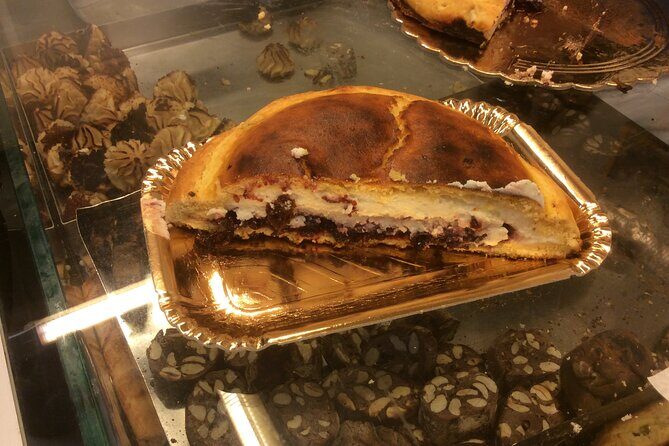
- Ricotta pie
- Jewish-Roma artichokes along the old wall
- Supplì with Middle Eastern connections
- A practical way to enjoy all this
- Private and paced well: the real difference is how it feels
- Price and value: is $105.96 per person worth it?
- Who should treat it as a priority
- Who I think should book this Rome Jewish Ghetto walk
- Should you book this private Jewish Ghetto walk with Roman cuisine?
- FAQ
- FAQ
- How long is the private Jewish Ghetto walk?
- Where does the tour start and end?
- Is this tour private?
- What language is the tour offered in?
- What’s the price per person?
- Is admission included for the synagogue?
- Does this tour include food tastings?
- Do I need to book a meal after the tour?
- Is there free cancellation?
- Is the meeting point near public transport?
Key highlights worth planning around
- A private format: only your group, so you can ask questions and move at a human pace
- Synagogue visit with admission included, not just an outside glance
- Food that’s the story: Pizza Rossa, ricotta pie, Jewish-Roma artichokes, and Supplì show up in the walk
- Tiber river barrier background, with a built-in explanation of how planning changed the area
- Pro guide energy: reviews point to strong communication and a good pace, even on a busy day
- Easy start point at Piazza Campo de’ Fiori, close to public transport
Why a Jewish Ghetto walk plus Roman food works so well
Rome food tours can be hit-or-miss. Some are basically a tasting parade with a thin thread of context. This one is different because the tastings are placed where the story actually lives: in the Jewish community area, around old walls and market streets, and along key squares and passages you can still picture in your head after the walk.
I like that the tour sets you up to skip the post-walk meal. The highlights are blunt about it: this is positioned as a food-focused experience that should satisfy your appetite. That matters in Rome, where “we’ll eat later” can turn into you hunting for a decent place while your energy drops.
You also get a guide-led route that’s built for history buffs and food lovers at the same time. If your brain wants facts, you’ll get them. If your brain wants flavors, you’ll get those too. You’re not forced to choose.
One more practical win: the tour is 2 hours approx. That’s long enough to feel like you saw something real, but short enough that you’re not dragging your feet through Rome’s walking weather.
You can also read our reviews of more walking tours in Rome

Piazza Campo de’ Fiori start: the kind of meeting point that saves time
You meet at P.za Campo de’ Fiori, 00186 Roma RM, Italy. It’s one of those anchors in central Rome where you can usually figure things out fast, and the tour notes that the meeting point is near public transportation. That’s huge on a city where taxis can be slow and lines can be long.
The end is simple: the activity ends back at the meeting point. No awkward “now get to the metro” scramble while your feet negotiate a ceasefire.
One review does suggest the meeting location could be more recognizable if it’s near a bookstore. So if you’re the type who likes to arrive early and confirm the exact spot, plan to show up a few minutes before start time and keep an eye out for the guide signage or group.
Jewish Community of Rome: market streets, the Tiber, and a real synagogue visit
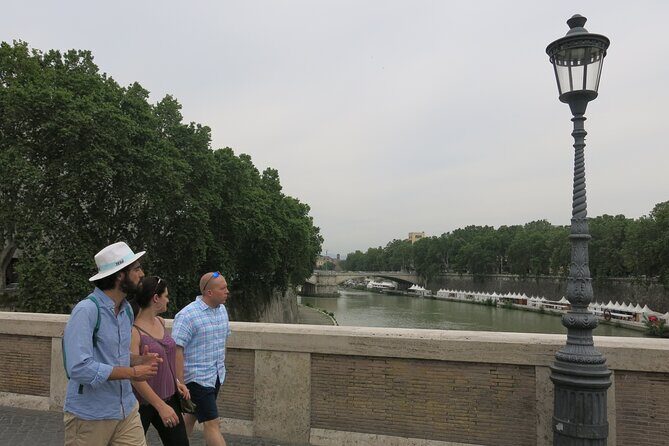
The heart of the tour is the Jewish Community of Rome area, and it doesn’t waste time.
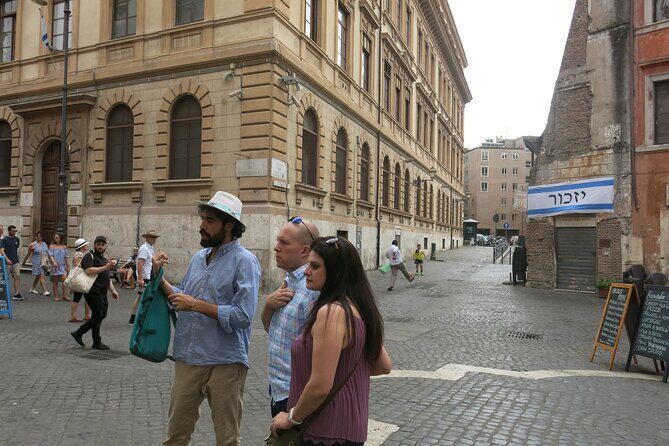
You start with a wander through the local market—exactly the kind of slow strolling that helps you understand how neighborhood life works. Then you walk along the Tiber river, described here as the Blonde Tiber, and the guide explains how the area changed after building river barriers. Even if you’ve walked near the Tiber before, this kind of built-history story makes the river feel less like scenery and more like an active force shaping neighborhoods.
After that, you visit the Sinagoga (synagogue). The tour includes admission ticket, so it’s not just a drive-by photo moment. This is one of the most important parts of the experience because it turns general “Jewish ghetto in Rome” talk into something grounded. It’s also where a good guide matters most—so you can connect the architecture and space to the community you’re learning about.
From there, the walk continues through memorable nearby areas: you’ll stroll around Portico d’Ottavia and S. Angelo in Pescheria. These aren’t just names on a map; they’re stepping stones between the bigger ideas and the street-level reality of Rome.
What to expect during this stretch
- A guided route with frequent moments to stop, look, and ask questions
- Street-level history that ties into the food later in the walk
- Comfortable pacing—at least, that’s what recent feedback emphasizes, including a pace that kept things calm even during a busy day
Portico d’Ottavia, S. Angelo in Pescheria, and Piazza Mattei stories
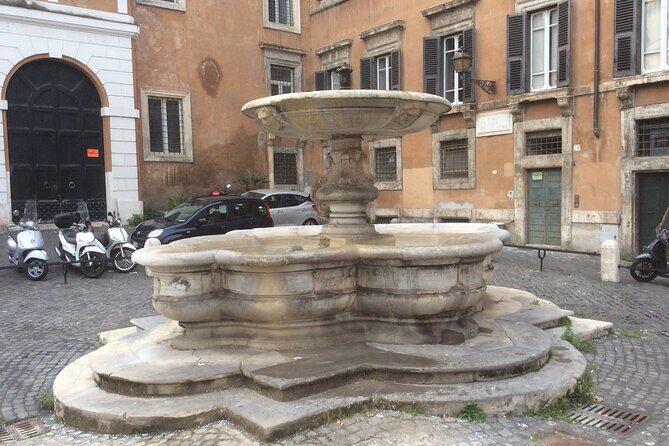
This part of the walk gives you the Rome that most people rush through. You’re not only looking at buildings; you’re collecting anecdotes that explain why certain places mattered.
One highlight: Piazza Mattei, where you get anecdotes about wealthy bankers. That detail is more than gossip flavor. It helps you understand how money, influence, and community networks show up in a city’s layout and in how neighborhoods develop over time.
Meanwhile, the strolls around Portico d’Ottavia and S. Angelo in Pescheria work like connective tissue. They’re the in-between spaces that tell you: yes, this was a community with its own rhythms, but it also sat inside Rome’s wider web of commerce, streets, and movement.
If you enjoy history that feels usable—like you can picture how a person actually walked through the day—this itinerary style is made for you.
You can also read our reviews of more private tours in Rome





A quick note on attention span
Two hours sounds quick until you’re standing in front of something meaningful and your guide is describing how it relates. The tour keeps you moving, but not at breakneck speed. One review specifically calls out a good pace and stress-free management during a busy day, which is exactly what you want on a Rome walking experience.
Food tastings that explain Roman Jewish influence (not just food for food’s sake)
Okay, the reason a lot of people book. This is a private food tour, and the food is threaded into the route so it feels like part of the geography, not a separate stop.
Here are the bites you can expect:
Pizza Rossa from a century-old bakery
You’ll try Roman Pizza Rossa from a century-old bakery. That detail matters. When food comes from a long-running place, you’re tasting something that’s survived changing neighborhoods, tastes, and history.
The story here also includes a tradition of women: it’s described as a patisserie traditionally run by women of the same family. That’s not just a cute origin note. It puts faces and routines behind the flavor.
Ricotta pie
Next up: Ricotta Pie. If you like creamy, savory, slightly sweet notes, this is the kind of bite that usually hits the comfort-food spot—while still feeling tied to the area’s identity.
Jewish-Roma artichokes along the old wall
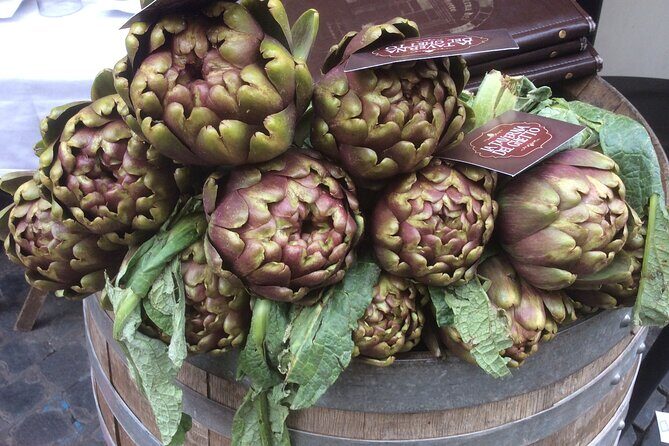
You’ll try Jewish-Roma artichokes right along the old wall. The location matters. Eating while you’re looking at the kind of wall that defined older city boundaries helps the food story land in your brain.
It’s also a reminder that “ghetto” isn’t only about walls and labels. It’s about daily life—what people ate, what they traded, and what grew in their orbit.
Supplì with Middle Eastern connections
Finally, you’ll get Supplì, described here as coming from the middle-east. This is the influence piece: Roman Jewish cuisine didn’t develop in a vacuum. It absorbed, adapted, and traveled across cultures.
Even if you’ve eaten supplì before, hearing it framed through influence and movement makes you taste more than crunch and salt. You start noticing texture and technique—how the flavor shows up in each bite.
A practical way to enjoy all this
Because this is a walking tour with multiple tastings, I recommend you treat it like a planned meal, not like snack shopping. Go hungry enough to enjoy it, but not so hungry that every stop feels like you’re racing your body.
The tour’s own promise is that you likely won’t need to book a meal afterward—so plan the rest of your day around that. If you’re the kind of person who always says yes to dessert, you can still do it. Just know you’ll probably feel satisfied first.
Private and paced well: the real difference is how it feels
This is private. That means only your group participates. No rotating crowds. No “everybody listen, no questions” energy. You can ask follow-ups, and the guide can keep the pace aligned with your group’s comfort level.
The reviews back up that this works in real life. One highlight: an exceptional guide who kept a good pace and handled a busy day without stress. Another mentions a professional connection and that the guide was prepared, with the Italian review naming Angelica as the guide. That’s exactly the sort of credential you want: calm expertise and a route that doesn’t feel rushed.
Also, because the tour is 2 hours approx., you get a complete arc without it turning into a marathon. You’re learning enough to feel grounded, and eating enough to end the walk comfortably satisfied.
Price and value: is $105.96 per person worth it?
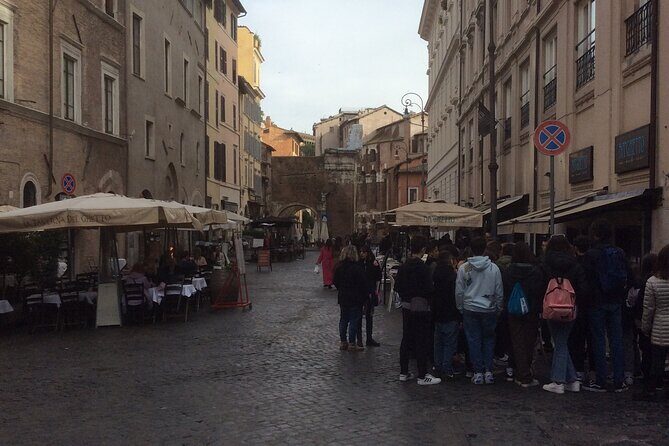
At $105.96 per person for about 2 hours, this isn’t a cheap add-on. But “worth it” is really about what you’re buying: private guiding, a synagogue visit with admission included, and multiple tastings.
Here’s how I see the value:
- Private format: you’re paying for a guided experience built around your group, not a shared cattle-car tour
- Admission included: the synagogue visit isn’t an optional extra
- Food included: the tour frames itself as a meal substitute, so you’re not paying for dinner right after
- A focused route: you’re not hopping randomly across Rome. You’re moving through a coherent set of places tied to Jewish community life and Roman influence
If you’re comparing it to booking a generic Jewish history walk plus separate food stops, this package style can be a better deal. You’re not just buying individual items; you’re buying time, pacing, and a guide who connects it all.
Who should treat it as a priority
If you care about both history and food and you don’t want to waste an afternoon searching for the right places, this is the kind of booking that simplifies your Rome day.
Who I think should book this Rome Jewish Ghetto walk
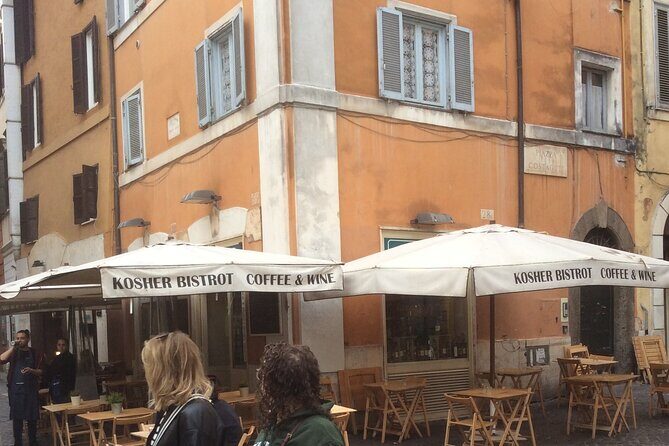
This tour fits best if you match one of these moods:
- You want a food tour that has structure and a clear historical thread
- You like walking routes that cover specific places you can remember later
- You’re okay with about 2 hours of walking and want the payoff of tastings and context
- You’re traveling as a group and want the comfort of a private experience
If you want a huge, all-day Rome hit with dozens of stops and a strict museum feel, this may feel too focused. But if you want something practical, thoughtful, and delicious, it’s well aimed.
Should you book this private Jewish Ghetto walk with Roman cuisine?
If you like the idea of history you can taste—synagogue visit plus market streets plus Roman Jewish influence—then yes, I’d book it. The strongest reasons are simple: private guiding, admission included, and tastings built to satisfy without making you schedule yet another meal.
Book it especially if you’re going on a day when you want a planned experience that reduces decision fatigue. You meet at a central spot, you get a tight route, and you finish back where you started.
If you’re sensitive to finding meeting points fast, arrive a bit early and double-check exactly where the guide will be near Piazza Campo de’ Fiori.
FAQ
FAQ
How long is the private Jewish Ghetto walk?
It’s listed as about 2 hours.
Where does the tour start and end?
The tour starts at P.za Campo de’ Fiori, 00186 Roma RM, Italy and ends back at the same meeting point.
Is this tour private?
Yes. It’s a private tour/activity, and only your group will participate.
What language is the tour offered in?
It’s offered in English.
What’s the price per person?
The price is $105.96 per person.
Is admission included for the synagogue?
Yes. The experience includes an admission ticket.
Does this tour include food tastings?
Yes. The walk includes multiple food tastings such as Pizza Rossa, ricotta pie, Jewish-Roma artichokes, and Supplì.
Do I need to book a meal after the tour?
The tour is described as satisfying your appetite, so you don’t need to book a meal afterwards.
Is there free cancellation?
Yes. Free cancellation is available up to 24 hours in advance for a full refund.
Is the meeting point near public transport?
Yes. The meeting point is described as near public transportation, and the tour notes that most travelers can participate.