REVIEW · EVENING EXPERIENCES
Private Evening Walk: Wonders of Rome in English or Spanish
Book on Viator →Operated by Republic Experiences · Bookable on Viator
Nighttime turns Rome into a story. This private evening walk mixes big-name sights with lesser-seen corners, so you’re not just ticking boxes while the city looks its best. I like the way guides bring the mythology, art, and architecture together stop by stop, and several guides named in real experiences like Sarah and Sharon are praised for clear explanations and keeping everyone included.
My second favorite part is the pacing. You hit anchors like Piazza Navona, Trevi Fountain, and the Pantheon area, then you slow down for small moments such as the Church of the Madonna dell’Archetto and the dreamy, glass-domed Galleria Sciarra. The one drawback to consider is simple: it’s still a walking tour, and it depends on good weather, plus some monuments can be affected by restoration during the Jubilee—so check for any updates before you go.
In This Review
- Key things to know before you go
- What makes this Rome evening walk work so well?
- Where the tour starts and ends: from Pasquino to the Colosseum
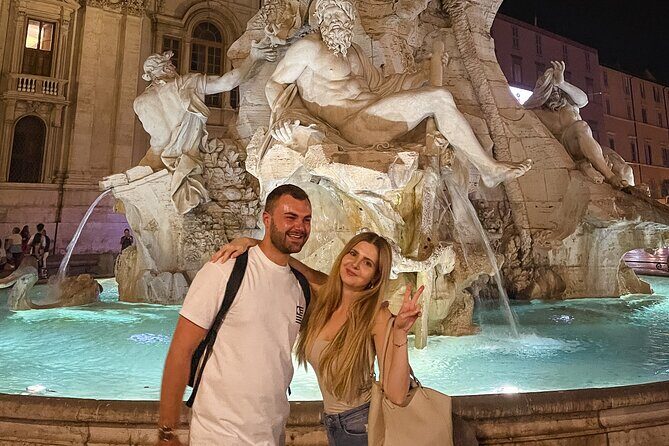
- Piazza Navona at night: the story behind the famous square
- Pantheon stop: seeing the old gods story without getting lost
- Sant’Ignazio di Loyola: a quick church pause that still matters
- Trevi Fountain traditions: more than just a photo spot
- Piazza Venezia and Ancient City vibes: palaces, views, and scale
- Via dei Fori Imperiali and Trajan’s Column: the Mussolini road detail
- The quieter side of Rome: Madonna dell’Archetto and Galleria Sciarra
- How small-group size changes the whole experience
- Price and value: what $115.64 per person buys you
- Practical tips for a smoother evening walk
- Who should book this tour?
- Should you book this private evening walk?
- FAQ
- Is the tour offered in English or Spanish?
- How long is the Rome evening walk?
- How many people are in the group?
- Is this tour truly private?
- Where do I meet and where does it end?
- What sights are included on the route?
- Is admission included for every stop?
- What happens if the weather is bad?
- When can I cancel for a full refund?
Key things to know before you go
- Small-group cap (15 participants) means you get more guide attention and a calmer pace
- 2 hours at 6:00 pm gives you cooler temperatures and softer light for photos
- A mix of famous and quieter Rome includes Galleria Sciarra and the Madonna dell’Archetto
- Pantheon admission isn’t included, so you may need your own ticket if you want inside time
- Your tour ends near the Colosseum, so you finish your evening with a wow-factor finale
What makes this Rome evening walk work so well?
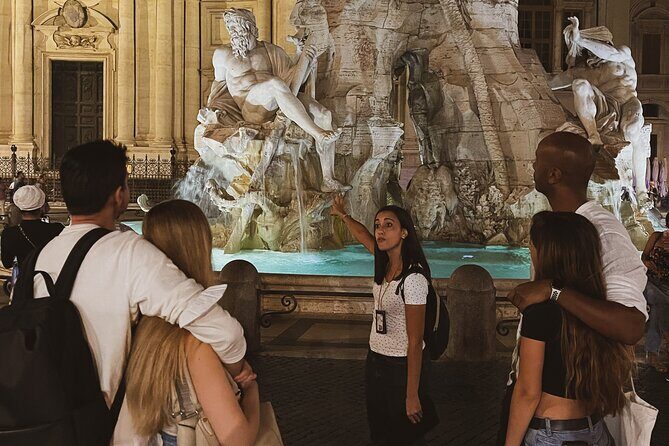
This isn’t a marathon. It’s built for an easy, human pace where your guide can actually explain what you’re seeing instead of rushing you along like a fast-food line. The tour is timed for early evening, starting at 6:00 pm, which matters more than most people expect. Rome in daytime can feel like a theme park. At night, the heat drops, the crowd density loosens, and the stone starts looking more dramatic.
Another smart choice is the mix of stops. You get the obvious hits—Piazza Navona, the Trevi Fountain, and the Pantheon area—but you also get two stops that usually don’t show up on quick highlight tours: the Church of the Madonna dell’Archetto and Galleria Sciarra. Those are the kind of places where a guide’s narration really pays off, because the details are easy to miss when you’re on your own.
Finally, it’s offered in English or Spanish, and it’s a private tour/activity in the sense that only your group participates. You’re not getting swallowed by a giant mixed crowd. That also helps with the rhythm of the tour, since questions can actually shape what happens next.
You can also read our reviews of more walking tours in Rome

Where the tour starts and ends: from Pasquino to the Colosseum

You meet at the Statua di Pasquino in Piazza di Pasquino (near public transportation). That’s a fun “Rome starter” location. Pasquino is one of those parts of the city that feels like it has its own personality—enough atmosphere to shift you into the right mindset before you even begin walking.
You finish at the Colosseum area, in the shadow of Rome’s most famous arena-like monument. Ending here is a win because it lets your evening build toward a final payoff. Even if you’ve seen the Colosseum from a distance before, there’s something different about arriving after your guide has given you the context for how Rome fits together—religion, empire, and everyday city life on the same streets.
Piazza Navona at night: the story behind the famous square
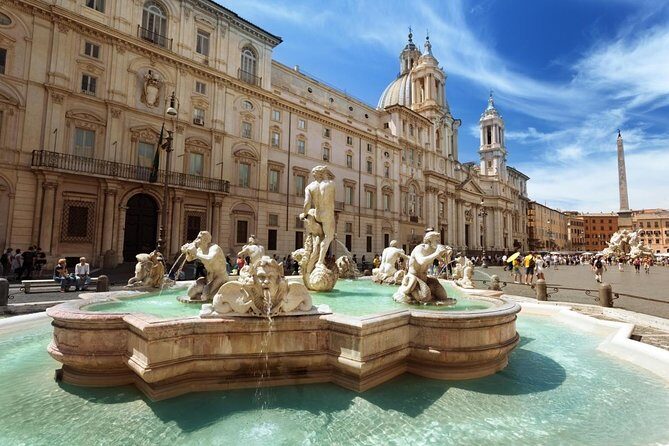
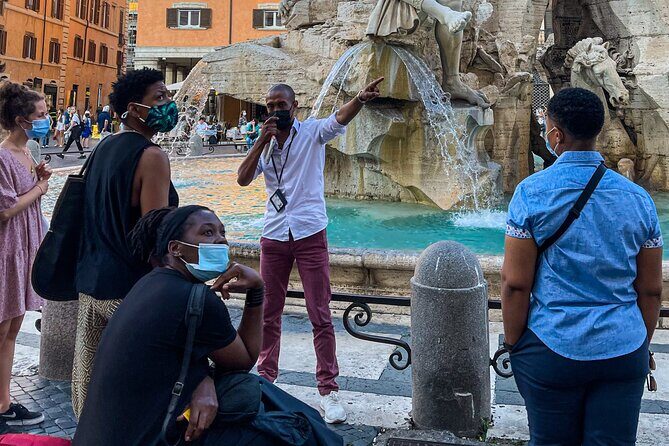
Your walk kicks off with Piazza Navona, one of Rome’s most recognizable piazzas—and one of the easiest places to get the lay of the land. You’ll spend about 15 minutes here, and the focus is on the layered history of the site rather than just pointing at buildings.
At night, Piazza Navona feels like a stage set: the facades look sharper, and the geometry of the square reads better in the dark. A good guide makes a difference here because Navona isn’t just a pretty backdrop. It has a past tied to older Rome, and when your guide connects the present-day square to that older world, it makes your photos feel less random and more meaningful.
Practical tip: take a minute to stand still and look around before you move again. The square is busy by nature, and if you’re always walking, you miss the “wide-angle” effect that makes Navona so special at night.
Pantheon stop: seeing the old gods story without getting lost
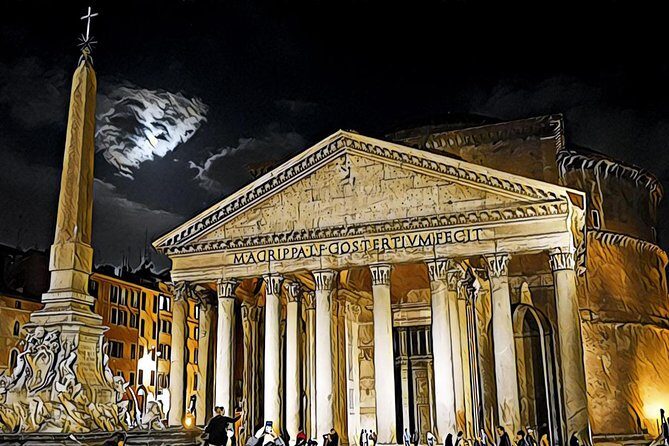
Next up is the Pantheon area, described as a transition from old gods to a church. This stop is your reminder that Rome reused, reshaped, and repurposed buildings over centuries—sometimes without changing the location, just changing the meaning.
Important detail: Pantheon admission isn’t included. That means you should expect a guided experience around the site and possibly exterior time. If you specifically want to go inside, plan to handle tickets separately.
Why this stop works on a night walk: the Pantheon’s presence is powerful even when you’re not stepping over the threshold. The guide’s narration gives you something to “read” in the structure—why it’s revered, what makes it distinct, and how Rome’s religious layers overlap.
If you’re the kind of traveler who likes architecture but hates feeling rushed, this tour’s timing and pacing are a good fit.
Sant’Ignazio di Loyola: a quick church pause that still matters
You’ll also stop at Chiesa di Sant’Ignazio di Loyola for about 5 minutes. It’s a short stop, but the purpose is clear: a quick pause at a beautiful church tied to stories that go beyond the walls.
This is one of those Rome moments where a guide turns a simple exterior sight into a lived cultural reference point. Reviews of this tour repeatedly highlight guides who keep their explanations clear and easy to follow, and this is the kind of stop where that skill shows.
If you’re hoping for a “big ticket” attraction every minute, this won’t be that. But if you want a night walk that feels like Rome’s intellectual and spiritual side too, it fits.
You can also read our reviews of more private tours in Rome



Trevi Fountain traditions: more than just a photo spot
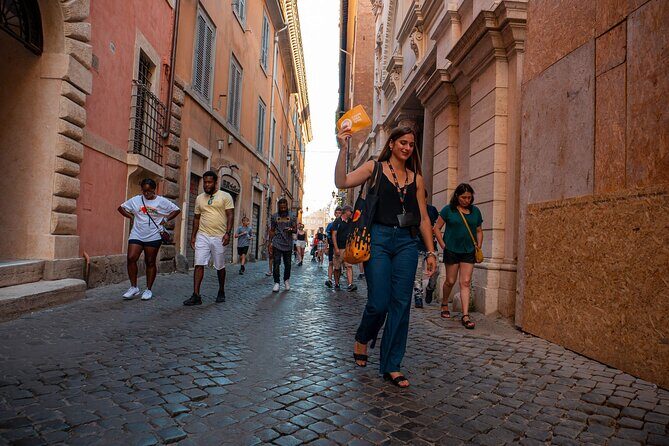
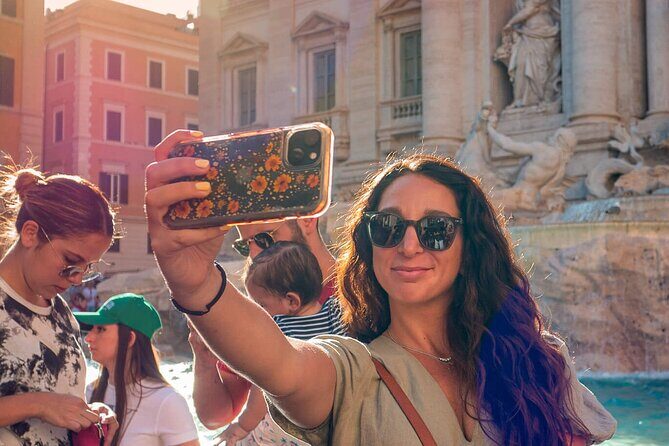
Then it’s on to Fontana di Trevi, with about 10 minutes there. The guide tells the story of the fountain and its traditions and cultural importance, not just its location.
At night, Trevi Fountain is one of those sights that looks almost theatrical. The lighting makes the detailing feel sharper. Still, the reason to stop isn’t the lighting alone—it’s what the guide helps you understand about why this fountain became a cultural ritual in the first place.
One consideration: Trevi is famous, so the area can still feel crowded even at 6 pm. Your best move is to treat your time here like a guided “orientation.” Listen first, then take photos once you understand what you’re looking for. That way, your pictures capture more than just the famous structure; they capture why it matters.
Piazza Venezia and Ancient City vibes: palaces, views, and scale
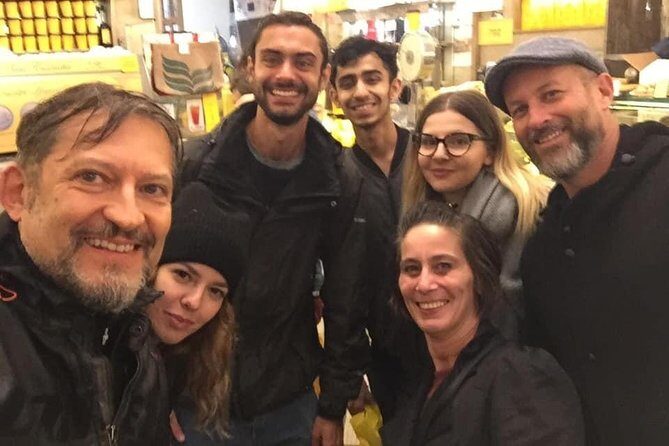
You’ll reach Piazza Venezia / Ancient City for about 10 minutes. This is another key storytelling moment. Piazza Venezia isn’t only a square; it’s a strategic viewpoint in the city’s layout, and your guide connects what you see there to the broader “ancient Rome still shapes the modern city” idea.
This is also where the tour starts to feel more like a guided walk through time. You can stand for a moment and realize you’re surrounded by architecture that was shaped by political ambition, cultural change, and the need for power to look permanent.
If you like viewpoints, you’ll likely enjoy this part of the walk because it gives context for what’s ahead—especially as the route moves toward the grand imperial roadways.
Via dei Fori Imperiali and Trajan’s Column: the Mussolini road detail
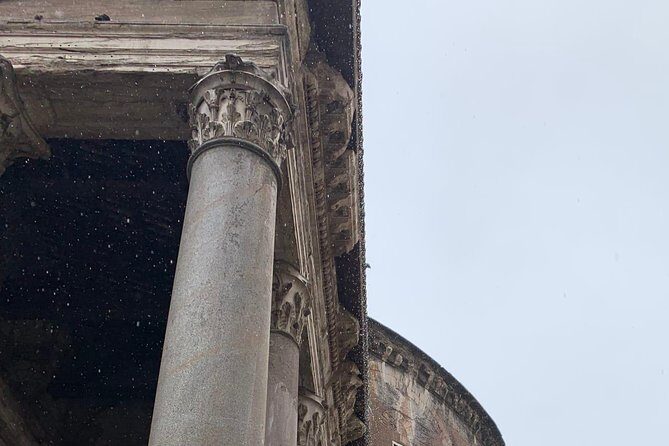
One of the most intriguing segments is the time on Via dei Fori Imperiali, about 10 minutes. You’re told it’s a famous road built by Mussolini, and the guide focuses your attention on Trajan’s Column, including insight into its story.
This stop can surprise people—in a good way. Rome is often sold as ancient ruins and art museums. Here, you get a reminder that 20th-century politics also left marks on the physical city. And then you zoom back into the imperial past with Trajan’s Column, which helps you connect the “who built what” story across eras.
For many travelers, Trajan’s Column is most meaningful when someone explains what you’re meant to notice. A column isn’t just a column. It’s visual storytelling carved in stone, meant to communicate power and legitimacy. When your guide points out the storyline inside the design, it clicks.
The quieter side of Rome: Madonna dell’Archetto and Galleria Sciarra
This is where the tour earns its name as more than a basic highlights loop.
You get the Church of the Madonna dell’Archetto, often described as the smallest church in Rome. That scale matters. It’s the kind of place where you can’t just speed through and move on. The guide’s narration helps you notice the calm, the shape, and the feel of a tucked-away sacred corner inside a massive city.
Then there’s Galleria Sciarra, a glass-domed atrium known for Art Nouveau frescoes. This is a “stop and look up” location. The dome and the ornate details are the point, and at night they can feel extra special because the outside streets contrast with the softer interior light.
Why these two stops are valuable: most first-time Rome itineraries skip places like this because they’re not on the top postcard list. But when you’re spending a short evening walking, you want variety. These sites give you texture—architecture that feels lived-in and slightly mysterious, not just monumental.
How small-group size changes the whole experience
This tour limits the group to 15 participants. That single detail affects everything: how quickly your guide can check in with you, how easily they can answer questions, and how relaxed the pacing feels through each crowded area.
It also affects your listening experience. In big groups, you’re often straining to hear a guide over traffic noise and other people’s chatter. In this tour, guides are repeatedly praised for speaking clearly and keeping things easy to follow. Names like Dinara, Dan, Mary, Anastasia, and Laura show up in positive experiences for exactly that kind of interaction—patient, energetic, and focused on keeping you engaged.
One more practical note from real-world experience: the listed duration is about 2 hours, but the tour may run a bit longer depending on questions and pace. That’s usually a good sign. It means the guide isn’t treating your time like a stopwatch.
Price and value: what $115.64 per person buys you
At $115.64 per person, this is not the cheapest way to see Rome at night. The value comes from the combination of three things:
- Time at the right hour. A 6 pm start is intentional, not random.
- Guided explanation for multiple anchor sights. You’re not doing self-guided “look and guess.”
- A small-group cap. You’re paying for attention, not just access.
Admission fees are mixed. Many stops are listed as free for admission time, while Pantheon admission isn’t included. So if you plan to go inside the Pantheon, budget extra. If your plan is to enjoy guided time outside and absorb stories from the architecture and piazza context, you can keep costs more predictable.
Where this shines most is for people who want a curated-feeling route without the hectic vibe of large group tours. If you’re traveling with family, a friend group, or anyone who hates being herded, the small-group format usually feels worth the price.
Practical tips for a smoother evening walk
Rome evening walking tours sound simple, but a few details can make them much better.
- Wear comfortable shoes you can walk in for a couple of hours. The route includes famous squares and historic streets, which can be uneven.
- Bring a layer. Even when Rome feels mild in the afternoon, evenings can cool down.
- Keep an eye out for Jubilee-related restoration notices. Some monuments may be under restoration, and the tour may adjust messages accordingly.
- If rain hits hard, know that the experience requires good weather. The tour provider may offer a different date or a full refund if weather cancels the plan.
Also, choose your expectations. This isn’t designed as a “sit and rest every 20 minutes” tour. It’s a steady walking narrative. If you like walking and listening, you’ll get a lot out of it.
Who should book this tour?
I’d point you toward this tour if you:
- want a nighttime Rome perspective without the full-on late-night chaos
- prefer a small group where you can ask questions and hear the guide
- like a blend of famous sights (Navona, Trevi, Pantheon area) plus quieter stops (Madonna dell’Archetto and Galleria Sciarra)
It’s also a great match for first-timers who want context fast. A well-run walking tour can help you understand how Rome’s layers connect—empire to church to modern city planning.
If you’re the type who hates walking or you’re trying to pack Rome into a “zero walking” schedule, you might prefer a taxi or tram-based plan. But for most visitors, the walking distance is part of the charm.
Should you book this private evening walk?
Yes, with a couple of smart caveats.
Book it if you want an evening route that feels guided but not rushed, with the best lighting hours and a small-group vibe. The combination of major sights plus two quieter stops is exactly the kind of variety you’d struggle to assemble on your own in a short window.
Think twice if:
- you plan to enter the Pantheon and you don’t want to manage extra tickets, since Pantheon admission isn’t included
- you’re traveling right at a time when restoration might affect monuments and you hate itinerary surprises (though you’ll get messages if changes are likely)
- you’re very weather-sensitive, because the tour requires good weather
If your priority is a memorable Rome evening with stories you can’t easily piece together alone, this tour is a strong pick—especially because the guides (Sarah, Sharon, Dinara, Dan, Mary, Anastasia, Laura, and more) are repeatedly praised for how clearly and warmly they explain what you’re looking at.
FAQ
Is the tour offered in English or Spanish?
Yes. The private evening walk is available in English or Spanish.
How long is the Rome evening walk?
The duration is listed as about 2 hours.
How many people are in the group?
The tour is capped at 15 participants for a more personalized experience.
Is this tour truly private?
It’s described as a private tour/activity, meaning only your group participates.
Where do I meet and where does it end?
You meet at Statua di Pasquino in Piazza di Pasquino and the tour ends at the Colosseum area (Piazza del Colosseo, 1).
What sights are included on the route?
You’ll visit stops that include Piazza Navona, the Pantheon area, Chiesa di Sant’Ignazio di Loyola, Fontana di Trevi, Piazza Venezia / Ancient City, and Via dei Fori Imperiali. The tour also highlights Madonna dell’Archetto and Galleria Sciarra.
Is admission included for every stop?
Many stops are listed with admission free, but Pantheon admission is not included.
What happens if the weather is bad?
The experience requires good weather. If it’s canceled due to poor weather, you’ll be offered a different date or a full refund.
When can I cancel for a full refund?
You can cancel up to 24 hours in advance for a full refund.