REVIEW · POMPEI CAMPANIA
Pompeii: Private Guided Tour with an archeologist
Book on GetYourGuide →Operated by Around Amalfi Coast · Bookable on GetYourGuide
Pompeii hits harder with a real guide.
This private tour lets you walk the ancient streets and read the city like a story, with an archaeologist explaining what you’re seeing and why it mattered. I especially like the custom feel and the fact that you get an archaeologist’s perspective right away, not a generic walkthrough. One possible drawback: it’s not suitable for mobility impairments, so plan your pace and route accordingly.
The tour is also great if you’re the type who wants details without getting stuck in a long lecture. You’ll spend your time on well-preserved ruins, including houses and temples, plus the kinds of artwork that survive by the grace of time. I also liked that entry tickets are included, so you’re not doing extra admin mid-day. The main consideration is the short duration—2.5 hours flies by—so you may want to arrive ready with questions.
And if you luck into a guide like Lello or Raffaello (Lelo), you’ll see why people rave about the way they bring places to life. In particular, the feedback I’m taking from their approach is: keep it engaging, keep it readable, and don’t overwhelm you with dates.
In This Review
- Key takeaways before you go
- Meeting at Coffee Shop Vittoria, then walking into the ruins
- Why a private archaeologist makes Pompeii feel real
- The 2.5-hour flow: see the highlights without feeling rushed
- Ancient streets and daily life in Roman Pompeii
- Houses, temples, and public buildings you can actually picture
- Frescoes and mosaics: the art that explains the owners
- The tragedy of Pompeii, explained without turning it into gloom
- Customization in a short tour: how to get the most in 2.5 hours
- What it feels like with guides like Lello (and Raffaello, Lelo)
- Price and value: $451.69 per group up to 4
- Who should book this private Pompeii tour
- Practical tips for a smooth Pompeii visit
- Should you book this private Pompeii tour?
- FAQ
- How long is the private Pompeii tour with an archaeologist?
- Where do we meet the archaeologist?
- What is included in the price?
- What language is the tour guide?
- Is this tour private or shared?
- Is the tour suitable for people with mobility impairments?
- What should I bring?
Key takeaways before you go
- Private archaeologist guide: you get tailored explanations instead of one-size-fits-all narration.
- Focused Pompeii time (2.5 hours): enough to get oriented fast and still see key areas.
- Ruins with artwork and interiors: houses, public spaces, frescoes, and mosaics are part of the experience.
- Daily life viewpoint: you’re shown what Romans actually did, not just what Rome conquered.
- Meet at Coffee Shop Vittoria: clear pickup spot, and the archaeologist brings a name sign.
Meeting at Coffee Shop Vittoria, then walking into the ruins
Your tour starts just outside Coffee Shop Vittoria, where you’ll meet your private archaeologist. Arrive about 5 minutes early and look for the guide holding a sign with your name. It’s a small thing, but it means you waste less time hunting people down and you get moving while the site is still fresh.
From the start, you’re set up for an easy rhythm. You’ll walk through the ancient streets and into the main ruined areas with a guide who can adjust the pace. That matters in Pompeii because you’ll be tempted to rush. Don’t—your guide’s job is to slow your eyes down and teach you what to notice.
Also, wear comfortable shoes. Pompeii involves walking on uneven surfaces, and you’ll want your feet to feel good from minute one. This is one of those sites where your comfort directly affects what you get out of the tour.
You can also read our reviews of more tours and experiences in Pompei Campania.



Why a private archaeologist makes Pompeii feel real
Pompeii can be visually stunning, but it’s also easy to turn into a list: house, street, temple, next house. A private archaeologist guide changes that. The whole point is that the ruins become explanations—how spaces were used, how buildings worked, and how ordinary people lived.
With an archaeologist at your side, you also get better context for what’s preserved versus what’s missing. You don’t just see the remains; you hear the reasoning behind what you’re looking at. That’s especially valuable when you’re staring at walls and floors that look similar at first glance.
I also like that your tour is designed to match your interests. If you care more about homes than temples, the guide can steer you. If you’re drawn to the “how did they live” angle, you’ll spend more time on the daily-life details that make Pompeii human instead of distant.
The 2.5-hour flow: see the highlights without feeling rushed
This experience runs about 2.5 hours. That length is a sweet spot for Pompeii because it’s long enough to get oriented and learn how to read the site, but short enough that you won’t feel trapped indoors or in one spot.
The tour flow is simple: you meet at Coffee Shop Vittoria, then you’re taken on a guided walk and sightseeing portion (about 1 hour for the stop that focuses on walking and views), and then you return to the meeting point. Think of it as a well-directed introduction, followed by time pressure—Pompeii makes you want to see more once you understand what you’re looking at.
Here’s how to use the time well. Ask your guide for a couple of “what should I look for next?” cues. Then, when you have free energy left, you can explore on your own with better instincts. The goal isn’t to cover everything. The goal is to learn the language of Pompeii quickly.
Ancient streets and daily life in Roman Pompeii
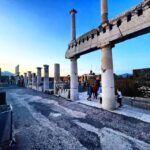
One of the biggest wins here is how the guide helps you understand the city as a living place. You’ll walk the ancient streets and get a feel for how Pompeii moved: where people passed, where routines unfolded, and how public and private spaces related.
This is where the tour really pays off. Without a guide, it’s easy to admire the ruins and move on. With one, you’ll start noticing patterns: where certain spaces are positioned, how the architecture shapes behavior, and what the layout suggests about daily routines.
Even the storytelling about the city’s tragic end is most powerful when it’s anchored to life before disaster. You’re shown the contrast between a city that functioned and a city frozen in time. That shift in perspective is what makes Pompeii stick after you leave.
Houses, temples, and public buildings you can actually picture
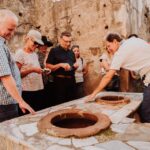
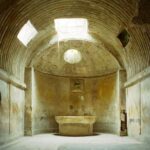
You’ll see a mix of public buildings and private residences, including well-preserved examples like houses and temples. The difference between those categories is exactly what makes Pompeii such a memorable visit. You’re not just looking at ruins—you’re watching the guide map roles: civic life versus home life.
The archaeologist’s explanations help you picture how households worked. You’ll hear about architecture and daily-life details that connect what you see—rooms, thresholds, surfaces—to how people used them. That’s also where private tours shine: you can ask follow-up questions without worrying about holding up strangers.
If you’re an architecture fan, this section is where you’ll enjoy the most. Pompeii is one of those places where small features matter. A guided hour focused on the right buildings makes you start reading details you would otherwise skip.




Frescoes and mosaics: the art that explains the owners
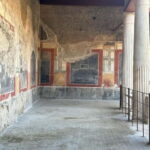
One of my favorite things to look for in Pompeii is what survived inside and around homes. This tour includes time for well-preserved frescoes and intricate mosaics, which do more than decorate. They signal taste, status, and everyday visual culture.
A guided approach helps here because artwork can look like “pretty wall” until you understand context. The archaeologist can point out what you’re seeing and how that fits into Roman domestic life and building design. The result is that you don’t just admire the art. You understand what it likely meant for the people who lived there.
Even if you’re not an art person, you’ll still get value. Frescoes and mosaics are often the pieces that make the past feel personal. They show what people chose to look at every day.
The tragedy of Pompeii, explained without turning it into gloom
Pompeii’s big story is dramatic, but it shouldn’t turn your visit into sad trudging. This tour balances the tragedy with how the city worked and why the preserved ruins matter.
Your archaeologist will explain the tragic events that befell the once-thriving Roman city, with a focus on what those events did to the architecture and what survived. That’s important because it changes how you view the site. You start seeing ruins as evidence, not just scenery.
I like this approach because it keeps your mind engaged. You’re not only thinking about what happened. You’re also thinking about what the city was and how quickly life ended.
Customization in a short tour: how to get the most in 2.5 hours
The tour is described as entirely customizable to match your interests. In practice, that means you can guide the balance between public spaces, private residences, art, and architectural details.
Use that by picking one or two priorities before you meet your guide. For example:
- If you’re curious about homes, ask to focus on domestic spaces and interiors.
- If you’re fascinated by public life, ask for more time in public buildings.
- If you want art, point your guide toward frescoes and mosaics.
Also, don’t be afraid to ask for “spot the detail” moments. A good archaeologist guide will help you learn what to notice, not just what it is. That kind of learning is what turns a 2.5-hour tour into a full memory, not a quick photo stop.
What it feels like with guides like Lello (and Raffaello, Lelo)
The tour experience is strongly shaped by the guide, and the names you might run into are Lello and Raffaello (Lelo). The descriptions of their style are consistent: passion for archaeology, stories that make places understandable, and pacing that’s interesting without becoming heavy.
One thing I’d borrow from that approach if I were planning your visit: make sure you’re ready for facts, but also ready to laugh. The best Pompeii guides don’t just recite. They connect. They keep the flow moving so your eyes stay open.
It also helps that the guide is English-speaking, so you won’t be translating in your head when the explanation gets specific. That makes a difference with archaeology, where terms can be technical fast.
Price and value: $451.69 per group up to 4
The price is $451.69 per group, up to 4 people, for roughly 2.5 hours, with entry tickets included. On paper, that looks high—until you do the simple math.
If you fill the group, your cost per person is about $113 each. That’s often very competitive in a major heritage site when you compare what you get: an archaeologist, a private setting, and included tickets. If it’s just two of you, it’s still a smart choice if you value learning over wandering. You’re buying attention, context, and time efficiency.
The best value is when you’re the kind of visitor who wants to ask questions and move through the site with purpose. If you’d rather roam at your own speed with a basic guidebook, you may not need this level of personalization.
Who should book this private Pompeii tour
This is a good fit if you want Pompeii to feel like more than sightseeing. You’ll enjoy it most if you like the idea of walking well-preserved ruins with someone who can explain what daily life looked like and how architecture supported that life.
It also suits history buffs, architecture fans, and people who enjoy art like frescoes and mosaics. And if you’re traveling with a small group (up to 4), the private format makes the price feel less painful.
If you have mobility constraints, note that it’s not suitable for people with mobility impairments. In that case, you’ll want a different tour format that matches accessibility needs.
Practical tips for a smooth Pompeii visit
First, wear comfortable shoes. You’ll walk. Pompeii isn’t built for minimalist footwear.
Second, come with a couple of questions. Even a simple one like “What should I look for first?” helps your archaeologist steer the tour to what you care about.
Third, use the tour as your orientation tool. Once you’ve learned what to notice—street patterns, building functions, domestic details—you can spend more time afterward exploring the parts that match your personal curiosity.
Finally, pace yourself. Pompeii encourages speed because you can see so much. Resist that. Let your guide help you slow down and actually read the site with your eyes.
Should you book this private Pompeii tour?
I’d book it if you want Pompeii to be understandable, not just dramatic. A private archaeologist is the difference between seeing ruins and learning how they worked, what people did there, and why the place matters.
If you’re on a tight schedule and you don’t want to waste time guessing what’s important, this tour gives you a fast, guided foundation. And if you’re traveling as a group of up to 4, the pricing can feel fair compared to the experience you get.
Skip it only if you know you prefer independent roaming and you don’t want to pay for a guide’s attention. Otherwise, this is one of the more practical ways to get real value from Pompeii in a short visit.
FAQ
How long is the private Pompeii tour with an archaeologist?
The tour lasts about 2.5 hours, and starting times vary based on availability.
Where do we meet the archaeologist?
You meet your private archaeologist just outside Coffee Shop Vittoria. The guide will have a sign with your name on it.
What is included in the price?
The tour includes a private tour, an archaeologist guide, and entry tickets.
What language is the tour guide?
The live tour guide speaks English.
Is this tour private or shared?
It’s a private group tour.
Is the tour suitable for people with mobility impairments?
No, it’s not suitable for people with mobility impairments.
What should I bring?
Bring comfortable shoes for walking the site.