REVIEW · POMPEI CAMPANIA
Pompeii: Family-Friendly Augmented Reality Tour with Ticket
Book on GetYourGuide →Operated by AR Tour srl · Bookable on GetYourGuide
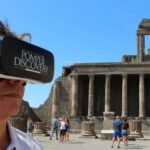
Holograms bring Pompeii back to life. This family-friendly tour uses AR glasses to show how major spots looked before the 79 A.D. eruption, layered over the real ruins. I like that the reconstructions are based on work by archaeologists and experts, so you are not just chasing cool effects. One thing to consider: the meeting point can feel tricky to spot in the square, and some people may find the AR more like a guided digital overlay than full, life-like realism.
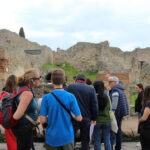
If you want a small-group walk that helps kids follow the story, this is a strong pick. You get an audio guide in multiple languages while a tour assistant handles the equipment and keeps you moving through the site. The main drawback is that it is not for everyone: it is not wheelchair-friendly, and children under 8 can enter the park only with a standard ticket but cannot use the 3D tech.
In This Review
- Key things to know before you go
- Seeing Pompeii before the eruption with AR glasses
- Your 2-hour route: temples, homes, squares, and theaters
- Orientation and getting your AR gear working
- Temples and civic-religious spaces
- Houses and everyday life in Pompeii
- Squares and public life
- Theaters and entertainment
- Wrapping up back at the start
- Meeting at Vittoria Coffee Shop: don’t waste time hunting
- Price and value: is $52.38 worth it?
- Using the audio guide in multiple languages (without missing the story)
- What to bring for a comfortable Pompeii day
- Who this tour suits best, and who should skip it
- Should you book this Pompeii AR Family Tour?
- FAQ
- How long is the Pompeii AR family tour?
- Where do we meet for the tour?
- What’s included in the ticket price?
- What languages are available for the tour?
- Is the tour suitable for young children?
- Is this tour wheelchair accessible?
- Does the tour run in bad weather?
- Can I wear AR glasses if I use eyeglasses?
- Is luggage allowed?
Key things to know before you go
- AR glasses overlay reconstructions on top of the standing ruins for the pre-eruption view
- Archaeologist-built itineraries help explain what you are seeing, not just where you are walking
- Temples, houses, squares, theaters, and key buildings are the focus, with built-in pauses for the visuals
- Tour assistant support means you do not fend for yourself with the equipment
- Two-hour format makes it easier to plan around heat, stamina, and kid attention spans
Seeing Pompeii before the eruption with AR glasses
Pompeii hits people in waves. First you see the stones. Then you start noticing doorways, street corners, and how close everything was. This tour adds a big missing piece: you do not just look at ruins, you watch them shift into a pre-eruption scene as you move.
The method is simple and smart. You’ll wear AR glasses that display holograms on top of what is already there. As you walk, the visuals line up with real locations in the archaeological park, so you can compare the past and the present side by side. The audio guide carries the explanation through that comparison, so you are not decoding it all with guesswork.
What I like most is that the tour is not stuck on one monument. It spreads attention across the kind of places a real town relied on: public and religious spaces, neighborhoods, and entertainment areas. That matters for families, because kids usually get bored when the tour becomes one long stare at one wall. Here, the story keeps shifting.
The other plus is the reconstruction work. The visuals and the route are described as developed by a team of archaeologists and experts. You’re still in a “this is what it likely looked like” world, but you’re not being asked to accept random fantasy. That’s a real value add when you are trying to make Pompeii understandable, especially for ages 8 and up.
You can also read our reviews of more tours and experiences in Pompei Campania.

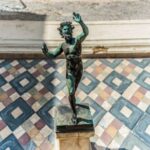

Your 2-hour route: temples, homes, squares, and theaters
You should think of this tour as a guided circuit with AR moments at the key stops. The tour highlights significant temples, houses, squares, theaters, and other important buildings. The exact sequence can vary, because stops may change, so use the assistant’s plan as your guide.
Here’s how the experience usually lands, stop by stop, and what to watch for:
Orientation and getting your AR gear working
At the start, you meet your tour assistant at the meeting point and get set up with the AR glasses. This is not a “figure it out alone” situation. The assistant walks you through how to use the equipment so the first minutes do not turn into frustration.
For parents, that first setup is huge. Kids lose interest fast when adults are wrestling with tech. Here, the goal is to get you watching reconstructions quickly.
Temples and civic-religious spaces
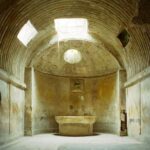
When the tour moves into major temples and religious areas, the AR overlay helps you understand scale and layout. You’ll be able to compare the standing ruins with how they were arranged in the pre-79 A.D. version of the city. That helps you see what a temple was meant to do, not just how it looks now.
The practical win: these spaces often feel confusing if you do not know what role they played. The audio guide description helps connect the building’s purpose to the visual.
Houses and everyday life in Pompeii
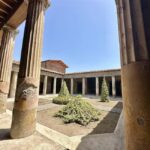
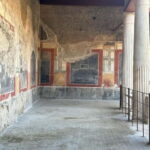
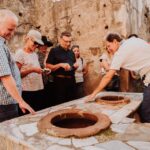
Houses are where the tour often becomes most meaningful. You can see how homes were organized and what kinds of rooms mattered for daily routines. The AR overlay shows reconstructed structures where the present-day ruins are fragments, so you can picture how people actually moved through their spaces.
This is also where kids tend to perk up. A house reads like a story: doorways, courtyards, and “rooms” that become legible through the overlay.




Squares and public life
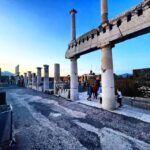
Public squares and central gathering areas help you understand that Pompeii was not a museum. It was a working town with meeting points and movement. With AR, you get a clearer sense of how people would have used these open areas.
A consideration: open areas can be sun-heavy. If you go at peak heat, bring water and plan short breaks when the assistant allows.
Theaters and entertainment
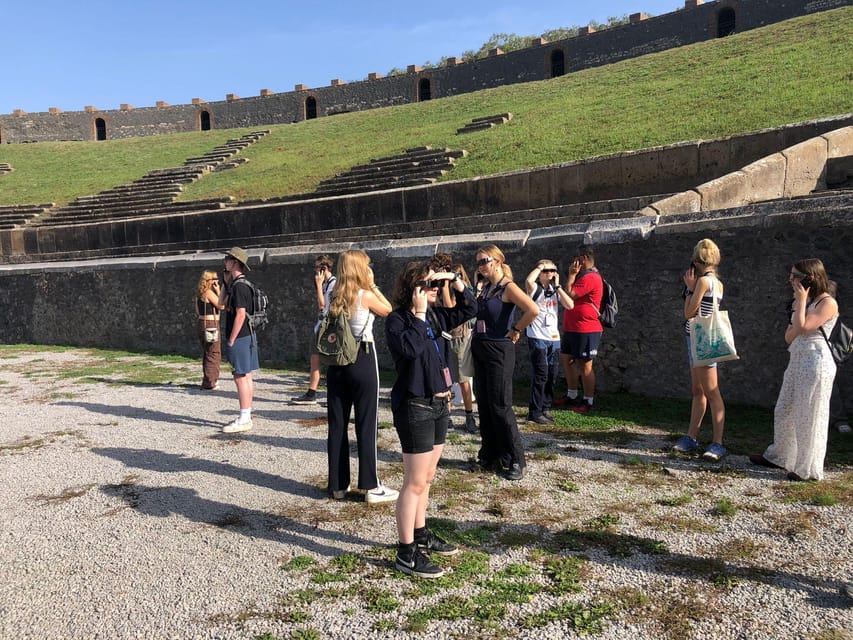
Pompeii’s theaters and entertainment spaces add variety because they give the story a rhythm. You are moving from homes and daily functions to leisure and public events. The AR visuals help you see how theaters were positioned and used, which is harder to understand from ruins alone.
This part can be especially rewarding if your family enjoys performances, even if you are not a theater buff. The audio guide description ties the space to its function.
Wrapping up back at the start
The tour ends back at the meeting point. After you return the AR glasses, you can stay in the archaeological park and explore independently. That’s a nice way to extend the visit at your own pace once the guided story has given you context.
Meeting at Vittoria Coffee Shop: don’t waste time hunting
The tour starts at a very specific spot: Vittoria coffee shop in Piazza Esedra (Porta Marina Inferiore), right next to the entrance. Your tour assistant will be holding a sign that says AR Tour.
Here’s my practical advice: treat “near the entrance” as a starting clue, not a guarantee. Piazza Esedra can feel busy and visually confusing, especially if you arrive a bit late. Build in extra minutes so you can locate the sign quickly.
If you are running late, they wait for a maximum of 5 minutes. After that, the tour starts out of respect for others. That means you should aim to be there early enough to settle, not early enough to panic.
Also note the ticket is nominal, meaning you need the full name and surname of each participant. Double-check spelling when you book so you do not get stuck at the ticket office.
Price and value: is $52.38 worth it?
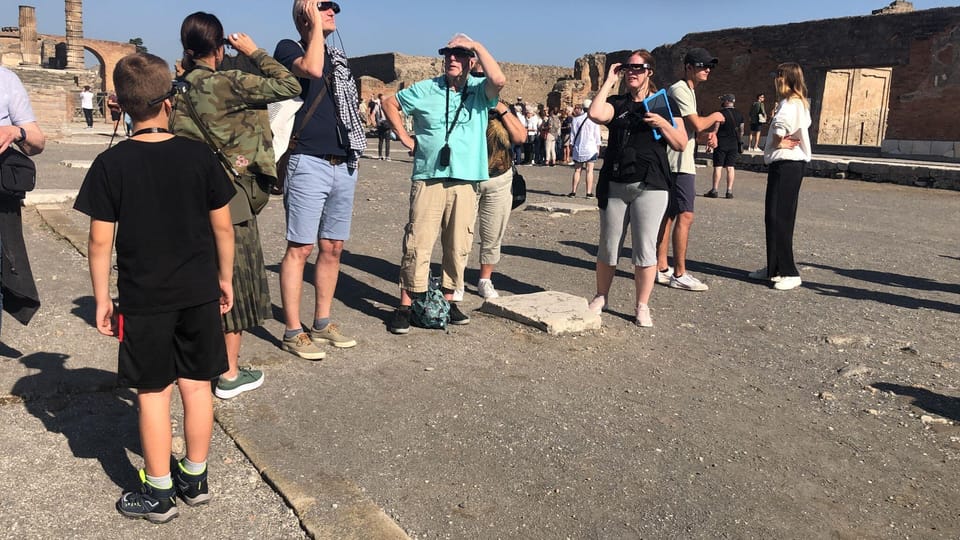
The price is $52.38 per person for a 2-hour tour that includes AR glasses, a multi-language audio guide, and a tour assistant. On its face, that can sound steep compared with a standard guided walk.
The value comes from what you’re paying for: the equipment and the technology-driven interpretation. You are getting more than directions through ruins. You’re getting a structured comparison between how places looked then and how they look now, with explanations timed to the visuals. For families with kids, that storytelling can be the difference between a day that feels like a lesson and a day that feels like a game.
Still, consider your expectations. The AR overlay may not match what you imagine from sci-fi. Some people can interpret it as more of a guided digital overlay than highly detailed, realistic reconstruction. If your main goal is pure authenticity with minimal tech, you might prefer a traditional guide. But if you want a clearer path into Pompeii for children and first-timers, the AR component is the selling point.
So, who gets best value? Families with children ages 8 and up, and couples who like tech when it has a clear purpose.
Using the audio guide in multiple languages (without missing the story)
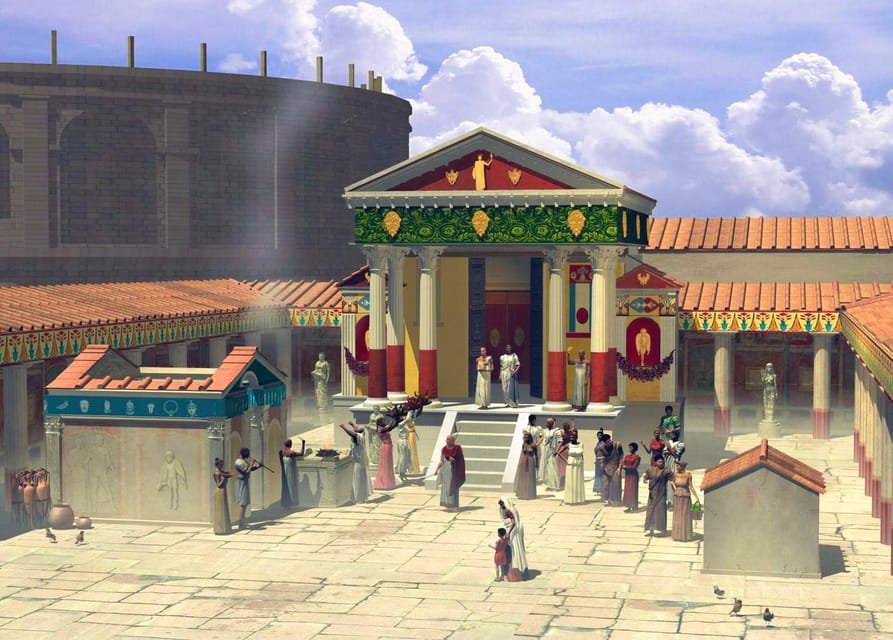
You get a detailed description through an audio guide. It’s available in English, French, Italian, Spanish, German, and Portuguese, with live tour language noted as Italian and English.
This matters because Pompeii can be overwhelming. Even if you know the basics of the eruption, you still need help understanding what each building is, what it was used for, and how people lived. The audio guide is designed to keep you connected to the meaning of the stops while the AR does the visual work.
You can also wear the AR glasses if you already use eyeglasses. That’s one less worry when you pack.
The key tip is timing: if the audio starts describing something and you are still trying to adjust the equipment, you’ll miss the best moment. Give yourself a minute at each setup point so you can watch and listen together.
What to bring for a comfortable Pompeii day
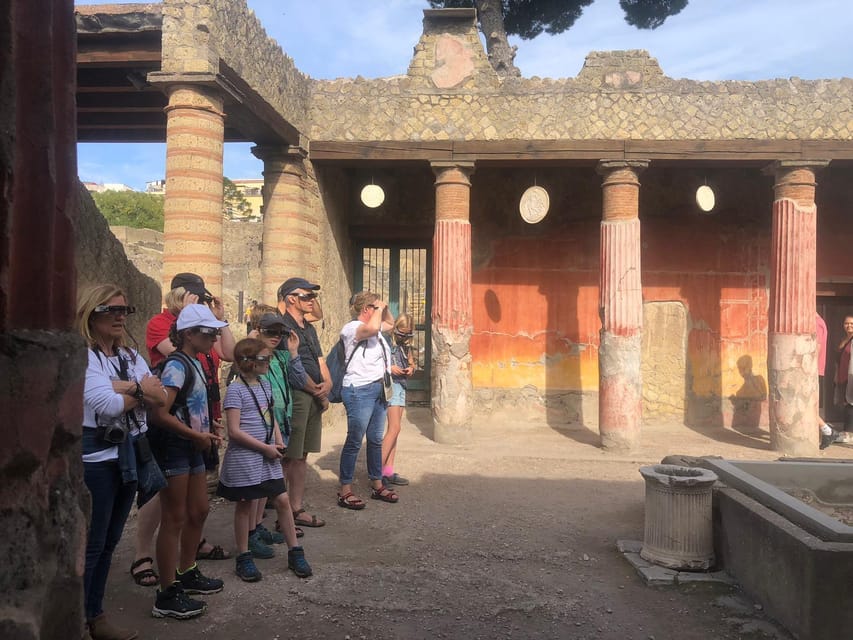
Pompeii can be rough on comfort. You are walking, you are exposed to sun, and weather can change quickly. Plan like you are spending a couple hours in open-air ruins.
Bring:
- Comfortable shoes
- Sunglasses and a sun hat
- Sunscreen and water
- Weather-appropriate clothing
Also remember what you cannot bring: luggage or large bags. If you have a daypack, keep it manageable. The smoother your movement, the less time you spend stopping for storage.
The tour runs rain or shine. So even if you think you can outsmart the weather, be ready. If the day turns wet, you’ll want shoes that handle slick ground.
Finally, once the AR tour ends and you return the glasses, you are free to explore the archaeological park on your own. If you want extra time, bring a second plan for breaks and photos, because Pompeii rewards slow wandering after you’ve learned the basics.
Who this tour suits best, and who should skip it
This tour is made for families. It’s ideal for children ages 8 and up, thanks to the visual explanation and the short, paced walking format.
Here’s where it may not fit:
- Children under 8 can enter Pompeii with a standard ticket, but they cannot use the 3D technology.
- It is not suitable for wheelchair users.
- It does not include suburban villas like Villa dei Misteri, so if that’s your priority, look for another option.
If you’re traveling with an 8+ kid who likes maps, gadgets, or anything that turns ruins into a story, you’ll likely have a better experience than with a purely text-based explanation.
If your family prefers quiet, unguided time or you already know Pompeii well, you may find the tech layer less essential. In that case, you might choose a traditional guide or explore independently after getting your bearings.
Should you book this Pompeii AR Family Tour?
Book it if you want a clear, kid-friendly way to understand Pompeii and you like the idea of seeing key places reconstructed directly on-site. The combo of AR glasses plus a multi-language audio guide plus an assistant helps you move through Pompeii without getting lost in confusion.
Skip it or plan carefully if you have trouble locating meeting points in busy public squares, or if you expect the AR to look perfectly photo-real. Also skip if accessibility is a concern, because it is not wheelchair-friendly.
My final take: this is a good value choice when your goal is understanding and engagement in a short window. The strongest “yes” factor is simple: it makes Pompeii’s layout and daily life easier to picture, especially for families.
FAQ
How long is the Pompeii AR family tour?
The tour lasts about 2 hours. Starting times depend on availability.
Where do we meet for the tour?
Meet at the Vittoria coffee shop in Piazza Esedra (Porta Marina Inferiore), right next to the entrance. The assistant will be holding a sign that says AR Tour.
What’s included in the ticket price?
Your ticket includes AR glasses, a multi-language audio guide, and accompaniment by a tour assistant. The AR reconstructions and itinerary are developed by archaeologists and experts.
What languages are available for the tour?
The live tour is listed as Italian and English. The audio guide is available in Italian, Portuguese, French, English, German, and Spanish.
Is the tour suitable for young children?
It is ideal for families with children ages 8 and up. Children under 8 can access the park with a standard ticket, but they cannot use the 3D technology.
Is this tour wheelchair accessible?
No. The tour is not suitable for wheelchair users.
Does the tour run in bad weather?
Yes. The tour runs rain or shine.
Can I wear AR glasses if I use eyeglasses?
Yes. AR glasses can be worn by participants who already wear eyeglasses.
Is luggage allowed?
No. Luggage or large bags are not allowed.