REVIEW · WALKING TOURS
Guided Group Walking Tour of Rome Top Sights
Book on Viator →Operated by EcoArt Travel · Bookable on Viator
Rome is best on foot.
This guided group walking tour strings together the classics in a smart route, so you’re not zigzagging across the city. You’ll hit Spanish Steps, Trevi Fountain, the Pantheon, and end at St. Peter’s Square, with a local guide who points out the kind of details you’d miss standing there on your own.
I especially love the way the tour builds one moment into the next: you go from views and people-watching on the hills to monumental architecture, then back to Bernini-linked sights. I also like that the group stays small (up to 20), which usually means you can ask questions without shouting.
One drawback to plan around: it’s a walking route through busy central Rome, and you’ll be dealing with steps and crowds at the big icons. Also note that during the Jubilee, some monuments may be under restoration, so you might see slight changes depending on updates you get.
In This Review
- Key points worth your attention
- Start at Piazza di Spagna with the right perspective
- Spanish Steps: 138 steps and a serious view over Via dei Condotti
- Trevi Fountain: more than a photo line
- Hadrian’s Temple (Tempio di Adriano): a quick exterior that pays off
- Pantheon inside: the dome effect you feel, not just read about
- Piazza Navona: Bernini’s Four Rivers and the rhythm of Rome
- Castel Sant’Angelo from the river: fortress-to-museum energy
- St. Peter’s Square: colonnade walk and the Bernini plan
- Guides matter: why Stefano and Eddy get praised so often
- Price and route value: $46.25 for a lot of major stops
- Timing, pacing, and what to expect from the stops
- Who this tour is best for (and who should think twice)
- Should you book this Rome top sights walking tour?
- FAQ
- What time does the tour start?
- Where do I meet the guide and where does the tour end?
- How long is the Guided Group Walking Tour of Rome Top Sights?
- Which major sights are included?
- Does the tour include going inside the Pantheon?
- Is food and drink included?
- What’s the maximum group size?
- What should I know about the Jubilee and possible changes?
- What is the cancellation policy?
Key points worth your attention
- Small group cap (20 travelers) makes the guide’s explanations easier to hear and more personal
- Bernini connections at multiple stops (Trevi, Navona, and St. Peter’s Square) give you a running theme
- Pantheon interior time means you see the dome space, not just the outside
- Route efficiency links Spanish Steps, Trevi, central piazzas, and the Vatican area in one stretch
- Certified local guides like Stefano and Eddy are praised for clear, fun, not-boring storytelling
Start at Piazza di Spagna with the right perspective
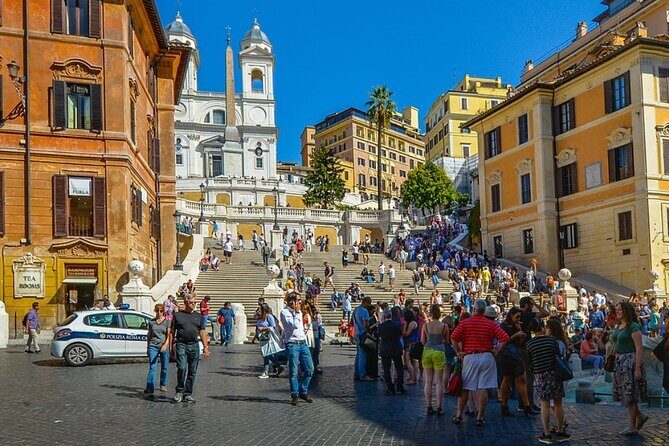
You begin near Babington’s tea room at Piazza di Spagna, right by the Spanish Steps. From the start, the tour sets you up for better seeing: you’re not just arriving at a famous spot, you’re learning how to look at it.
The first stop focuses on the view of the steps from below. That matters because the Spanish Steps aren’t just a staircase. They’re a stage set where architecture, fashion streets, and street life meet.
You’ll get some time to settle in, find the right angles for photos, and listen for the guide’s context. This is a good “tone setter” stop, especially if you’re new to Rome and want to understand what you’re seeing before the day gets fast.
You can also read our reviews of more walking tours in Rome


Spanish Steps: 138 steps and a serious view over Via dei Condotti
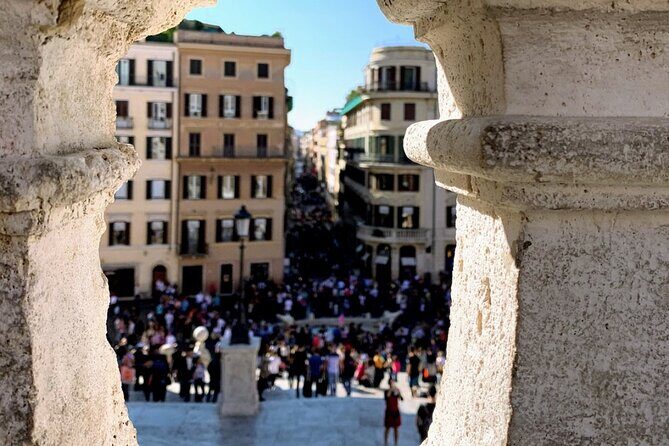
Next comes the Spanish Steps itself. The headline fact is 138 steps, and the tour gives you flexibility: you can climb all the way up or just take part of it, depending on your pace.
The payoff is the view over Via dei Condotti, Rome’s high-end shopping street. Even if you don’t shop, it helps you understand how the city’s power centers form around streets, not just monuments.
This is also where Rome’s layout becomes clearer. Standing at different heights shows how the city connects hills, churches, and piazzas. A guide’s explanations help you link the spots you’ll see later, so it doesn’t feel like you’re hopping from landmark to landmark.
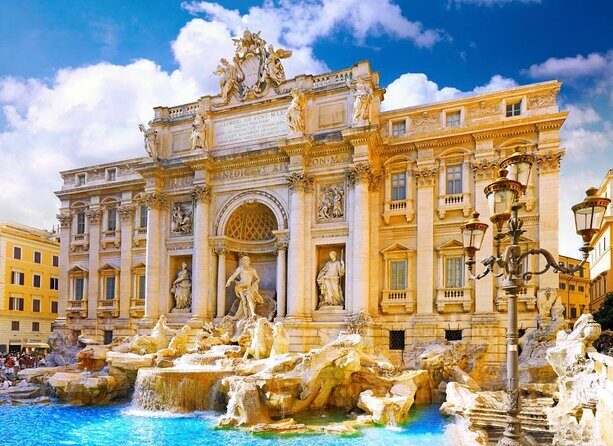
Trevi Fountain: more than a photo line
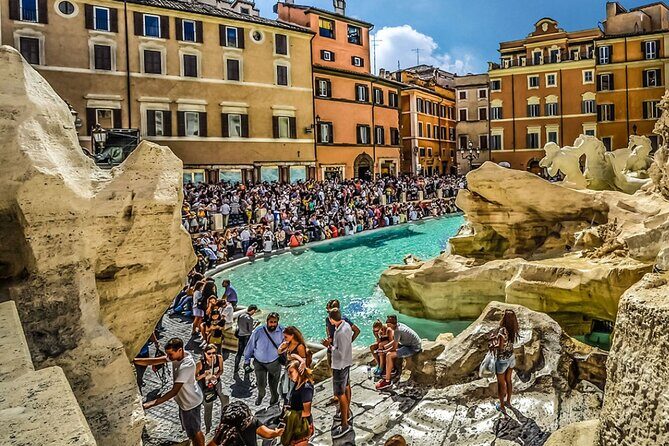
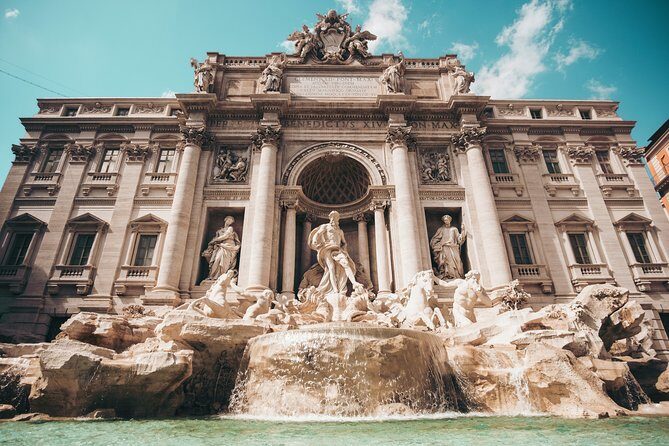
Then you head into the central city streets for the Fontana di Trevi. The guide’s big job here is making sure you look at the fountain like a story, not a postcard.
The Trevi Fountain is tied to Bernini through the sculptures, and the tour highlights the idea of secrets embedded in the artwork. Whether you’re into art or not, that approach changes your viewing. You start noticing figures, composition, and the meaning behind the dramatic details instead of just scanning for the best angle.
One practical benefit of this stop in a guided format: you’re less likely to miss small-but-important parts while you’re trying to manage a crowd. You get a focused window to watch, listen, and move on, which is exactly how to handle Rome’s busiest icons.
Hadrian’s Temple (Tempio di Adriano): a quick exterior that pays off
After Trevi, the tour makes a short stop at Tempio di Adriano, also known as Hadrian’s Temple. This is not a long linger. It’s a “look and lock in the idea” kind of stop.
From outside, the towering columns are the main attraction. And the guide’s framing helps you see why a structure like this still matters, even when it’s used in a modern setting as an event space.
This kind of stop is great value for your time. You get a fast hit of ancient Rome without sacrificing momentum for the rest of the day’s big sights.
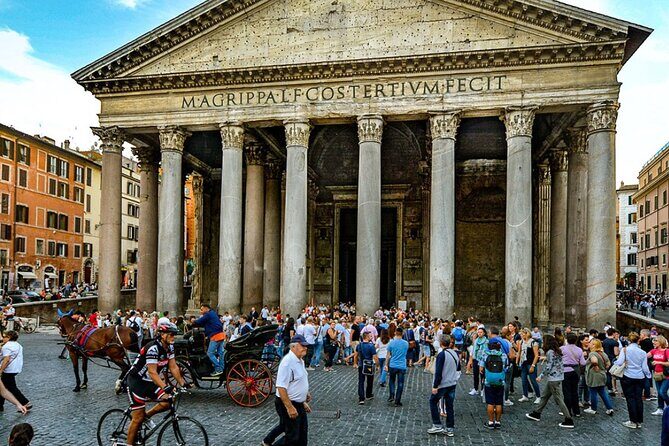
Pantheon inside: the dome effect you feel, not just read about
The Pantheon is where your tour becomes genuinely memorable for most people. You don’t just pass by. You step inside with your guide.
The most famous takeaway is the dome: it’s described as the largest unreinforced concrete dome in the world, and it has lasted for nearly 2,000 years. But the tour does better than facts. You’ll learn what to notice in the interior space—how the architecture shapes light and how the scale creates that iconic, hushed feeling.
This is also one of the best places to bring curiosity. The Pantheon has lived different lives over time, moving from a pagan temple to a church, and tied to the tomb tradition of Rome’s kings. With a guide, that timeline becomes clear instead of a blur of names and dates.
If you care about buildings that still work after centuries, this is the stop that proves it. And if you don’t care much about history, the sheer spatial design still lands.
You can also read our reviews of more guided tours in Rome




Piazza Navona: Bernini’s Four Rivers and the rhythm of Rome
Next is Piazza Navona, one of the city’s classic piazzas where daily life and monumentality overlap. The tour gives you time to watch the scene—people moving, vendors operating, and tourists clustering around the center.
But the key point is the fountain: the tour points out another Bernini masterpiece, the Fountain of the Four Rivers. The guide’s focus helps you interpret why the fountain is placed the way it is and what it’s doing in the visual theater of the piazza.
This stop is about balance. The day has been heavy with big architecture, and Navona lets you see how those monuments function while people live around them. It’s a great moment to pause your brain and just take Rome in—guided, but not lecture-only.
Castel Sant’Angelo from the river: fortress-to-museum energy
After the piazza, you move toward the Tiber area for Castel Sant’Angelo. The tour frames it as a symbol of Rome that has worn many roles over time: fortress, prison, hideaway, and now a museum.
Even if you only see it from outside during the walking route, it’s an excellent visual anchor. The river positioning gives you a sense of how defense and transport mattered in old Rome, and how the city’s power geography shaped where major buildings appeared.
This is also a good “reset” stop. By now you’ve seen major religious and civic landmarks, so Castel Sant’Angelo adds a different angle—control, conflict, and survival—without swallowing the whole day.
St. Peter’s Square: colonnade walk and the Bernini plan
The tour ends at St. Peter’s Square, in Piazza San Pietro. This is a smart finish because the square is designed for people to arrive on foot, and the space changes as you move into it.
You’re guided to notice Bernini’s role again, especially the colonnade that seems to embrace visitors. Time here isn’t just “look at the church.” It’s about feeling the design that directs your movement and attention.
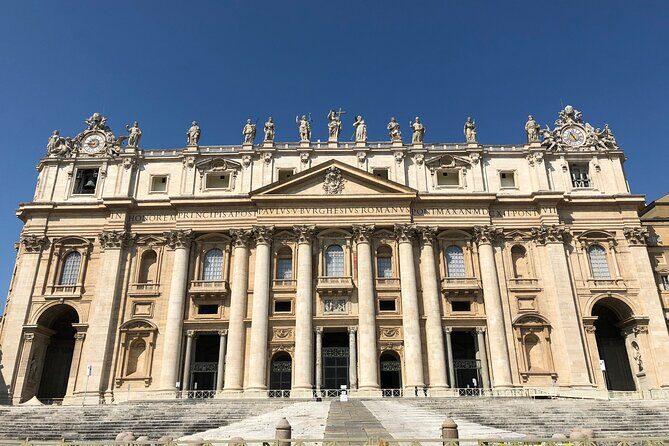
You’ll also see the famous blue dome of St. Peter’s Basilica from the square, and the tour points out details like the lineup of saints chosen for the façade area you can view from where you stand.
This final stop often feels different from the earlier ones because the scale is so commanding. It’s also a good place to ask last questions, or just slow down and take it all in before you continue exploring on your own.
Guides matter: why Stefano and Eddy get praised so often
The biggest repeat theme in the feedback is the guides’ ability to make the day feel clear, fun, and organized. Stefano is highlighted for being detailed without turning it into a boring lecture. The point isn’t just that he knows stuff—it’s that he keeps the explanations moving with what you’re seeing right in front of you.
Eddy comes up again and again, praised for professional, engaging delivery and for sharing little-known angles that make familiar monuments feel fresh. One review even mentioned his ability to keep a nearly 4-year-old involved, which tells you something about pacing and how he handles different attention spans.
Eddy also gets credit for practical advice around the rest of the day, including suggestions for where to eat before and after. That’s the kind of real-world help that turns a tour into a smoother trip, not just a checkbox.
When a guide is strong, you end the day with a mental map. You’re not just tired in Rome. You’re oriented.
Price and route value: $46.25 for a lot of major stops
The tour costs $46.25 per person and runs about 2 hours 30 minutes. For a city that charges extra just to access certain sights, that’s a reasonable price point—especially because the tour focuses on high-impact places in a tight geographic arc.
A few things push the value higher than a basic walk:
- You have a certified local guide
- The group is max 20, which helps keep the experience interactive
- The plan includes time at major icons like the Pantheon and ends at the big finale of St. Peter’s Square
- Each stop in the day’s outline notes admission as free, meaning you’re not constantly paying add-ons for tiny delays
What’s not included is food and drink. That’s fine, but it means you should plan a meal before or after based on where you want to be afterward—especially since the tour finishes in the Vatican area, which changes the easy options for dinner.
Bottom line: if you want a guided way to see Rome’s biggest hits without doing a complicated self-planning route, this price feels fair.
Timing, pacing, and what to expect from the stops
The schedule is built from short time blocks—often about 15 minutes at key sights—with a shorter 5-minute stop at Hadrian’s Temple. The format makes sense: each landmark gets enough time to understand it, but you’re not stuck in one location forever.
That pacing is helpful because Rome’s crowds can change fast. A guided group plan helps you keep moving when you’d otherwise get stuck waiting, or wandering without purpose.
The itinerary also follows a logic: you start at the hills around Spanish Steps, sweep into central Rome with fountains and the Pantheon, then shift toward the river and finish in Vatican territory. That flow helps your brain connect the city districts.
Who this tour is best for (and who should think twice)
This works well if you want a top sights overview without turning your day into project management. It’s a solid choice for first-time Rome visitors, and for anyone who wants a clear narrative across a day of famous monuments.
It’s also a good fit if you like learning through what you’re seeing. The guides in feedback are repeatedly praised for explanations that stay interesting and not overlong.
Who should think twice: if you hate crowds, or if long walks and standing time are hard, you may find the Vatican finish and the central icons a bit intense. Also, if you’re very concerned about seeing a specific monument in perfect condition, remember the note about Jubilee restoration potentially affecting how places look.
Should you book this Rome top sights walking tour?
I’d book it if you want a structured Rome day that hits the headline monuments in a smart order. The combination of a small group, strong guide storytelling (Stefano and Eddy are standout names), and the best moments like Pantheon interior time makes it a practical use of your day.
I’d skip it if your priority is deep time at one site, or if you’re trying to avoid stepping into the busiest, most photographed zones. For a classic first pass at Rome, though, this is the kind of tour that helps you feel like you actually understood the city—not just visited it.
FAQ
What time does the tour start?
The tour starts at 10:00 am.
Where do I meet the guide and where does the tour end?
You meet at Babington’s tea room, Piazza di Spagna 23, and the tour ends at St. Peter’s Square, Piazza San Pietro.
How long is the Guided Group Walking Tour of Rome Top Sights?
It runs about 2 hours 30 minutes.
Which major sights are included?
The tour covers Piazza di Spagna (Spanish Steps area), the Spanish Steps, Trevi Fountain, Tempio di Adriano, the Pantheon, Piazza Navona, Castel Sant’Angelo (from outside), and St. Peter’s Square.
Does the tour include going inside the Pantheon?
Yes. The Pantheon stop includes stepping inside with your guide.
Is food and drink included?
No. Food & drink are not included.
What’s the maximum group size?
The group is limited to a maximum of 20 travelers.
What should I know about the Jubilee and possible changes?
Due to the Jubilee, some monuments may be under restoration. You should pay attention to any messages about potential changes.
What is the cancellation policy?
You can cancel for a full refund if you cancel at least 24 hours in advance of the experience’s start time. If you cancel less than 24 hours before, you won’t receive a refund.