Rome feels more human when you walk it.
This private half-day route pairs big-name landmarks with lesser-seen corners, and it’s paced so you can actually ask questions as you go. I like the photo-friendly timing at the Pantheon, and I also like the food rhythm built into the day, including an authentic pizza bite between sights and a real market stop at Campo de’ Fiori.
The main thing to plan around is effort and timing. You’re on your feet for about 3 hours, and a few places depend on the day and opening pattern (for example, the university library component is noted as available Monday to Friday). Good weather also matters, since the experience requires it.
In This Review
- Key highlights at a glance
- A private 3-hour route that gives you bearings fast
- Meeting at Sant’Apollinare and starting in a pilgrim-ready neighborhood
- Chiostro del Bramante: a calm reset before the crowds
- Santa Maria dell’Anima: a church tied to Germans and Austrians
- The beautiful Roman square that started as a stadium: Piazza Navona area
- Campo de’ Fiori and that old Roman bakery feeling
- Sant’Ivo alla Sapienza: first university energy, library calm on weekdays
- The Pantheon: where 27 BC still grabs attention
- Piazza Venezia and the Roman core: a Pope-era residential twist
- Piazza del Campidoglio: Michelangelo’s decoration and a forum view
- Palazzo Caffarelli: terrace skyline payoff
- How this tour fits different travelers (including families)
- Price and value: $92.19 makes sense when it’s private
- Tips to get the most out of the 3-hour walk
- Should you book this private Rome walking tour?
- FAQ
- How long is the tour?
- Is this a private tour?
- What’s the price per person?
- Do I get a mobile ticket?
- Where does the tour start and end?
- What are some of the main places you’ll visit?
- Are there admission tickets required?
- Is the Sant’Ivo library available every day?
- What’s the cancellation policy?
- What happens if weather is bad?
Key highlights at a glance
- Simone D’alessandro leads with the kind of storytelling that makes Roman sites feel personal, not like a checklist
- Pantheon photo time in a tight window so you can look up, frame, and move on
- Campo de’ Fiori market stop with an old-school feel (including a Roman bakery vibe)
- Free entry sites show up often, like Chiostro del Bramante, Santa Maria dell’Anima, Sant’Ivo alla Sapienza, and more on the route
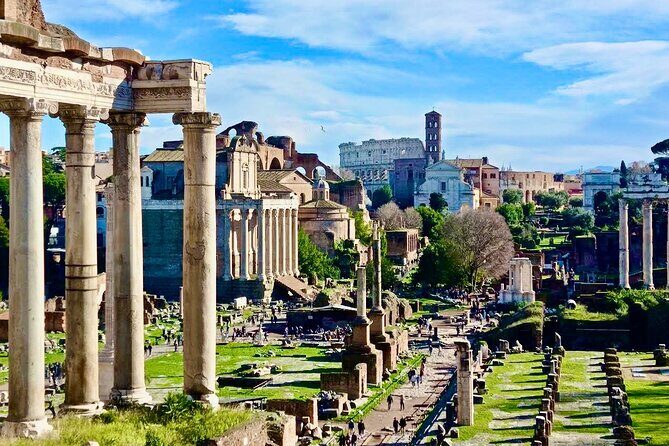
- Views from Campidoglio and Palazzo Caffarelli without needing a separate ticketed excursion
- Family-friendly pacing, with a guide who has handled prams and toddler questions calmly
A private 3-hour route that gives you bearings fast
Rome is huge, and the center can feel like it’s shouting at you at once. This tour’s strength is that it’s long enough to connect the dots, but short enough that you’re not trying to “do Rome” in a single day. At about 3 hours, you’ll hit major landmarks plus quieter streets, with a guide steering you toward meaning, not just monuments.
I also like that it’s truly private. That matters because Rome rewards questions: Why is a square shaped like it is? What changed here between Roman times and the Pope era? Why do certain facades look the way they do? With your own guide, you don’t have to wait for the group to catch up or compete for attention.
One practical note: the itinerary is built for walking. Expect city-center terrain, crowding around the big sights, and the normal real-world pace of Rome’s streets.
You can also read our reviews of more walking tours in Rome


Meeting at Sant’Apollinare and starting in a pilgrim-ready neighborhood
You begin at Piazza di Sant’Apollinare. The starting area is described as an older neighborhood tied to pilgrims arriving in Rome, which sets a good tone right away: this city has always been about arrivals—visitors, merchants, students, believers.
From there, you move into a street that’s said to be well preserved from the 16th century. It’s a smart warm-up because you get away from the instantly-famous zones and into the human scale of Rome: narrower lanes, building textures you’d miss at a faster pace, and the sense that the city has layers, not just attractions.
Chiostro del Bramante: a calm reset before the crowds
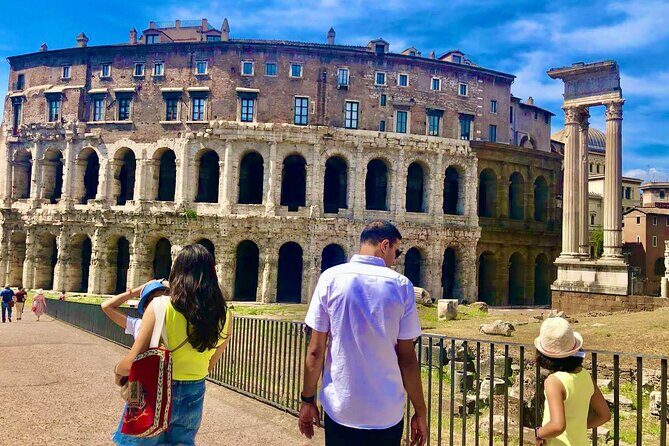
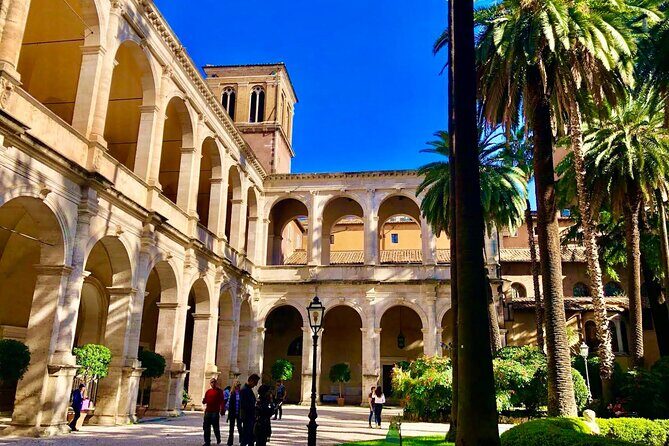
Chiostro del Bramante is one of the first major visual pauses. It’s presented as a 16th-century property connected to Renaissance art in Rome and working relationships tied to the Pope. The best part for you is the rhythm: you get a moment that feels like a breather, where the setting helps you slow down enough to notice details.
It also comes with an advantage you’ll appreciate on a first trip: the stop is listed with free admission. Even if you don’t spend long, it’s the kind of place where a few minutes with context makes the architecture click.
Santa Maria dell’Anima: a church tied to Germans and Austrians
Next is Chiesa di Santa Maria dell’Anima, described as a 16th-century church connected to German and Austrian communities. This is a perfect example of what a good private guide does well: it takes something you might otherwise treat as just another church facade and explains why it matters in a city shaped by foreign visitors.
This stop is also listed as free. If you like churches for art and stories (instead of just photos), you’ll probably enjoy the way the guide connects people, history, and place.
The beautiful Roman square that started as a stadium: Piazza Navona area
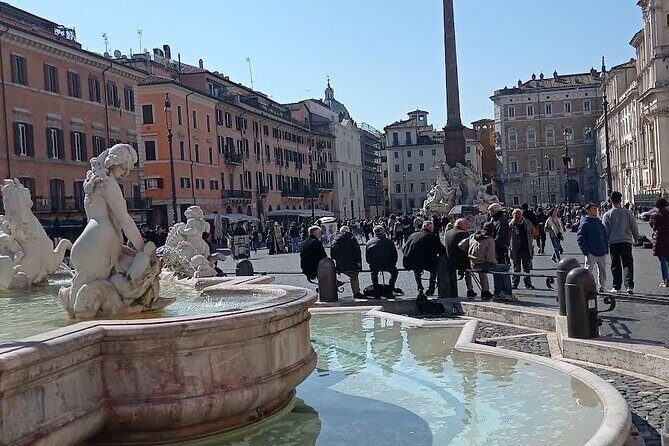
Rome’s most famous “square stop” on this route is presented as a place that, in Roman times, functioned as a stadium, and later was transformed in the 16th century into a piazza with grand buildings, an obelisk, and fountains.
This is the kind of transformation that helps you understand Rome’s evolution quickly. The architecture style changes, but the energy of public space remains. Standing there, you can see why these plazas became Rome’s social living rooms—places to meet, watch, and linger.
You can also read our reviews of more private tours in Rome




Campo de’ Fiori and that old Roman bakery feeling
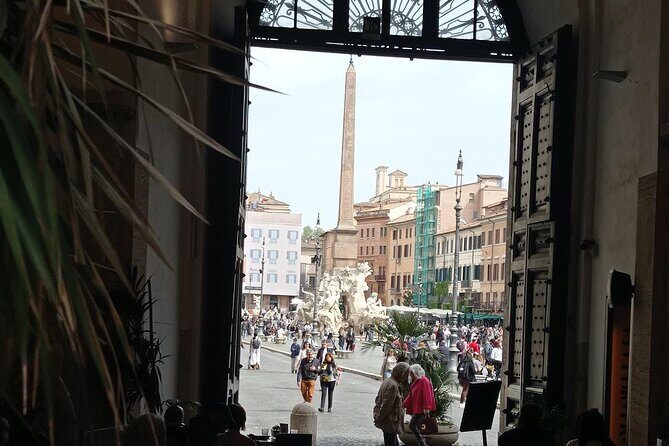
Campo de’ Fiori is your market moment: a lively public area, but with an “old” texture—especially with the note about a real market and an old Roman bakery vibe. This stop is listed as about 20 minutes, so it’s not rushed into a quick glance.
Here’s what makes it practical: it’s a good place for a snack or a short bite while you’re already in the rhythm of walking. Combine that with the itinerary’s promise of grabbing a Roman pizza bite between stops, and you have an easy, low-stress way to eat without trying to plan a separate meal.
If you’re traveling with kids, this is also a good moment to burn energy safely in a public square, and it’s one of the settings where a guide can steer you toward something simple that won’t derail the tour.
Sant’Ivo alla Sapienza: first university energy, library calm on weekdays
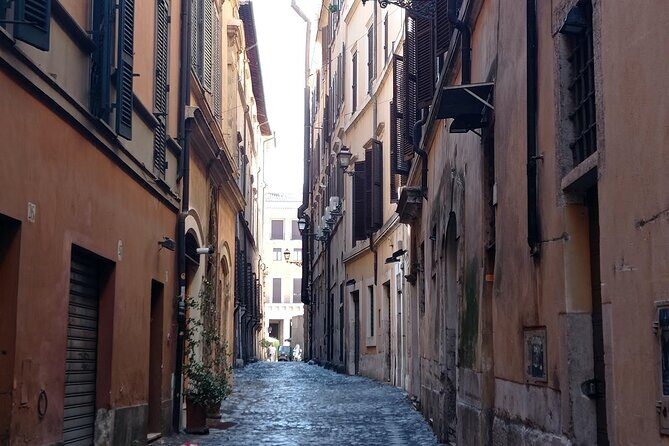
Chiesa Di Sant’Ivo Alla Sapienza is highlighted as an impressive 16th-century building and as the first university in Rome. The stop is also described as now used as a library to preserve old books, with availability noted Monday to Friday.
That weekday condition is worth clocking before you book. If your dates fall on a weekend, you might not get the same interior/library access. The exterior and setting should still be impressive, but the full experience you’re hoping for may vary.
Either way, this stop adds a different kind of Rome to your day. It’s not just empire and popes. It’s education, study, and the city’s role as a place where ideas travel.
The Pantheon: where 27 BC still grabs attention
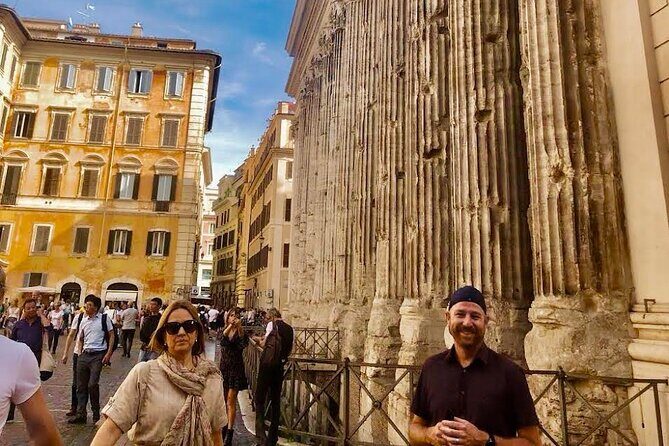
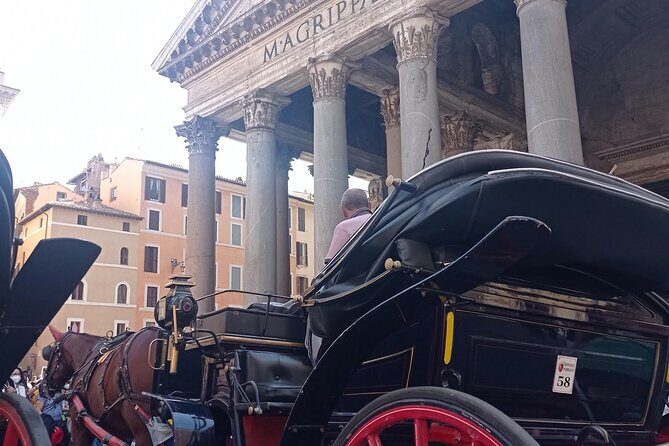
Then comes the headline moment: the Pantheon. It’s described as the oldest building in Rome standing, dating to 27 BC, and honestly that’s a big reason this place works even when you think you’ve seen enough photos of it.
The tour gives you about 10 minutes here, which is the right compromise. You won’t turn the stop into a full museum marathon, but you will have time to look up, take the key photos, and understand what you’re seeing. A private guide helps you focus on the details that matter—so you don’t just stare at a dome, you actually notice why it’s engineered the way it is and how it functions as a monument.
Because crowds build fast around the Pantheon, the timing and pacing of a guided walk can make the difference between a frustrating stop and a satisfying one.
Piazza Venezia and the Roman core: a Pope-era residential twist
From the Pantheon area, you move to Piazza Venezia / Ancient City. The description calls out a huge 14th-century building used as a residential house from the Pope era, with a hidden garden in the historical center.
I’d file this under “context matters.” Even if you’ve walked through piazzas before, a guide can help you see the site as more than a skyline backdrop. You start recognizing the way Rome’s power structures left their fingerprints in plain view: religious authority, city planning, and reused spaces.
This stop is about 10 minutes, so think of it as a visual pivot—shifting you toward the viewpoint sequence next.
Piazza del Campidoglio: Michelangelo’s decoration and a forum view
Piazza del Campidoglio is where you get an intentional viewpoint. It’s described as decorated by Michelangelo and as a place where you can reach one of the most beautiful viewpoints over the Roman Forum.
This is one of the best parts of the route for first-timers, because it’s the moment where you can stand still and connect landmarks you’ve been walking past mentally all day. A skyline view is one thing; a view that puts the Forum into context is another.
Again, the stop is listed at about 10 minutes, which keeps you moving while still giving you a “look-and-absorb” window.
Palazzo Caffarelli: terrace skyline payoff
The last major viewpoint stop is Palazzo Caffarelli, with a terrace and “one of the best skyline view” options over downtown Rome. This is your payoff for finishing strong: you get a final perspective that helps everything else feel like it belongs to the same story.
And since the tour ends back in the Trastevere direction (the end point is Piazza di Santa Maria in Trastevere), it’s a good landing zone for food and wandering afterward—without needing to backtrack across the city.
How this tour fits different travelers (including families)
This experience is built to be flexible within the walking format. The big pattern I see in the provided feedback is that Simone (the guide, Simone D’alessandro) connects the city to people, not just dates. That’s why the same route works for adults, couples, and families.
If you’re traveling with a toddler, pacing matters. One family note praises the guide’s patience and willingness to help with a pram, including carrying when needed. That tells you the tour isn’t rigid about fitting everything into a strict timeline.
For first-time Rome visits, I’d also recommend this as an early-trip activity. You come away with mental maps: which streets feel important, where the major “Rome” moments cluster, and how to plan your remaining days without guessing.
Price and value: $92.19 makes sense when it’s private
At $92.19 per person, this is not a budget group bus tour. But it also isn’t priced like a full-day museum marathon. The value equation here is simple:
- You’re paying for a private guide, which matters most when you want context and questions answered in real time.
- Many stops are listed as free admission (including key architecture and churches), so you’re not stacking the day with ticket costs.
- The route covers a lot of high-impact sights and viewpoint energy in about 3 hours, which helps if you have limited time.
If you’re traveling solo, it’s a premium, but you still get the full benefit of personalization. If you’re a couple or family, it usually feels like smarter spending because you’re buying convenience, not just sightseeing.
Tips to get the most out of the 3-hour walk
A few practical ideas will make your day smoother:
- Bring comfy shoes. Rome walking adds up fast, especially when you’re standing for photos and viewpoints.
- Use the app details sent to you. One strong point from the feedback is that it helps you find the guide easily and keeps the meeting smoother.
- Ask questions early. The guide’s best answers usually happen once you’ve set what you care about: art, architecture, food, daily life, or how Rome changed over time.
- Plan for weekday-only access. If your dates fall on a weekend, remember the Sant’Ivo library availability is noted for Monday to Friday.
Should you book this private Rome walking tour?
Book it if you want a focused private walk that mixes Rome’s headline monuments with quieter streets, and you like learning stories as you move. It’s especially strong for first-timers and families because the pacing is short enough to feel doable, while still hitting major moments like the Pantheon and delivering viewpoint payoff from Campidoglio and Palazzo Caffarelli.
Skip it (or at least adjust expectations) if you hate walking, or if you’re hoping for a lot of interior time that depends on day-specific access, like the university/library component. Also, if your trip dates are tight and you’re worried about weather, remember the experience requires good weather.
If you want Rome to feel less like a photo album and more like a place with a pulse, this is a very sensible way to start.
FAQ
How long is the tour?
It’s listed as about 3 hours.
Is this a private tour?
Yes. It’s private, meaning only your group participates.
What’s the price per person?
The price is $92.19 per person.
Do I get a mobile ticket?
Yes, the tour uses a mobile ticket.
Where does the tour start and end?
The start is Piazza di Sant’Apollinare, 00186 Roma RM, Italy. The end is Piazza di Santa Maria in Trastevere, 00153 Roma RM, Italy. The last stop is listed as Campidoglio Hill.
What are some of the main places you’ll visit?
The route includes Chiostro del Bramante, Chiesa di Santa Maria dell’Anima, Campo de’ Fiori, Chiesa Di Sant’Ivo Alla Sapienza, the Pantheon, Piazza Venezia / Ancient City, Piazza del Campidoglio, and Palazzo Caffarelli. It also includes a Roman-era stadium-turned-square stop (Piazza Navona area) and a 13th-century basilica stop.
Are there admission tickets required?
Many stops are listed as Free, including Chiostro del Bramante, Santa Maria dell’Anima, Campo de’ Fiori, Sant’Ivo alla Sapienza, Pantheon, and more on the route.
Is the Sant’Ivo library available every day?
It’s noted as available Monday to Friday.
What’s the cancellation policy?
Free cancellation is allowed up to 24 hours in advance for a full refund. If you cancel less than 24 hours before, the amount paid is not refunded.
What happens if weather is bad?
The experience requires good weather. If it’s canceled due to poor weather, you’ll be offered a different date or a full refund.