REVIEW · HALF-DAY
Ancient Rome Half-Day Segway Tour
Book on GetYourGuide →Operated by Rolling Rome Segway & Golf-Cart · Bookable on GetYourGuide
Rome feels different when you ride it. In just a few hours, you glide past major Imperial Rome landmarks like the Colosseum and up the viewpoints of the Seven Hills, all on an easy, self-balancing Segway. It is a futuristic, eco-friendly way to see Rome without turning the whole day into a long walking test, and you get a quick training session first so you are not guessing once you roll out.
Two things I like a lot: the way the route compresses serious sights into a short window, and the fact that the guides focus on clear explanations and safety from the start. I also like that you are not stuck with a huge crowd—this runs as a small group capped at 8, so the experience feels more controlled and personal.
One consideration: you do need to be comfortable balancing and riding for the full 3 hours, even with training. If you are uneasy on your feet or hate the idea of a motorized scooter-style ride, you may prefer a traditional walking tour instead.
In This Review
- Key takeaways before you book
- Why a Segway route makes sense for Imperial Rome
- Piazza del Gesù is a smart starting point (and what you’ll do first)
- Palatine Hill: the legend you can see from above
- Circus Maximus to the Aventine Hill stretch (including the Orange Grove)
- Santa Maria in Cosmedin and the Mouth of Truth
- Capitoline Hill: Michelangelo’s Renaissance redesign in action
- Imperial Forum by Segway: the power corridor leading to the Colosseum
- Price and value: $100 for three hours, a trained guide, and wheels
- The guide factor: Nico, Alex, Julio, and Jean Paul (and what that implies)
- Practical tips so your Segway doesn’t feel stressful
- Who this tour is best for (and who should skip it)
- Should you book the Ancient Rome Half-Day Segway Tour?
- FAQ
- Where does the tour start?
- How long is the Ancient Rome Half-Day Segway Tour?
- Is there Segway training before you start sightseeing?
- What’s included in the price?
- What group size should I expect?
- Is the tour led in English, and can I cancel for a refund?
Key takeaways before you book
- Easy-to-use training before you hit the sights
- Imperial Rome highlights packed into about 3 hours
- High-quality English guiding, including patience for first-time riders
- Seven Hills viewpoints like Palatine Hill for sweeping city views
- Big-ticket monuments including the Colosseum and the Imperial Forum area
- Route flexibility when street closures happen during busy periods like Holy Week
Why a Segway route makes sense for Imperial Rome
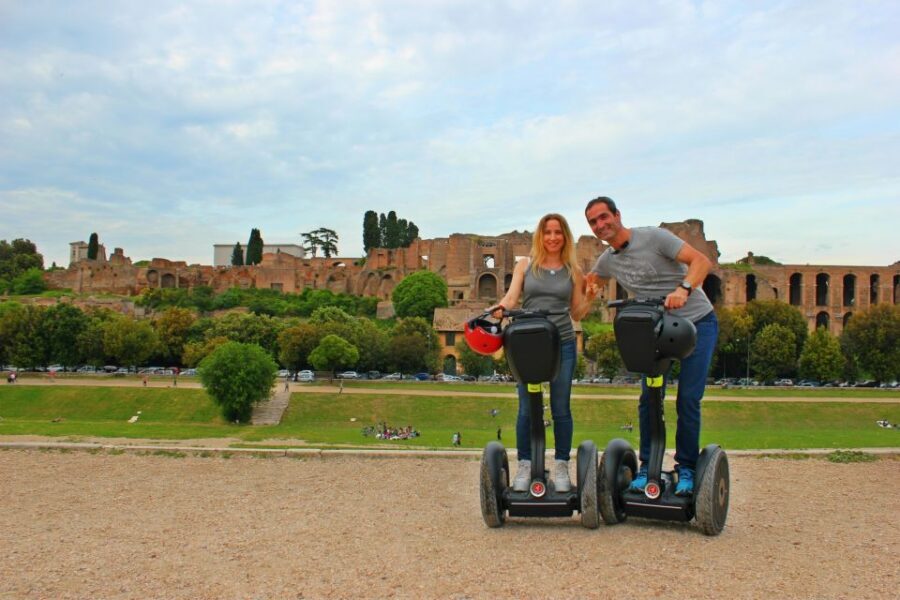
Imperial Rome is spread out. Even if you know the names—Palatine, Capitoline, Forum—you still need a way to get between them without spending the whole day zigzagging. That is why a Segway tour works here: you cover ground quickly while still stopping for the important look-and-learn moments.
The best part is that you do not just see one neighborhood. You bounce between the major hills and the monuments tied to the Roman Empire, including the Colosseum. You also get that satisfying feeling of sliding through streets that feel ancient in a way that a bus cannot replicate.
And yes, it is fun. But it is not random fun. The route is built around key vantage points and iconic stops, which means your time in the city actually goes toward understanding what you are looking at.
You can also read our reviews of more tours and experiences in Rome

Piazza del Gesù is a smart starting point (and what you’ll do first)
Your tour starts at Piazza del Gesù, 47. From there, you do not jump straight into traffic. You begin with a Segway training session so you can get your bearings fast—and so the guide can make sure everyone is comfortable before you move on.
This training matters more than people expect. Rome streets can be hectic, and you are steering on a vehicle that responds instantly. A good guide keeps it calm, works through the basics, and then helps you settle into a smooth rhythm.
The guides are a standout here. I would pay attention to the feedback on their professionalism and patience—especially for first-time riders. One review-style detail that keeps showing up is that the guide stays focused on safety the whole time, not just at the beginning.
Palatine Hill: the legend you can see from above
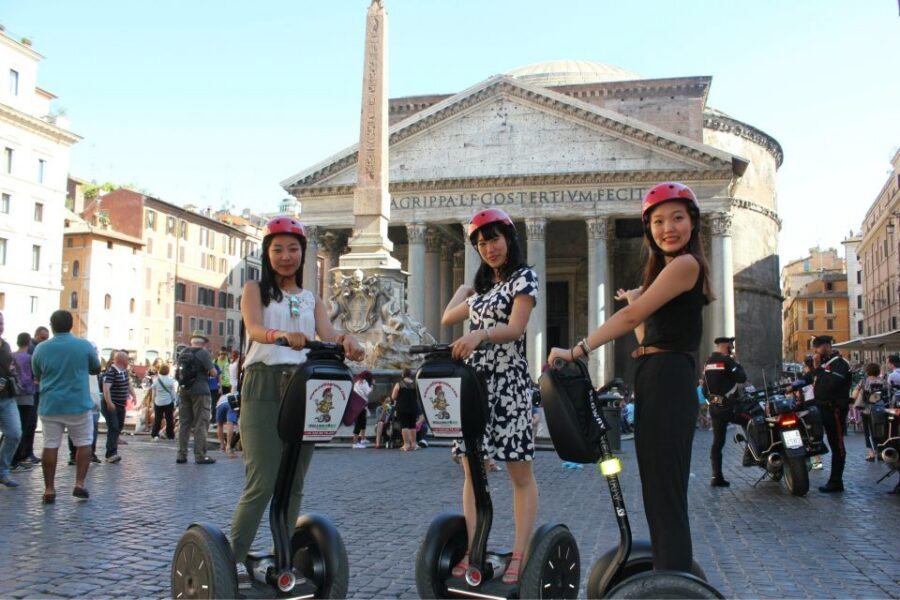
Palatine Hill is one of the places where Rome starts to feel like a story you can walk into. On this tour, you get a panoramic look across the city while the guide shares the legend of Romulus and Remus. That combination—view plus story—turns a hilltop into something more memorable than a photo stop.
Palatine is also an important “origin” feeling before you move toward the Imperial showpieces. You are not only chasing famous ruins. You are getting oriented to why emperors later built where they did, and why this area became a center of power.
You will also be thinking about timing here. In a three-hour format, this stop gives you a high-impact payoff early. It sets the tone: Rome is about viewpoints, symbols, and power—then you ride to the next clue.
Circus Maximus to the Aventine Hill stretch (including the Orange Grove)
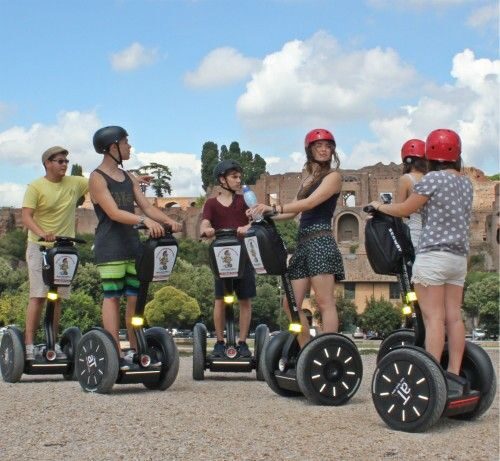
After Palatine, the route takes you past Circus Maximus on your way toward Aventine Hill and the Orange Grove. Even if you are not an architecture nerd, the ride helps you see how these hills relate to each other—Rome’s geography is part of the explanation.
Circus Maximus is one of those names you have heard forever, and being on the route gives you a more immediate sense of scale than looking at a single plaque. From there, you move toward Aventine’s more open-feeling vantage and a change in scenery that helps break up the density of central Rome.
The Orange Grove part is a nice reminder that Rome is not only stone and monuments. The city has pockets where light and trees show up, and you can catch a breath before the more intense stops ahead.
Santa Maria in Cosmedin and the Mouth of Truth
Then comes one of the most fun stops on the tour: Santa Maria in Cosmedin. You will see the remains of San Valentino, the figure associated with Valentine’s Day, and you will also get to the famous marble face linked to the legend of the Mouth of Truth.
This is where a Segway tour earns points beyond speed. You slow down for a place that is more about culture and folklore than raw monument size. The guide explains what the mask is tied to, including the old idea of it serving as an ancient lie detector.
If you like mixing the famous with the slightly weird, this stop hits the sweet spot. It is not the Colosseum, but it is the kind of site that makes Rome feel like Rome—stories layered over stones.






Capitoline Hill: Michelangelo’s Renaissance redesign in action
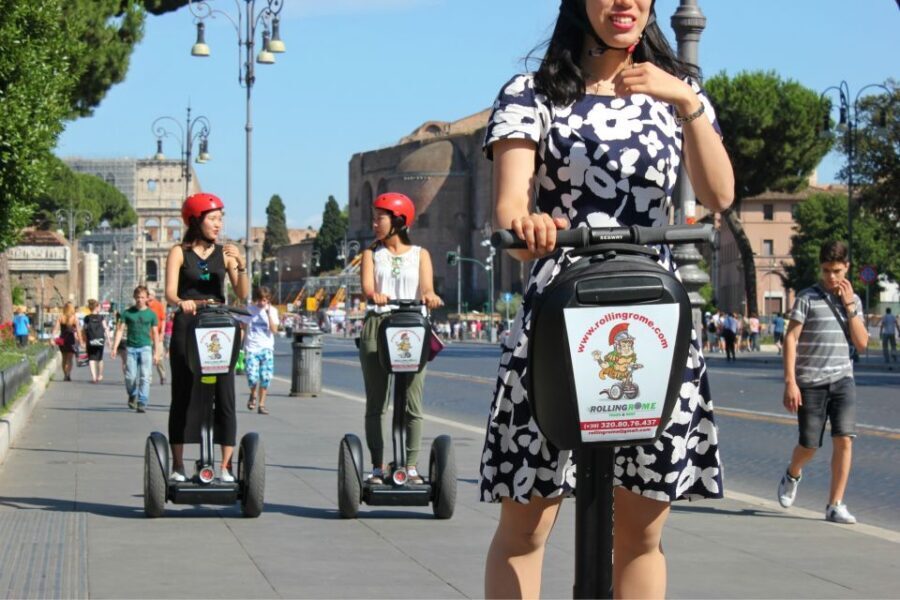
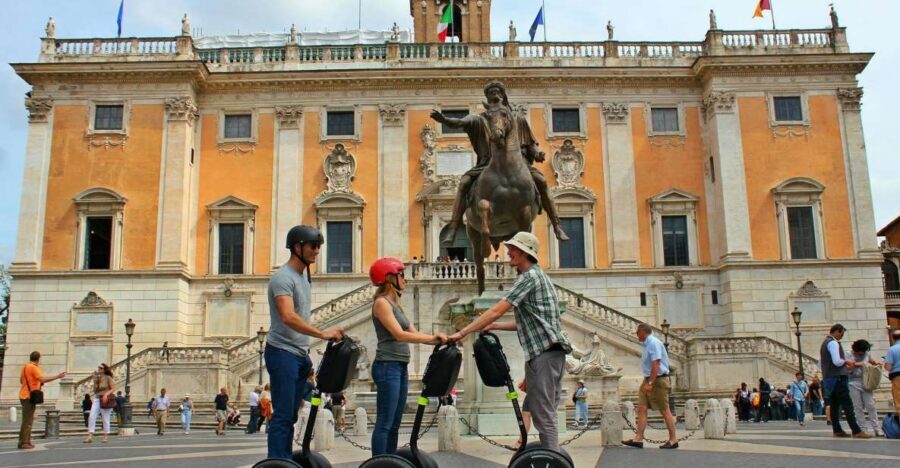
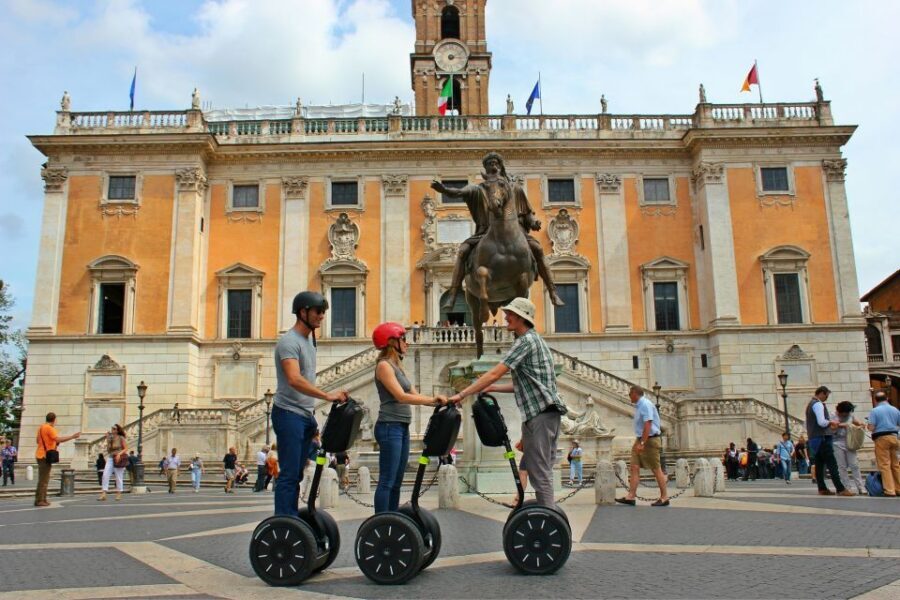
Next, you head to Capitoline Hill, which you reach as the tour shifts from legends and churches to the political heart of imperial Rome. Capitoline is the most important of the hills of imperial Rome, and this stop comes with an extra layer: the redesign by Michelangelo during the Renaissance.
You can see why this matters. Michelangelo’s work gives you the bridge between ancient authority and later Rome’s idea of how that authority should look. In other words, you are not just touring ancient ruins. You are watching Rome reinvent itself while pointing back to its own past.
This is also a hill where the viewpoint and the angles help you understand the “why” behind the layout. In a half-day Segway format, it is a good place to let the guide connect architecture to meaning without you feeling overwhelmed.
Imperial Forum by Segway: the power corridor leading to the Colosseum
From Capitoline, you ride through the area of the Imperial Forum. The idea here is simple: you are following in the footsteps of Roman emperors, but you are doing it with modern transport so you can actually fit it into a short tour window.
The Forum area is impressive partly because it feels like a long corridor of power—built to project control. You do not need a semester of Roman history to appreciate that. You just need the right framing, which is exactly what the guide provides.
Then you reach the tour’s biggest end-game sight: the Colosseum. It is hard to overstate what an experience like this does for your sense of scale. You see it not as a single isolated landmark, but as part of the broader imperial system—hills, forums, and street-level life all connected.
Price and value: $100 for three hours, a trained guide, and wheels
At $100 per person for about 3 hours, this tour is not the cheapest thing in Rome. But it can be good value if you are thinking in terms of what you get for the time.
You receive:
- a guide
- a Segway training session
- the Segway tour itself
- and a compact route that includes multiple major hills and famous landmarks
A walking tour might cost less, but you are trading away the speed and the reduced fatigue. For many people, the Segway format is the difference between seeing the highlights and simply surviving the day. With a small group limited to 8, you also get a better “flow” than you would in a massive bus-and-hold tour.
Also worth noting: the guide quality is heavily praised. Several entries mention how the commentary is easy to follow, with a focus on explaining what you are seeing and making sure people feel safe while learning. That kind of guidance is what turns a vehicle ride into a real sightseeing experience.
The guide factor: Nico, Alex, Julio, and Jean Paul (and what that implies)
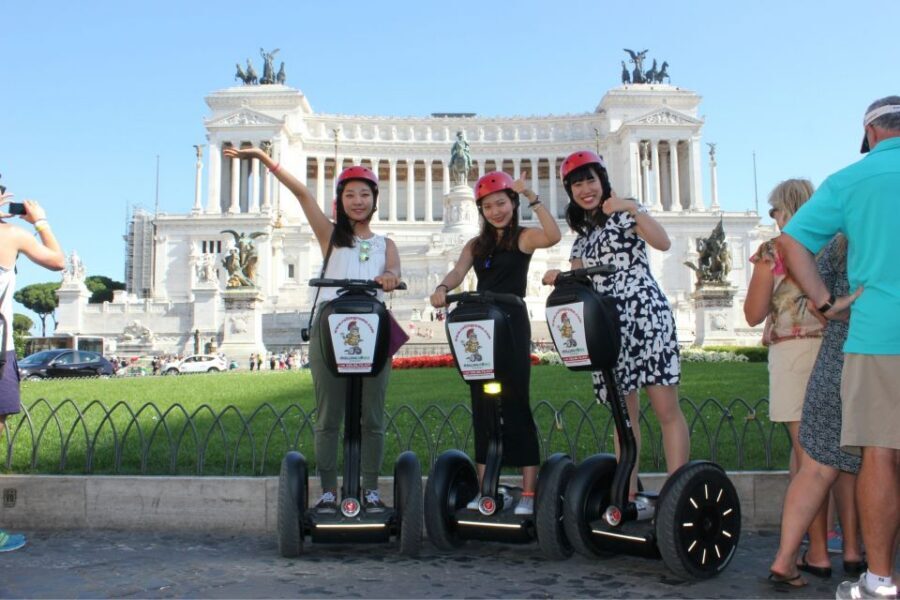
This tour’s reputation is tied closely to the guides. Names that show up include Nico, Alex, Julio, and Jean Paul—and the common thread is professionalism.
What you should look for in the guide’s style:
- safety-first training and patience for first-time riders
- explanations that are clear and easy to understand
- the ability to adjust if circumstances change
One detail I really appreciate from the feedback is that guides can find practical solutions, like adjusting for heat by seeking shade. Another is the ability to pivot during periods when streets close—like Holy Week—so the tour still delivers the main sights without spiraling into frustration.
In a city like Rome, that problem-solving matters.
Practical tips so your Segway doesn’t feel stressful
Here are the practical things that will make your ride smoother, based on what the tour is and how it operates.
Wear shoes you trust for standing and steering. Closed-toe footwear is the simplest way to avoid a sore day, especially if there is any uneven pavement.
Bring water and plan for sun. Rome can swing from pleasant to harsh fast, and even if the route includes stops with shade, you still want to be comfortable between them.
Arrive a little early at the meeting point on Piazza del Gesù. With a training session at the start, you want your group to get moving at the planned rhythm.
And mentally decide what you want from this tour: you are not going to slow down for endless museum time. You are getting a smart, high-impact sight route where the payoff is seeing multiple big landmarks and viewpoints in one go.
Who this tour is best for (and who should skip it)
This is ideal if you want a fast, structured Rome highlight circuit without the grind of long walks. It is also a great fit for people who learn better with story and context—because the guide explanations are built into each stop.
It can also work well for first-time Segway riders. The tour includes training, and the guide attention to patience is specifically praised.
You might skip it if:
- you are strongly uncomfortable balancing
- you want a slow, deep museum day
- you are hoping for a fully quiet experience (it is a moving small group, and you’ll be stopping often)
Rome is always crowded, and the half-day pace means you will trade some lingering time for coverage.
Should you book the Ancient Rome Half-Day Segway Tour?
If you have only a short window in Rome and you want a concentrated hit of Imperial sights—Palatine Hill views, Capitoline Hill with Michelangelo’s redesign, the Imperial Forum area, and the Colosseum—this tour is a strong candidate. The small group cap at 8, the training session, and the consistently praised guide professionalism make it feel like you are being guided, not just dropped on wheels.
I would especially recommend it if you:
- want to see a lot without wrecking your legs
- like history explained in plain language
- enjoy mixing big landmarks with a playful stop like Santa Maria in Cosmedin and the Mouth of Truth legend
If you hate the idea of riding a self-balancing vehicle, or you are expecting a slow, meditative pace, then you may be happier with a traditional walking tour.
FAQ
Where does the tour start?
Tours start at Piazza del Gesù, 47.
How long is the Ancient Rome Half-Day Segway Tour?
The duration is about 3 hours.
Is there Segway training before you start sightseeing?
Yes. You get a Segway training session first, so you can feel confident on the self-balancing vehicles.
What’s included in the price?
The price includes a guide, the Segway training session, and the Segway tour.
What group size should I expect?
This is a small group limited to 8 participants.
Is the tour led in English, and can I cancel for a refund?
The tour is led in English. You can cancel up to 24 hours in advance for a full refund.