REVIEW · COLOSSEUM TOURS
Ancient Rome Guided Walking Tour: Colosseum, Forum and Palatine
Book on Viator →Operated by Gray Line I Love Rome by Carrani Tours · Bookable on Viator
The Colosseum hits different with a guide. You’ll get wireless headsets and pre-booked Colosseum entry, so you’re spending your time on the sights instead of hunting around and waiting. The one watch-out: this is real walking, with hills and stairs, and it’s not meant for impaired mobility.
What makes this tour especially useful is the order and pacing. You start at Palatine Hill, then move into the Colosseum, then finish in the Roman Forum, where the guide connects legends to how Rome actually ran. With a maximum group size of 20, the experience stays focused enough to hear what matters, even in a crowded place.
In This Review
- Key highlights you’ll feel fast
- Why this Palatine–Colosseum–Forum walk is such good value
- Meeting point tips: how to avoid the most common headache
- Palatine Hill first: where Rome’s legends turn into real geography
- Entering the Colosseum with pre-booked tickets and headsets
- The Roman Forum: political power hidden under modern silence
- Walking reality check: what your body should expect
- How the guide quality shows up in your experience
- Who this tour suits best
- Should you book this Colosseum–Forum–Palatine tour?
- FAQ
- How long is the Ancient Rome guided walking tour?
- What does the tour include?
- Are Colosseum tickets included in the price?
- Does the tour use headsets?
- What language is the tour offered in?
- Where do I meet the guide?
- What time does the tour start?
- What documents do I need for entry?
- Is this tour wheelchair accessible?
Key highlights you’ll feel fast
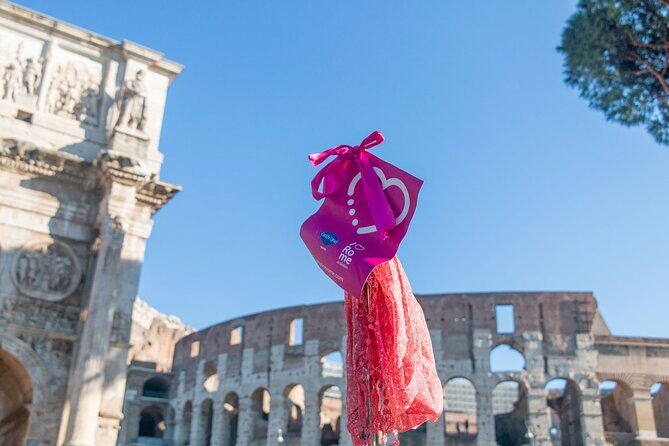
- Headsets included so you can follow commentary through busy ruins
- Pre-booked Colosseum tickets (admission plus reservation fee included)
- Palatine Hill legend to Forum politics in one logical walking arc
- Small group size (max 20) that keeps the flow under control
- Flexible departure times (1:30 PM or 2:30 PM depending on the date) for your schedule
Why this Palatine–Colosseum–Forum walk is such good value
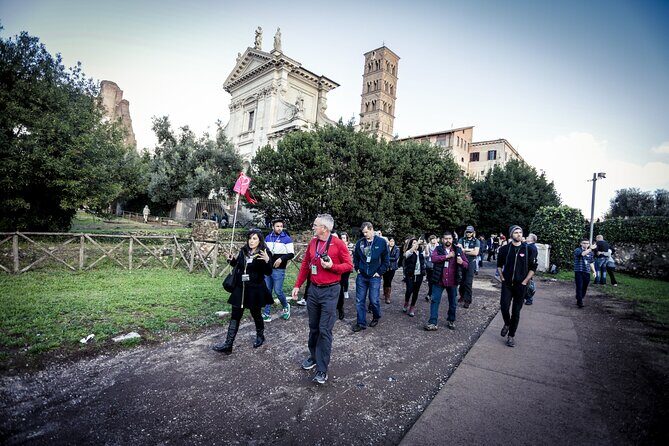
At $71.65 per person for about 3 hours, this isn’t cheap in the “casual stroll” sense. But it’s strong value because you’re paying for three things that are hard to replicate on your own: a guide, headsets, and guaranteed access to the Colosseum entry you reserve ahead of time.
The Colosseum ticket part alone is listed at €18 for admission plus €2 for the reservation fee. That means a chunk of what you pay isn’t just “information”—it’s actual timed access included in the package. Add a professional guide, plus wireless audio, and you’re basically buying back your energy: less confusion, fewer dead ends, and more time understanding what you’re looking at.
I also like the time commitment. Three hours works well in Rome because you’ll still have energy to explore nearby on your own afterward. And because the big three sites sit close together, you’re not burning a half-day bouncing between far-flung neighborhoods.
You can also read our reviews of more walking tours in Rome


Meeting point tips: how to avoid the most common headache
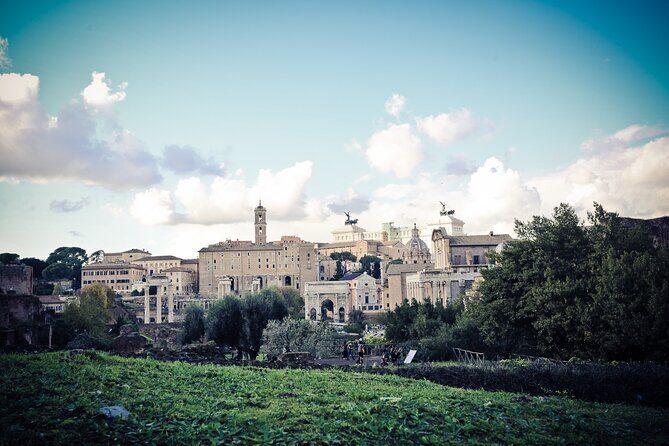
The most consistent “friction” theme here is not the sites—it’s finding the right group at the start. The meeting point is on Via delle Terme di Tito, 75 (near public transportation), and the tour ends on Via dei Fori Imperiali.
One key detail: the start point changes in the calendar. From April 1, 2025, the meeting point moves to Colle Oppio Park, via delle Terme di Tito (corner of via Nicola Salvi), inside the park. If you’re traveling in 2025, double-check that update so you don’t arrive at the older pin on your map.
Here’s what I’d do to make your meetup painless:
- Screenshot your meeting-point instructions before you leave the hotel.
- Plan to arrive about 10–15 minutes early (Rome is great, but wayfinding can be chaotic around major attractions).
- Look for the tour staff style and branding used by the operator, since multiple companies crowd the same sidewalks.
Also, expect security checks. The tour notes that heightened measures can cause delays when clearing security checks. That matters because you’ll want to be ready to move quickly once you’re directed forward.
Palatine Hill first: where Rome’s legends turn into real geography
You begin at Palatine Hill, one of Rome’s seven hills, positioned between the Velabro and the Roman Forum. This is one of the oldest parts of the city, and the guide starts by grounding you in the story: legend says Romulus and Remus were kept alive by a she-wolf here, which is part of how Rome got its name.
Why starting here helps: Palatine Hill sets the “why” before you see the “wow.” When you’re later standing in the Colosseum and walking the Forum, you’ll have a better sense of the city’s layers—myth first, then power, then politics, all in the same small area.
Plan about an hour here. You’ll be outdoors in an open-air museum setting, and the tour notes that you should be ready for rain or shine. Comfortable shoes are a must. Even if you’re not doing anything athletic, the terrain and paths are uneven enough that good footwear pays off.
A practical drawback to flag: this stop can feel like a lot of viewpoints and ruins in a short time. If you’re someone who wants to slow way down, you might appreciate that the guide can’t spend unlimited minutes at every angle. Still, the payoff is that you’ll leave Palatine with a mental map, not just photos.
Entering the Colosseum with pre-booked tickets and headsets
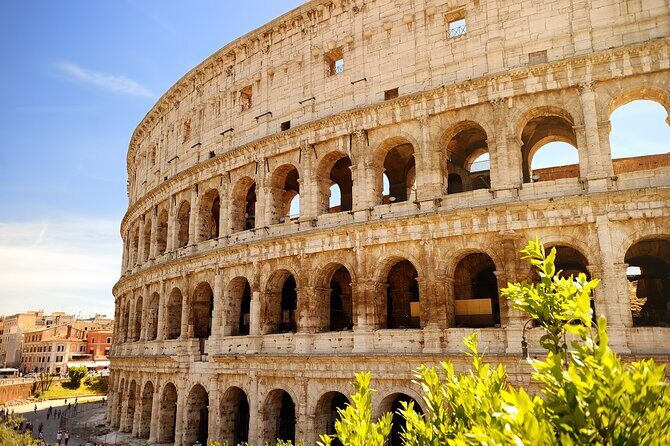
Next comes the Colosseum, originally known as Amphitheatrum Flavium. This is the big-name stop, but the tour’s value is how it’s handled: you enter with your pre-booked tickets, and you get wireless audio headsets so you can hear the guide over the noise and crowd.
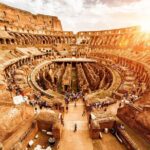
You get about an hour inside the Colosseum. That’s not long in a building this massive, but it’s long enough for a structured walk and a real explanation. The guide focuses on how the amphitheater was developed in the AD 70–80 era and how it once held as many as 80,000 spectators. When you hear those scale details while you’re in the space, it changes the experience. You stop thinking of it as a backdrop and start thinking of it as an engineering and social machine.
What I liked in the way this tour tends to work (based on what shows up in real-world feedback): guides often help you hit the best viewing areas for photos and storytelling without forcing everyone to crowd a single spot the whole time. Some people have also said the headsets were clear even with other tourists around, which is exactly what you want in a place where you can’t control the sound.
Two considerations to keep in mind:
- Crowd density is real. Even with reservations, you can still feel surrounded by other tour groups.
- Headset reception can drop in certain spots if you’re moving through thick structural areas. When that happens, just stick with your guide and move with the group until the audio returns.
Bottom line: this is an efficient way to get meaning from the Colosseum, not just a quick walk through.
The Roman Forum: political power hidden under modern silence
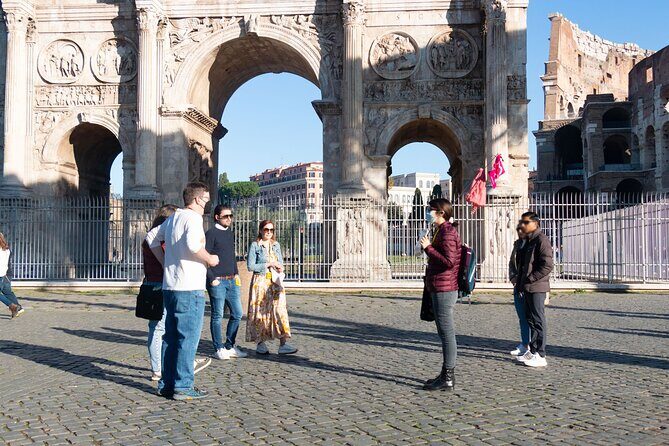
The final stop is the Roman Forum, the area that once held the center of public and religious life in ancient Rome. After the Empire fell, the Forum gradually fell into oblivion and was buried little by little. Excavations began much later (the tour notes that while people knew of the location by the 16th century, excavations didn’t start until the 20th century).
You spend about an hour here, and the guide brings you to key highlights such as:
- Temple of Julius Caesar
- House of the Vestal Virgins
This is where the tour’s context really pays off. It’s easy to visit the Forum and feel like you’re looking at “interesting rocks.” A good guide helps you connect those remains to the role they played—law, ritual, authority, and daily power moves.
There’s also a timing advantage. Ending here means you’re in the area where you can keep exploring on your own after the tour finishes. Even if you don’t plan a long additional visit, it’s a nice way to transition from guided explanation into independent wandering.
A mild caution: the Forum can feel busy and visually dense. If you’re prone to losing track of where your group is moving next, keep a close eye on where your guide stops and starts. A few people have mentioned they got separated early on, so don’t treat this as a “walk and meander” tour.
You can also read our reviews of more guided tours in Rome




Walking reality check: what your body should expect
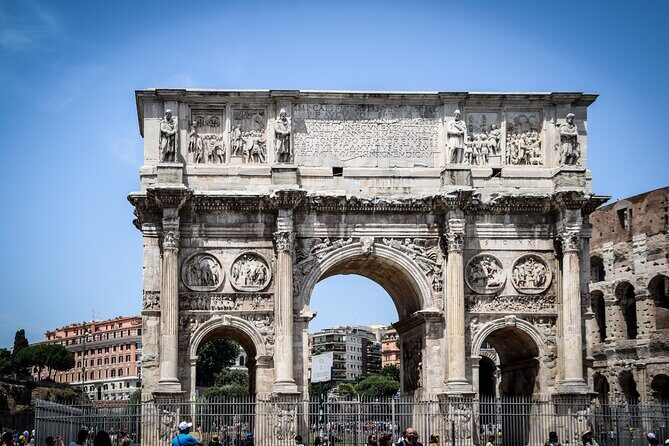
This isn’t marketed as a gentle loop, and the on-the-ground reality matches that. The tour notes a moderate physical fitness level and warns that you’ll walk on medium-hard floors in the archaeological area. Combine that with the fact that many famous Rome ruins sit on hills and have stairs, and you get a straightforward takeaway: wear shoes you’d trust for uneven ground.
If you’re the type who needs frequent seating breaks, build extra buffer time into your day. Even when the guide moves at a pace that works for the group, there’s still a lot of standing, stepping, and looking.
It’s also not recommended for people with impaired mobility. So if you or someone you’re traveling with has limitations that make stairs or uneven surfaces difficult, you’ll likely be happier choosing a different format.
Weather matters too. The tour explicitly says you should be ready for rain or shine. Rome weather can switch fast, and ruins don’t care.
How the guide quality shows up in your experience
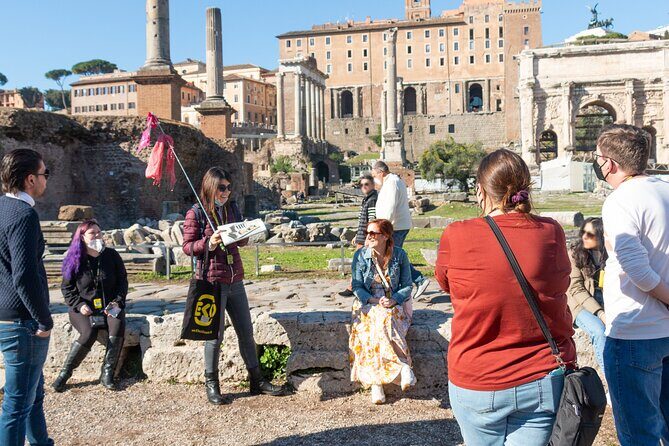
You’ll feel the guide in two places: clarity and momentum. The tour includes a professional guide and headsets, which is a strong setup. Reviews reflect that many guides delivered engaging explanations, with people specifically praising guides who:
- stayed kind and attentive to the group’s needs
- made time for questions and photos
- kept people together and moving at a pace that most could manage
Names that came up include Alicia, Alessandra, Egle, Emanuel, Heather, Zara, Letita, Alessio, Vanya, and Maria. That’s not just trivia—it’s evidence that this tour relies on consistent guiding, not just pre-recorded audio.
One real-world consideration: a few people reported difficulty hearing the guide clearly in some cases, or a more monotone delivery. That doesn’t mean it’s always like that, but it is a reminder: if you prefer more dramatic storytelling, you might want to lean into asking questions and focusing on the places where your guide stops to explain.
Who this tour suits best
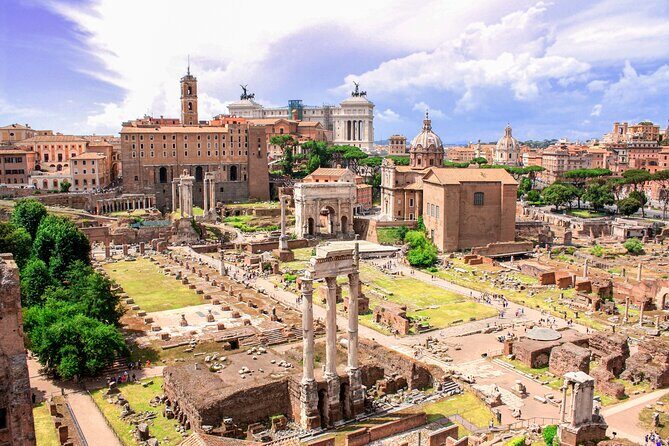
This tour is ideal if you want:
- A guided intro to the major ancient sites without planning timed entry yourself
- A tight route that covers Palatine Hill, the Colosseum, and the Roman Forum
- Headsets to keep your understanding clear in a crowded environment
It’s also a good pick for first-time Rome visitors. The structure gives you a “big picture” framework fast: legends on Palatine, entertainment and engineering in the Colosseum, then politics and religion in the Forum.
If you’re traveling with kids, or with someone who likes architecture and visual storytelling, this can be a fun shared experience. Some feedback noted kids getting involved when the guide used engaging pacing and prompts.
If you hate walking, need step-free routes, or want a slow museum pace, this one may feel too intense.
Should you book this Colosseum–Forum–Palatine tour?
Yes, if you want a smart, time-efficient Rome win. The included Colosseum tickets, the wireless headsets, and the built-in route through Palatine Hill and the Forum make it a strong use of half a day. At $71.65, you’re also not paying only for commentary—you’re paying for access.
I’d book with extra care if:
- you’re worried about finding the meeting spot (arrive early and check the 2025 meeting-point update)
- you want a very relaxed pace (this is hills, stairs, and archaeological surfaces)
- you’re sensitive to audio clarity (headsets help, but crowd movement and structure can still affect reception in a few areas)
If you’re flexible, bring good shoes, and show up a bit early, you’ll get a lot of understanding from three of Rome’s most famous ruins—without wasting your afternoon doing logistical chores.
FAQ
How long is the Ancient Rome guided walking tour?
It runs for about 3 hours.
What does the tour include?
You visit Palatine Hill, the Colosseum, and the Roman Forum, with a guide at each stop.
Are Colosseum tickets included in the price?
Yes. The Colosseum entrance ticket and reservation fee are included (listed as €18 admission plus €2 reservation fee).
Does the tour use headsets?
Yes. Wireless audio headsets are provided so you can hear the guide more easily.
What language is the tour offered in?
The tour is offered in English.
Where do I meet the guide?
The meeting point is Via delle Terme di Tito, 75, 00184 Rome. From April 1, 2025, the meeting point changes to Colle Oppio Park at the corner of Via delle Terme di Tito and Via Nicola Salvi, inside the park.
What time does the tour start?
It starts at 2:30 PM for certain date ranges, and at 1:30 PM for other date ranges (depending on the season).
What documents do I need for entry?
You must present a valid passport or ID document that matches the full name provided at booking. If you have a pacemaker, you’ll need to show a certificate.
Is this tour wheelchair accessible?
It’s not recommended for people with impaired mobility. The tour involves walking on medium-hard floors and includes hills and stairs.