REVIEW · COLOSSEUM TOURS
Walking Tour of the Colosseum, Roman Forum and Palatine Hill
Book on Viator →Operated by Rome in tours · Bookable on Viator
That Colosseum underground tour is a real wow.
This 3-hour walk strings together the sites you actually came to see—Colosseum, Roman Forum, and Palatine Hill—with a guide who explains what you’re looking at in plain language. I especially like the fact that you’re not just pointed at ruins; you’re taken through key spots like the Colosseum’s interior corridors and the Forum’s most story-rich corners.
Two things I love: first, the chance to see the Colosseum from multiple angles, including the underground levels and tier-divider areas. Second, you get the “Rome as an empire” perspective from Palatine Hill, where you can scan out over the Forum and Circus Maximus. It feels like the city makes sense.
One possible drawback: you must bring an ID that matches your booking, and on the first Sunday of the month you may still have to wait for free-entry lines since advance Colosseum slots can’t be pre-bought. That can add time even if the tour is well organized.
In This Review
- Key things to know before you go
- Why this Colosseum–Forum–Palatine tour works
- Meeting point to final stop: from Via di San Gregorio to Saint Peter in Chains
- Entering the Colosseum: underground levels, tier corridors, and best angles
- Palatine Hill: emperors’ palaces, the Romulus and Remus legend, and sweeping views
- Roman Forum highlights: Caesar’s cremation, Mark Antony’s podium, and the Sacred Way
- The guide quality: why an archaeologist-led tour changes everything
- Price and ticket value: what $240.15 covers, and what it means for you
- Timing, group size, and comfort on a 3-hour walk
- Practical tips: IDs, first-Sunday lines, and showing up ready
- Bring the right ID
- First Sunday of the month: plan for waiting
- Dress properly for a walking tour
- Should you book this Colosseum, Forum and Palatine Hill walking tour?
- FAQ
- Is the tour in English?
- How long is the walking tour?
- What’s included in the price?
- Is admission to the Colosseum, Palatine Hill, and the Roman Forum included?
- Do I need an ID to enter?
- What is the meeting point and where does the tour end?
- What happens on the first Sunday of the month?
- How big is the group?
- Can I get a refund if I cancel?
Key things to know before you go
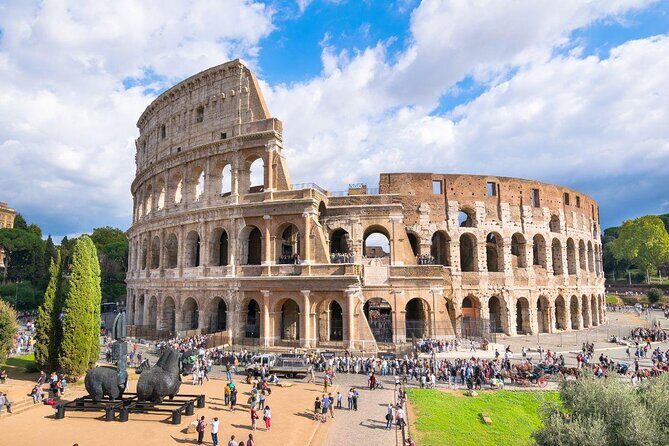
- Skip-the-line style tickets, with a real Colosseum reservation built in (but see first-Sunday note below).
- Colosseum underground + interior highlights, not just the outer photo spots.
- Palatine Hill viewpoints over the Forum and Circus Maximus.
- Forum storytelling anchored to Caesar and Mark Antony, including major monuments like the Arch of Septimius Severus and Tabularium.
- A small-group feel (maximum 50 people) and audio support via headsets for groups of 6+.
Why this Colosseum–Forum–Palatine tour works
Rome has two kinds of sightseeing days. The first is you wandering, squinting, and trying to connect names from guidebooks to stone blocks that look the same. The second is when a guide puts the pieces in order, so the place stops being a pile of history and turns into a working city you can picture.
This tour leans hard into the second option. You’re guided through the big three ancient stops in one tight loop. The timing also matters: you spend enough time at each site to understand what you’re seeing, but the schedule keeps you from getting “ruin fatigue” by hour four.
The tour also has a built-in quality signal from the guide team. Names like Ferdinando (including a PhD archaeologist profile) show up in the experience, and other guides such as Francisco and Chiara have led groups with the same focus: careful pacing, strong English, and lots of explanation rather than a rushed lecture. If you enjoy history that comes with context—why something was built, who used it, what changed—you’re in the right place.
And yes, the views are a big deal here. Palatine Hill is where the Forum stops being a distant set of ruins and becomes an actual “this is how it all fit together” scene.
You can also read our reviews of more walking tours in Rome

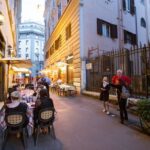
Meeting point to final stop: from Via di San Gregorio to Saint Peter in Chains
You start at Via di San Gregorio (Via di S. Gregorio, 00186 Roma RM). The end point is Largo Corrado Ricci, 42, 00184 Roma RM, right by the church of Saint Peter in Chains, where you’ll find Michelangelo’s Moses. That ending location is convenient because it puts you close to a major landmark and an easy transit link.
The tour also ends near the Metro Cavour (Line B) area—about one stop from Termini. That means you can either keep exploring immediately or head back to your hotel without fighting another complicated route.
A small practical note that can save stress: the meeting point is in a part of Rome where you’ll want to be early enough to actually find the group. The guide’s pre-tour communication (including clear directions in some cases) is a plus, especially in the city center where street signage can be… character-building.
Entering the Colosseum: underground levels, tier corridors, and best angles
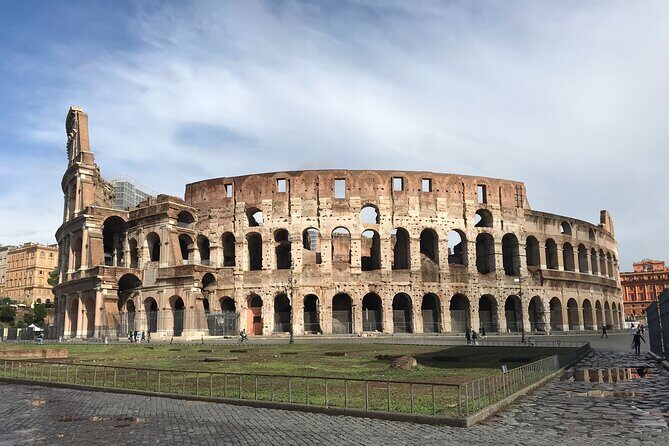
The Colosseum is the star, and this tour treats it like a star—not like a quick checkbox.
You get about 1 hour 30 minutes at Stop 1, with the most memorable moments happening early. You’ll see:
- The underground levels view (the engine room of gladiatorial entertainment)
- The ground level
- A corridor dividing the second by third tier
- Multiple stops for panoramic views over the Colosseum and surroundings
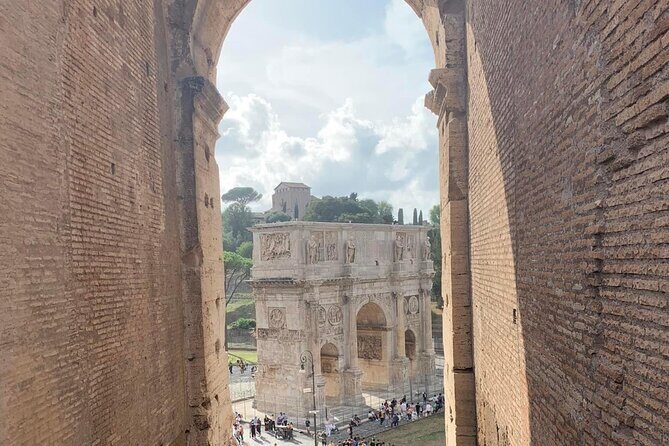
Why this matters: the Colosseum looks simple from the outside—big curve, big arches, lots of tourists. But inside, it becomes a system. Seeing the underground area helps you understand that the spectacle wasn’t just what you watched from your seat. It was a full machine: passages, staff movement, and staging.
The corridor dividing tiers is one of those details that most casual visits miss. It helps you picture how audiences were arranged and how space was segmented by class and seating zones. It’s the kind of micro-detail that makes the big structure feel human.
Real talk about pacing: the Colosseum can feel crowded and loud, and even with a reservation you’ll want to manage your expectations about crowd flow. The tour’s job is to keep you moving with purpose and to stop at the viewpoints that actually explain the building, not just the viewpoints that sell the postcard.
Palatine Hill: emperors’ palaces, the Romulus and Remus legend, and sweeping views
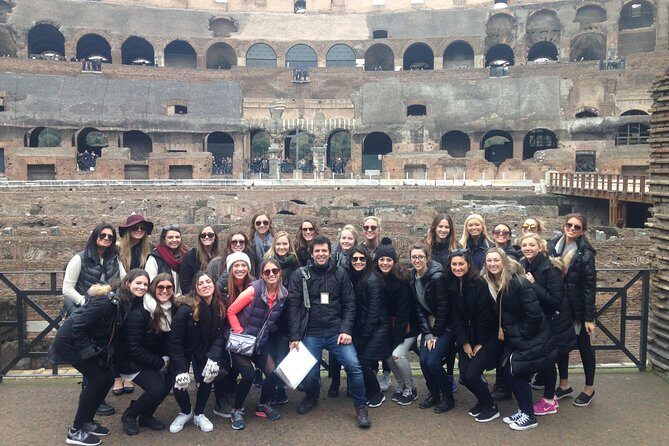
Next comes Palatine Hill, about 45 minutes. This stop is less about one single monument and more about atmosphere and scale—how Rome’s power center sits on top of Rome’s political center.
You’ll cover:
- Emperors’ palaces
- The legendary story of Romulus and Remus (where they were abandoned and raised by the she-wolf, according to myth)
- Panoramic views over the Roman Forum and Circus Maximus
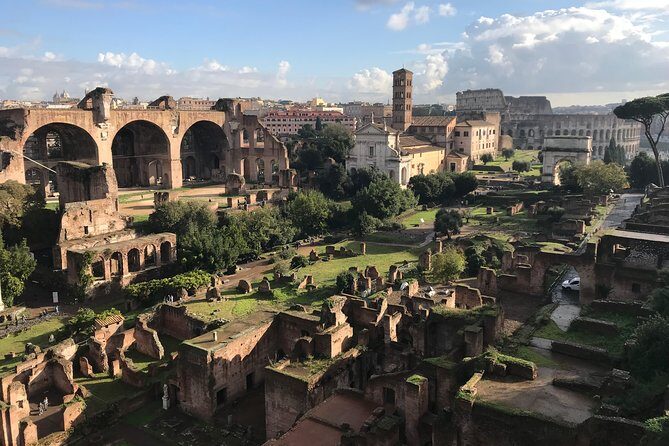
This is where the city starts to make sense geographically. The Forum below feels like the government stage. The hill above feels like the private vantage point of power.
If you like mythology blended into real topography, you’ll appreciate how the legend ties into what you can actually see. Standing here is one of the easiest ways to understand why rulers wanted this location in the first place: it’s commanding, visible, and close enough to control what happens below.
Potential drawback: Palatine Hill is a walking and standing stop. If you prefer minimal movement and maximum sitting, you might wish this segment were longer or had fewer transitions. Still, the time is focused and the payoff is real.
Roman Forum highlights: Caesar’s cremation, Mark Antony’s podium, and the Sacred Way
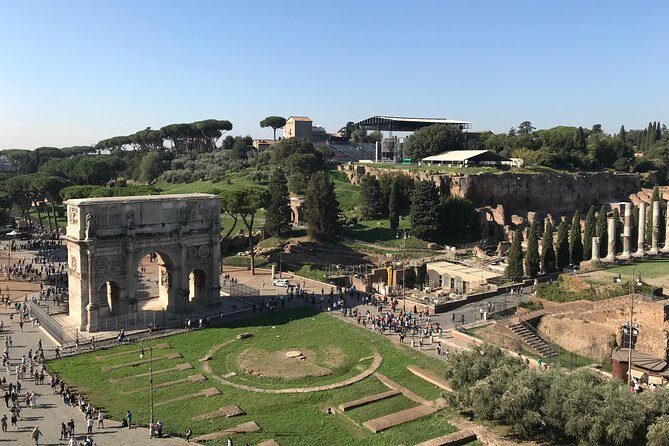
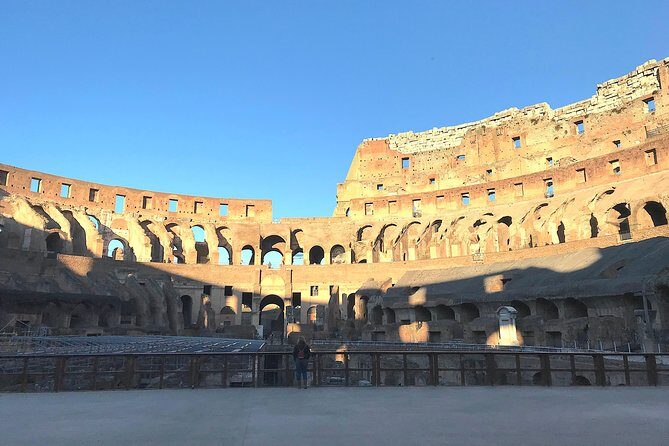
The final stop is the Roman Forum, about 45 minutes, and it’s packed with high-value sights. This part of the walk is the “beating heart” of ancient Rome—political, social, and religious—so the guide’s job is to help you sort out what’s where and why each monument mattered.
Key moments include:
- Sacra Via (the main processional route)
- The cremation of Julius Caesar
- The podium where Mark Anthony made his funeral speech
- The Altar of Julius Caesar
- Temple of Antonino and Faustina
- Temple of Julius Caesar
- Basilica Julia and Basilica Emilia
- Curia Julia
- Arch of Septimius Severus
- Tabularium (ancient state archive)
- Temples like Concordia, Vespasian, Castor and Pollux, and the Temple of the Vestal Virgins
Here’s why this stop is more than just seeing ruins. The Forum is a place where events stuck to specific spots. Caesar’s story, Mark Antony’s speech, and the way public religion and government overlap are not abstract when you’re standing near the routes, platforms, and temple foundations.
Also, notice how the tour includes both “big story” anchors (Caesar, Mark Antony) and “how the system worked” buildings (basilicas, curia, archive). That combination helps your brain connect politics, law, religion, and public life.
Time consideration: 45 minutes is tight for the scale of the Forum. The tour is clearly designed to hit the major points with enough explanation to make them stick. If you’re the type who likes to linger and read every sign, you’ll likely want to come back later on your own for a second pass.






The guide quality: why an archaeologist-led tour changes everything
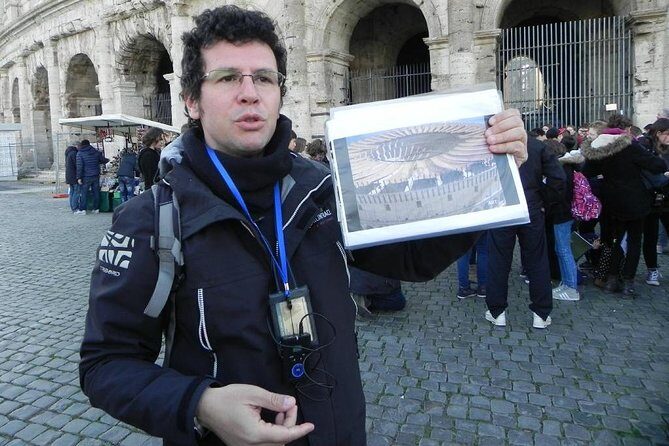
When a tour focuses on history like it’s a story you can follow, you don’t just “learn facts”—you get a mental map. And that’s what an archaeologist-style approach tends to do well.
In this experience, the guide’s background shows up in the way they explain materials, construction logic, and how excavation evidence helps reconstruct what you’re seeing. Ferdinando’s PhD archaeologist background is a standout example from the guide team, and it’s paired with a teaching style that keeps your questions from feeling like interruptions.
The result is that you can ask things you actually care about, like how certain spaces were used or why one area differs from another. The guide isn’t there to rush through talking points. The goal is to make the places make sense.
I also like that the tour supports clear communication. Headsets are provided for groups of 6+ people, which helps a lot when Rome’s noise and crowds make it hard to hear. That detail matters more than you’d think.
Price and ticket value: what $240.15 covers, and what it means for you
At $240.15 per person, this isn’t a budget “grab-and-go” option. But the price isn’t just for someone to walk beside you while you take photos.
Here’s the value math you can use:
- The Colosseum entrance ticket is valued at €18
- The Colosseum reservation fee is valued at €2
- That means roughly €20 of the cost is tied to the monument access itself
- The remaining cost goes toward the guide team, expert interpretation, headset setup (for larger groups), and the planning that gets you into the right flow
So the question isn’t only whether you get into the Colosseum. It’s whether you get a guided experience that turns three major sites into one coherent story. With the kind of site-specific explanations this tour offers, it can be worth paying for—especially if it’s your first time tackling ancient Rome.
This is also a time-and-stress purchase. Rome’s ancient sites don’t run on your schedule. If you want less wandering and more structured sightlines, a guided format earns its keep.
Timing, group size, and comfort on a 3-hour walk
The total duration is about 3 hours. That’s a realistic sweet spot for first-time visits to the Colosseum area because you get the main hits without feeling like you’re trapped in a museum.
Group size has a ceiling: maximum 50 travelers. That’s not small in absolute terms, but you also get audio support via headsets for groups of 6+. And in practice, the tour’s pacing relies on moving between set stops while the guide handles the flow.
Weather is also covered: it runs in all weather conditions, so you’ll want to dress for sun, heat, or rain. In Rome summers, that can mean bringing water and using shade where possible. The guide’s job is to keep the pace livable, and some guides are clearly attentive to breaks and comfort.
Practical tips: IDs, first-Sunday lines, and showing up ready
This is where a little preparation pays off.
Bring the right ID
You must provide full names when booking, and you need a valid passport or ID document that matches those names for entry. If you can’t present matching ID at the ticket office, entry can be denied. That’s not negotiable.
If you’re traveling with anyone under 18, it’s specifically noted that a valid ID is required.
First Sunday of the month: plan for waiting
On the first Sunday of the month, access to the monuments is free. The catch is that the operator cannot pre-buy an entrance slot to skip the line. Instead, you’ll meet your guide at 8am to reduce crowd pressure, but expect some waiting before entering.
The guide typically uses that time to introduce the tour and keep things engaging. Still, schedule the rest of your day with the understanding that this is the one scenario where “skip-the-line” doesn’t behave like normal.
Dress properly for a walking tour
It operates in all weather, so wear shoes that work on uneven ancient stone and bring what you need for comfort. This is not a seated, air-conditioned tour.
Should you book this Colosseum, Forum and Palatine Hill walking tour?
Book it if you want an efficient hit of Rome’s ancient core and you care about understanding what you’re seeing. The combination of Colosseum underground views, Palatine Hill vantage points, and Forum monuments tied to Caesar and Mark Antony is exactly the kind of structure that turns ruins into a story you can follow.
Skip or consider alternatives if you hate lines and long waiting might ruin your day—because the first Sunday of the month can still involve a queue. Also, if you want to linger for long periods at each monument with lots of solo reading, the 3-hour format may feel tight.
If your priority is value in time and meaning—especially your first time in this part of Rome—this tour is a strong choice.
FAQ
Is the tour in English?
Yes. The experience is offered in English.
How long is the walking tour?
It runs for approximately 3 hours.
What’s included in the price?
The tour includes a local guide, headsets for groups of 6 or more, a professional archaeologist/historian/art historian guide, and the Colosseum entrance ticket plus the Colosseum reservation fee.
Is admission to the Colosseum, Palatine Hill, and the Roman Forum included?
Colosseum admission is included, and the tour includes entry ticket components for the stops listed. Exact ticket details beyond the Colosseum are not specified in the information provided.
Do I need an ID to enter?
Yes. Each traveler must present a valid passport or ID document that matches the name used at booking, or entry may be denied.
What is the meeting point and where does the tour end?
It starts at Via di San Gregorio and ends at Largo Corrado Ricci, 42, very close to the church of Saint Peter in Chains and near the Metro Cavour (Line B) station.
What happens on the first Sunday of the month?
Access is free, so the operator cannot pre-buy an entrance slot. You’ll meet your guide at 8am to line up together.
How big is the group?
The maximum group size is 50 travelers.
Can I get a refund if I cancel?
No. The experience is non-refundable and cannot be changed for any reason.