REVIEW · EVENING EXPERIENCES
Walk the magic of Rome at night
Book on GetYourGuide →Operated by Lock Your Tour · Bookable on GetYourGuide
Rome looks different after dark.
This 2.5-hour, small-group walk strings together Rome’s biggest icons—the Colosseum, Trevi Fountain, and the Spanish Steps—with photo pauses and a guide you can actually hear thanks to included headsets. It’s a smart way to see the Eternal City in evening glow without spending your whole night figuring out where to go next.
I also like how the tour turns each stop into a quick story you can picture on the spot, from gladiator contests at the Colosseum to the Trevi tradition of making a wish. One thing to plan around: it covers about 3 miles (5 km) on foot and luggage or large bags aren’t allowed, so bring comfortable shoes and keep your load light.
In This Review
- Key Points You’ll Feel Right Away
- Walking Rome at Night: What This 2.5-Hour Route Really Delivers
- Where the Tour Starts at Via del Monte Oppio 3
- Colosseum After Hours: Best Views and What You’re Meant to Notice
- Down Via dei Fori Imperiali to Piazza Venezia and the Altar of the Fatherland
- Pontifical Gregorian University: A Stop for Jesuit-Era Context
- Trevi Fountain Wish Moment: Coin Toss and Photo Time
- Marcus Aurelius Column, Pantheon, and Piazza di Pietra Views
- Spanish Steps Finish: Photos, Breaks, and a Stroll Up
- Price and Value: Is $39.86 Worth It?
- Who Should Book This Night Walk (and Who Might Skip It)
- Should You Book Walk the Magic of Rome at Night?
- FAQ
- What is the duration of the tour?
- How do I find the starting times?
- Where do we meet the guide?
- What’s included in the price?
- Is entry to attractions included?
- Is food or drinks provided?
- Are luggage or large bags allowed?
- Is the tour suitable for people with mobility impairments?
- Can I cancel for a full refund?
Key Points You’ll Feel Right Away
- Headsets that make the guide easy to hear even in busy night streets
- Photo stops timed for iconic lighting, including the Colosseum and Pantheon
- Trevi Fountain wish ritual with the coin toss over your left shoulder
- A route that connects places to real-life use, from a church at the Pantheon to Jesuit-founded schooling at the Pontifical Gregorian University
- Easy-to-follow pacing with short walks between major sights
Walking Rome at Night: What This 2.5-Hour Route Really Delivers
This is the kind of Rome evening that helps you get your bearings fast. In just 2.5 hours, you move through a concentrated loop of major sights—mostly exterior views—while a guide keeps you oriented and explains what you’re looking at. Since you have headsets and Wi‑Fi included, you’re not stuck guessing what to do next or trying to read a sign in the dark.
What makes it work is the pacing. You get a handful of guided moments, plus short stretches to walk and absorb the atmosphere. You’re also given specific “photo-stop” time, which matters at night when crowds and lighting can change quickly.
The best part for most people: you don’t have to build an itinerary. You just show up, follow along, and enjoy the fact that these places look dramatically different under lights.
You can also read our reviews of more walking tours in Rome

Where the Tour Starts at Via del Monte Oppio 3
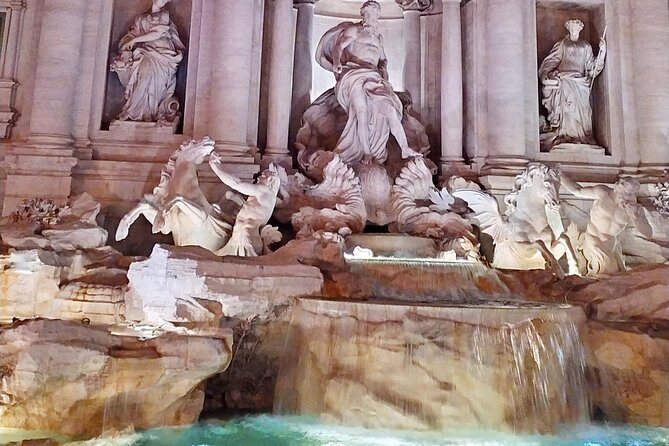
Your evening begins at Via del Monte Oppio, 3 (00184 Roma RM). The guide arrives at least 10 minutes early, which is a nice buffer if you’re getting there from another stop in the city. You’ll find the guide in front of the red house, identifiable by a Lock Your Tour flag or umbrella.
If you’re nervous about meeting points, do yourself a favor: arrive a little early and take one quick look around the exact address. Night in Rome can feel like a maze—this start setup is designed to reduce that stress.
And yes, plan to travel light. The tour doesn’t allow luggage or large bags, so bring only what you can comfortably carry during a ~3-mile walk.
Colosseum After Hours: Best Views and What You’re Meant to Notice
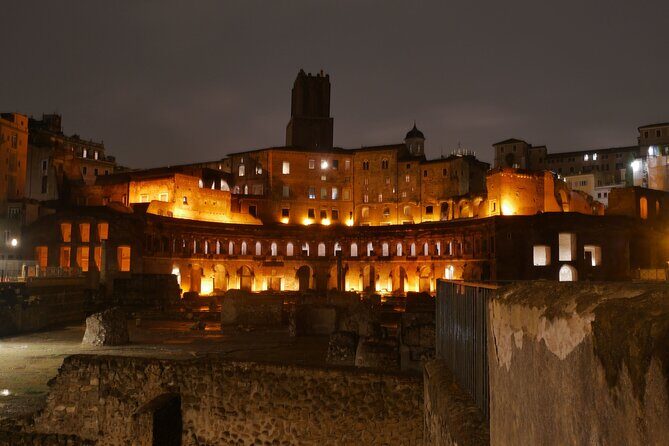
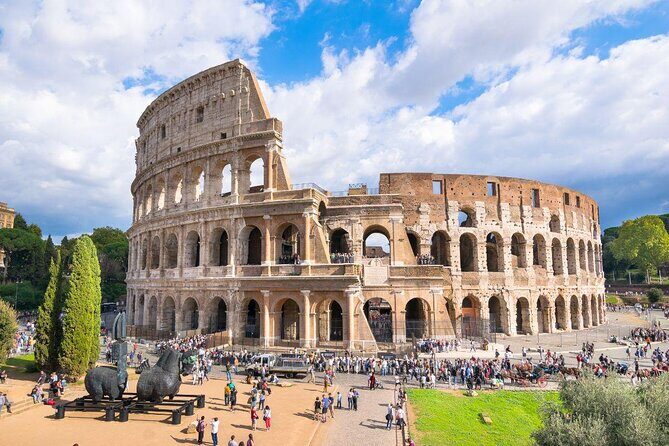
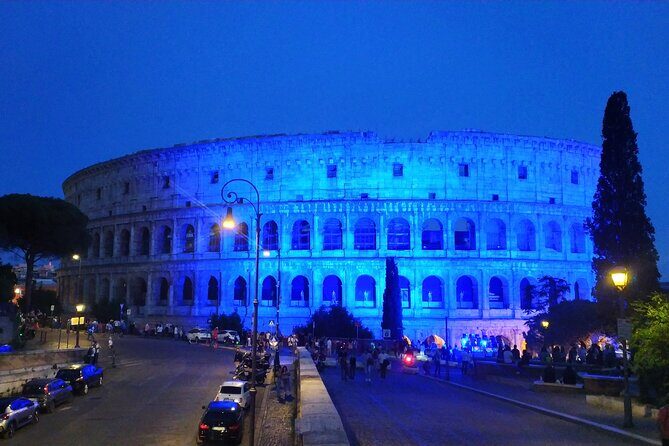
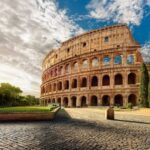
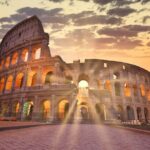
The Colosseum is stop one for a reason. Even if you’ve seen it in photos, at night it becomes a completely different experience—shadowy arches, glowing stone, and a sense of scale that’s hard to get during daylight crowds.
Here, you’ll have time for photos and a guided look at the amphitheater. The guide also shares context about the gladiator contests and shows that took place in the Colosseum—information that helps you look at the ruins as a working venue rather than just a monument.
Practical tip: when you’re taking pictures, try a couple of angles. One from a distance to capture the whole lit structure, and another closer view that shows details in the stone. That way you end up with at least one shot that feels “Rome at night,” not just “another Colosseum photo.”
You’ll also get a guided view designed to help you see the amphitheater clearly from where the group is walking—so don’t rush ahead. The guide’s positioning is part of the value.
Down Via dei Fori Imperiali to Piazza Venezia and the Altar of the Fatherland
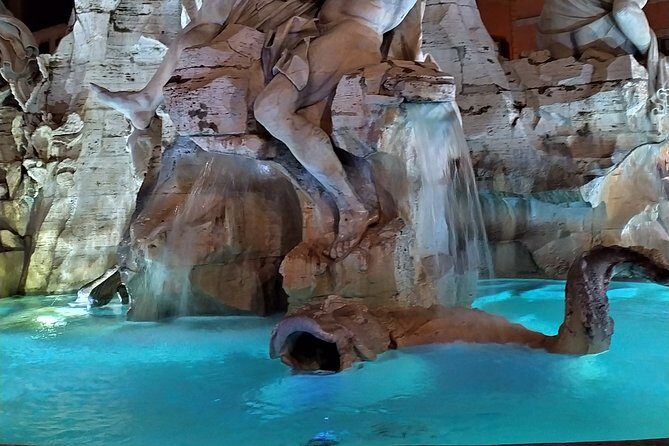
Next comes the long, straight walk down Via dei Fori Imperiali, described as a grand route. This is one of those Rome streets where you can feel the city’s big moments happening in architecture—especially after dark, when the lines of the road and buildings look extra dramatic.
You then reach Piazza Venezia and the Victor Emmanuel II National Monument, which the tour frames as having major symbolic weight. You’ll have a photo stop plus a bit of guided explanation so you understand why this white mass dominates the square.
Why this stop is worth it at night: the monument’s size can feel abstract in daylight photos. Under lighting, you’re more likely to notice carvings, contrasts, and the way the square opens up for views and pictures.
Quick consideration: the walk sections between major stops are short, but they can still feel like a lot if you’re not used to pavement. If your legs run on low battery, treat this portion as a steady pace, not a sprint.
Pontifical Gregorian University: A Stop for Jesuit-Era Context
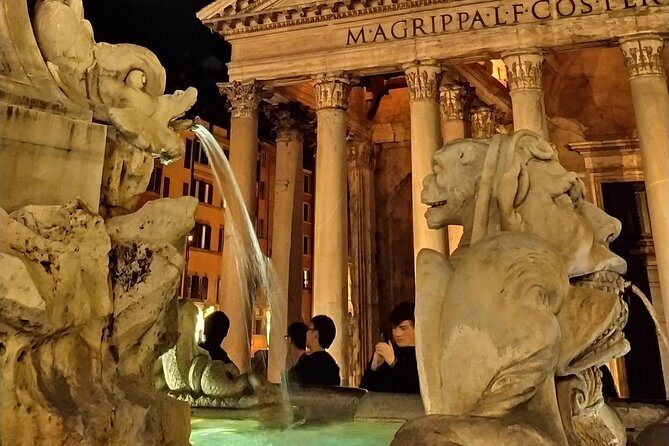
From the big Roman monuments, you shift to something more human-scale: a stop near the Pontifical Gregorian University. The tour points out that it’s the first university founded by Jesuits, which gives you a different kind of Rome story—one tied to education rather than spectacle.
You’ll get break time here, which is honestly a smart design. After Colosseum energy, it helps to have a pause so you can reset before Trevi and the rest of the evening.
What I like about including this stop: it reminds you that Rome isn’t only about ancient stones. It’s also about institutions and living systems that still shape daily life.
You can also read our reviews of more evening experiences in Rome
Trevi Fountain Wish Moment: Coin Toss and Photo Time
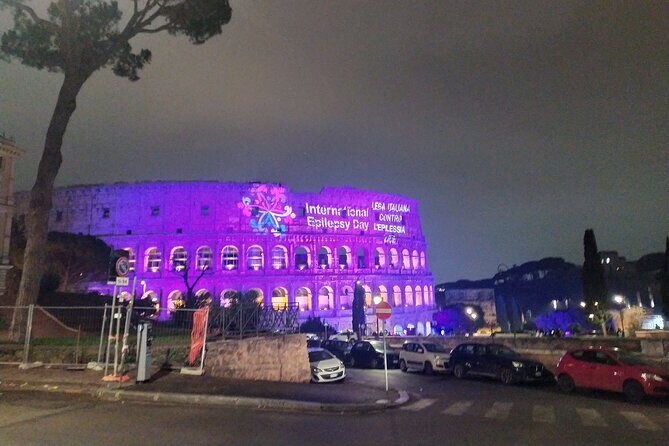
Then the tour hits the most cinematic water-and-stone scene in central Rome: the Trevi Fountain. You’ll get time for photos and a guided look that explains why it’s famous.
And yes—you get the wish moment. You’ll make the wish by throwing a coin over your left shoulder, exactly as the tradition goes on this tour. It’s one of those small rituals that makes the experience feel personal instead of just observational.
A couple of practical thoughts so this lands well:
- Keep your coin timing simple—don’t overthink it while the fountain area gets crowded.
- Take one careful photo early, then another from a slightly different angle once you’ve settled.
This stop is a highlight for a reason: Trevi’s lighting at night turns the fountain into a bright focal point, and it’s easy to see why people build entire evenings around it.
Marcus Aurelius Column, Pantheon, and Piazza di Pietra Views

After Trevi, the route continues through central Rome with quick passes and short guided moments. One notable pass-by is the Marcus Aurelius Column, where the guide helps you notice what you’re seeing as you move along.
Next up is the Pantheon, which still functions as a church. You’ll get a break time and both photo and guided segments. That mix matters because the Pantheon can feel overwhelming if you’re rushing: having a guide help you focus on what to notice makes a big difference.
Right after, you’ll stroll through Piazza di Pietra, with the tour mentioning you’ll get to see Hadrian’s Temple. This is the kind of stop that turns “I saw a building” into “I recognized what it was and why it mattered,” because the guide points you toward the key features as you move.
Night value here: these streets and squares look calmer than daytime chaos, but they’re still active enough to feel alive. You’ll get to experience the monuments as part of a working city, not just a filmed backdrop.
Spanish Steps Finish: Photos, Breaks, and a Stroll Up
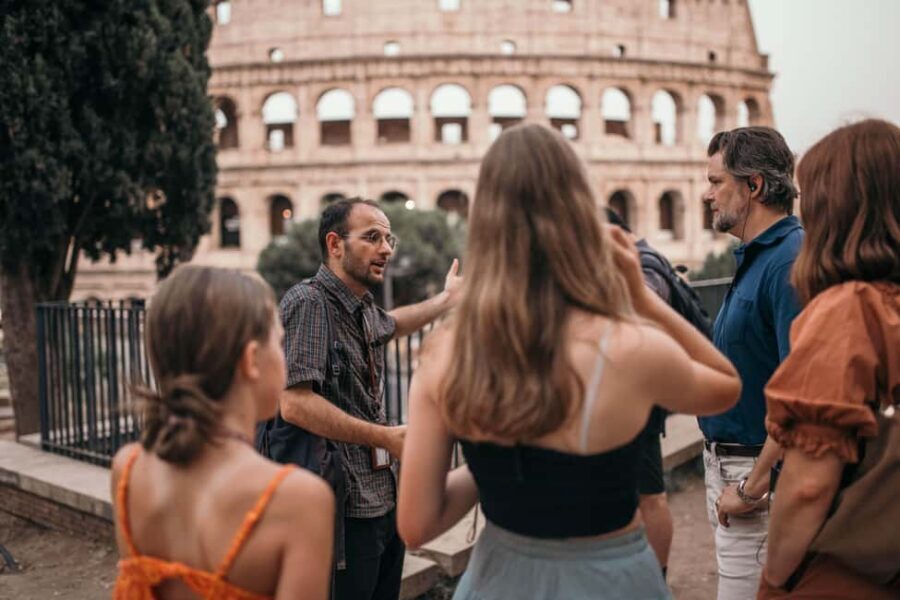
The last major stop is the Spanish Steps, famous for their design and romantic atmosphere. You’ll have time for photos, plus a guided visit and some walking time through the area.
The tour also includes time to climb the steps, which is the right way to do this. Standing at the bottom gives you one view; moving upward changes what you see and makes the shape of the stairs feel real.
There’s also break time built in here, which helps because by the end of the evening you’ll feel the 3-mile total in your legs, even if the route is paced comfortably.
If you want the best photos, aim for a moment when you’re not fighting every person in the area. Get your shot, pause, and let the crowd ebb a little—Rome is good at handling patience.
Price and Value: Is $39.86 Worth It?
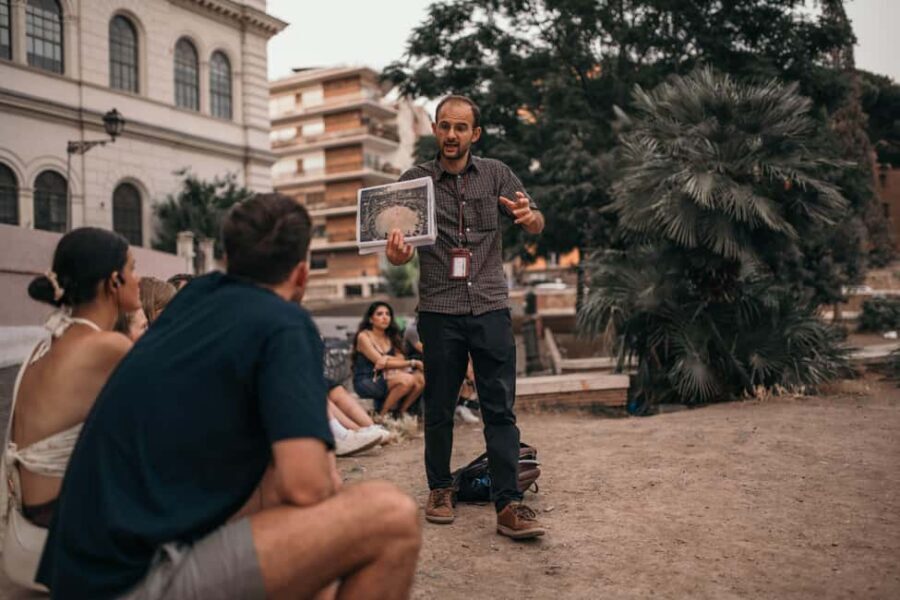
At $39.86 per person, this isn’t a “just walk around” experience. You’re paying for three big value pieces:
- a live English guide who keeps the route coherent and interprets what you’re seeing
- headsets, so you don’t lose half the story to street noise
- structured stop time for photos and brief breaks
Also, entry fees and food aren’t included, which is typical for an exterior-focused evening walk. That means your money is going toward guided experience and logistics—not toward attraction tickets. If you already plan to pay for specific entries separately, this tour is a strong way to make your night more meaningful between ticket times.
And the rating is a good sign: it holds a 5/5 with 8 reviews, which fits the overall design—people tend to love night walks when they feel guided, not random.
Who Should Book This Night Walk (and Who Might Skip It)
This tour fits best if you want an easy, organized evening that strings together top Roman sights without hiring multiple guides or building a complex plan. It’s especially good if you:
- like history explained in small, digestible chunks
- want photo opportunities timed for evening lighting
- prefer a small-group format for a more manageable pace
It’s not ideal if you have mobility limits, because it covers about 3 miles (5 km) and may be tough on uneven pavement. Also keep in mind the tour doesn’t allow large bags—so it’s better for day packs than big travel cases.
Should You Book Walk the Magic of Rome at Night?
If you want a guided Rome night that hits the big icons—Colosseum, Trevi Fountain, Pantheon, Spanish Steps—and you like your sightseeing with context and photo time, I’d book it. The mix of guided storytelling, headsets, and a concentrated route is exactly what you want when the city is gorgeous but time is short.
Skip it if you can’t handle ~5 km of walking or you need a luggage-friendly format. Otherwise, this is a well-designed “night primer” to help you understand Rome while you’re seeing it.
FAQ
What is the duration of the tour?
The tour lasts about 2.5 hours.
How do I find the starting times?
You’ll need to check availability to see the starting times for the 2.5-hour experience.
Where do we meet the guide?
The meeting point is Via del Monte Oppio, 3 (00184 Roma RM). The guide arrives at least 10 minutes early and you should look for them in front of the red house with a Lock Your Tour flag or umbrella.
What’s included in the price?
The tour includes a guide, headsets, and Wi‑Fi.
Is entry to attractions included?
No. Entry to attractions is not included.
Is food or drinks provided?
No. Food and drinks are not included.
Are luggage or large bags allowed?
No. Luggage or large bags aren’t allowed.
Is the tour suitable for people with mobility impairments?
The tour may not be suitable for those with mobility impairments, since it covers about 3 miles (5 km).
Can I cancel for a full refund?
Yes, you can cancel up to 24 hours in advance for a full refund.