REVIEW · WALKING TOURS
Via Crucis Catholic Pilgrim Walking Tour in Rome
Book on Viator →Operated by Crucis Tours · Bookable on Viator
A devout walking route with real theology baked in. This Via Crucis-style experience strings together major Catholic sites through a scripture-and-church-history lens, not just sightseeing. Two things I really like about it: the small group size (max 5) that keeps the pace human, and the way the guide (often highlighted by names like Tom and Wen) connects what you see to Scripture and Church history. One possible drawback: the walking can feel like a workout—especially in summer—and you need respectful dress (shoulders and knees covered).
You’ll also get the added bonus of structure: multiple stops, clear time at each place, and a guide who keeps you oriented on why these locations matter to Catholic pilgrims. The route is designed for people who want more meaning than photos, with attention to details like major relics, icons, and sacred traditions.
The biggest consideration is physical comfort and timing. If you can’t comfortably walk more than about 2 kilometers, or if you’re not up for a longer morning trek, this may be a stretch.
In This Review
- Key Things to Know Before You Go
- A Morning Via Crucis Route Through Rome’s Most Pilgrim-Heavy Sites
- Meeting at Piazza di Santa Maria Maggiore and Walking with a Tiny Group
- St John Lateran’s Holy Door and Relics Moment
- Santa Prassede: The Scourging Column and Early Christian Mosaics
- St Alphonsus Maria de Liguori and Our Lady of Perpetual Help
- Scala Santa and the Holy of Holies: What You’ll See (and What You Won’t Do)
- Back at St John Lateran: Why This Church Matters to the Catholic Walk
- Santa Croce in Gerusalemme: Passion Relics as the Final Climax
- Price, Pace, and Value: Is 114.45 Worth It?
- How to Prepare: Dress Code and Walking Reality
- Who This Tour Is For (and Who Might Prefer Another Plan)
- Should You Book This Via Crucis Catholic Pilgrim Walking Tour?
- FAQ
- How long is the Via Crucis Catholic Pilgrim Walking Tour in Rome?
- Where does the tour start and end?
- Is the tour offered in English?
- Is a mobile ticket provided?
- Are entrance fees included?
- Does the tour include climbing the Holy Steps on your knees?
- How much walking is involved, and who should avoid it?
- What should I wear?
- Is guide tipping included in the price?
Key Things to Know Before You Go
- Small group, max 5: easier questions, less rushing, better focus in busy churches
- Theology-led explanations: you won’t just hear facts—you’ll hear how Catholics understand these sites
- Santa Croce in Gerusalemme as the climax: the Passion relics are the heavy hitters
- Scala Sancta stop comes with a catch: you can see the Holy Steps, but the kneeling tradition isn’t allotted time here
- Multiple major basilicas: St John Lateran is central, with Holy Door themes during Jubileum years
A Morning Via Crucis Route Through Rome’s Most Pilgrim-Heavy Sites
This is the kind of Rome tour that starts with a mindset: you’re not here to skim. You’re here to walk from one sacred point to the next, and to understand what makes each one part of Catholic memory.
It runs about 3 to 4 hours, starting at 8:45 am. That early start matters because churches still feel calmer in the morning, and you avoid turning your whole day into a queue marathon. It’s also one of those schedules where you’ll feel your feet by the end, even if you’re not hurrying.
You can also read our reviews of more walking tours in Rome

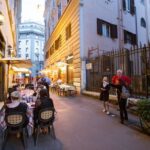
Meeting at Piazza di Santa Maria Maggiore and Walking with a Tiny Group
The experience begins at Piazza di Santa Maria Maggiore, 33 (near public transportation). Then it ends at Basilica di Santa Croce in Gerusalemme, at Piazza di S. Croce in Gerusalemme, 10.
Two practical perks stand out. First, it’s a small-group format with a maximum of 5 travelers, so the guide can adjust to questions and pace. Second, you get a mobile ticket, which is a nice, low-friction way to handle entry. Also, it’s offered in English, so you’re not forced into a translation game while you’re trying to absorb Scripture, theology, and Church history.
The flip side is that a small group doesn’t change the fact that you’re doing a walking tour. Rome streets add up fast—so this isn’t the best choice if you’d rather ride a tram or keep your feet fresh for the afternoon.
St John Lateran’s Holy Door and Relics Moment
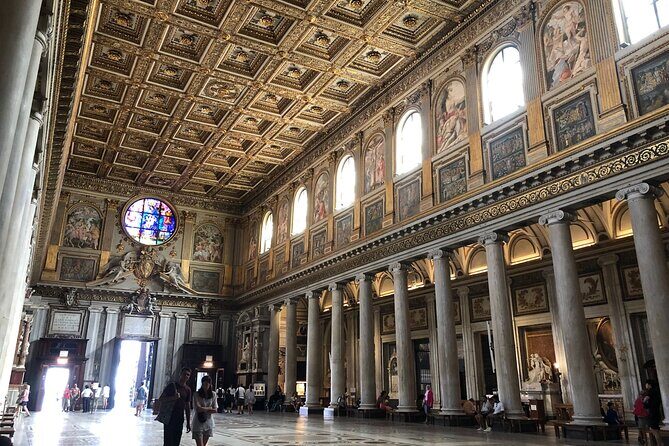
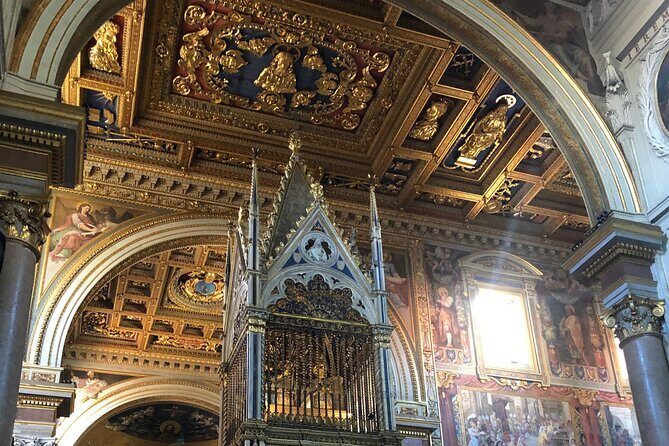
A major anchor of the route is St John Lateran—the Mother Church of the Catholic world and the seat of the Bishop of Rome (the Pope). The tour frames it as more than an impressive building. It’s a place tied to Catholic identity, including the Holy Doors theme during Jubileum years for a Partial Indulgence.
When you arrive, the guide’s approach is key: you’re encouraged to look for the specific elements that symbolize the Church. Inside, you’ll hear about the Holy Sponge, papal tombs, and even the skulls of Saints Peter and Paul. The tour also highlights the “Pillars of the Church,” which helps you connect the visual weight of the space to the role those apostles played in Catholic teaching and tradition.
Time-wise, this stop isn’t rushed. You’ll have extended time here, and that matters. In a basilica like this, the difference between a quick look and a real visit is whether you can slow down long enough to notice the objects you came for.
Santa Prassede: The Scourging Column and Early Christian Mosaics
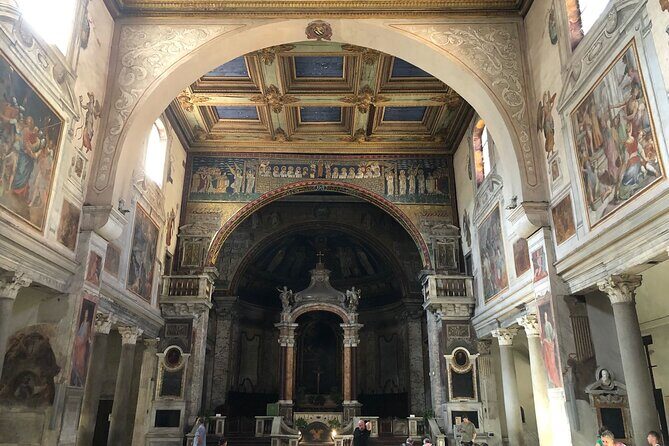
Next you move to Basilica di Santa Prassede, a quieter-feeling stop that’s easy to miss on your own. It’s right near St Mary Major, and that’s part of why it works well in a guided route: you get the “wait, I didn’t know this existed” feeling without having to figure out directions mid-day.
The basilica is tied to St Praxedes, a 1st-century martyr whose story is linked with caring for persecuted Christians. The tour also emphasizes relic traditions here, including relics of martyrs brought to the site and hidden in a well.
Then comes the highlight: the basilica houses a pillar against which the Lord Christ was scourged before the crucifixion. The tour explains that this column was brought from Jerusalem in the 13th century, described as a donation in gratitude for the Fourth Crusade. Even if you’re not deep into relic history, that one detail makes the place feel intensely specific.
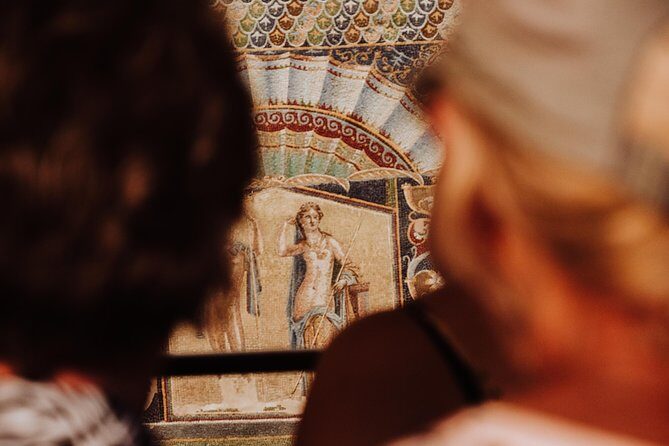
Add to that the basilica’s early Christian mosaic art, and Santa Prassede becomes more than a “relic stop.” It becomes a visual lesson in how early Christians communicated faith through art.
St Alphonsus Maria de Liguori and Our Lady of Perpetual Help
The walk continues toward the Church of Saint Alphonsus Maria de Liguori. From the outside it’s described as comparatively unremarkable, with neo-Gothic architecture, but the point of this stop is what you’ll find inside.
This is one of the tour’s most meaningful icon moments: you’ll see the original icon of Our Lady of Perpetual Help (also known as Our Lady of Perpetual Succour, and in the East as Our Lady of the Passion). For Catholic pilgrims, icons like this aren’t simply art objects—they’re devotional anchors. They give a “stand and pray” feeling to a church visit, even if your trip is short.
If your faith background is what draws you to the tour, this stop usually hits hardest because it’s direct and personal. If your faith background is more mixed, it still works as a lesson in why certain Marian icons became central to popular devotion.






Scala Santa and the Holy of Holies: What You’ll See (and What You Won’t Do)
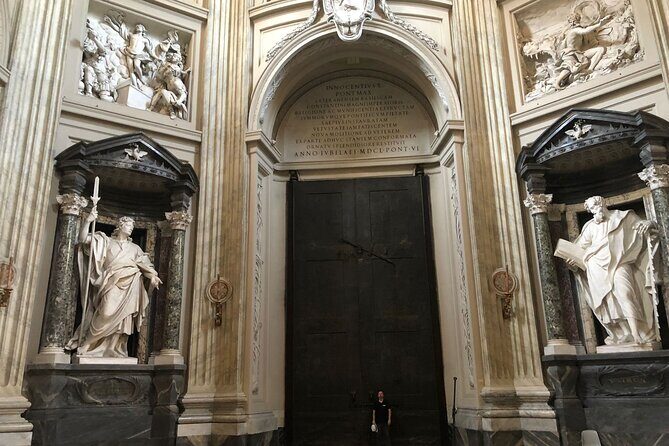
The Pontificio Santuario della Scala Santa, known as the Scala Sancta, is one of Rome’s most dramatic sacred sites. These are the steps that tradition says Jesus ascended at the praetorium in Jerusalem, before condemnation.
The tour explains that the steps were brought to Rome in the 4th century by St Helena. Then it introduces the popular pilgrim tradition of climbing the steps on one’s knees.
Here’s the practical catch: the tour says you’ll see the Holy Steps, but you won’t have time to partake in the kneeling tradition during this specific walking tour. The good news is that the tour also notes you can organize a separate visit for that devotional practice—entrance is free and no booking is necessary.
You’ll also visit the Church of the Holy Stairs, including the “Holy of Holies,” described as an inner sanctum historically accessed exclusively by the Pope. Inside a tiny chapel, you’ll get a glimpse of an acheiropoieta—an icon associated by tradition with a beginning connected to St Luke, and finished by angels.
That combination—Holy Steps view plus the Holy of Holies glimpse—makes the stop feel like a focused devotional highlight, not just a quick photo break.
Back at St John Lateran: Why This Church Matters to the Catholic Walk
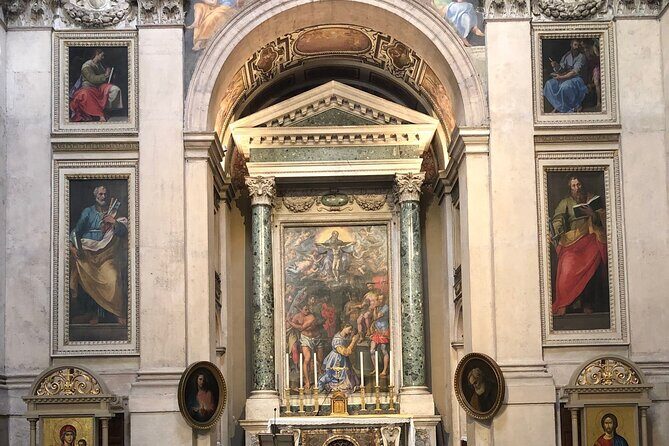
If St Peter’s is Rome’s headline for many people, St John Lateran is the “home base” idea for Catholics. The tour returns to it with more time on what’s inside.
You’ll hear the core message again: St John Lateran is the Mother Church of the world, and a principal symbol of the Pope’s role as Bishop of Rome. Inside, you’re pointed toward statues of the Apostles, papal tombs, and the skulls of Saints Peter and St Paul, plus the “Pillars of the Church” symbolism.
This repeated focus isn’t accidental. It’s how the route teaches you to read Rome like a pilgrim map: one church reinforces the next, and the guide ties those themes together through Scripture and Church history.
Santa Croce in Gerusalemme: Passion Relics as the Final Climax
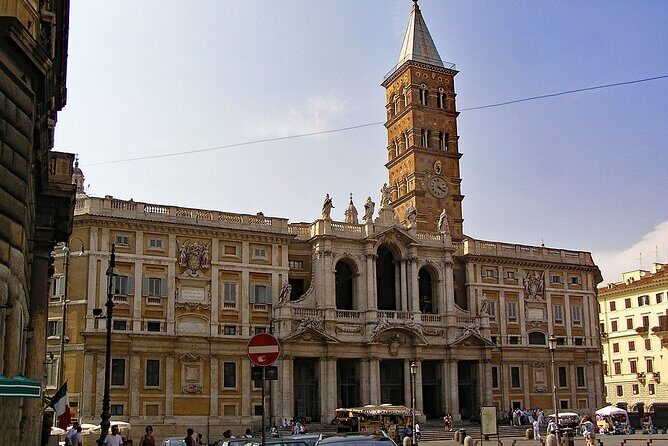
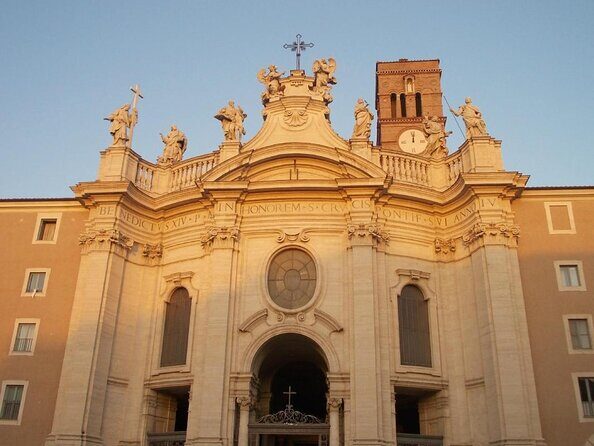
The ending stretch feels like the payoff: Basilica of San Giovanni in Gerusalemme is described as the climax, but the actual named destination in the provided details is Santa Croce in Gerusalemme—the Basilica of the Holy Cross of Jerusalem. This is where the tour concentrates its most important Passion relics.
Inside this basilica, the atmosphere is described as strikingly different from the surrounding city. Crowds are rare even though Rome outside keeps going.
This stop is built around specific relic claims connected to Jesus’ Passion, traced back to St Helena’s pilgrimage to Jerusalem after Christianity was legalized. The tour highlights relics such as:
- a section of wood from the True Cross
- Holy Nails from the crucifixion
- thorns from the Crown of Thorns
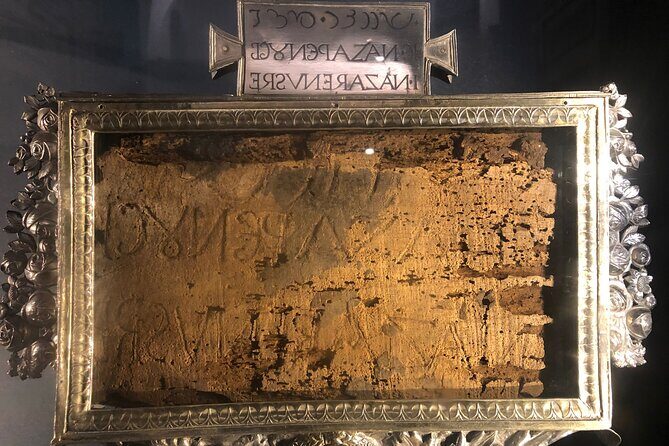
- the board hung above Jesus on the cross, described with the inscription Jesus the Nazarene, King of the Jews
The tour also includes other attached relic traditions found here, such as:
- the finger of St Thomas
- fragments from the cave of the Nativity and the Holy Sepulchre
If you care about Catholic devotional history, this is the stop that turns the morning from “interesting churches” into “these are tangible anchors of faith.” If you’re simply curious about Rome’s sacred art and relic culture, it still works because the tour clearly explains what you’re seeing and why it mattered to Catholics enough to be brought to Rome.
Price, Pace, and Value: Is 114.45 Worth It?
At $114.45 per person, this tour isn’t the cheapest way to see churches in Rome. But it also isn’t priced like a generic “walk past landmarks” experience.
Here’s where the value comes from:
- Small group size (max 5), which is usually where quality lives
- All fees and taxes included
- Multiple church interiors with admission listed as free across the stops, plus an included element at Scala Santa
Tips are not included, so you’ll want to plan for that. And because the tour includes entrance where indicated, you’re less likely to lose time figuring out ticket lines or paywalls while you’re trying to stay in a sacred rhythm.
The overall rating is strong: 4.8 with 96% recommending the tour. The consistent theme in that kind of feedback is usually the same thing you’ll feel during the walk—good guidance, not just access.
How to Prepare: Dress Code and Walking Reality
This tour comes with clear expectations:
- You should have moderate physical fitness
- It’s not recommended if you can’t walk more than 2 kilometers
- In summer, it’s described as particularly difficult walking
- You must dress respectfully, with shoulders and knees covered
That dress rule can catch people off guard in Rome. Don’t treat it as optional. You’ll enjoy the tour more if you don’t waste time scrambling for a scarf or shrug.
Also, service animals are allowed, and the tour is near public transportation. That can help if you need a quick reset between the start area and your end point.
Who This Tour Is For (and Who Might Prefer Another Plan)
This fits best if you want a Rome morning that feels like a pilgrimage walk. You’ll likely love it if you:
- want a devout Catholic perspective on art, relics, and Church history
- appreciate Scripture and theology being woven into the sites
- like small groups where questions don’t get lost
You might want to choose a different style of tour if:
- you prefer minimal walking, or you’re sensitive to heat
- you can’t comfortably handle the total walking effort and church-hopping pace
- you want zero devotional focus and only art-history commentary
Should You Book This Via Crucis Catholic Pilgrim Walking Tour?
Book it if you want Rome’s sacred sites outside the Vatican to feel personal, structured, and meaningful. The route is built around major Catholic landmarks, key relic traditions, and the Scala Sancta experience—with enough time at the big stops to actually take them in.
Skip it (or pick a gentler option) if your biggest constraint is walking distance or summer stamina. Even with a small group, this is still a walking tour through multiple churches, and the dress and pace expectations are real.
If your goal is to leave with more than photos—more like insight, prayerful attention, and a clearer sense of why these places matter—this one is an easy yes.
FAQ
How long is the Via Crucis Catholic Pilgrim Walking Tour in Rome?
It lasts about 3 to 4 hours.
Where does the tour start and end?
The tour starts at Piazza di Santa Maria Maggiore, 33, 00185 Roma, and ends at Basilica di Santa Croce in Gerusalemme, Piazza di S. Croce in Gerusalemme, 10, 00185 Roma.
Is the tour offered in English?
Yes. The tour is offered in English.
Is a mobile ticket provided?
Yes, you receive a mobile ticket.
Are entrance fees included?
All fees and taxes are included. The listed admissions for the stops are free, and the tour includes admission at the Scala Santa stop (Holy of Holies).
Does the tour include climbing the Holy Steps on your knees?
The tour says you can see the Holy Steps, but it does not include time to do the kneeling tradition. For those who want to do that, the information says you should plan a separate visit.
How much walking is involved, and who should avoid it?
It’s marked as a moderate fitness activity, and it is not recommended if you can’t walk more than 2 kilometers. It’s also described as particularly difficult in summer.
What should I wear?
You must dress respectfully, with shoulders and knees covered.
Is guide tipping included in the price?
No. Guide tips are not included.