REVIEW · ROME
Tour of the Pontifical Basilicas of Rome
Book on Viator →Operated by Carratonitours · Bookable on Viator
Four basilicas, one smooth half-day.
This tour works because it links Rome’s biggest church stops with private vehicle rides and hotel pickup, so you spend less time figuring out transport and more time getting context. I also love that the driver-guide sets the stage before you walk in, so the art and stories don’t feel like random decoration.
My second favorite part is the smart pace: about 30 minutes at each of the first three basilicas, then around an hour at St. Peter’s. That timing keeps the tour moving while still giving you enough minutes to look up, notice details, and catch the big emotional moments.
The main drawback is simple: three sites get only about 30 minutes. If you’re the kind of person who wants to linger for an hour per stop, you’ll likely finish wishing you had more time on your own.
In This Review
- Key highlights at a glance
- Why this tour is such a good use of a half day
- Price: what $349.07 per person really buys
- The route: how the timing keeps you from burning your day
- A practical tip for your mindset
- Stop 1: San Paolo Fuori le Mura and the scale of the story
- Stop 2: Santa Maria Maggiore on the Esquiline Hill
- Stop 3: San Giovanni in Laterano, the mother church idea
- Stop 4: St. Peter’s Basilica and the scale of Renaissance ambition
- The driver-guide experience: what you should expect
- Booking value: when this private tour makes the most sense
- Should you book this tour?
- FAQ
- Is admission included for the basilicas?
- How long is the tour?
- Does the tour include hotel pickup and drop-off?
- Is this tour private?
- Is there a morning or afternoon option?
- Can I cancel for a full refund?
Key highlights at a glance
- Four papal basilicas, one organized loop across Rome and the Vatican area without messy transit planning
- Door-to-door pickup and drop-off by private vehicle, which saves you time and stress
- Free entry at every basilica stop, so your money goes to logistics and commentary
- Driver-guide storytelling that adds meaning fast, especially for the later-battle, rebuild, and tradition threads
- Time built in for independent looking rather than a nonstop lecture
Why this tour is such a good use of a half day
Rome has hundreds of churches, but only four are the big papal basilicas that matter most when you want the classic Rome-in-one-pack approach. The challenge is that they aren’t all clustered together. With this format, you get a quick, efficient route that still feels personal because it’s private: only your group rides together and only your group gets the commentary.
The value is not just that you see four famous names. It’s that you see how they connect. The tour’s driver-guide approach gives you the why behind the where, so you’re not standing inside a huge church wondering what to look for. And because it’s door-to-door, you’re not hunting down bus stops or dragging yourself across town with a map and time pressure.
You can also read our reviews of more tours and experiences in Rome.
Price: what $349.07 per person really buys
At $349.07 per person for about 4 hours, this is not a budget “hop-on, hop-off” deal. But you are paying for three things that cost real time: a private vehicle between far-apart basilicas, hotel pickup/drop-off, and a driver-guide who provides context as you go.
Also, the basilicas here list free admission tickets, which matters. You’re not paying extra entry fees at each stop; your payment is mainly for the guided logistics and the ride time. If you can split the cost with someone, or if you value comfort and clean scheduling, this price starts to make more sense. If you’re traveling solo and only want self-guided freedom, you may feel the cost more sharply.
The route: how the timing keeps you from burning your day
The full tour runs about 4 hours, with a morning or afternoon departure option. You’ll start with San Paolo Fuori le Mura and then move through Santa Maria Maggiore, San Giovanni in Laterano, and finally St. Peter’s Basilica.
Here’s the key rhythm: roughly 30 minutes for three stops, and about 1 hour for St. Peter’s. That isn’t a lot of time if you’re aiming for deep study of every chapel or every ceiling panel. But it’s enough to get oriented, catch major landmarks, and feel the scale. I like this style because it turns the basilica visits into “see the big things” rather than “maybe see the big things if you don’t get tired.”
A practical tip for your mindset
Go in with a simple goal. For each basilica, pick one thing to hunt for—an interior space, a specific story thread, or a visual style. When time is limited, having a focus keeps you from wandering in circles.
Stop 1: San Paolo Fuori le Mura and the scale of the story
San Paolo Fuori le Mura is Rome’s largest church after St. Peter’s, and it sits on a site tied to St. Paul’s story. You’re in a basilica that traces back to the burial of Paul after his decapitation in AD 67. Constantine built it in the 4th century, but a major fire in 1823 damaged much of it, and what you see today reflects a big 19th-century reconstruction.
One of the most striking things here is how the building behaves. The interior is known for its echoey results, which can feel modern even though you’re standing in layers of ancient and rebuild history. And the sheer size changes your perspective: large groups of pilgrims can look small inside, which is exactly what you want at this stage of the tour. It sets a wow tone before you head to the more art-heavy Marian and Lateran stops.
What to watch for during your ~30 minutes
- The overall interior volume and how your voice and movement feel in the space
- The way the basilica’s “older core plus later rebuild” creates a mixed feel rather than one single period
Possible downside
Because of the echo and crowds, it can be hard to settle into quiet looking. If that’s your style, you may want to treat this stop as a “big first impact” rather than a slow, reflective pause.
Stop 2: Santa Maria Maggiore on the Esquiline Hill
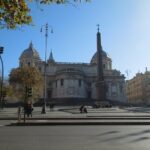
Santa Maria Maggiore (Papale Basilica of Saint Mary Major) is one of the four papal basilicas and a Marian shrine that has dominated Rome for 16 centuries. It’s also tied to the idea of a spiritual “cradle” for artistic civilization, so you’re not only there for devotion. You’re there to see how faith and art grew together over time.
The basilica sits on the summit of the Esquiline Hill. Tradition says Mary indicated and inspired the construction of her abode on this spot, which gives the location a strong sense of purpose. Even if you don’t get lost in doctrine, that “place meaning” helps you read the building with different eyes. You stop seeing stone as stone and start seeing it as a physical marker of a long-running story.
What makes this stop feel special in limited time
In about 30 minutes, you can still connect two things: the sense of continuity (sixteen centuries) and the way the hill setting reinforces the idea of a focal point for pilgrims and believers.
A small consideration
Because this is a major shrine, the pace can feel busy. Your best move is to pick one focal area to look at first, rather than trying to absorb everything at once.
Stop 3: San Giovanni in Laterano, the mother church idea
The Arcibasilica di San Giovanni in Laterano is the “mother of all the churches in the world,” at least in the way the basilica is described. It’s also presented as a bridge between eras: an ideal trait d’union between the pagan and Christian world. That framing matters. It makes the building feel like more than an isolated religious site—it feels like a conversion of Rome itself.
Historically, the structure begins far from what we imagine as a church. It started as a building for public meetings and for the administration of justice. Over time, it transformed into a majestic ecclesiastical structure designed for large numbers of faithful as the new cult spread.
So while you walk through this stop, you’re not just seeing sacred art. You’re seeing the logic of how societies repurpose spaces. That’s the kind of context a good driver-guide brings fast, and it’s exactly why this tour format works: you get the “big change” story before you start looking around.
What to watch for in your ~30 minutes
- The building’s sense of civic-to-sacred transformation
- Any visual cues that help you track that shift from public administration to worship
Consideration
This is a stop where the story may feel more conceptual than purely decorative. If you like to anchor your thoughts with a specific visual goal, ask the guide for one or two “look-for” points at the start.
Stop 4: St. Peter’s Basilica and the scale of Renaissance ambition
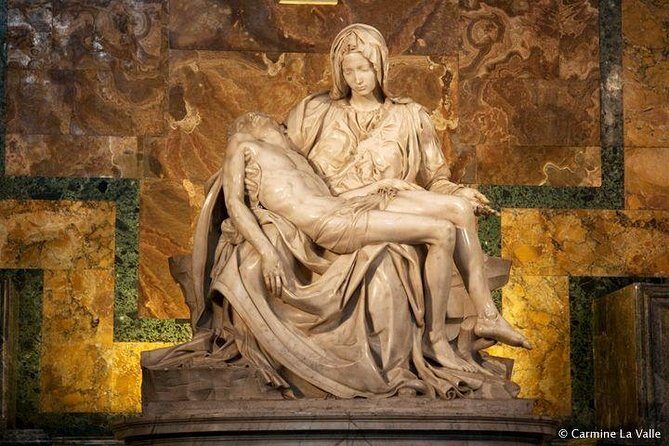
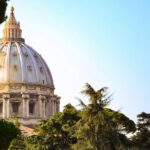
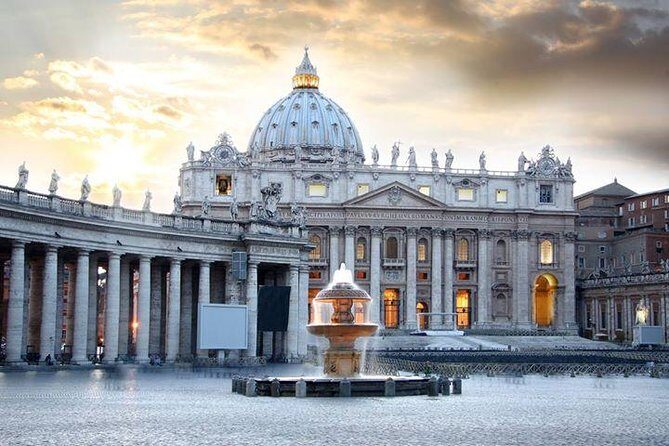
St. Peter’s Basilica is the final stop and the one with the most time—about 1 hour. That extra hour matters because this church is on a different level of architectural ambition. You’re in Vatican City, an independent microstate enclosed within Rome, which is itself a fascinating political twist around a religious site.
In terms of planning, the current St. Peter’s is an evolution of an earlier church. The modern basilica was planned in the 15th century by Pope Nicholas V and Pope Julius II to replace an older St. Peter’s built in the 4th century by Constantine the Great. Construction of the present basilica began on 18 April 1506 and finished on 18 November 1626. That timeline alone is a reminder: you’re not standing in one “project.” You’re standing at the result of generations of effort.
If you take the tour’s context seriously, St. Peter’s becomes easier to read. You’re not only admiring beauty. You’re tracking the moment when Rome decided to rebuild its most important church on a grand High Renaissance scale.
How to use your 1 hour well
Try to do two things quickly:
- Spend the first part getting your bearings inside the basilica
- Use the second part to focus on the major architectural and artistic cues tied to the High Renaissance feel
Reality check
Even with an hour, you won’t cover everything. But if your goal is the key experience—scale, ambition, and sacred gravity—you’ll likely leave satisfied rather than frustrated.
The driver-guide experience: what you should expect
The tour is private and guided, and you can choose a morning or afternoon departure. The driver-guide delivers commentary as you move, so you get short context bursts rather than one long lecture before you’re tired.
One detail I really like is the balance between guidance and freedom. In the best version of this tour style, you get enough information to understand what you’re seeing, but you’re still given time to explore on your own inside each basilica. If you get a guide who works this way—like Beatrice was praised for being professional, courteous, and good at that balance—you’ll get the “learn just enough” effect that makes churches click.
Also, the tour may be operated by a multi-lingual guide. That’s helpful if your group has mixed language comfort. You’ll still get the same core structure and stops.
Booking value: when this private tour makes the most sense
This is a great pick if you:
- Want four major basilicas in one half-day without juggling public transport
- Prefer a private vehicle pickup/drop-off so your schedule feels easy
- Like commentary that explains the big stories: martyrdom, Marian tradition, civic-to-church transformation, and Renaissance rebuild ambition
- Appreciate time limits because it keeps your day from turning into a tired blur
This may not be the best choice if you:
- Want to spend long, unhurried hours inside each church
- Hate scheduled stops and would rather wander freely with no fixed timing
Should you book this tour?
Book it if you want a clean, efficient route that covers Rome’s four papal basilicas with real context and comfortable logistics. The free-entry stops mean your cost is mostly about guide time and getting you between far-apart locations without headaches.
Don’t book it if you’re a slow traveler who wants hours at a time in one church. This tour is built for smart coverage, not deep solo study of every chapel.
If you’re aiming for the big hits—plus an explanation that makes those hits more meaningful—this private half-day format is a strong match.
FAQ
Is admission included for the basilicas?
Yes. Each basilica stop lists admission ticket as free, so you should not pay separate admission fees for entry on this tour.
How long is the tour?
It runs for about 4 hours (approx.), with time split across four stops: around 30 minutes at the first three and about 1 hour at St. Peter’s Basilica.
Does the tour include hotel pickup and drop-off?
Yes. Hotel pickup and drop-off are included, and you travel by private vehicle between locations.
Is this tour private?
Yes. It’s a private tour/activity, so only your group participates.
Is there a morning or afternoon option?
Yes. You can choose from morning or afternoon departures to fit your schedule.
Can I cancel for a full refund?
Yes. Free cancellation is available up to 24 hours in advance for a full refund. If you cancel less than 24 hours before the start time, the amount you paid is not refunded.