REVIEW · FOOD
Flavors of Rome Campo Marzio Street Food Tour and Sightseeing
Book on Viator →Operated by Bruno Tours · Bookable on Viator
Rome tastes better on a sidewalk tour. This 2.5-hour walk turns snacks into a path through Rome, mixing markets and landmarks into one smooth route. I like how it pairs street food with real neighborhood context right as you’re passing the sights.
My favorite part is the food lineup: creamy cheeses and salumi at a norcineria, then classic Roman supplì, plus a Roman-Jewish fried artichoke (carciofo alla giudia) and a slice of homemade pizza. The finale lands at the Pantheon area with artisanal gelato, which is a smart finish after all that walking.
One thing to plan around: the tour is not gluten-free, dairy-free, or vegan, and there’s a note about possible cross-contamination if you have nut or dry-fruit allergies. If that’s you, you’ll want to check options very carefully before booking.
In This Review
- Key Highlights You’ll Notice Fast
- How This Food-and-Sightseeing Combo Feels Like Rome, Not a Route
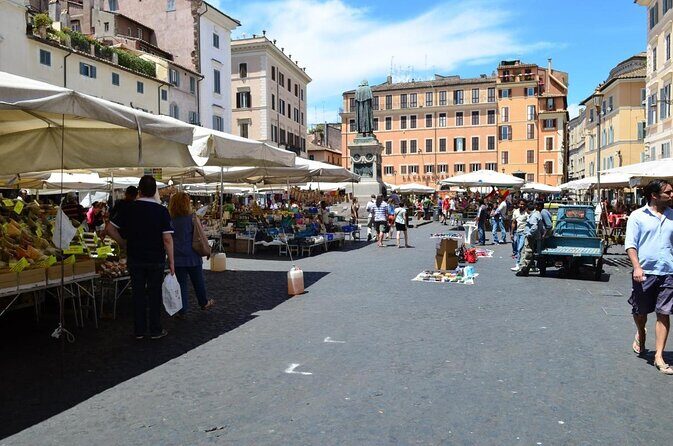
- Starting at Piazza Campo de’ Fiori: Market Energy and Norcineria Tastings
- The Jewish Ghetto Walk: History Cues and Carciofo alla Giudia
- Temples of Apollo Sosianus & Bellona: Ancient Architecture Meets Homemade Pizza
- Area Sacra di Largo Argentina: Caesar’s Story in Walking Form
- Pantheon Finale and Gelato: A Classic Landmark Finish
- Price and Value: What $54.07 Actually Buys You
- Small Group Logistics: Why Up to 15 People Changes Everything
- Dietary Needs and Allergy Notes You Should Take Seriously
- Who This Tour Fits Best
- Should You Book This Flavors of Rome Tour?
- FAQ
- How long is the Flavors of Rome Campo Marzio Street Food Tour and Sightseeing?
- What is the price per person?
- Is the tour in English?
- How many people are in a group?
- Where does the tour start and end?
- Is the tour offered rain or shine?
- Does the tour include drinks?
- Can vegetarians or people with dietary restrictions join?
- What is the cancellation policy?
Key Highlights You’ll Notice Fast
- Campo de’ Fiori to norcineria: you get the market atmosphere, then a proper taste of cured meats and cheeses.
- Jewish Ghetto stop with carciofo alla giudia: history cues like Portico of Ottavia and the fountain of turtles, then a memorable fried bite.
- Temples of Apollo Sosianus & Bellona: Roman food and ancient architecture share the same stretch of your walk.
- Largo Argentina and Caesar: you’ll walk among Republican Temples where Julius Caesar was assassinated.
- Pantheon + gelato finale: a classic landmark ending with a sweet, practical reward.
- Max 15 people: small-group pacing means you can ask questions and keep up without feeling rushed.
How This Food-and-Sightseeing Combo Feels Like Rome, Not a Route
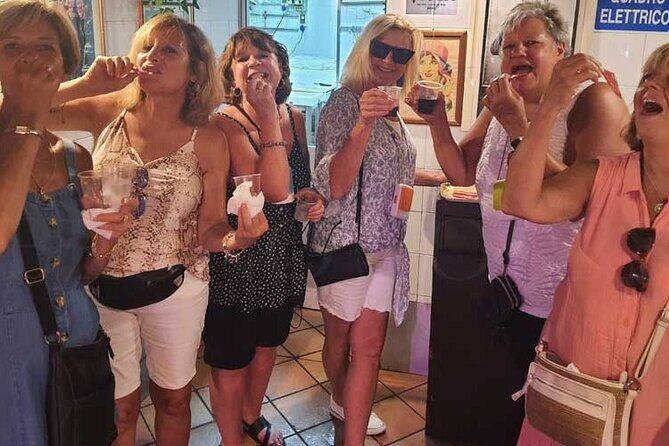
This tour works because it treats food as a way to read the city. You’re not stopping at random restaurants for bites. You’re walking between places that shaped Roman life, and the snacks are timed to help you pay attention to what you’re seeing.
I also like the pacing. With a total time around 2 hours 30 minutes, you get enough stops to feel you made progress, but it doesn’t drag like a half-day “checklist” tour. And since it’s a small group with a maximum of 15, you’re less likely to get lost in the crowd. You can actually hear the guide, ask about what you’re eating, and connect the flavors to the neighborhood.
Still, this is a walking tour in central Rome. It’s scheduled rain or shine, so bring a light layer and be ready for pavement. If you prefer sitting every few minutes, this may feel like too much mobility for one outing.
You can also read our reviews of more food & drink experiences in Rome


Starting at Piazza Campo de’ Fiori: Market Energy and Norcineria Tastings
You begin at Piazza Campo de’ Fiori, then head to one of Rome’s oldest open-air markets. This is the part where your tour stops being just food tasting and becomes “oh, this is how people shop and snack in Rome.”
You’ll browse the market area first, then move to a typical Roman norcineria, the kind of spot tied to cured meats and regional farm products. This is where you’ll taste Roman specialties like fine cheeses and salumi. Even if you think you know cured meats, this kind of stop tends to make you notice differences you’d miss in a pre-packaged version back home.
Then the tour pivots into classic street food: supplì. You’re eating while walking, so it feels natural, not staged. It’s also a smart introduction to Roman “street food logic”: simple, hot, and designed for quick enjoyment.
One practical note: since this is a market setting, it can get busy and a little loud. If you’re sensitive to noise, you’ll want to lean in during the guide’s quick pointers so you don’t miss the food context.
The Jewish Ghetto Walk: History Cues and Carciofo alla Giudia
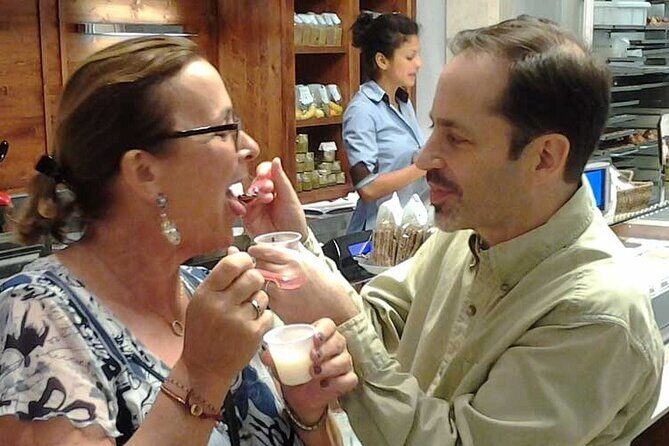
Next you head into Antico Quartiere Ebraico, the Jewish ghetto area. Your guide gives a quick historical overview while you walk through layers of Rome—locations tied to older structures and famous references.
You’ll hear about the theatre of Pompey, the Portico of Ottavia, and the fountain of turtles. That matters because those aren’t just random names tossed in. They help you understand why people traveled this part of town and why certain sites keep showing up in stories about the area.
Then comes the food payoff: carciofo alla giudia, a Roman-Jewish fried artichoke. Fried artichoke sounds simple, but it’s the kind of bite that makes you pay attention to texture—crispy exterior, tender interior, and a flavor that’s different from the artichokes most people expect.
This stop is also a good reality check on Rome: history isn’t behind glass. It’s on streets and in neighborhoods, and food is one of the ways the culture keeps moving.
If you’re vegetarian, you may have better options on some of the tastings than you’d expect, but only if you let the operator know in advance. The tour does not list full dietary accommodation for gluten-free or dairy-free needs, so don’t assume substitutions.
Temples of Apollo Sosianus & Bellona: Ancient Architecture Meets Homemade Pizza
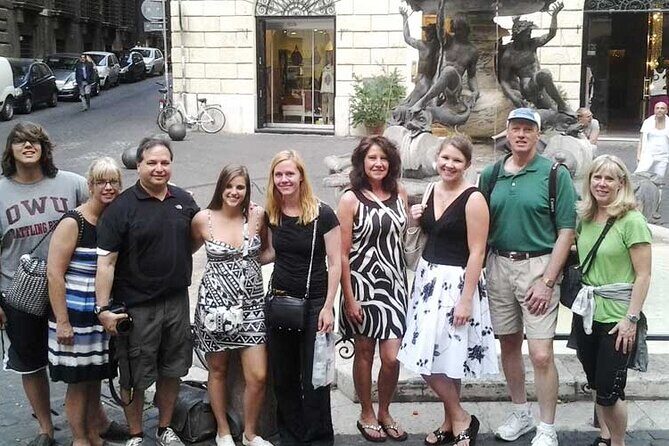
After the ghetto, you’ll walk toward the Temples of Apollo Sosiano & Bellona. These aren’t just “nice old stones.” They’re part of a Rome story where religion, public space, and everyday life all overlap. Seeing them while you’re on foot keeps the scale clear—you feel how the buildings sit in the city rather than standing alone in a museum.
Right after the temple area, the tour turns to what you’ll want after walking: something warm and satisfying. You’ll stop for a slice of home-made pizza.
This combination is one of the tour’s smartest choices. Pizza is familiar enough that you don’t have to “learn” it, but eating it here, timed with the architecture stop, helps you feel what Roman daily life might have looked like: quick meals, quick conversations, and landmarks that aren’t far from where people ate.
A small drawback to know: the guide’s historical explanations are short by design. This is a food tour first, sightseeing second. If you want deep archaeology lectures, you might want an extra targeted tour on top.
Area Sacra di Largo Argentina: Caesar’s Story in Walking Form
At Area Sacra di Largo Argentina, you’ll move through a sacred area tied to Republican Temples and the place where Julius Caesar was assassinated. The space has a charged feel. Even if you don’t know every detail, the guide’s framing helps you connect the moment to the broader Roman political story.
Walking this area with food still in your system is surprisingly effective. It makes history feel less like a distant chapter and more like something that sits under city life. Rome doesn’t treat the past like a separate theme park, and this stop shows that.
If you’re the kind of traveler who likes dates and names, you’ll probably enjoy the way the tour gives you anchors to remember. If you’re more “mood and atmosphere” than “facts,” you’ll still get something out of it because the guide keeps the explanations focused on what you’re seeing and why it matters for the city.
Then the route continues with the flow toward the Pantheon area. You’re getting a tour that threads through Rome in an efficient way, without feeling like you sprint from stop to stop.
You can also read our reviews of more tours and experiences in Rome



Pantheon Finale and Gelato: A Classic Landmark Finish
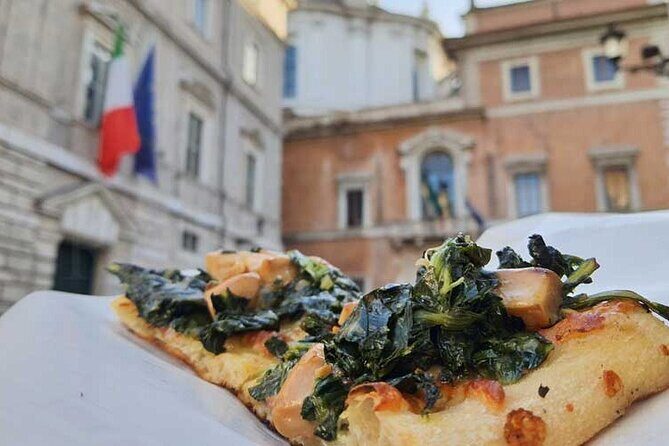
Your Roman street-food walk ends at the Pantheon, one of the most emblematic landmarks in the historic city center. Ending here makes sense. It’s a place you’ll likely want to revisit on your own, and finishing at a major sight helps your brain lock in directions for the rest of your day.
After the landmark, you finish with artisanal gelato. This is a practical end point. You’re done eating savory food for the day, your stomach has room for something sweet, and you’re near a central reference point for sightseeing.
One tip: if you’re choosing flavors later in the week, consider the lemon-and-basil style of gelato that gets praised often. It’s a flavor combo that fits Italy’s tendency toward bright, herbal notes, and it’s memorable after a salty, fried, cheesy route.
If you’re planning what to do next, keep it simple. You’ll likely want to linger around the Pantheon area or use it as a hub to explore nearby streets at your own pace.
Price and Value: What $54.07 Actually Buys You
The price is $54.07 per person, and that figure matters less than what’s included.
You get:
- a professional local guide
- a small-group format
- food tasting
Drinks are not included, so if you normally order water plus something else, plan for that cost. But for Rome, the value here is that the tastings are spread across multiple styles of food: cured meats and cheese, street snacks, a ghetto specialty, temple-area pizza, then gelato.
Also, the pacing keeps you moving through central areas that are expensive in time. You’re paying to turn a scattered day of wandering into a structured route where each stop has a reason. That’s why this works even if you’ve visited Rome before. It gives you a guided map of what to notice.
One more detail that signals popularity: it’s often booked around 42 days in advance on average. I’d treat it like a “plan early” outing, especially if you’re traveling in peak season.
Small Group Logistics: Why Up to 15 People Changes Everything
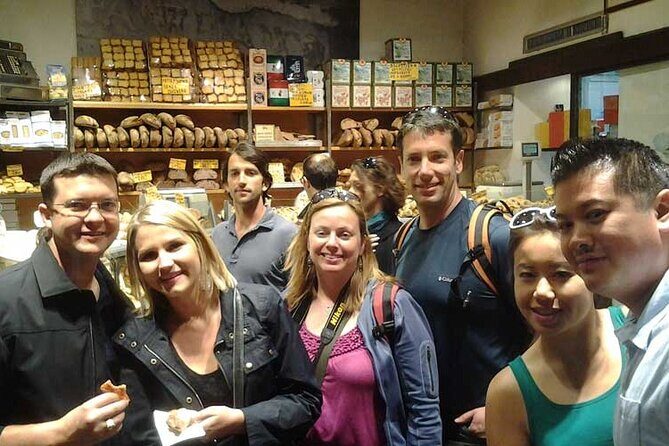
With a maximum of 15 travelers, you get a different vibe than big bus tours. This size makes it easier to:
- keep the group together on narrow sidewalks
- hear the guide’s explanations without straining
- ask quick questions while everyone still has the same food on the table
It also helps with timing. Every stop is roughly 30 minutes, and you move between them without long waits. That matters because Rome days can get stretched by lines and transit snags. Here, the schedule is designed to keep you fed and oriented.
You should also expect a mobile ticket and the tour offered in English. Confirmation comes at booking time, and the meeting spot is clearly set at Piazza Campo de’ Fiori. The route ends back in central Rome at Piazza di S. Eustachio, which is convenient if you’re continuing on foot.
One practical comfort note: you’re going rain or shine, so pack for weather. The tour doesn’t stop being useful because of a drizzle, but your enjoyment can drop if you’re unprepared.
Dietary Needs and Allergy Notes You Should Take Seriously
This tour has specific boundaries. It does not accommodate gluten-free, dairy-free, or vegan participants. Vegetarians can be accommodated, but only if you advise in advance.
There’s also a cross-contamination warning for nut or dry-fruit allergies. That means even if an item sounds safe, the environment may not be fully controlled. If you have a serious allergy, you’ll want to ask direct questions before booking, not after you arrive.
So how do you decide? Be honest about your risk level. If you’re only avoiding preferences and can eat the standard menu, you’ll probably enjoy it a lot. If you need strict avoidance (especially dairy or gluten), this may not be the right fit.
Who This Tour Fits Best
This is a great match if you:
- want Rome orientation without spending hours planning
- like learning through food, not just statues and plaques
- enjoy classic Roman flavors and one-on-one conversation with a guide
- want a route that includes market life, Jewish ghetto history, ancient temples, and the Pantheon in one outing
It’s also a strong first-day or second-day option in Rome, because finishing near the Pantheon gives you a fixed point for the rest of your plans.
If you hate walking, or you have strict dietary needs, you’ll likely be happier with a different type of tour.
Should You Book This Flavors of Rome Tour?
I think you should book it if you want a compact, high-reward way to taste Roman street food while also seeing real neighborhood landmarks. The mix of market staples, Roman classics like supplì, a signature Jewish ghetto dish, and an end at the Pantheon is a smart flow for most visitors.
Skip it (or at least research alternatives) if gluten, dairy, or vegan needs drive your whole meal plan. And if you have a nut or dry-fruit allergy, ask very direct questions first because the tour itself flags cross-contamination risk.
If your stomach can handle the standard menu, this is one of the better ways to get both flavor and context in just a few hours.
FAQ
How long is the Flavors of Rome Campo Marzio Street Food Tour and Sightseeing?
It runs about 2 hours 30 minutes.
What is the price per person?
The price is $54.07 per person.
Is the tour in English?
Yes, the tour is offered in English.
How many people are in a group?
This tour has a maximum of 15 travelers.
Where does the tour start and end?
It starts at Piazza Campo de’ Fiori and ends at Piazza di S. Eustachio.
Is the tour offered rain or shine?
Yes, it takes place rain or shine.
Does the tour include drinks?
No, drinks are not included.
Can vegetarians or people with dietary restrictions join?
Vegetarians can be accommodated if advised in advance. The tour does not accommodate gluten-free, dairy-free, or vegan participants, and it notes possible cross-contamination risk for nut or dry-fruit allergies.
What is the cancellation policy?
You can cancel for free up to 24 hours in advance for a full refund.