REVIEW · ROME
Tiber Island and Ghetto
Book on GetYourGuide →Operated by P.M.K. Leisure S.R.L · Bookable on GetYourGuide
Step into Rome’s in-between places.
This walk connects Tiber Island and the Roman Ghetto in a way that makes the city feel less like postcard Rome and more like real neighborhoods with layered change. I like that you get guided context while you’re actually moving through the streets, not just looking at monuments. I also like that the tour mixes landmark stops (bridge, church, synagogue) with daily-life details like the food.
Two things that stand out for me: you start on Tiber Island at Piazza S. Bartolomeo All’Isola and you finish with a clearer sense of how the Jewish quarter developed over centuries. You also get practical help hearing your guide with included headsets, which matters on busy days and in tighter streets. The only drawback to consider is that you’ll walk through narrow, cobblestone areas, so if you need extra room or cushioning, plan your pace accordingly.
In This Review
- Key Highlights at a Glance
- Getting Oriented: Meeting on Tiber Island’s Obelisk Church
- Tiber Island (Isola Tiberina): a short walk with centuries packed in
- Ponte Fabricio and the Basilica of Saint Bartholomeo
- Crossing into the Ghetto Ebraico: what changes when you shift neighborhoods
- Great Synagogue of Rome and the Jewish Museum
- Kosher cuisine stop: turning culture into something you can taste
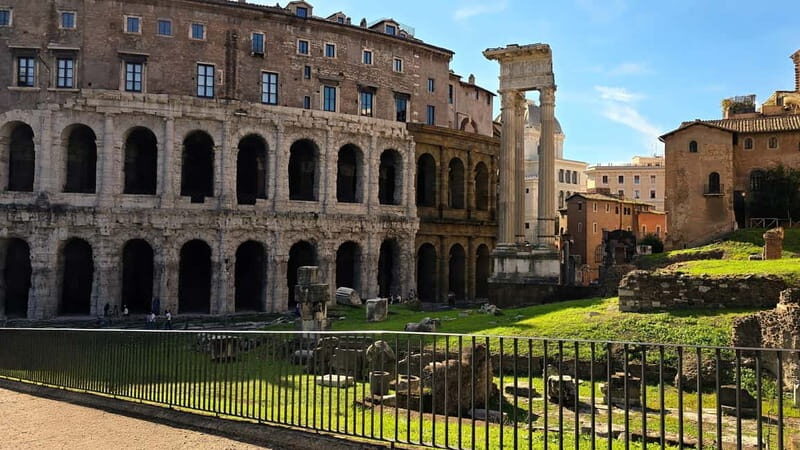
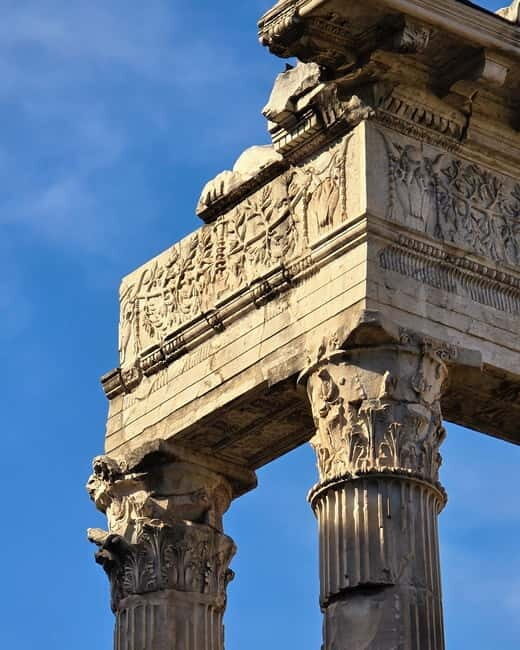
- Portico d’Ottavia: a Roman structure with a long afterlife
- Your Guide, Headsets, and a 3-hour walking rhythm
- Price and what you get for $67.97
- Who Should Book This Walking Tour
- Should You Book the Tiber Island and Ghetto Walking Tour?
- FAQ
- How long is the Tiber Island and Ghetto Walking Tour?
- What is the meeting point?
- Where does the tour end?
- Is the tour in English?
- What does the tour include?
- Is the tour wheelchair accessible?
- Do I need to bring headsets?
- How much does it cost per person?
- Is there free cancellation?
- Can I reserve and pay later?
Key Highlights at a Glance
- Tiber Island guided walk on the Isola Tiberina, tied to centuries of healing and care
- Roman Ghetto overview (Ghetto Ebraico) with context for how the community shaped the area
- Great Synagogue of Rome and Jewish Museum visits that explain the story in real artifacts and rooms
- Kosher cuisine stop for a real taste of local tradition
- Portico d’Ottavia sight stop that shows how Roman structures outlive the eras around them
Getting Oriented: Meeting on Tiber Island’s Obelisk Church
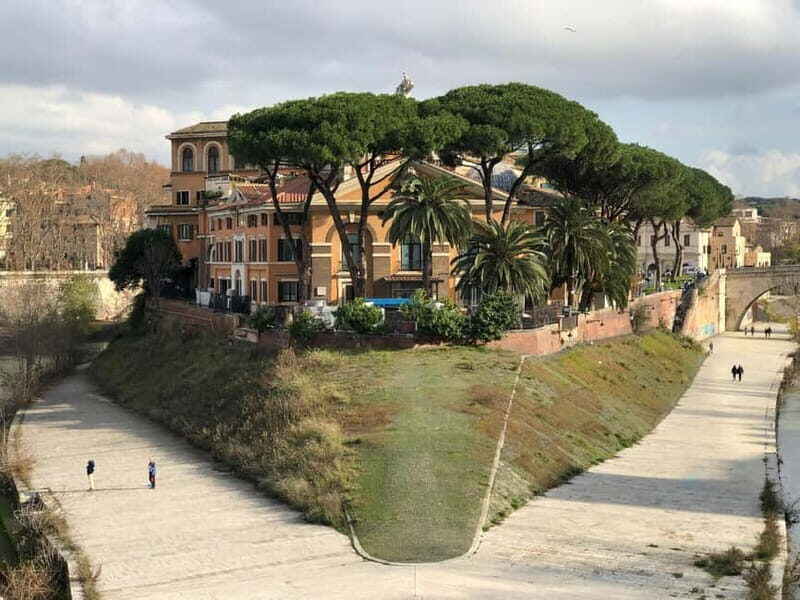
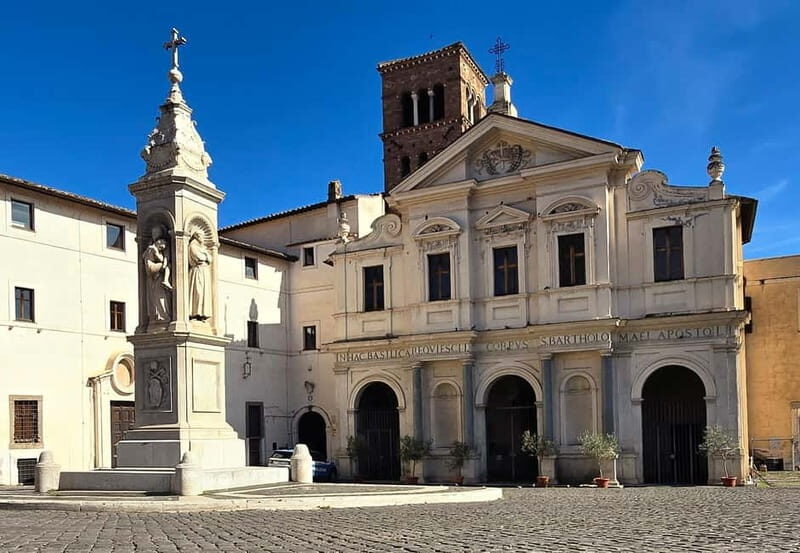
Your tour begins back on Tiber Island, not at some far-off meeting point. The starting location is Piazza S. Bartolomeo All’Isola, 22, and the guide meets you in front of the church where an obelisk is located. Look for the guide holding a sign, and take a minute to get your bearings before you start walking.
This matters more than you’d think. Starting on the island means you’re immediately in the right setting for the day’s theme: how Rome keeps reusing the same geography, generation after generation. And because the tour ends back at the meeting point, you don’t have to juggle the stress of transit afterward.
You can also read our reviews of more tours and experiences in Rome.

Tiber Island (Isola Tiberina): a short walk with centuries packed in
The Tiber Island portion is where the tour builds momentum. You’re walking through a small sanctuary in the center of the Tiber River, and the story you’ll hear is tied to Roman-era institutions connected to healing. That theme turns the usual sightseeing approach on its head. Instead of treating the island like a scenic pause, you start seeing it as a functional place people relied on.
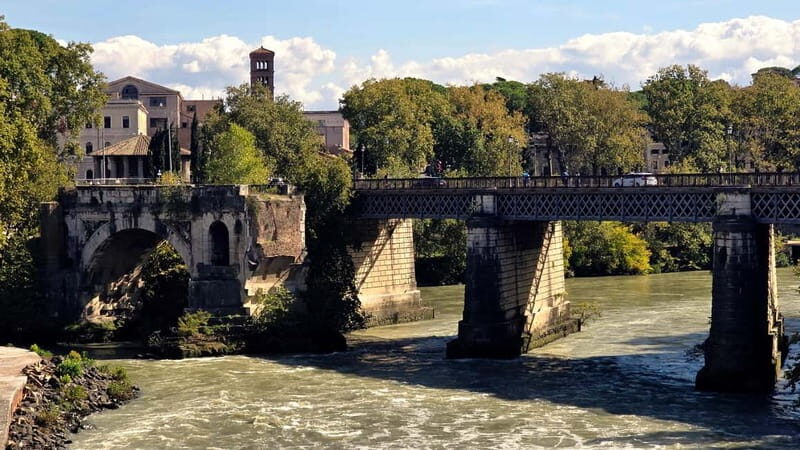
You’ll also get a guided look at the island’s standout architectural features. In particular, the tour includes the Basilica of Saint Bartholomew and the nearby Ponte Fabricio, also called the Bridge of the Four Heads. Even if you’ve seen photos of these before, the value here is the way your guide connects them to how the area operated and changed over time.
A practical tip: because this part is historical and compact, it’s ideal for slowing down. If you tend to rush in Rome, this is one of the days where you’ll benefit from taking a few extra minutes at each stop to let the explanations land.
Ponte Fabricio and the Basilica of Saint Bartholomeo
Two specific stops anchor this morning: Ponte Fabricio and the Basilica of Saint Bartholomew.
Ponte Fabricio is one of those Roman-looking bridges that feels instantly familiar once you spot it, and the tour gives you the extra context behind why it’s still remembered. The nickname Bridge of the Four Heads is the kind of detail that makes your brain file it away, and your guide’s explanation helps it stick.
Then there’s the Basilica of Saint Bartholomew. The tour’s approach makes the church more than a photo stop. You’ll learn how the religious architecture fits the island’s older role as a place associated with healing and care. When you understand that connection, the building reads differently in your mind: not just impressive, but purposeful.
Crossing into the Ghetto Ebraico: what changes when you shift neighborhoods
After Tiber Island, you’ll cross over into the Jewish Ghetto (Ghetto Ebraico). This is where the tour becomes less about individual buildings and more about how a community lived in a specific urban space.
Your guide will frame the area as one of the oldest Jewish communities in the world, and you’ll hear how that history affected daily life. The streets themselves help tell the story: the tour follows narrow cobblestone streets and alleys, so you experience the scale and tight geometry rather than just reading about it.
One reason I like this part of the tour is that it’s not only “history trivia.” The explanations connect the past to visible neighborhood patterns: where things likely clustered, how the quarter functioned, and why resilience mattered. It makes the ghetto feel like a real place where people built culture, not just a label on a map.
Great Synagogue of Rome and the Jewish Museum
The tour includes a visit to the Great Synagogue of Rome and the Jewish Museum. These stops are especially valuable if you want to move beyond broad overviews and see the story in a more tangible way.
The Great Synagogue is described as a breathtaking architectural masterpiece that reflects the community’s heritage and identity. That gives you a moment to look at the building with context in mind, rather than treating it as a separate destination.
Then the Jewish Museum gives the experience structure. You’ll explore artifacts, manuscripts, and artworks related to Jewish life in Rome across centuries. This is the part where your guide’s explanations really earn their keep. When someone connects what you’re seeing to what it means historically, the rooms stop feeling like a checklist and start feeling like a timeline you can walk through.

Kosher cuisine stop: turning culture into something you can taste
Rome can be overwhelming with food options, so I appreciate that this tour builds in a kosher bakery or restaurant stop for a taste of local Jewish tradition. This is not meant as a big “food tour” diversion. It’s more of a cultural pause inside the day’s theme.
You’ll sample dishes that have been passed down through generations, and the point isn’t just flavor. It’s continuity. When you eat something tied to a community’s history, you notice how the story works at street level, not only in the museum.
If you have dietary restrictions, this is the kind of stop where it helps to be practical. You know it’s kosher, which narrows the options, but you should still plan around your personal needs when you’re deciding what to order.
Portico d’Ottavia: a Roman structure with a long afterlife

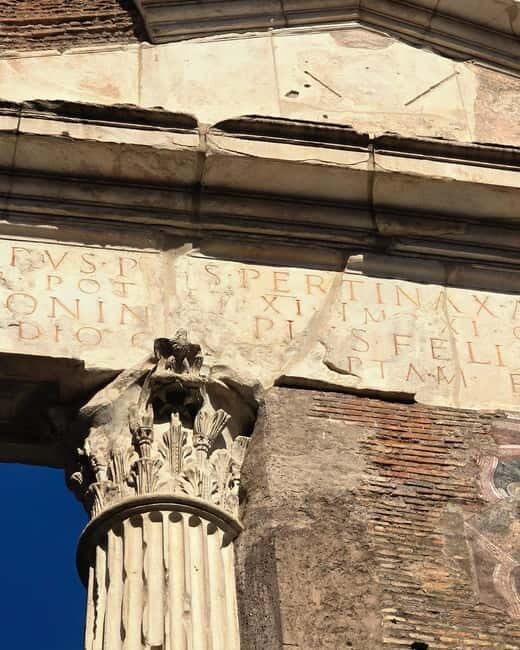
A key stop after the ghetto area is Portico d’Ottavia. This is an ancient Roman structure with a long memory, and the tour uses it to explain the neighborhood’s evolution. You’ll hear how the area changed over time—how a confined space eventually shifted into a place with cultural energy, art, and boutique shopping.
Even if you’re not a Roman-architecture specialist, you can appreciate the “layers” idea here. Roman stonework still creates the geometry where later life happens, and that’s one of the reasons Rome can feel so readable when you have a guide.
The tradeoff: because this part connects story and setting, it helps if you’re comfortable listening for meaning rather than looking for one specific photo-perfect view. If you’re the type who loves details, you’ll enjoy this stop more.
Your Guide, Headsets, and a 3-hour walking rhythm
The tour runs for about 3 hours, and it’s structured to keep you moving without feeling like you sprint between points. The pacing is built around three major zones: the island, Portico d’Ottavia, and the Jewish Ghetto.
One practical upgrade that I’m glad is included: headsets. In a city like Rome, that single detail can make the whole experience more enjoyable because you’re not straining to hear in tighter streets or around other groups.
The tour language is English, and there’s also an audio guide included in English. So even if you step one pace to the side for a photo, you’re less likely to miss the core explanation.
A small-note perspective: some groups can be small, and if you land in a group like the one that included a guide named Paula, expect a lot of clarity in how the history is explained and the pace stays friendly. The big idea is that a guide can turn “interesting” into “I get it.”
Price and what you get for $67.97
At $67.97 per person, this tour sits in a mid-range bracket for guided experiences in central Rome. The best value point isn’t a discount; it’s the mix. You get a live English guide, headsets, multiple major stops (island, synagogue, museum), and a kosher food stop.
Here’s why that matters for value. If you were trying to do this on your own, you’d likely spend more time figuring out routes and context—and you might still miss the connections between sites. With a guide, the stops feel linked: Tiber Island sets a theme, the Ghetto area adds human and cultural scale, and the synagogue/museum portion helps you understand what you’re looking at.
So if you’re the kind of traveler who wants Rome to make sense while you walk, the price starts to feel fair. If you only want a quick photo loop and don’t care about guided explanation, then it may feel like more structure than you need.
Who Should Book This Walking Tour
This tour fits best if you want a focused slice of Rome that combines architecture, community history, and lived culture.
I’d especially recommend it if:
- you like walking tours that explain what you’re seeing as you go
- you want more than just famous landmarks and prefer neighborhood-level storytelling
- you’re interested in the Jewish heritage of Rome, including a synagogue and museum visit
- you enjoy food stops that are tied to history, not just hunger
It may be less ideal if you prefer minimal walking or you want a very open-ended itinerary with lots of free time for wandering. Also, because the route includes narrow cobblestone streets and alleys, bring the right shoes and plan for slower going if you’re sensitive to uneven ground. The tour is marked wheelchair accessible, but it’s still a cobbled city, so it’s smart to think about comfort before you go.
Should You Book the Tiber Island and Ghetto Walking Tour?
Yes, I’d book it if you want a clear, guided route through some of Rome’s most meaningful areas, without needing to stitch together your own context. The payoff comes from how the tour connects geography and identity: you start on Tiber Island, move into the Ghetto Ebraico, see the Great Synagogue and the Jewish Museum, then round it out with Portico d’Ottavia and a kosher cuisine stop.
Book it if you like history told in a way that stays practical. Skip it if you only want quick sightseeing with no interest in explanation, since this experience is built around your guide’s storytelling and the cultural meaning behind each place.
FAQ
How long is the Tiber Island and Ghetto Walking Tour?
The duration is 3 hours.
What is the meeting point?
The meeting point is located on Tiber Island, in front of the church where the obelisk is located. The guide will be there with a sign.
Where does the tour end?
The activity ends back at the meeting point.
Is the tour in English?
Yes. The live tour guide and audio guide are both in English.
What does the tour include?
It includes a guided walking tour of Tiber Island, a glance/visit of the Jewish Ghetto, the Great Synagogue of Rome and the Jewish Museum, a stop for kosher cuisine, and Portico d’Ottavia. Headsets are included.
Is the tour wheelchair accessible?
Yes, it is listed as wheelchair accessible.
Do I need to bring headsets?
No. Headsets are included.
How much does it cost per person?
The price is $67.97 per person.
Is there free cancellation?
Free cancellation is available up to 24 hours in advance for a full refund.
Can I reserve and pay later?
Yes. You can reserve now and pay later.