REVIEW · CATACOMBS TOURS
Subterranean Rome: Catacombs and Appian Way Discovery
Book on Viator →Operated by Eternal Rome Experiences · Bookable on Viator
Rome looks different underground.
This small-group-feeling outing (you’ll travel with only your party) mixes catacombs and the Appian Way, so you get early-Christian burial rooms and then an outdoor walk on one of Rome’s most famous roads. It also saves you hassle: catacomb entry is included, and you’re in an air-conditioned vehicle with Wi-Fi for the ride between stops.
I love how the route is built around strong stop-to-stop contrasts: a preserved ancient gate at Porta San Sebastiano, then underground corridors with inscriptions and symbols, and finally the open air of Via Appia Antica. Two favorites for me are the guided descent into the burial tunnels and the chance to see major ruins like the Villa of Maxentius and the Domine Quo Vadis church.
One thing to consider: the tour is short (about 2.5 hours total), with several stops that run around 15 minutes each, so you won’t get hours of slow wandering. Also, double-check that you’ll have a real guide with commentary in English; a few past experiences have mentioned arriving with mostly driving instead of interpreting the sites.
In This Review
- Key Highlights You’ll Care About
- A Private, Comfort-First Route Into Ancient Rome
- Porta San Sebastiano: The Gate That Starts the Story
- San Callixtus/San Sebastiano Catacombs: Symbols, Niches, and What Photos Don’t Show
- Via Appia Antica (Appian Way): Walking the Queen of Roads
- Villa of Maxentius: Imperial Power Meets Entertainment Ruins
- Domine Quo Vadis: A Small Church With a Big Story
- Price and Value: What $223.49 Is Buying You
- Who Should Book This Tour (and Who Might Skip It)
- FAQ
- Is this tour private?
- What’s the duration?
- Is pickup included?
- Is the tour in English?
- Are the catacombs tickets included?
- Does the vehicle have air-conditioning and Wi-Fi?
- What extras are provided during the ride?
- What sites are included in the route?
- What’s the typical booking lead time?
- Can I cancel for a full refund?
Key Highlights You’ll Care About
- Catacombs entry is included, so you don’t spend your time hunting tickets.
- Air-conditioning and Wi-Fi on board make a big difference in Roman summer heat.
- Porta San Sebastiano gives you an instant jump into Rome’s defensive history.
- Via Appia Antica time is guided, with famous landmarks like the area around Cecilia Metella in the mix.
- Maxentius’s ruins and Circus track connect ancient entertainment to imperial power.
- Domine Quo Vadis is quick, atmospheric, and story-driven without taking over your day.
A Private, Comfort-First Route Into Ancient Rome
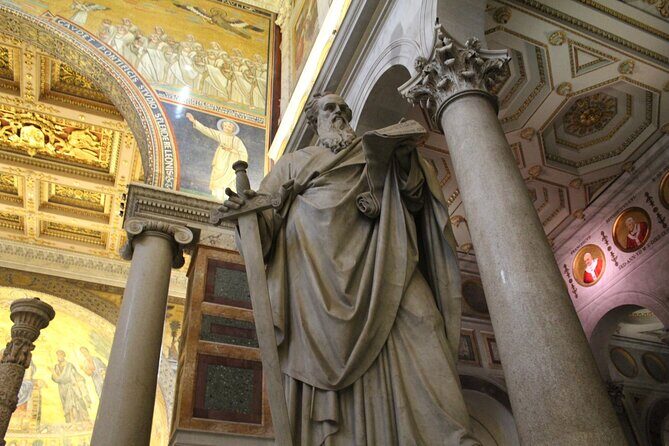
If you only have a few hours in Rome, this tour is built for momentum. You’ll start with an iconic city gate, step down into underground burial chambers, then walk a section of the Appian Way where the scenery changes from stone tunnels to countryside air.
The comfort details matter more than you might expect. The vehicle includes air-conditioning and Wi-Fi, plus water and candies—nice extras when the sun is doing its best impression of a Roman oven. And because it’s private, your guide can usually match the pace to your questions and interests rather than keeping everything on a rigid herd schedule.
That said, the plan is not a slow museum day. You’re visiting multiple sites, so think in terms of focused highlights rather than deep lingering. If you want a calm, hour-by-hour deep dive at one location, you might prefer a longer, single-site tour.
You can also read our reviews of more tours and experiences in Rome.



Porta San Sebastiano: The Gate That Starts the Story
Your first stop is Porta San Sebastiano, one of the best-preserved gates in Rome’s Aurelian Walls. This is a smart first move because a gate is more than a photo spot. It sets the theme for everything that follows: Roman engineering meant for movement, defense, and control.
The name points you toward nearby history as well—the gate is tied to the nearby Basilica of San Sebastiano. Even if you don’t memorize dates, you’ll get a sense of how the city’s walls shaped life around the roads leaving Rome.
What I like about starting here: it gives you context before the catacombs and before the Appian Way. You’ll understand this wasn’t just a scenic route outside town; it was a major artery in how Romans connected, supplied, and projected power.
Time note: expect a relatively short visit here (around 15 minutes). It’s enough to get the essentials and get your bearings before heading into the more dramatic stuff.
San Callixtus/San Sebastiano Catacombs: Symbols, Niches, and What Photos Don’t Show
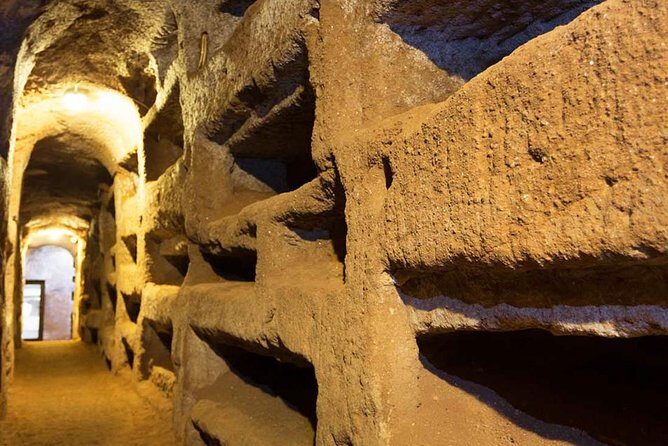
Next comes the tour’s headline: the catacombs along the Appian Way. You’ll descend into underground chambers connected to early Christian burial practices, often referred to here as the Catacombs of Saint Callixtus / San Sebastiano catacombs. The big idea is clear: these burial spaces date back to the 2nd century AD and were used when above-ground cemeteries weren’t allowed.
This is not a dark-rides vibe. The experience you’ll be talking about afterward is the details: underground tunnels across several levels, with thousands of niches carved for burial. The niches aren’t just empty holes—they’re paired with inscriptions, symbols, and early Christian art.
A few specific motifs you’ll see described and explained include:
- Ichthys (the fish symbol)
- anchor symbolism
- Chi-Rho (the Christ symbol used by early Christians)
If you’re the kind of person who’s seen catacomb photos online, you may be surprised by what’s emphasized on the ground. The tour description focuses on the niches and iconography, not dramatic skeletal displays. So if your mental picture comes from movie-like images, reset it early: you’re there for the architecture of burial and the messaging carved into stone.
Time note: this stop runs about 45 minutes. That’s a good amount of time. Long enough to feel the space and take in the symbolism, short enough that you won’t get stuck when your mind wants to race ahead to the next stop.
Via Appia Antica (Appian Way): Walking the Queen of Roads

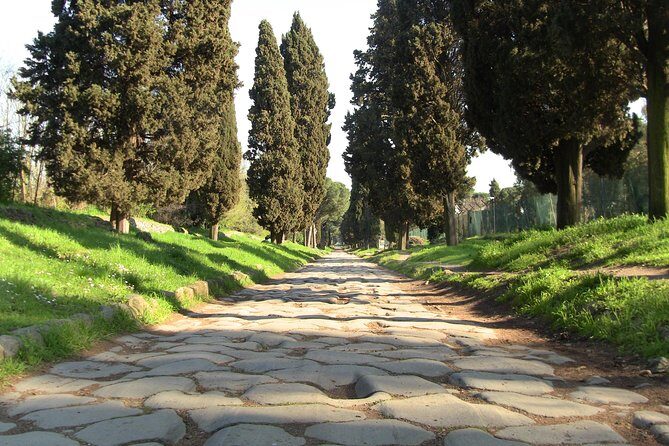
After the underground world, you step back into Rome’s air with the Appian Way (Via Appia Antica)—often called the Queen of Roads. This road matters because it isn’t just old. It was built to move people and goods and to extend Rome’s reach. The road is credited to Appius Claudius Caecus, built in 312 BC, and it served military and economic expansion.
What makes this stretch special is the texture under your feet and the change in atmosphere. You’ll walk on cobblestones worn by centuries of travel, and you’re surrounded by the kind of countryside setting that feels like it belongs to a different era. In other words: it’s one of the few places in Rome where you can feel the city spilling out into the landscape.
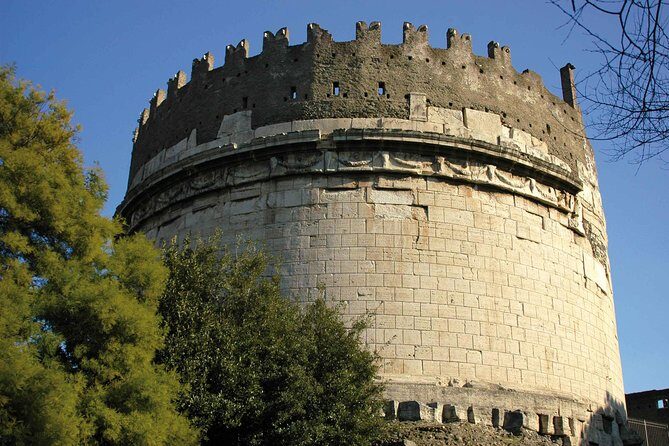
The tour also includes a connection to famous drama—references to historical events linked to the Appian Way, including the path tied to Spartacus’s followers in 71 BC. And there’s a focus on tombs and mausoleums, including the area around the Tomb of Cecilia Metella.
My advice: wear comfortable shoes. Even with short walking time, cobblestones can be a foot tax. If you’re prone to blisters, bring your preferred blister solution. Also, keep water in mind. You’re leaving a cool vehicle and walking in open sun.
Time note: this is another short stop (about 15 minutes). If you want an extended Appian Way walk, you could treat this as your sampler and plan a longer follow-up later.
Villa of Maxentius: Imperial Power Meets Entertainment Ruins
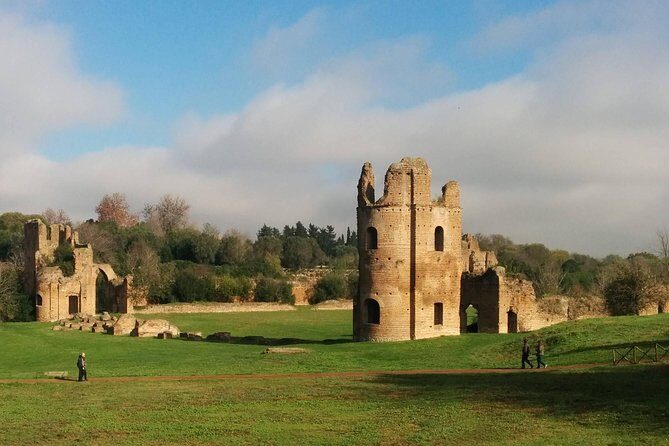
The tour continues with Villa di Massenzio, tied to Emperor Maxentius in the early 4th century AD. This part of the route is great for two reasons: it connects politics to physical space, and it shows how even leisure had a public face in ancient Rome.
The villa was built as a luxurious retreat, but it’s historically loaded. Maxentius ruled from 306–312 AD and had a rivalry with Constantine. That rivalry matters because it leads to the Battle of the Milvian Bridge (312 AD), which marked a turning point.
Then there’s the piece many people find most visually striking: the Circus of Maxentius. This ancient racing track could hold over 10,000 spectators, and its remnants are among the best-preserved examples of Roman circuses.
Even if you’re not a chariot-racing nerd (I’m not, usually), you’ll understand the point. This was mass entertainment backed by power. The size of the circus helps you picture how the empire used spectacle—so the ruins stop being random stones and become a window into how people lived and gathered.
Time note: plan for about 15 minutes. You’ll get the essentials and see the scale, but you won’t be touring every corner like a dedicated site visit.



Domine Quo Vadis: A Small Church With a Big Story
Next you’ll visit Chiesa del Domine Quo Vadis, a small church along the Appian Way connected to a Christian tradition about Saint Peter’s flight from Rome. The name translates to Lord, where are you going?
The attraction here is the story-linked detail: the church is said to preserve the footprints of Christ on stone, reflecting the moment of a vision. Whether you approach it as faith, folklore, or layered history, it’s a memorable stop because it’s compact and symbolic.
The church is described as being built in the 4th century, during Constantine’s reign, though later rebuilding happened. That matters because it explains why the site feels both ancient and preserved through time rather than being a single snapshot frozen in amber.
Time note: again, expect around 15 minutes. It’s ideal as a breathing point after Maxentius’s larger-scale ruins.
Price and Value: What $223.49 Is Buying You
At about $223.49 per person for roughly 2 hours 30 minutes, this tour isn’t trying to be the cheapest way to hit two or three Rome landmarks. It’s paying for a private format, plus included catacomb entry, plus comfort extras like Wi-Fi and air-conditioning.
Here’s the value math I’d use:
- Included catacomb admission: You avoid ticket-hunting and the risk of missing entry times.
- Private transportation and pickup: Hotel pickup is included, which can save time and reduce stress—especially if you don’t want to navigate Rome right before a curvy day of walking.
- Comfort features: In Roman heat, air-conditioning and on-board water and candies aren’t fluff. They keep the day from feeling like a trial.
- A guide (when it works right): The biggest difference between a good and disappointing experience often comes down to interpretation. Some guides have been praised for starting right away with clear historical context and then pacing according to questions.
One consideration: the experience is listed as a private tour, but a small minority of past experiences have described a scenario closer to driver transport than active guiding, and a mention that aqueduct-related elements weren’t shown. So if you care about commentary, ask ahead (or confirm at booking) that your tour includes an English-speaking guide who will actually walk you through the sites, not just drive you between stops.
Also note the “short stops” reality: you’re buying a curated highlight sweep, not a long, slow exploration. If that matches your travel style, this is a strong fit.
Who Should Book This Tour (and Who Might Skip It)

This tour fits you if:
- You want a focused first taste of early Christian Rome underground plus Appian Way ruins.
- You like having someone else handle timing and entry, especially for catacombs.
- You’re traveling in warm weather and want air-conditioned transport.
- You value a private setup where the day can bend a little around your pace.
You might skip it if:
- You’re hoping for a long Appian Way hike or a deep half-day at one site.
- You mostly want views and photos and don’t care about guided interpretation—then you might find a cheaper self-guided plan better.
- You’re very sensitive to disappointment caused by guide quality. In that case, confirm the English-guiding component before you book.
If you do book, I’d do one practical thing: decide which part you care most about (catacombs, Appian Way, or Maxentius’s ruins) and go in ready to ask your guide 2–3 good questions. It’s the fastest way to turn a highlight tour into something that sticks.
FAQ

Is this tour private?
Yes. It’s described as a private tour/activity, meaning only your group participates.
What’s the duration?
It runs for about 2 hours 30 minutes.
Is pickup included?
Yes, hotel pick up is offered.
Is the tour in English?
The tour is offered in English.
Are the catacombs tickets included?
Yes, entry to the catacombs is included.
Does the vehicle have air-conditioning and Wi-Fi?
Yes. The vehicle includes air-conditioning and free Wi-Fi.
What extras are provided during the ride?
Water and candies are included.
What sites are included in the route?
The stops include Porta San Sebastiano, the catacombs, Appian Way (Via Appia Antica), Villa di Massenzio, and Chiesa del Domine Quo Vadis.
What’s the typical booking lead time?
On average, this is booked about 55 days in advance.
Can I cancel for a full refund?
Free cancellation is available. You can cancel up to 24 hours in advance for a full refund.
—
If you want an efficient, comfort-friendly way to connect three big themes of Rome—defensive walls, early Christian burial, and the Appian Way’s imperial road life—this is a solid choice. Just make sure you’ll get real guiding in English, and go in with the right expectations for the short, highlight-focused timing.