REVIEW · NAPLES
The Skull with the Ears: the Cult of the Dead in the Church of S. Luciella
Book on Viator →Operated by Chiesa di Santa Luciella ai Librai · Bookable on Viator
Naples keeps secrets underground.
This quick stop at Chiesa Museo di Santa Luciella ai Librai takes you into the underground cemetery and the local belief around the skull with ears, a relic tied to prayers, favors, and miracles. Even though the place is small, the story feels oddly personal, like you’re stepping into a tradition that still matters to some Neapolitans.
I especially like two things. First: the short, focused format. Second: the visible restoration work, with ongoing conservation tied to jobs for young people after decades of neglect. It’s history you can see happening, not history sealed behind glass.
One thing to consider: while the tour is offered in English, the experience may run mostly in Italian depending on the group. If you’re relying on English the whole time, go in with flexible expectations.
In This Review
- Key highlights you’ll actually remember
- Why Santa Luciella is worth your time in Naples
- Entering the Chiesa Museo: small church, big atmosphere
- The skull with ears: the belief system behind the relic
- Underground cemetery tour: what you’ll see and why it matters
- Restoration you can notice: reopening after 30 years
- Timing in real Naples: how to fit 15 minutes into your day
- English vs Italian: plan for the group, not just the listing
- Price and value: what $9.67 buys you
- Should you book The Skull with the Ears at Santa Luciella?
- FAQ
- FAQ
- How long is the Skull with the Ears experience?
- Where does the tour take place?
- What is the price per person?
- Is the admission ticket included?
- What language is the tour offered in?
- When do tours run?
- Do I get a mobile ticket?
- When will I get confirmation?
- What’s the cancellation policy?
- Is the experience easy to reach and suitable for most people?
Key highlights you’ll actually remember
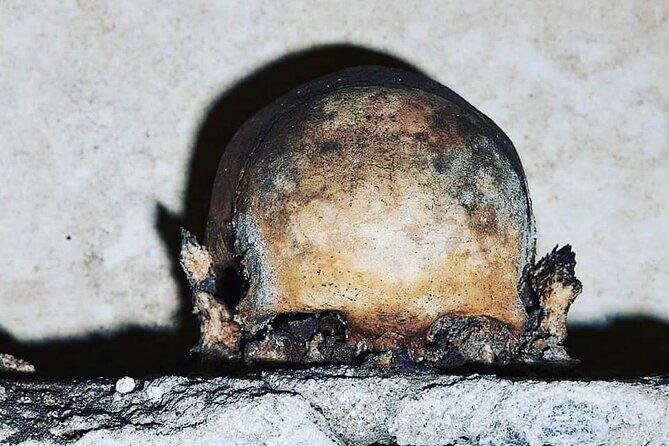
- Skull with ears lore: why ears were seen as helping the soul communicate and intercede
- Underground cemetery visit: you’re not just looking at a church interior
- Restoration in progress: conservation work includes revealing frescos under preserved plaster in the undercroft
- Youth-focused conservation effort: the site has been reopened after 30 years, with help from a nonprofit association
- Easy add-on in Naples: close enough to other sights in the Decumano area for a smooth walking plan
Why Santa Luciella is worth your time in Naples
You can spend days in Naples chasing the big, famous names. Or you can take 15 minutes to see something stranger and more intimate. Santa Luciella is not trying to be a grand show. It’s a working doorway into a local way of coping with death, devotion, and hope.
The setting helps. The church is tied to an underground cemetery, so the mood isn’t just “view a chapel.” It’s “walk into a place where people once came with prayers.” And then there’s the star object: the skull with ears—a relic that Neapolitans (at least those who followed the tradition) treated as a special intermediary.
If you like your Naples experiences off the main circuit, this one hits the sweet spot: short, meaningful, and close to other things you’ll likely want to see anyway.
You can also read our reviews of more tours and experiences in Naples.


Entering the Chiesa Museo: small church, big atmosphere
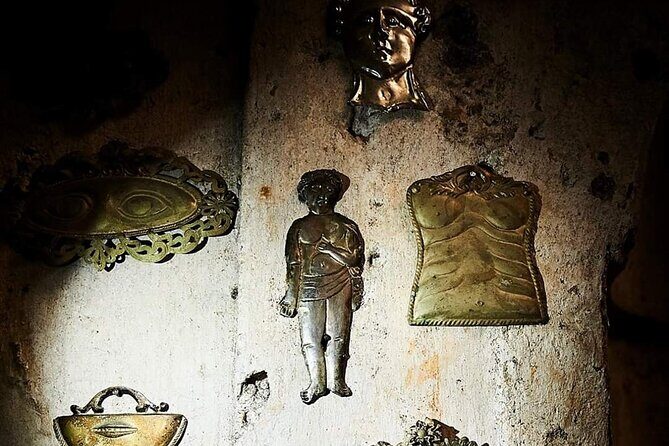
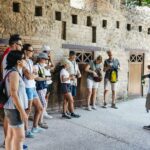
The visit starts at the Chiesa Museo di Santa Luciella ai Librai. From the outside, you might think, okay, this is a church. From the inside, you get the sense that the building was never meant to be only a sightseeing stop.
The charm here is contrast. On one hand, it’s a church with a specific local identity. On the other hand, it opens into the underground cemetery, which shifts your expectations quickly. You go from normal religious space to something more raw and direct—where the physical remnants of the dead are part of the devotional landscape.
Keep your eyes open for signs that the site is still being carefully worked on. The conservation approach matters: instead of rushing to “finish,” the restoration is preserving existing surfaces while making new elements visible when appropriate. That makes the experience feel current, not staged.
The skull with ears: the belief system behind the relic
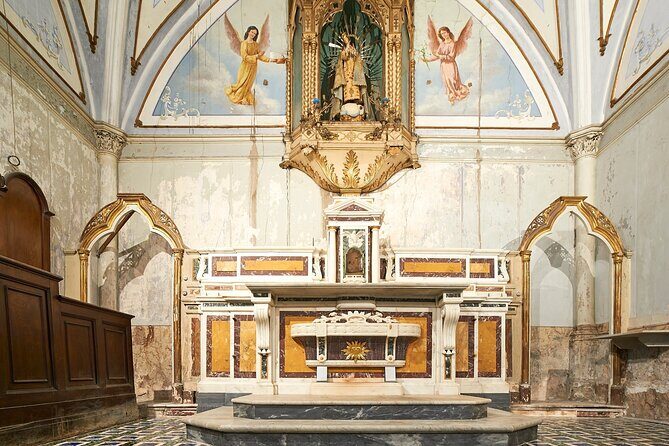
The tour centers on the skull with ears, kept among many skulls in the cemetery space. What makes it interesting isn’t only the odd detail. It’s what that detail was understood to do.
In this tradition, the skull’s ears were believed to make it easier for the soul to intercede. In other words, the relic wasn’t just symbolic. It was imagined as an active listener and mediator for prayers—someone (or something) that could connect the living with whatever they were asking for.
That can sound strange if you’re coming in with a purely secular mindset. But in a place like this, you’re not supposed to treat it like a museum exhibit with one universal explanation. You’re seeing how local belief turns a physical object into a spiritual tool.
And that’s the key value for you: you’re not just learning a fact. You’re understanding how the people around the relic made meaning from it.
Underground cemetery tour: what you’ll see and why it matters
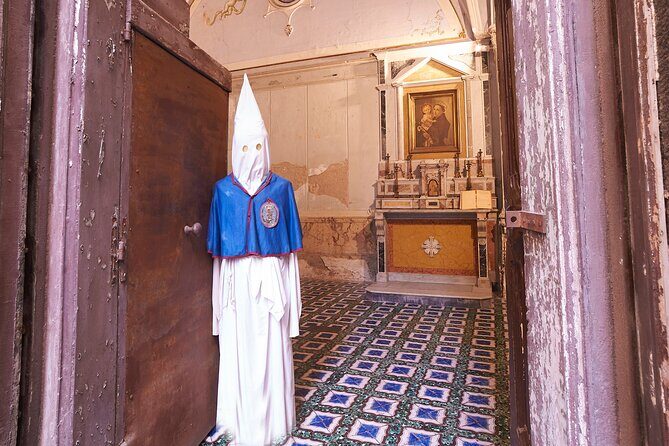
When the tour moves into the underground cemetery, it becomes more than a quick look. You’re guided through a space where skulls are kept together, and the story of devotion is tied to the location.
You should expect a guided experience focused on interpretation. The aim isn’t to overwhelm you with every detail. It’s to give you the main threads: why the skull with ears became a reference point, how prayers and favors fit into the tradition, and how the cemetery space relates to the church above.
Because it’s underground, give yourself a moment to adjust. Even if you’ve been walking around Naples all day, the shift into the cemetery can feel different—more enclosed, more concentrated. The guide’s pace helps. This isn’t a marathon. It’s a short, structured visit that leaves you with context instead of just images.
Practical note: take your time looking, but don’t expect a huge “collection room.” This is a specific site with a focused purpose.
Restoration you can notice: reopening after 30 years
One of the strongest reasons to go is that the church has been reopened after a long period of neglect—30 years, in fact. That reopening is connected to the Breathe Art Association, working with the idea of saving the monuments while creating jobs for young people.
During the visit, you’ll likely see evidence that conservation is ongoing. A real standout is the way restoration work can reveal details beneath preserved layers. The undercroft is a good example: conservation efforts have involved keeping plaster in place while revealing frescos that were underneath it.
For you, this is more than a feel-good story. It changes how you experience the place. Instead of thinking, this is old and untouchable, you start thinking, this is being cared for right now. That makes the whole visit feel more respectful—and it also helps you understand why guides are so invested. They’re explaining a living project, not just a finished product.


Timing in real Naples: how to fit 15 minutes into your day
This tour is short—about 15 minutes. That’s a blessing in Naples, where you can easily lose time in traffic, lines, or the simple chaos of streets and sidewalks.
It’s also easy to pair with nearby stops in the Decumanus area. People tend to combine this kind of site with other nearby religious sights and neighborhood streets. One extra tip: if your schedule allows, consider timing your visit around a Sunday walk, since there’s a nearby street known for local crafts and sales. Even if you don’t shop, it’s a nice way to add local flavor without stretching your day.
Because the experience runs in multiple time slots, check the day you’re in Naples and aim for one that doesn’t force a stressful sprint across town. When you’re only there for 15 minutes, you want your energy for the walk and the approach—not just for the stop itself.
English vs Italian: plan for the group, not just the listing
Here’s the practical truth you should know. The experience is offered in English, but a group can shift the actual language used during the tour. If the group is mostly Italian-speaking, the tour may be conducted in Italian.
The good news is that the guide may still take time afterward to answer questions with the English-speaking members, especially if you’re curious about the skull, the cemetery, or the restoration efforts.
So what should you do? If you’re comfortable with a basic Italian greeting and you’re okay using context clues, you’ll likely still enjoy the visit. If you need fluent English the entire time, treat this as a “go with flexibility” stop.
Price and value: what $9.67 buys you
At $9.67 per person, this is a low-cost way to experience something different from Naples’ headline attractions. The value comes from three things:
First, it’s short, so you’re not paying for time sitting around. Second, the guided interpretation is central, not optional. Third, the site’s restoration context adds weight to what you see—this isn’t just an object tour, it’s an ongoing conservation story.
You may also hear advice about buying tickets directly on site for a slightly different local price. Since that detail can vary, I’d treat it as a possible money-saver rather than a guarantee. The bigger picture is that the price is already modest, and you’re getting a real, guided visit rather than a quick self-guided glance.
Should you book The Skull with the Ears at Santa Luciella?
Book it if you like offbeat Naples stories, short guided stops, and places where you can see preservation work happening. This is also a smart choice when your day is full and you want one focused experience that doesn’t swallow half your schedule.
Skip it if you need a long, in-depth museum-style visit, or if you require English-only narration with no chance of a language shift. Also skip it if you dislike the subject matter—this is a cult-of-the-dead style devotional site, even if it’s presented respectfully and with explanation.
If your goal is to understand Naples as lived culture, not just a photo checklist, Santa Luciella is a small door that opens onto something surprisingly memorable.
FAQ
FAQ
How long is the Skull with the Ears experience?
It lasts about 15 minutes.
Where does the tour take place?
It takes place in Naples, Italy, at Chiesa Museo di Santa Luciella ai Librai.
What is the price per person?
The price is $9.67 per person.
Is the admission ticket included?
Yes. Admission is included.
What language is the tour offered in?
The tour is offered in English.
When do tours run?
The schedule listed is on Fridays, with time slots from 11:00 AM to 6:00 PM.
Do I get a mobile ticket?
Yes. The ticket is mobile.
When will I get confirmation?
Confirmation is received at the time of booking.
What’s the cancellation policy?
Free cancellation is available. You can cancel up to 24 hours in advance for a full refund.
Is the experience easy to reach and suitable for most people?
It is near public transportation, and most people can participate. Service animals are allowed.