REVIEW · ROME
Pizza Cooking Class in Rome – Piazza Navona
Book on GetYourGuide →Operated by IPM COETUS SRL · Bookable on GetYourGuide
A pizza class on one of Rome’s prettiest squares sounds like a win. You’ll start right at the entrance to Piazza Navona at Antica Trattoria Agonale, with a glass of prosecco, then get hands-on help from an English-speaking instructor to shape dough, pick toppings, and understand what makes a proper pie. I love that you’re not just watching. You’re actually making pizza and learning the process step by step.
I also like the food flow: bruschetta first, then your pizza, then a proper sit-down finish with drinks. One possible drawback to plan for: this experience isn’t suitable for people with gluten intolerance, so if you need gluten-free, you’ll want to look elsewhere.
In This Review
- What makes this class worth your time
- Key highlights at a glance
- Where you start: Antica Trattoria Agonale at the edge of Piazza Navona
- The 2-hour rhythm: prosecco, bruschetta, and oven timing
- 1) Arrival and a glass of prosecco
- 2) Bruschetta while the class gets underway
- 3) Hands-on pizza making with an English instructor
- 4) Choose toppings and get your pizza into the oven
- 5) Post-class seating at the osteria
- 6) Finish with limoncello or coffee
- What you actually learn about pizza (and how to use it later)
- Bruschetta first: why that starter makes sense
- Drinks and the osteria finish: more than a tasting
- Small group (10 max): the attention you’re paying for
- Cost and value: $51.02 for Rome pizza time
- Who should book this class
- Practical tips before you go
- Should you book Pizza Cooking Class in Rome (Piazza Navona)?
- FAQ
- How long is the pizza cooking class in Piazza Navona?
- Where do I meet for the class?
- Is the class taught in English?
- What’s included in the ticket price?
- Do you eat the pizza you make?
- Do you get limoncello or coffee at the end?
- How big is the group?
- Is it suitable for children?
- Is it suitable for people with gluten intolerance?
- What if I need to cancel?
What makes this class worth your time
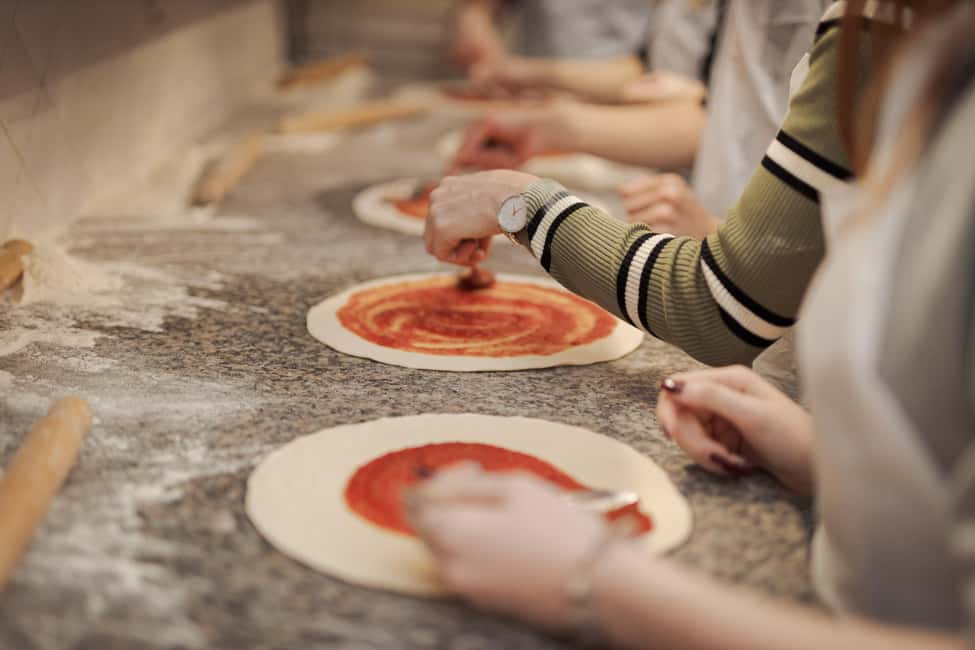
The charm here is location plus instruction. You’re in the middle of Rome—near enough to Piazza Navona that you feel the city around you—but the class still stays focused on craft, not crowds. Guides named in past sessions like Simone, Elisa, Patrizio, Sarah, and Chef Bea are described as funny, patient, and quick to explain the steps, which matters when dough is involved.
The group stays small (limited to 10), so you’re not waiting around while someone else’s pizza gets attention. Still, it’s a two-hour format, so come hungry and ready to work—there isn’t time to linger over questions all night.
Key highlights at a glance
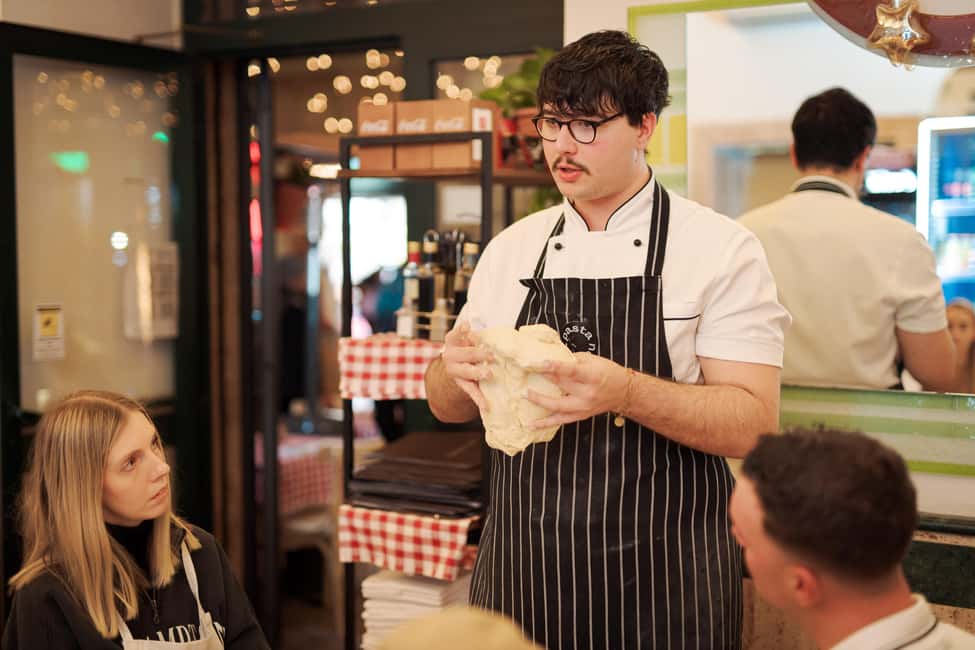
- Piazza Navona setting: start at Antica Trattoria Agonale right by the square
- Prosecco on arrival: a glass before you roll up your sleeves
- Real hands-on pizza prep: dough work plus topping choices
- Bruschetta before the main event: snack your way into pizza mode
- Finish with limoncello or coffee: the sweet or cozy ending
You can also read our reviews of more tours and experiences in Rome.



Where you start: Antica Trattoria Agonale at the edge of Piazza Navona
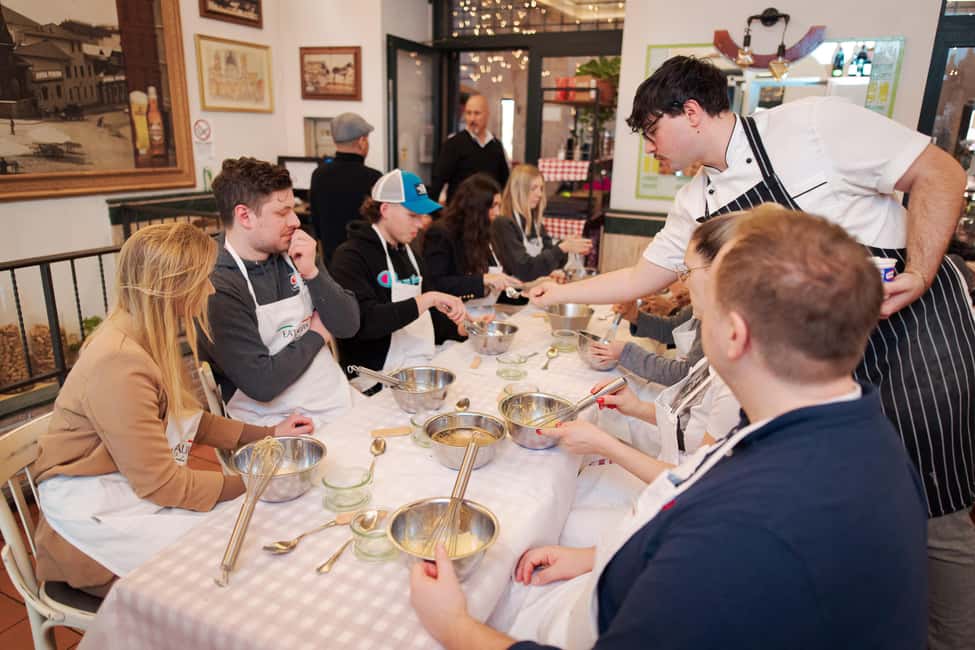
This class meets inside Antica Trattoria Agonale, on the corner of Corsia Agonale and Corso del Rinascimento. It’s a smart starting point because you’re already in the thick of Rome’s “walk and look” zone. Piazza Navona is a place where you can easily spend hours just wandering, and this experience lets you do that later—after you’ve had your hands in flour first.
Think of it as location with guardrails. You get the Roman setting, but the meal and lesson have a clear rhythm. That’s great if you like your Rome days organized, even when you’re surrounded by chaos outside the door.
Also, expect a genuine trattoria feel. Past classes have been led by instructors and chefs such as Elisa, Simone, Patrizio, Sarah, and Chef Bea. The common thread in feedback is that the tone stays welcoming and the teaching stays practical.
The 2-hour rhythm: prosecco, bruschetta, and oven timing
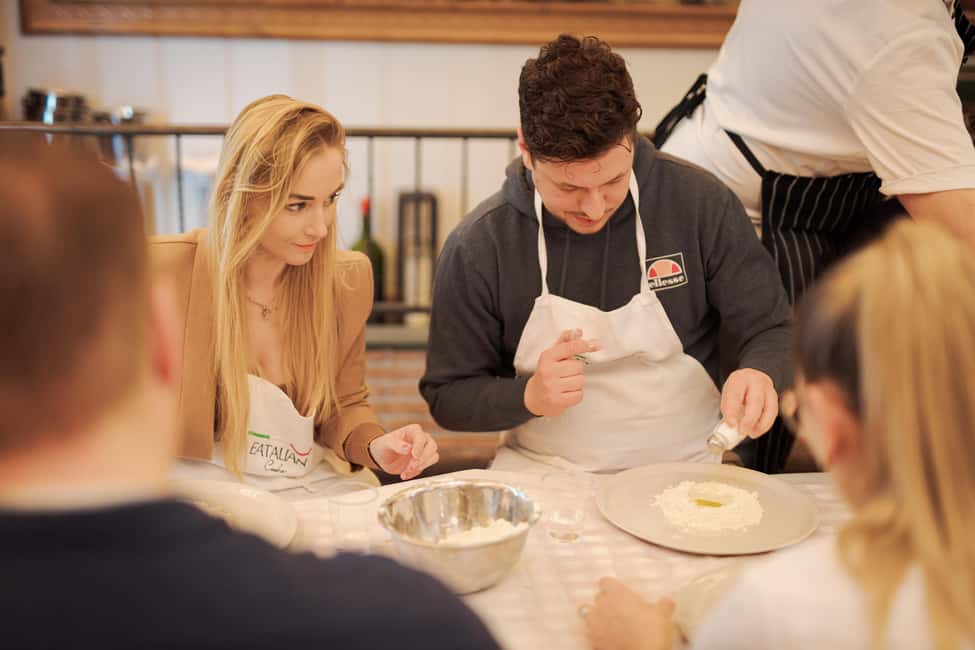
The class runs about two hours, with starting times that depend on availability. The schedule has a logical build that keeps energy high.
Here’s the flow you should expect:
1) Arrival and a glass of prosecco
You’ll be welcomed with a glass of prosecco. It’s not just a nice touch—it sets the pace. You’ll have a drink in your hand before you start, which makes the whole experience feel like a small evening out rather than a formal lesson.
2) Bruschetta while the class gets underway
Before your pizza hits the oven, you’ll enjoy bruschetta. This matters because it keeps you from feeling rushed when it’s time to start dough work. It also gives you a quick taste of Italian flavors that fit with what you’re about to cook.



3) Hands-on pizza making with an English instructor
Your instructor walks you through the steps. You’ll work with the pizza ingredients provided and learn how to make a pizza rather than just assemble one. This is where the small group size pays off.
Past sessions describe instructors as patient and interactive—Simone is repeatedly singled out as funny and attentive, and Elisa and Sarah are praised for clear explanations. That mix is ideal: you want both technique and a little humor when your pizza dough decides to be difficult.
4) Choose toppings and get your pizza into the oven
Topping choices are part of the fun. You’ll taste your own results, too, so you’ll want to pay attention during the lesson rather than relying on luck.
5) Post-class seating at the osteria
After cooking, you move into a seated part of the experience. Waiters will serve water and help you with drinks such as wine, beer, or soda. It’s a good transition: you stop “making” and start “eating,” which helps the whole thing feel like a meal, not a workshop.
6) Finish with limoncello or coffee
To close, you’ll sip limoncello or coffee. It’s a Rome-style finish that makes the class feel complete, especially after two hours of flour, heat, and concentration.
What you actually learn about pizza (and how to use it later)
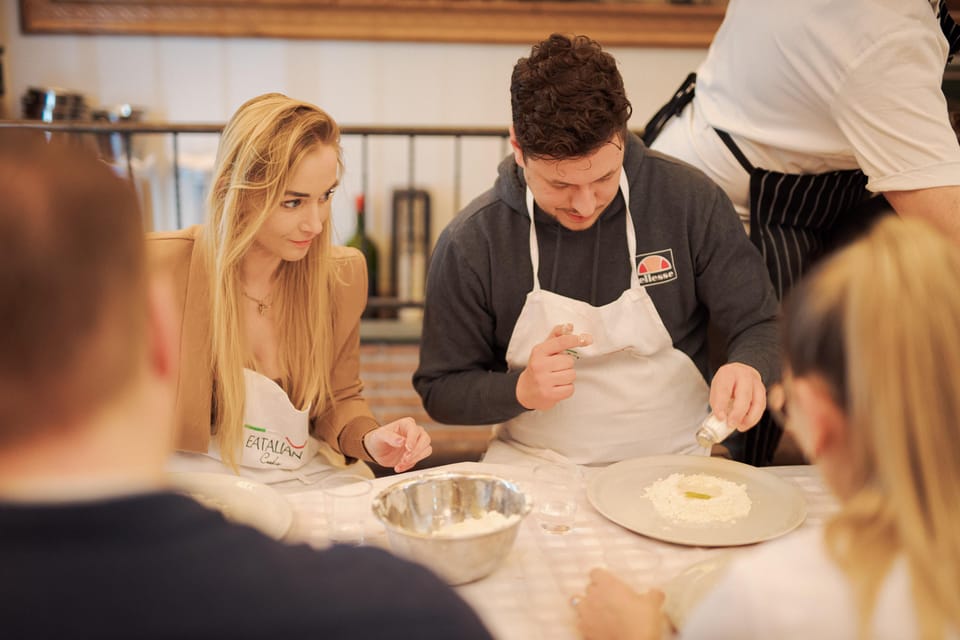
This isn’t a class where you leave with a vague idea of pizza. You’re taught the key steps behind making a good pie—plus the “why,” not just the “do this, then that.”
Even without getting technical on ingredients you can’t pronounce, you’ll learn practical skills like:
- How dough should behave as you work it
- How to think about toppings so the pizza stays balanced
- How to follow the process rather than improvising mid-way
That “process” mindset is what you’ll actually use at home. You don’t need to replicate a Roman oven or the exact tools. You need the method.
One helpful detail: reviews note that you can recreate the pizza at home, and some mention getting a recipe to take with you. That’s big value. A class that doesn’t translate into results later is just entertainment. Here, you’re leaving with something you can repeat.
Bruschetta first: why that starter makes sense
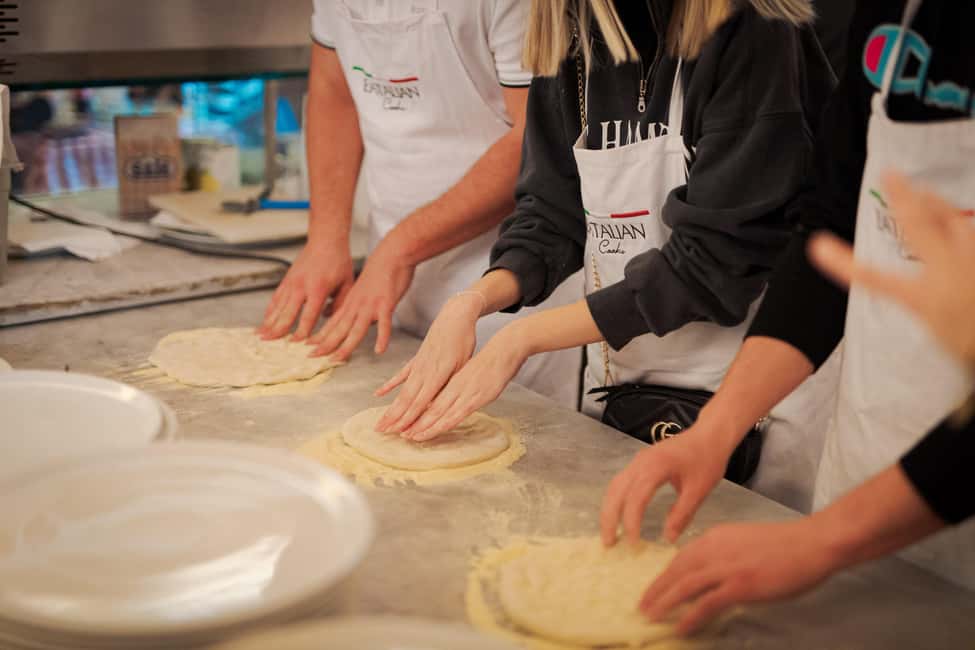
You get bruschetta before pizza, and I like that the order isn’t random. Bruschetta is simple food, so it doesn’t compete with the lesson. Instead, it acts like a warm-up.
It also helps you connect flavors in your head. When you’re about to make pizza, you’re tasting tomato-forward, garlicky, olive-oil energy first. That makes your toppings choices feel more intentional rather than purely decorative.
And because you’re eating during the session, you’re less likely to feel hungry, cranky, or distracted while you wait for the oven moment.
Drinks and the osteria finish: more than a tasting
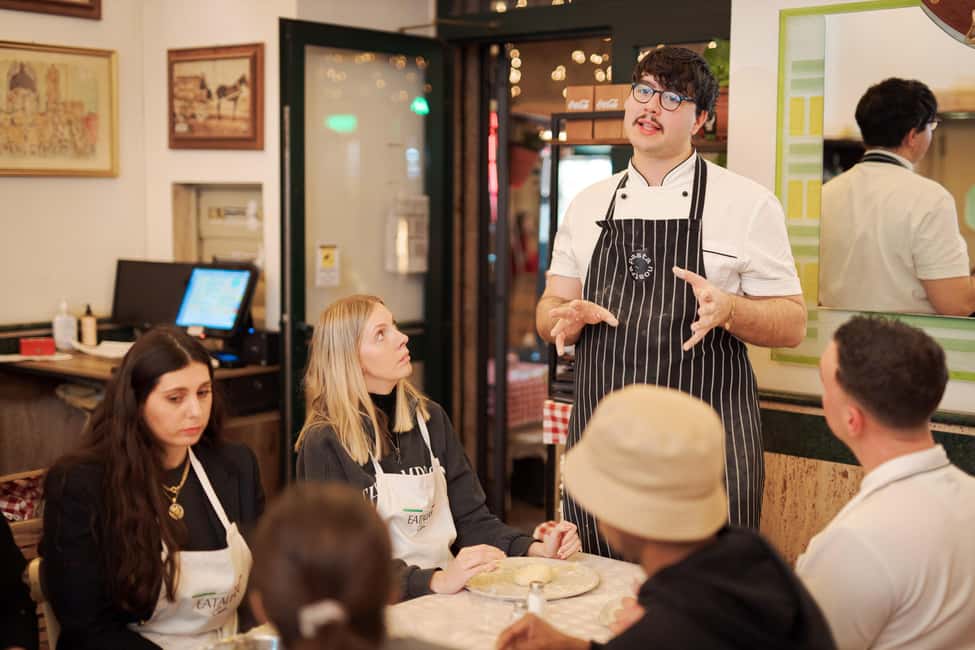
A big part of the value is that you don’t just cook and run. You settle into an osteria-style meal.
You’ll get:
- a glass of prosecco at the start
- a glass of wine, beer, or soda (plus water) during the meal
- limoncello or coffee to finish
That sequence turns the class into a proper experience in the middle of a sightseeing day. It’s also why this feels like good value at the stated price: you’re paying for ingredients and instruction, yes—but you’re also paying for a full food-and-drink arc, not a quick bite.
One practical note: if you’re sensitive to alcohol, remember you’ll have a prosecco glass up front and additional drink options later. You can always choose wine/beer/soda as offered, but plan your day accordingly.
Small group (10 max): the attention you’re paying for
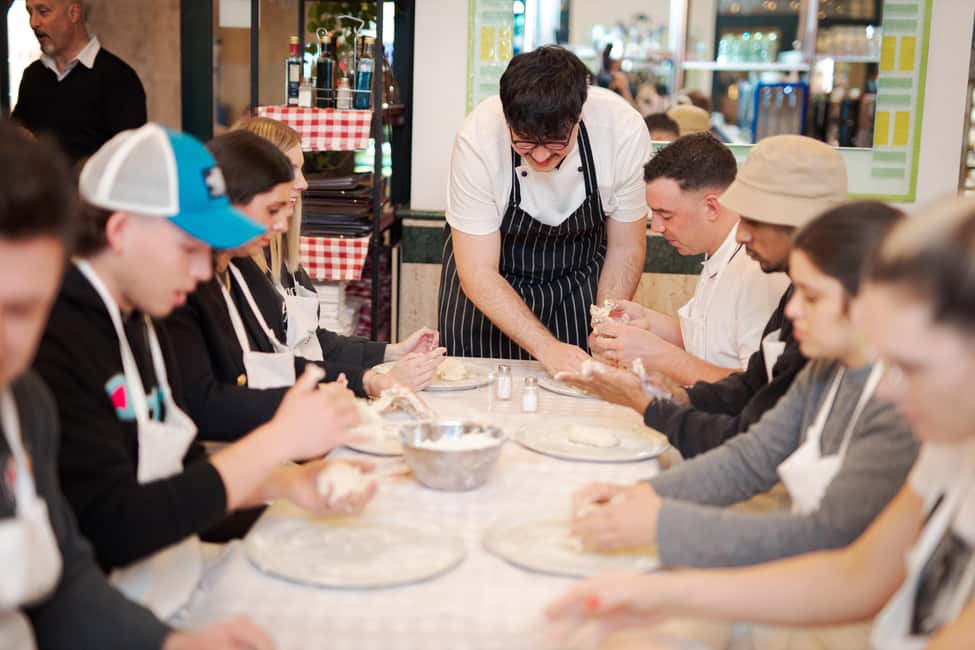
This is limited to 10 participants, and that size matters. In a class this hands-on, too many people means one of two things: either you cook very little or you spend a lot of time watching.
Here, the group stays small enough that instructors can correct technique and answer questions while you’re working. Reviews repeatedly mention patience and hands-on guidance—Simone’s name comes up a lot, and Elisa and Patrizio are praised for making the experience fun while still explaining the steps clearly.
If you like learning with your hands and you want real back-and-forth, this format is a sweet spot.
Cost and value: $51.02 for Rome pizza time
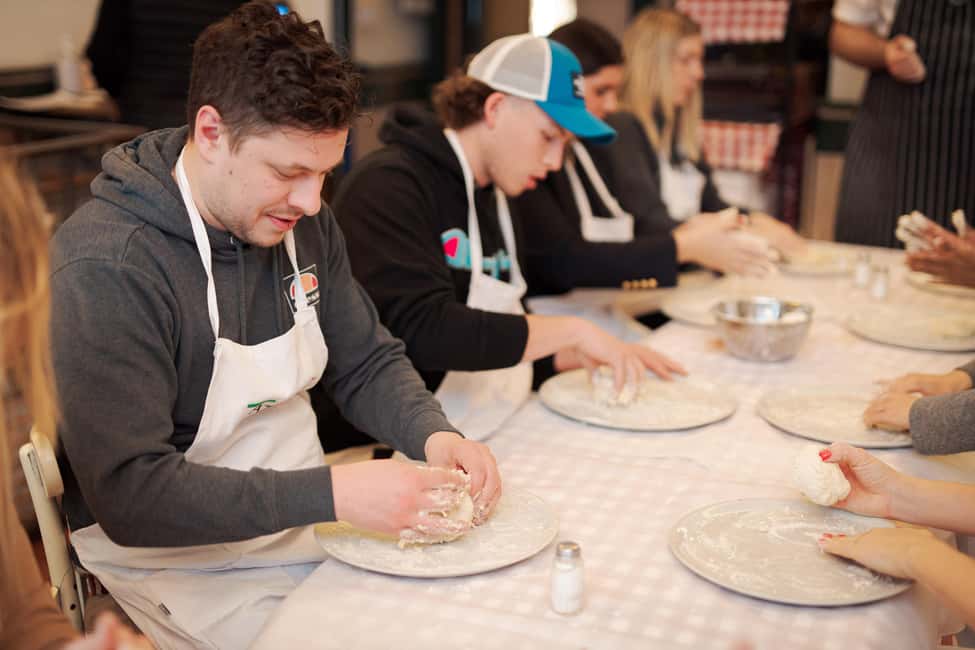
At $51.02 per person, this class sits in the category of “worth it when you want a hands-on food memory.” It’s not a bargain if you compare it to buying a slice on the street. But it is good value compared to experiences where you pay extra and still don’t do much.
Here’s what your money covers:
- instruction in English
- pizza ingredients
- bruschetta
- prosecco
- an included drink (wine/beer/soda)
- finishing drinks like limoncello or coffee
So you’re paying for a multi-part meal plus learning time. In Rome, food classes can be expensive, and this one’s pricing feels aligned with what you actually get: you cook, you eat, you drink, and you leave with the method (and possibly a recipe, depending on the session).
Who should book this class
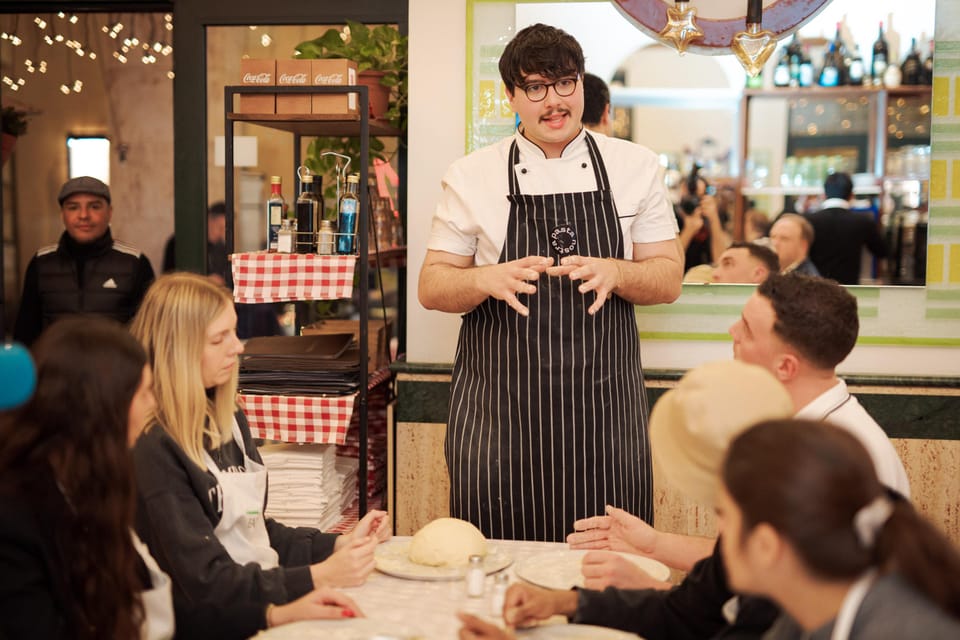
This is a great match if you want:
- a break from nonstop walking with a focused activity
- an English-taught, small-group class where you get to participate
- a Rome experience that includes food you’ll actually eat together
It may not be the best fit if you:
- need gluten-free (it’s not suitable for people with gluten intolerance)
- are traveling with kids under 7 years (not suitable)
If you’re planning a date in Rome, this also works. It’s active enough to feel fun, and the meal afterward keeps it relaxed.
Practical tips before you go
A few small things that can make your class smoother:
- Arrive a few minutes early so you’re not rushing into the welcome drink.
- Wear something you can move in. Dough work is less glamorous than people think.
- Save room for the sit-down finish. Pizza is good, but the timing means you’ll eat it after bruschetta.
- Ask questions during the step where you’re stuck. In small groups, instructors can spot problems fast.
- If you care about the final result, watch your own oven moment and follow the guidance you’re given.
Should you book Pizza Cooking Class in Rome (Piazza Navona)?
I think you should book this class if you want one memorable, hands-on food experience in central Rome—especially if you like the idea of combining Piazza Navona proximity with a real cooking lesson. The small group limit, the drinks, and the full sit-down finish make it feel like you’re paying for more than a novelty activity.
Skip it if gluten-free is a must, or if you’re hoping for a low-effort, mostly-watching tour. This is for people who enjoy doing.
FAQ
How long is the pizza cooking class in Piazza Navona?
The duration is about 2 hours.
Where do I meet for the class?
Meet inside Antica Trattoria Agonale at the corner of Corsia Agonale and Corso del Rinascimento.
Is the class taught in English?
Yes, the instructor teaches in English.
What’s included in the ticket price?
You get an instructor, pizza ingredients, bruschetta, a glass of prosecco, and a glass of wine, beer, or soda.
Do you eat the pizza you make?
Yes. After cooking, you’ll be seated at the osteria and then served your pizza to taste.
Do you get limoncello or coffee at the end?
Yes. The experience ends with limoncello or coffee.
How big is the group?
It’s a small group limited to 10 participants.
Is it suitable for children?
No, it’s not suitable for children under 7 years.
Is it suitable for people with gluten intolerance?
No, it is not suitable for people with gluten intolerance.
What if I need to cancel?
You can cancel up to 24 hours in advance for a full refund.