REVIEW · GLADIATOR SCHOOL
Roman Gladiator School: Learn How to Become a Gladiator
Book on Viator →Operated by Scuola Gladiatori Roma · Bookable on Viator
Roman gladiators, but make it hands-on. This class turns you from spectator to fighter in about two hours, starting with museum artifacts and ending in arena sword-and-shield action near the Appian Way. You also get a traditional costume setup, learn basic techniques, and finish with a certificate for everyone who takes part.
Two things I really like: first, the instructors are members of the Historic Group of Rome, so the session sticks to how gladiators were presented and trained in reenactment style, not just random choreography. Second, the teaching feels personal, even in a group, with small sizes (up to 15 travelers) and guides who bring real energy—people have called out instructors like Mirkos and Ivan for being especially engaging.
One drawback to plan for: it’s physical. Some kids may find the sparring style uncomfortable if they’re very young or sensitive about getting bumped. The minimum age is 6, but you’ll want to judge your child’s comfort with active play-fighting and light impacts.
In This Review
- Key things to know before you go
- Roman Gladiator School near the Colosseum: what you’re really buying
- Via Appia Antica meeting point: getting there without wasting your day
- The museum stop: weapons, helmets, and the Roman story you can actually see
- Gear-up time: costume, rudis, and learning the basics
- The arena training: warm-ups, sword-and-shield work, and the mock fights
- Optional tournament and the certificate moment: why the finale sticks
- Who this suits best (and who should think twice)
- Price and time: is $108.16 worth two hours?
- Small-group feel: why max 15 travelers helps
- Practical tips: comfort, bug spray, and what to expect physically
- Should you book Roman Gladiator School?
- FAQ
- What is the duration of the Roman Gladiator School class?
- Where does the experience take place?
- What’s included in the experience?
- Is a museum visit included?
- What language is the class offered in?
- What is the minimum age?
- How big is the class group?
Key things to know before you go
- Museum time is included: You can see gladiator weapons and artifacts before training starts
- Traditional gladiator gear: You wear items like a belt, tunic, leather gloves, and a training sword (rudis) for the session
- Small-group class: Up to 15 people means you’re not just watching from the back
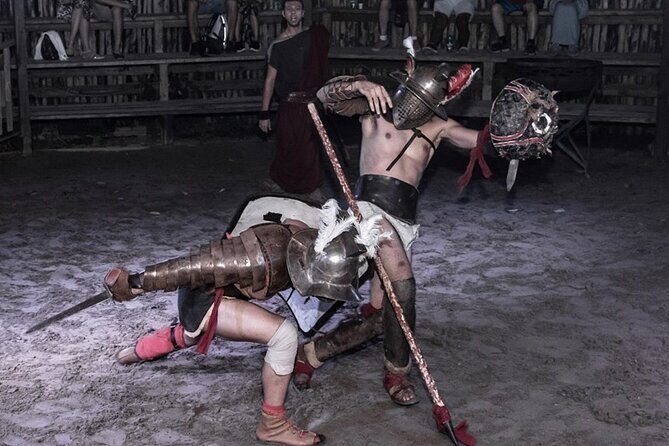
- Arena finale: You practice basics, then fight in the arena (and some sessions include an optional tournament)
- Bring bug spray: Mosquitoes can be an issue out on the Appian Way
- It’s a bit out of central Rome: You may walk, bus, or taxi—don’t assume it’s right by the Colosseum entrance
Roman Gladiator School near the Colosseum: what you’re really buying
This is not a passive history talk. You’re paying for a two-hour “try it” experience that mixes short museum storytelling with movement, technique, and a final mock battle. If you like Rome for its big sights but also want one day where you do something active, this fits.
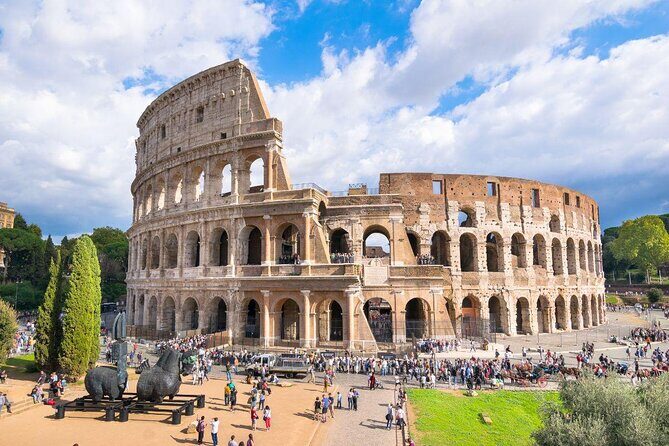
The school sits near the Colosseum area along the historic Appian Way, which matters because the setting feels like you’re stepping into another part of Roman space—not just moving from one ticket line to the next. Also, the experience includes entry to the Gladiator School of Rome Museum, so you get more than the training alone.
At $108.16 per person for about two hours, it’s not a “cheap add-on.” But it includes the full training setup—clothing and weapons hire for the lesson—plus museum admission. For many families and active travelers, that bundled value is exactly why it’s worth it.
You can also read our reviews of more tours and experiences in Rome.



Via Appia Antica meeting point: getting there without wasting your day

The meeting point is on Via Appia Antica, 18, 00179 Roma RM. Because it’s outside the densest central streets, you’ll want a plan before you leave your hotel.
Here’s the practical reality: you can walk if you’re up for a longer trek (it can be around 45 minutes from the Colosseum area), but it’s not the most relaxing option if you’re already doing a lot of Rome sightseeing. Buses are an option, and taxis can be convenient but not always cheap.
My advice is simple: give yourself buffer time. If you’re pairing this with a Colosseum visit, schedule it like you would an out-of-the-way museum—arrive early, breathe, and don’t rush the walk.
Also, dress for outdoors. Comfortable shoes and breathable clothes help a lot, since you’re going to move more than you expect.
The museum stop: weapons, helmets, and the Roman story you can actually see
Your session begins at the Gladiator School of Rome. The museum portion is included, and it’s built around real-world gladiator gear: weapons, helmets, and artifacts tied to Roman soldier and gladiator life.
This part matters because it sets context for what happens next. Instead of walking into the arena with no idea what you’re looking at, you learn the names and purpose of items first—then you handle them during training. Many people love this step as the calm start before the action, especially kids who enjoy being shown visuals and letting the story click.
If you’re the type who likes understanding the “why” before the “how,” you’ll probably appreciate the order here: museum first, then technique.
Gear-up time: costume, rudis, and learning the basics
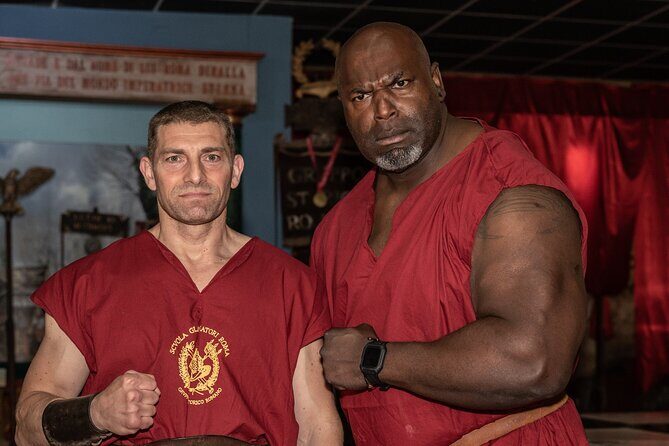
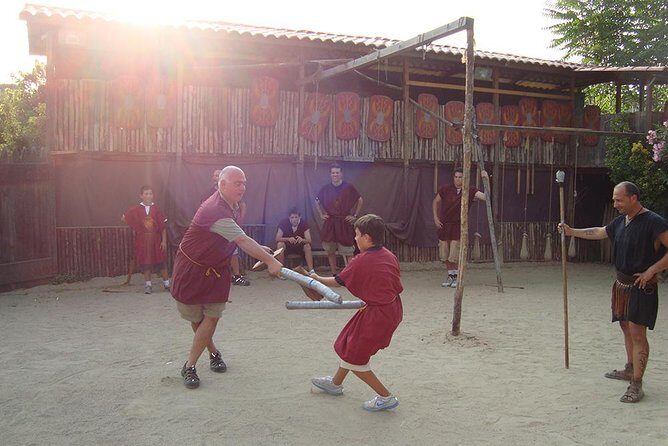
After the museum intro, you suit up in a traditional gladiator-style kit. The costume described for the experience includes a belt, tunic, leather gloves, and a training sword called a rudis. You also get gladiator clothing and weapons hire for the duration of the lesson, so you don’t need to bring anything aside from what you’re wearing.
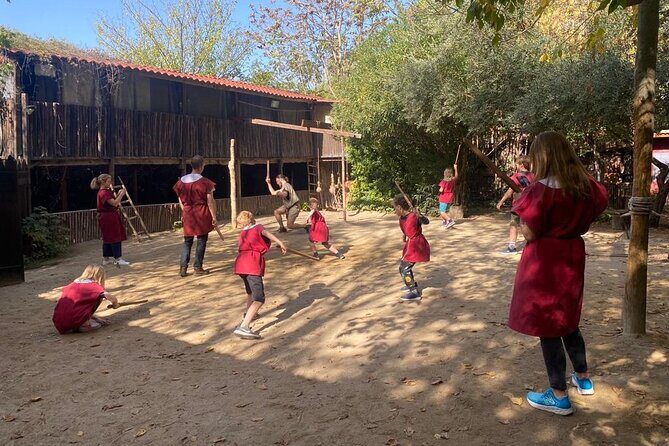
Then you learn the core skills. This is basic sword fighting technique training, with guidance from instructors who reenact ancient Roman life and gladiator fighting. The tone is friendly and encouraging, even if you’re starting from zero.
A key thing to know: the session is designed to be fun, not a hardcore combat camp. You’ll do warm-ups and drills, learn offense and defense basics, and then move toward the arena.
The arena training: warm-ups, sword-and-shield work, and the mock fights

Once training starts, expect a progression that keeps you moving. The typical flow includes warm-ups, agility-style practice, and instruction on offensive and defensive basics. Then you head to the arena for matches.
Some sessions add extra game-like elements and a tournament-style format with a prize for the victor (optional). Either way, the end of the lesson includes a certificate of accomplishment. That little paper moment is silly in the best way—especially for kids—and it makes the whole day feel like it had a finish line.
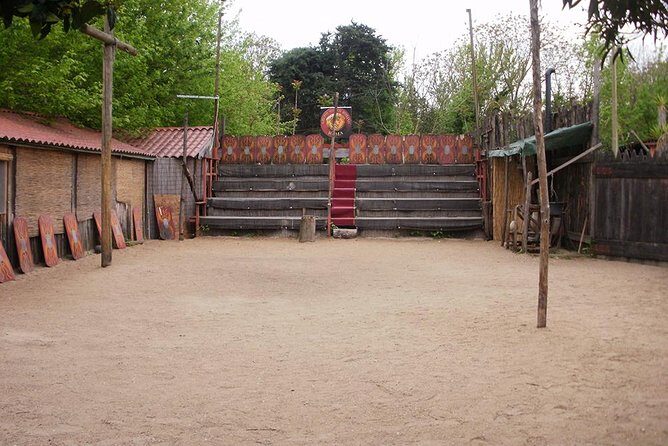
Friends and family can watch from a viewing platform. So if you’re traveling with kids, you’re not stuck doing everything in silence. You can cheer, point out what you’re learning, and make it feel like a mini event.



Optional tournament and the certificate moment: why the finale sticks
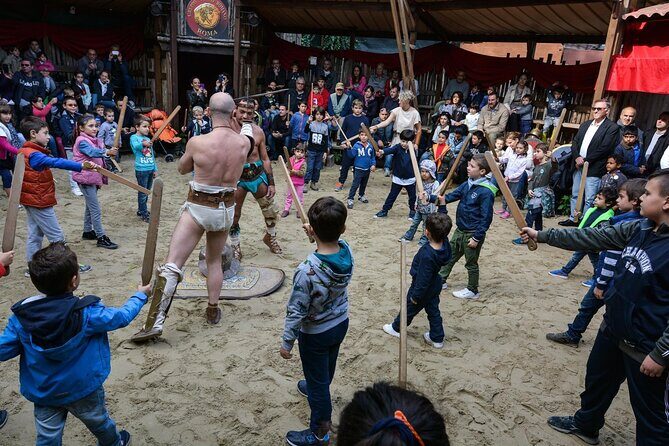
The optional tournament is exactly the kind of Rome activity that feels like a story. You’re already in costume, practicing basic techniques, then you level it into a structured mock competition. If your group wants extra excitement, this is usually the part people remember later.
The certificate is also more meaningful than it sounds. It marks the transition from play-fighting into a real structured activity with a start and finish. Even adults who don’t usually care about certificates tend to like this one because it ties to the effort you put in during the training.
And if you’re traveling as a group—say multiple kids plus parents—you’ll likely enjoy the shared payoff.
Who this suits best (and who should think twice)
This is a strong fit for families, kids, and active adults. The minimum age is 6, and many people recommend it as a favorite family activity, especially for children who like pretending, costumes, and games with rules.
You’ll also enjoy it if you’re the kind of traveler who likes Rome beyond the obvious landmarks. If you’ve already seen the big sites and want something different—something physical, but still educational—this delivers that mix.
Who should think twice:
- Very young kids who dislike physical contact may struggle. One common concern is kids getting hurt from sparring or impacts, which can lead to tears. The staff may guide you through, but you’re still doing active fighting drills.
- If you hate getting sweaty or don’t handle heat well, plan your time wisely. The location can be mosquito-prone, and outdoor movement is part of the deal.
Price and time: is $108.16 worth two hours?
Here’s the honest value math. You’re paying for:
- a two-hour structured class
- museum admission
- gladiator costume and weapons hire for the lesson
- instructor-led training and an arena finale
- a certificate for participants
That’s a lot bundled into a short window. Compared with booking multiple separate attractions, it feels like one ticket that actually fills time and creates a memory you can’t get from a standard museum visit.
The only reason it might not feel worth it is if you’re hoping for a quiet, purely historical experience. This one is active by design. If you want to observe rather than participate, you’ll still likely enjoy the watching, but your best time will come from jumping into the training.
Small-group feel: why max 15 travelers helps
With a maximum of 15 travelers, you’re not swallowed by a crowd. In practice, small groups often mean more attention, quicker correction, and better pacing—especially during sword-and-shield drills.
People have highlighted that some sessions end up feeling extra personal when fewer families book at a given time. Even when it’s full, the class structure keeps you from being idle for long stretches.
If you’re someone who worries you’ll be lost in a big group activity, this is one of those experiences where the size cap genuinely matters.
Practical tips: comfort, bug spray, and what to expect physically
A few practical notes can make or break this kind of activity.
Bring bug spray. Mosquitoes can be a serious problem in the area. If you forget, you might spend the lesson swatting instead of paying attention.
Wear comfortable clothes and shoes. You’ll move, warm up, and handle gear. You don’t want slippery footwear or stiff outfits.
Know it’s active. Even with training guidance, you’re doing physical interaction—sword drills and shield work, and then mock fights in the arena. If you’re traveling with kids, it helps to set expectations: this is a game with rules, but it can still feel rough.
And one more small thing: the experience lists a drink as included, but some people reported that no drink was actually provided. If you’re the type who needs water to stay comfortable, bring your own and treat the listed drink as a bonus.
Should you book Roman Gladiator School?
Book it if you want a Rome day that feels like an event, not just a sightseeing stop. The combination of museum artifacts, hands-on training, and an arena finale makes it one of those activities that tends to delight both adults and kids—especially if your group likes playful learning.
Skip it (or go in with extra caution) if you want a purely seated, calm museum experience. And if you’re bringing very young kids or anyone who hates physical contact, judge comfort level closely because sparring drills can lead to small injuries.
If your schedule is flexible, this is also one worth planning ahead. It’s often booked about 52 days in advance, which suggests popular lesson times go fast.
FAQ
What is the duration of the Roman Gladiator School class?
The class runs for about 2 hours.
Where does the experience take place?
The meeting point is on Via Appia Antica, 18, 00179 Roma RM, Italy. The activity ends back at the meeting point.
What’s included in the experience?
It includes a 2-hour gladiator class, instruction by members of the Historic Group of Rome, a drink, gladiator clothing and weapons hire for the duration of the lesson, and entrance to the Gladiator School of Rome Museum.
Is a museum visit included?
Yes. Admission to the Gladiator School of Rome Museum is included, and you’ll see gladiator weapons and artifacts.
What language is the class offered in?
The experience is offered in English.
What is the minimum age?
The minimum age is 6 years.
How big is the class group?
It has a maximum of 15 travelers.