REVIEW · POMPEII
Skip the Line: Pompeii Express Small Group Guided Tour
Book on Viator →Operated by City Wonders Ltd · Bookable on Viator
Two hours in Pompeii can feel tight. I love the skip-the-line entry and the audio headsets that keep the guide’s commentary clear while you’re walking. One possible drawback: 2 hours is just enough for the big highlights, so you may not have time for every major stop you’ll see listed on longer tours.
This is also a small group style tour (20 or fewer, with a max of 25), so you’re not stuck in a crowd wall. You’ll hear the lead-up story on the way in, then you’ll move into the park with a plan.
My favorite part is the mix of street-level ruins and a restored domus, where you can see how wealthier Romans lived right before the eruption froze everything in ash.
In This Review
- Key things to know before you go
- Pompeii Express in 2 hours: what you really get
- Skip-the-line at Pompeii: how it helps (and what it can’t change)
- The meeting point, coach transfer, and how the day flows
- On route to Pompeii: the story before the ruins
- Walking the highlights: Forum, baths, and semi-intact streets
- The Forum: how public life was organized
- Baths and the culture of everyday routine
- Houses, streets, and the feel of “frozen” time
- The restored domus: seeing wealth and taste up close
- Pacing, physical comfort, and what to pack
- Price and value: is $52.04 worth it?
- Who this tour fits best
- Should you book Pompeii Express small group?
- FAQ
- How long is the Pompeii Express small group guided tour?
- Is skip-the-line entry included?
- Are audio headsets included?
- Where is the meeting point, and where do we end the tour?
- Do I need to arrange transportation to the meeting point?
- What should I know about bags or ID?
Key things to know before you go
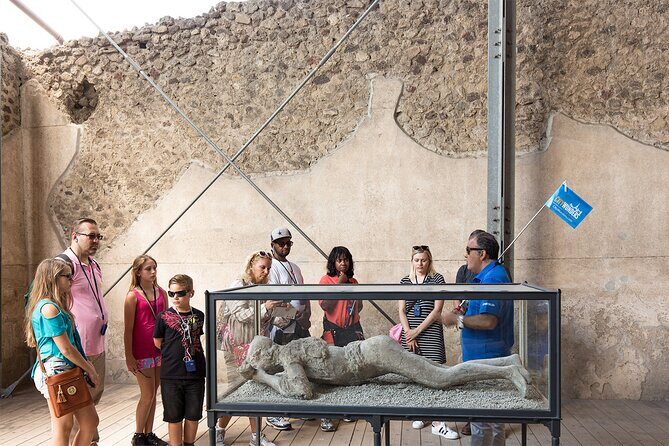
- Skip-the-line entry to the Pompeii Archaeological Park, so you spend time touring, not waiting
- Official local guidance inside the ruins, with audio headsets included
- A focused 2-hour route hitting the Forum, baths, and other central sights
- Restored domus stop to compare everyday life with elite interiors and decoration
- Small-group pacing designed for easier listening and more human-sized questions
Pompeii Express in 2 hours: what you really get
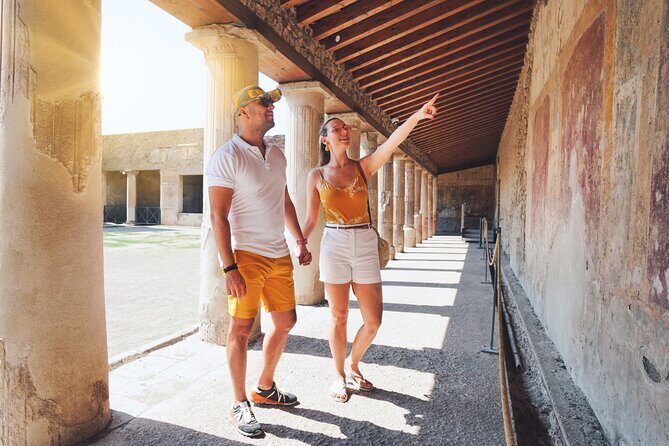
If you’re short on time, this Pompeii tour makes a practical promise: it trades depth for momentum. You’re looking at a 2-hour walking tour, plus the pre-visit context en route, so the day doesn’t drag. That’s a big deal in Pompeii, where even simple paths can take longer than you expect once you’re inside.
You’ll cover the parts that most people come for: the Forum, major public buildings like the baths, and other well-known areas on the UNESCO site. The route also includes time for the quieter, more intimate side of Pompeii: semi-intact streets and houses where you can still get a feel for how people moved through their daily routine.
Here’s the key trade-off to understand up front: 2 hours won’t turn Pompeii into a checklist where you can say you saw it all. If you’re the type who wants the arena, extra villas, and every major corner, you’ll probably leave with a strong urge to return on a longer format.
You can also read our reviews of more guided tours in Pompeii


Skip-the-line at Pompeii: how it helps (and what it can’t change)
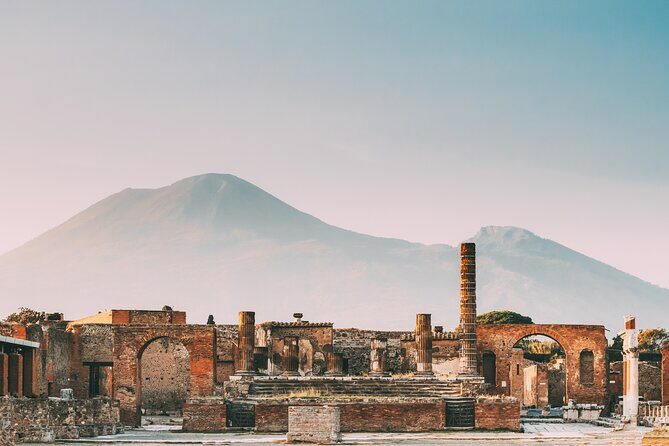
The headline benefit is skip-the-line access to the archaeological site. In plain terms, this saves you from the slow shuffle at entry and helps you start your guided portion sooner. In a place like Pompeii, timing matters because once the park gets busy, it’s not just about the queue—it’s about crowd density inside too.
The tour also includes audio headsets, which is more than a nice-to-have. Pompeii ruins can swallow sound, and open areas can be loud with chatter and footsteps. Headsets mean you can keep walking without stopping every few minutes just to hear your guide.
One more detail that’s easy to miss until you’re standing there: Pompeii is a security-conscious site. The tour notes that extra measures may be used and that bag rules can tighten. I strongly recommend traveling light—skip large backpacks and bulky bags—so you’re not scrambling at the last moment.
The meeting point, coach transfer, and how the day flows
Your tour starts at the Coffee Shop Vittoria Via Mare area (80045 Pompei). You’ll then be taken by climate-controlled coach toward Pompeii as part of the tour’s flow. Since the tour guidance also says you’ll need to handle your own way to the meeting point, plan for getting there in advance rather than assuming pickup is automatic from your hotel door.
Once everyone arrives, the day runs like a machine built for a short time window: you’re guided from the moment you step in, and you keep moving. The goal isn’t to linger; it’s to give you a clear understanding of what you’re seeing before you lose the thread.
Another practical benefit of this structure is group size. When your group stays around 20 people or fewer, your guide can actually manage pacing. You won’t spend half the time waiting for stragglers, which is common with larger tours.
On route to Pompeii: the story before the ruins
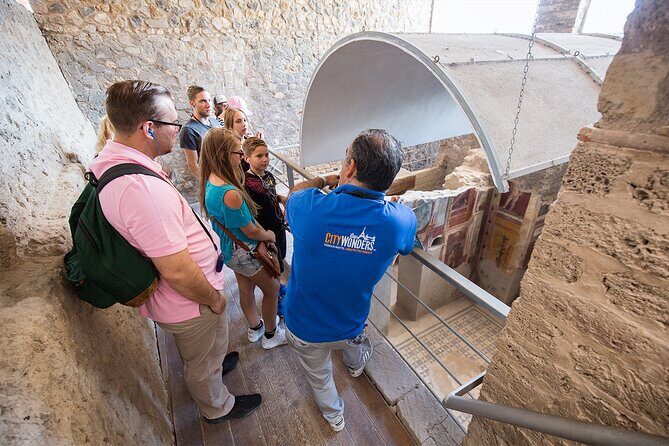
One smart part of the experience is the storytelling you hear before you ever walk into the park. On the way in, your guide explains life in the Roman town before the eruption in 79 AD, when Mount Vesuvius smothered Pompeii in ash and rubble.
This matters because Pompeii can otherwise feel like a museum of disconnected rooms. With the background laid out early, you’re better prepared to understand why certain buildings exist and what their decoration or layout suggests about status and daily life.
Also, the tour frames the visit as a timeline: you’re not just looking at stones and painted walls. You’re looking at a city stopped mid-routine—nearly 2,000 years ago—so the details you see on-site feel personal rather than random.
Walking the highlights: Forum, baths, and semi-intact streets
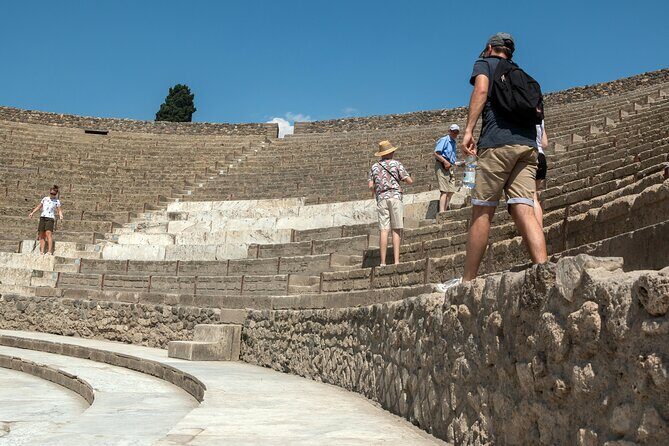
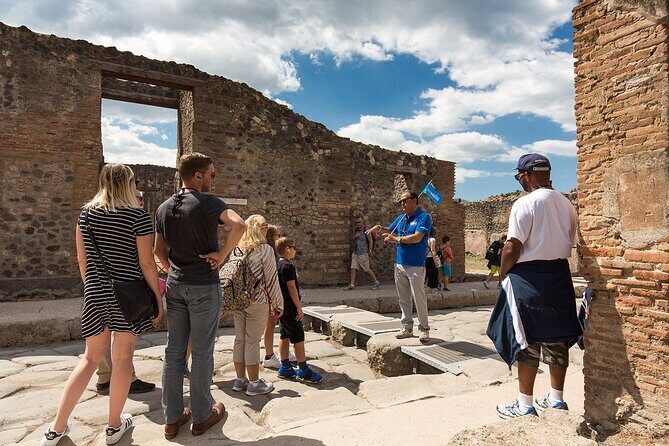
Inside the Pompeii Archaeological Park, the guided portion focuses on the central story of the city. You’ll do a walking tour of UNESCO-listed ruins and street plans, with commentary designed to help you read what you’re seeing.
You can also read our reviews of more tours and experiences in Pompeii

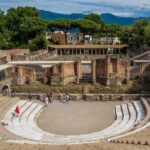
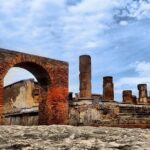


The Forum: how public life was organized
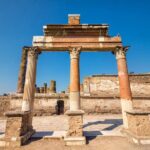
The Forum is one of those places where you can almost visualize the day-to-day rhythm even without being a Roman history expert. Your guide’s job here is to connect the layout to what a public center meant: civic gatherings, political life, commerce, and general community energy.
The big advantage of a guided approach is interpretation. Pompeii’s stones don’t come with labels that explain how Romans used the space, so the guide’s narration turns the ruins into a story you can follow.
Baths and the culture of everyday routine
The tour also includes the baths. This is a great choice because baths weren’t just about cleanliness; they were social and routine-driven. Even when parts are worn, you can still get a sense of how people used these spaces through explanation and context.
In a short 2-hour tour, hitting the baths is a win because it helps you understand Pompeii beyond houses and tragedy. It shows how locals spent time, talked, and moved through daily life.
Houses, streets, and the feel of “frozen” time
You’ll also see houses and streets that are semi-intact. That phrase matters. Pompeii isn’t only about walls and fresco fragments; it’s about the structure of living spaces—how you’d walk from one room to another, how streets shaped movement, and how neighborhoods were laid out.
If you’ve only ever seen Pompeii from postcards, this is where you’ll feel the site’s reality. You start noticing small clues: where a doorway opens, how a room might have been used, and how the street grid affects everyday flow.
The restored domus: seeing wealth and taste up close
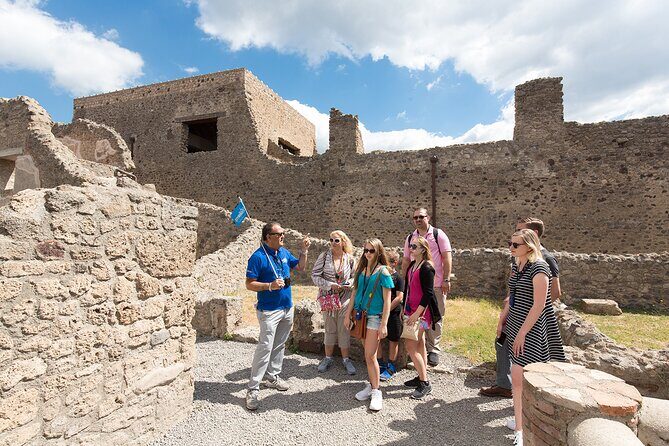
One of the most valuable parts of this Pompeii Express tour is the visit to a restored domus. This is where Pompeii shifts from public spaces to private comfort.
A domus visit gives you a clearer comparison between ordinary life and the lifestyle of Pompeii’s wealthier elite. You’ll see:
- Wall frescoes and murals
- Floor mosaics
- Features that reflect everyday luxury, not just survival archaeology
The strength of this stop is how visual it is. Frescoes and mosaics aren’t just decoration; they help you understand what people chose to display and what they wanted guests to notice. In a short tour, you want stops like this—things you can truly see and process.
If you’re the type who loves details—color, layout, and decoration—this domus moment will likely be the highlight. It’s also a reminder that Pompeii wasn’t only destroyed. It was lived in, enjoyed, and decorated right up to the end.
Pacing, physical comfort, and what to pack

This is listed for moderate physical fitness. In practice, that usually means you’ll be doing steady walking on uneven ground, plus short stops for explanation. You don’t need to train for a marathon, but you should wear shoes that can handle rough surfaces.
For what to pack:
- Wear comfortable walking shoes
- Bring minimal bags in case of security checks
- Avoid large purses or bulky backpacks to reduce risk of delays
- If you’re bringing a child under 18, bring their ID card, since ID checks may happen
And one more small but useful tip: arrive early enough to be calm. A short tour gives you less buffer time. If you’re rushed before you start walking, you’ll feel it.
Price and value: is $52.04 worth it?
At about $52.04 per person, the value depends on what you’re trying to accomplish.
If your goal is a quick, structured Pompeii visit with an official guide and help navigating crowds, this price starts to make sense. You’re paying for:
- Skip-the-line entry
- An English-speaking guide with official access
- Audio headsets so you can hear without stopping
- A tight route that hits the main sights in 2 hours
If your goal is total freedom to wander everywhere at your own pace, a pay-more, longer time investment—or a different tour style—might serve you better.
For most people doing a single Pompeii hit, this feels like a practical buy. It’s not trying to be a whole-day replacement. It’s trying to be the best possible use of limited hours.
Who this tour fits best
This Pompeii Express setup is a strong match if you:
- Have only a half day (or less) and want key sights
- Prefer small-group attention rather than a large bus crowd
- Want official guiding plus headsets so you can keep moving
- Like a mix of public spaces (Forum, baths) and private elite interiors (restored domus)
It’s less ideal if you’re a die-hard completist who wants the full park in one visit. In that case, you’ll likely crave the extra areas that don’t fit into a 2-hour route.
Should you book Pompeii Express small group?
I’d book it if you value time efficiency and clear guidance. The skip-the-line entry and audio headsets do real work here: they reduce waiting and improve your understanding while you walk.
I would not book it as your only Pompeii experience if you want maximum coverage. The tour’s structure is focused, and that means some notable areas may be left for a second trip or a longer itinerary.
If you’re deciding between this and a longer guided visit, my simple rule is: pick the tour that matches your available hours. When your time is tight, this one uses it well—and it helps you leave with a coherent picture of Pompeii, not just a handful of random photos.
FAQ
How long is the Pompeii Express small group guided tour?
The guided tour is about 2 hours.
Is skip-the-line entry included?
Yes. You get skip-the-line entrance to the Pompeii Archaeological Park.
Are audio headsets included?
Yes. Audio headsets are included to help you hear the guide clearly.
Where is the meeting point, and where do we end the tour?
The meeting point is Coffee Shop Vittoria Via Mare, 80045 Pompei NA, Italy. The end point is Archaeological Park of Pompeii, 80045 Pompei, Metropolitan City of Naples, Italy.
Do I need to arrange transportation to the meeting point?
Yes. Transportation to the venue is not provided, so you’ll need to make your own way to the meeting point. The tour itself includes transfers to and from the site as part of the experience flow.
What should I know about bags or ID?
Extra security measures may be used, which can affect bag size and create delays at the entrance. You should avoid bringing large purses, bags, or backpacks. Children under 18 might be asked to show an ID card.