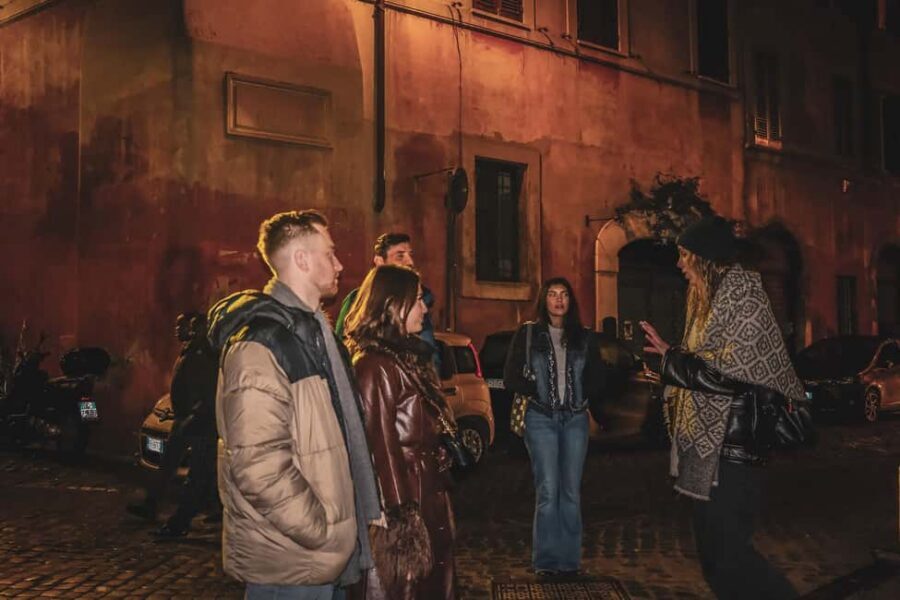
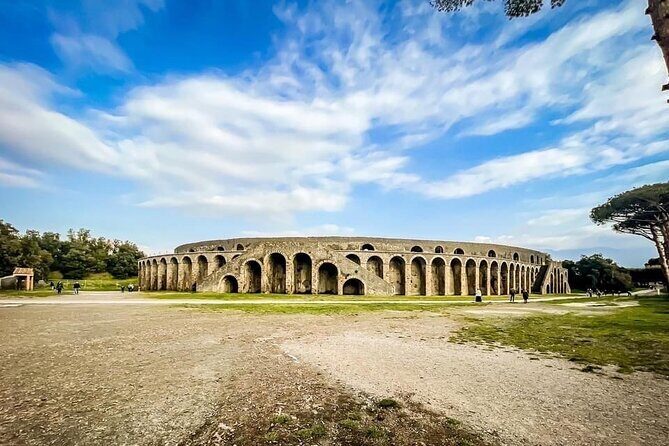
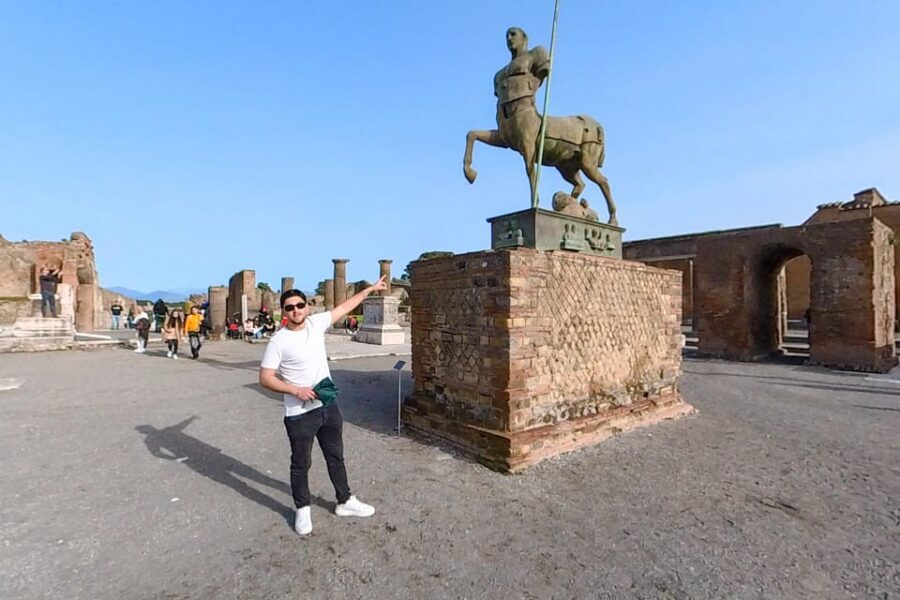
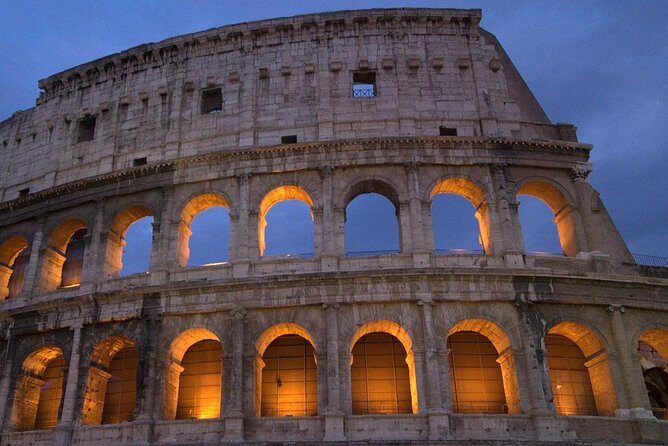
Rome rewards slow looking. This tour helps you do it without wandering blind. You get a small-group walk with an English-speaking guide, so you’re not just seeing landmarks—you’re understanding why this part of Rome changed over time. I especially like the pairing of famous sights with off-the-main-street stops, and I like how the route keeps moving so you don’t waste your short time. One thing to consider: Pantheon entry isn’t included, so plan for a separate ticket if you want to go inside.
You’ll start at Piazza d’Aracoeli and end at Piazza Navona, with stops that work well for a first visit: Imperial Rome vibes at Piazza Venezia, a quietly stunning courtyard at Galleria Sciarra, Trevi Fountain legends at night, and Baroque wow-factor at Sant’Ignazio di Loyola before finishing at the city’s liveliest meeting ground for dinner afterward. The pace is set for a max group size of 15, which usually means fewer bottlenecks and easier questions along the way.
In This Review
- Key highlights that make this walk worth your time
- A two-hour Rome route that keeps your bearings sharp
- Piazza Venezia to the Imperial Forums: where Rome’s power shifts
- Galleria Sciarra: the quiet courtyard break that resets your brain
- Trevi Fountain at night: legends plus a calmer viewing feel
- Sant’Ignazio di Loyola: the Baroque church illusion that makes you look twice
- Pantheon: big architecture impact, with entry as your choice
- Piazza Navona finish: where to eat, drink, and keep walking
- Price and value: why $30.23 can make sense here
- Practical tips so the tour feels smooth (not stressful)
- Should you book this Rome Pantheon, Trevi, and Navona tour?
- FAQ
- How long is the walking tour?
- What does the tour cost?
- Is Pantheon entry included?
- What are the main places you’ll visit?
- Is the tour offered in English?
- How many people are in the group?
- Where do you meet, and where does the tour end?
- Does weather affect the tour?
- What is the cancellation policy?
Key highlights that make this walk worth your time
- Pantheon focus without the entry hassle: you’ll get the big visual payoff, then decide on a separate plan for going in
- Trevi at night: legends plus softer lighting than daytime crowds
- Galleria Sciarra: a 19th-century Art Nouveau style courtyard stop that feels like a secret pause
- Sant’Ignazio di Loyola: Baroque illusion inside a grand church
- Ends at Piazza Navona: perfect “walk-to-dinner” landing zone with lots nearby
- Max 15 people: a small group that tends to make the tour feel personal
A two-hour Rome route that keeps your bearings sharp
This is the kind of Rome walking tour I like for the first or second day in town. In about two hours, you cover the core monuments most first-time visitors want, but you also get stops that explain how the city layers its eras. That matters in Rome, where the streets look ancient, but the buildings are often much newer than you expect.
The route starts with viewpoints and context (Piazza Venezia and nearby ancient remains), then moves into “wow” stops (Trevi Fountain and the Pantheon), and finishes in a square where you can keep exploring after the tour. It’s also a mobile ticket tour and runs in English, which makes it easier to show up ready and not worry about paper.
The best part is how much value you squeeze out of the guide. You’re paying for more than photos. You’re paying for clear explanations, local culture context, and practical recs once you reach Piazza Navona. That’s why a $30.23 tour can feel like a bargain compared to paying for your own wandering and then realizing you missed the meaning.
You can also read our reviews of more walking tours in Rome


Piazza Venezia to the Imperial Forums: where Rome’s power shifts
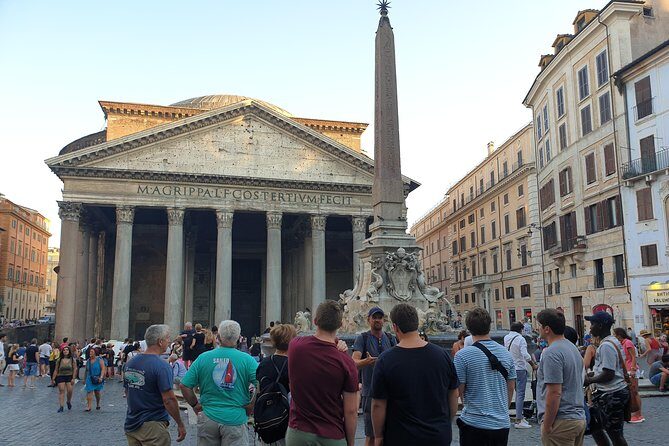
Your walk begins at Piazza d’Aracoeli near Via di S. Venanzio, starting you in a part of Rome where you can feel the city’s layers fast. From Piazza Venezia, you look toward the Imperial Forums area, and the guide helps connect the dots between ancient power and later Rome’s changing identity.
Why this stop works: it gives you a timeline-shaped mental map before the tour hits the major “star” sights. Instead of just saying Pantheon and Trevi, you understand how this whole zone evolved—from a seat of power in ancient Rome to later monumental touchpoints in different periods.
You’ll spend about 20 minutes here. That’s enough time to get oriented without turning into a slow museum visit. Admission isn’t needed for this portion, so you’re free to focus on learning and direction rather than ticket lines.
A practical note: this area can be visually busy, so the guide’s “what to look at” cues are worth listening for. If you tend to take photos first and think later, this is where you should shift gears and let the guide point out the key shapes and spatial clues.
Galleria Sciarra: the quiet courtyard break that resets your brain
Next is Galleria Sciarra, a stop that feels like a little curveball in a good way. You step inside a 19th-century courtyard known for its Art Nouveau style frescoes and decorative paintings. It’s the kind of place you might walk past without ever realizing it’s there, especially if you’re focused on Rome’s big exteriors.
This is where the tour gets more than sightseeing. The stop teaches you a Roman rhythm: grand streets, then sudden privacy. It’s also a nice chance to slow down for a minute, look up, and notice the small details that make Rome feel handmade rather than generic.
You’ll have about 10 minutes here, so don’t expect a full sit-and-stare. Come ready to look around with purpose. If you enjoy design, religious art, and how architects used light and decoration to create mood, you’ll likely enjoy this stop a lot.
Another plus: since admission is ticket-free, it’s an easy win during a short tour. You’re getting something unique without paying extra or spending time figuring out entry.
Trevi Fountain at night: legends plus a calmer viewing feel

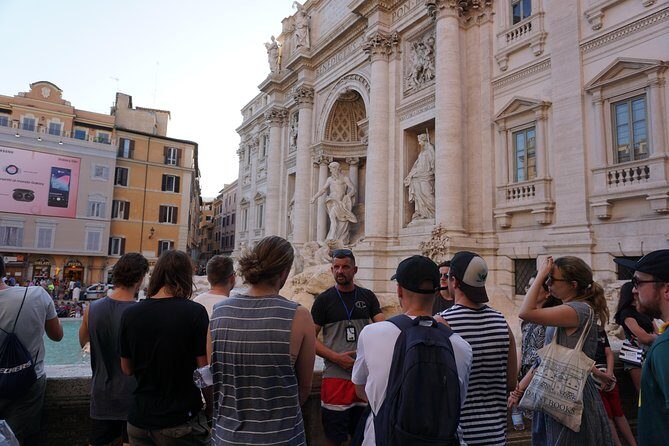
Trevi Fountain is the headline, but the timing is what makes this version smart. You’ll see it as the light shifts, with the fountain glowing. The guide shares the legends behind the sculpted beauty and explains the tradition of tossing a coin for good luck.
This is a useful stop even if you’ve seen Trevi photos a hundred times. At night, the fountain reads differently. You notice the sculptural depth, the way people flow around the space, and the energy of the square without the harsh midday glare.
You’ll spend about 20 minutes at Trevi. That’s long enough for:
- a few solid photos (not just a quick “pass by and go”),
- listening to the legend story so you know what you’re actually looking at,
- and enjoying the atmosphere without feeling rushed.
One practical consideration: Trevi is still Trevi. Even at night, it’s popular. If you’re sensitive to crowds or want space to move, this tour’s small-group setup helps. Also, when the guide explains where to stand and when to shift, it usually saves you from fighting for angles.
Sant’Ignazio di Loyola: the Baroque church illusion that makes you look twice
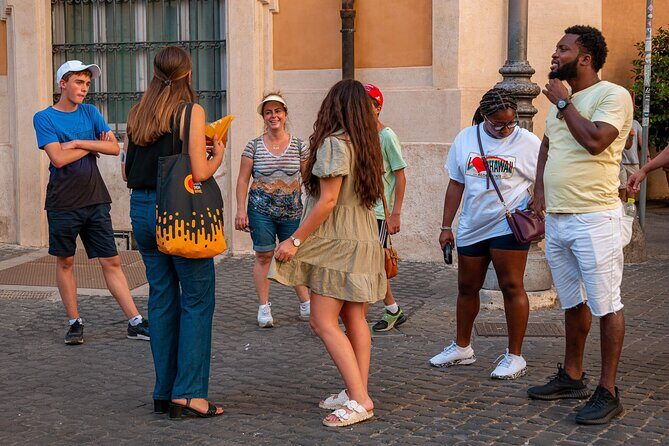
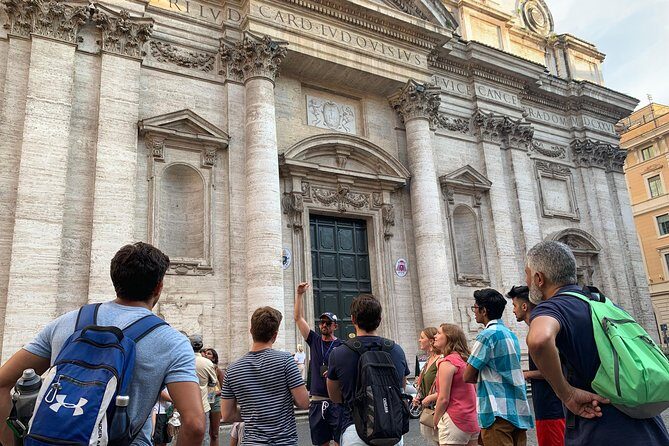
Then comes Sant’Ignazio di Loyola, and yes, it’s exactly the kind of stop that turns a walking tour into a real story. You enter a grand Baroque church where illusionist art creates an effect that many visitors find astonishing—an awe-inspiring fake dome that tricks your eyes.
The value here is simple: Rome isn’t only about ancient ruins. It’s also about the way later artists engineered belief, emotion, and perspective. A church like this shows how art can be a visual technology.
You’ll get about 15 minutes in this stop. That’s enough time to see the illusion from the right angles and let the guide explain what’s going on. Don’t skim. This is one of those places where you’ll understand more the moment you slow down and follow the instructions on where to stand.
Another practical upside: admission is listed as ticket-free for this part. So you get a major “wow” moment without additional entry planning.






Pantheon: big architecture impact, with entry as your choice

The Pantheon is next, and it’s hard to mess up a visit to one of Rome’s greatest architectural feats. In Roman terms, it was once a temple; now it’s a church. The guide frames how the building’s design achieved something people still marvel at: the perfect dome.
You’ll spend about 20 minutes here. But here’s the key detail: access to the Pantheon isn’t included. That means you should think of this stop as a guided encounter with the monument and its exterior/interior viewpoint possibilities, not a guaranteed entry.
How to plan for this:
- If your dream is to go inside, look ahead and decide on your separate entry timing.
- If you just want the design impact, this tour still hits the mark by giving you the context to understand what makes the Pantheon such a standout.
This matters for value. Many tours spend money on entry and some do not. With this one, you’re paying for guided time and historical framing, and you retain control over Pantheon entry logistics.
Either way, the guide’s explanations help you look beyond “it’s big” into “it’s engineered.” That shift is what makes the Pantheon feel personal rather than just famous.
Piazza Navona finish: where to eat, drink, and keep walking
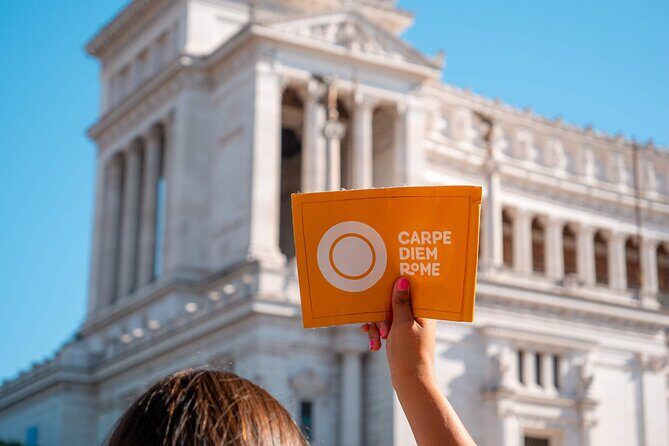
You end at Piazza Navona, one of central Rome’s most rewarding squares to finish in. The guide wraps up by pointing you to good nearby eateries, bars, and rooftop options, which is exactly what you want after a tour so you can keep the day moving without guessing.
You’ll spend about 15 minutes here, enough to enjoy the Baroque surroundings, admire the fountains, and take in the church of Sant’Agnese in Agone before you go off on your own.
Why finishing here is a smart move: Piazza Navona is not just a photo stop. It’s a place where you can continue the Rome experience immediately—street life, people watching, and the easiest transition from “guided route” to “your agenda.”
If you’re traveling with kids or you want a less formal ending, this stop also works well because it’s easy to break off and rejoin nearby plans without complicated transportation.
Price and value: why $30.23 can make sense here
At $30.23 per person for about two hours, you’re buying a guide-led route with multiple major stops and several thoughtful side moments. The price also reflects a small group size (max 15), which often costs more than huge group tours but usually delivers better pacing and more chances to ask questions.
You also get:
- a guided walking tour with a local guide,
- city highlights plus lesser-seen additions,
- and a mobile ticket rather than paper chaos.
One more value point: several stops are listed with free admission tickets (so you’re not paying repeatedly for entries across the route). Pantheon entry is the exception, so you should budget for that separately if you want it.
If you’re doing Rome on a tight schedule, this price can be efficient. It compresses orientation, context, and the big three landmarks (Pantheon, Trevi, and Piazza Navona) into one guided flow, rather than forcing you to plan every connection yourself.
If you already have entry tickets lined up for the Pantheon, even better—you can treat this tour as the “story layer” that makes those tickets feel worth it.
Practical tips so the tour feels smooth (not stressful)
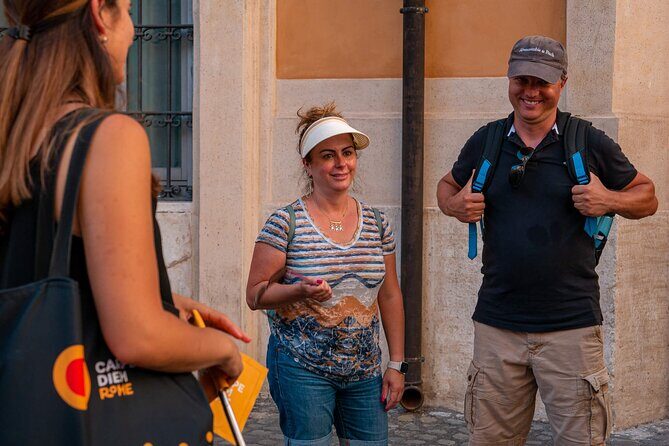
Meeting point accuracy can make or break the start. The official start is near Piazza d’Aracoeli, Via di S. Venanzio 8, 00186 Roma. The ending point is Piazza Navona. I strongly suggest you double-check the meeting spot in the day-of instructions and open it in your maps app before you head there. Rome has multiple squares and similar street names, so a small mix-up can cost you time.
This tour is near public transportation, so you can use transit to arrive without dragging your whole day through long walks at the beginning.
It’s also stated that service animals are allowed, and most travelers can participate. Still, it’s a walking tour. If you have mobility limits, it’s worth planning based on your comfort with steady walking over multiple city stops.
Finally, this is a good-weather experience. Plan for flexible thinking. If rain or other poor conditions hit, you’ll need to adjust—this tour is designed to work outdoors.
Should you book this Rome Pantheon, Trevi, and Navona tour?
Book it if:
- you want a first-day-friendly route that hits the big sights without turning into a museum marathon,
- you like learning the why behind what you’re looking at,
- and you prefer a small group pace with room to ask questions.
Skip or reconsider if:
- you’re only interested in entering the Pantheon and nothing else,
- or you dislike walking and want a strictly minimal route.
For most visitors doing Rome for the first time, this is a strong choice. It’s short enough to fit into a travel schedule, structured enough to help you avoid confusion, and varied enough that the day doesn’t feel like a checklist.
FAQ
How long is the walking tour?
The tour runs for about 2 hours.
What does the tour cost?
The price is $30.23 per person.
Is Pantheon entry included?
No. Access to the Pantheon is not included.
What are the main places you’ll visit?
You’ll see Piazza Venezia/Ancient City, Galleria Sciarra, Trevi Fountain, Chiesa di Sant’Ignazio di Loyola, the Pantheon, and finish in Piazza Navona.
Is the tour offered in English?
Yes, it is offered in English.
How many people are in the group?
The maximum group size is 15 travelers.
Where do you meet, and where does the tour end?
The start is near Piazza d’Aracoeli (Via di S. Venanzio, 8, 00186 Roma). The tour ends at Piazza Navona (00186 Roma).
Does weather affect the tour?
Yes. The experience requires good weather. If it’s canceled due to poor weather, you’ll be offered a different date or a full refund.
What is the cancellation policy?
You can cancel for a full refund up to 24 hours before the experience starts. If you cancel less than 24 hours before, the amount paid isn’t refunded.