REVIEW · WALKING TOURS
Rome walking tour: Churches, Squares and Fountains
Book on Viator →Operated by City Walkers Tours · Bookable on Viator
Rome rewards feet, and this tour is built for them. You get a well-paced circuit through iconic stops and a few less-famous corners, all explained on foot with a guide plus radio headsets, so you don’t have to strain to hear. I especially like the small group size (max 15) and how the route ties together church exteriors, major squares, and fountains into one easy overview. One thing to consider: this is mostly outside views only, so if you want to go inside major sites, plan a separate visit.
In This Review
- What you’ll feel from the start
- Who it’s for (and who should skip it)
- Key things to know before you go
- Why this Churches, Squares and Fountains walk makes sense
- Price and logistics: what $42.17 buys you
- Trajan’s Column to Trajan’s Market: the Roman power-story starter kit
- Piazza Venezia: the square that makes Rome feel like a postcard
- The Jewish Ghetto area: history, architecture, and everyday life
- Campo de’ Fiori: market energy without the pressure
- Piazza Navona and Bernini’s Four Rivers
- The Pantheon area: why it still looks like Rome
- Piazza di Pietra and the Temple of Hadrian
- Trevi Fountain: the final big finish (and what to do after)
- The guide factor: why the experience lands well
- What to wear and bring for comfort
- Should you book this Rome churches, squares, and fountains tour?
- FAQ
- How long is the Rome walking tour?
- What does the tour cost, and what’s included?
- Is the tour in English?
- How big is the group?
- Where does the tour start and end?
- What time does it start?
- Are tickets or entry fees included?
- Do I need a high fitness level?
- What if I need to change my plans?
- Is there private transportation included?
What you’ll feel from the start
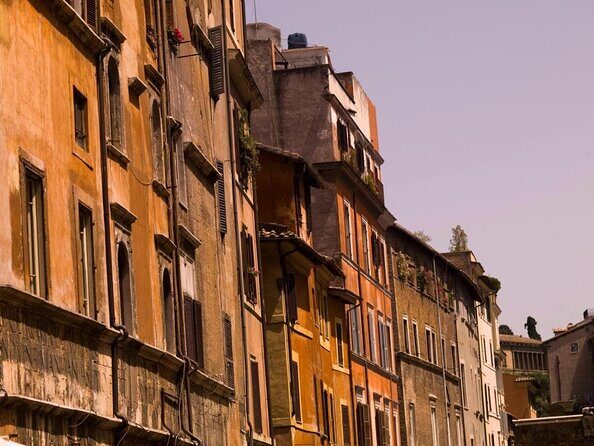
The value here is speed with context: you pass major monuments in central Rome without wasting time figuring out what you’re looking at. I also love the way guides can adjust for comfort; on a hot day, Brian focused on shaded pauses, which made the whole walk feel far less brutal. The possible drawback is that you’ll still be doing a solid chunk of walking for about 2½ hours, so comfy shoes really matter.
Who it’s for (and who should skip it)
This tour is a smart choice if you’re short on time and want the big map points—Trajan’s Column, Piazza Navona, the Pantheon area, the Trevi Fountain, and more—without getting stuck in ticket lines. It also fits families and mixed-age groups, since the pace is guided and the group is capped small. If you prefer deep interior visits and you want lots of time inside churches and monuments, you might want a different tour that includes entry.
You can also read our reviews of more walking tours in Rome


Key things to know before you go
- Max 15 people keeps the tour personal and makes questions easier.
- English guide + radio headsets help a lot in crowded squares.
- Outside-only viewing means no building entries on this walk.
- A tight hit list: Trajan’s Column, Jewish Ghetto area, Piazza Navona, Pantheon (outside), Temple of Hadrian area, Trevi Fountain.
- Hot-weather friendly pacing: guides have a habit of finding shade when needed.
- Ends at Trevi so you can roll right into gelato and dinner nearby.
Why this Churches, Squares and Fountains walk makes sense
Rome can feel like you’re always looking at something, but also wondering what it means. This tour helps you do two things at once: get your bearings fast and learn the story behind what you’re seeing while you’re still close enough to enjoy the details.
The format is also practical. You’re walking for about 2 hours 30 minutes, and you’re not stuck on long stretches with nothing to see. Instead, each stop is a quick lesson with a real-world payoff: you look at a monument, you get the context, and then you keep moving. That rhythm works well for first-timers, and it’s even better for anyone who wants a “morning of orientation” before going off on their own.
Finally, this is a small-group experience. With a cap of 15, the guide isn’t just herding people through crowds. That matters in Rome, where a big group can turn every photo stop into a slow-moving bottleneck.
Price and logistics: what $42.17 buys you
At $42.17 per person, you’re paying for a guided route that strings together many of Rome’s top central-city landmarks. You also get a guide and radio headsets, which is not just a comfort perk—it keeps the tour informative even when you’re standing near crowds and traffic noise.
What’s not included is where you’ll want to budget flexibility. The tour notes that some sites have admission tickets that are not included. And the experience overall explains monuments from the outside, with no entry into buildings. So think of this as a “guided highlights walk,” not a set of paid museum entrances.
One more practical detail that affects your day: you meet at Foro Traiano (84, 00187 Roma RM). The start time is 10:00 am, and you’ll be expected to show up 20 minutes early to keep departure smooth. In Rome, that buffer is your friend—use it to find the exact spot and calm your nerves before the group moves out.
Trajan’s Column to Trajan’s Market: the Roman power-story starter kit
Your walk begins in an area strongly associated with Roman ambition. Colonna Traiana (Trajan’s Column) is a good first stop because it instantly signals what kind of Rome you’re stepping into: grand, political, and meant to impress.
You’ll learn about the column’s spiral bas-relief, completed in AD 113. The main theme is war—specifically the conflicts between Romans and Dacians. It’s one of those monuments that makes you look twice, because the “carved story” wraps around the column instead of sitting flat like a simple plaque.
From there, you move to Mercati di Traiano (Trajan’s Market area). Even without entry, the ruins help you picture how Romans designed complex city spaces. You’ll hear about the idea that these arcades were thought of as an early shopping mall, though interpretation has evolved—many now believe some areas functioned as administrative spaces for Emperor Trajan. That contrast is useful: you’ll see what’s left, and you’ll understand why people keep re-reading what the ruins might have been for.






Piazza Venezia: the square that makes Rome feel like a postcard
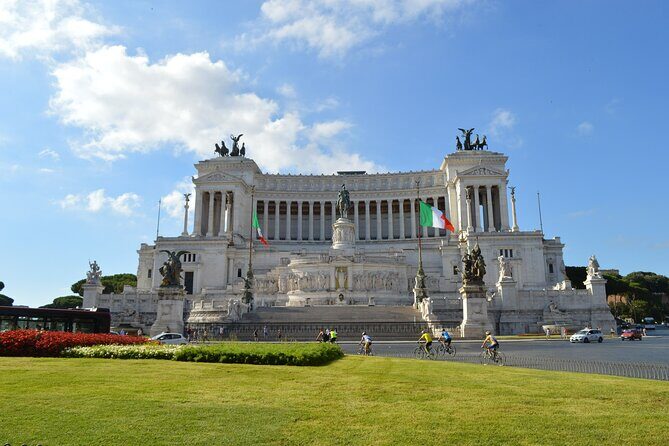
Next comes Piazza Venezia, one of the city’s most famous crossroads. This is where the city starts to feel cinematic: big open space, heavy historic landmarks, and buildings that instantly look important.
You’ll spot the Victor Emmanuel II Monument and Palazzo Venezia around the square. Even if you don’t go inside anything, standing here helps you understand why this area works as a hub—Rome’s center isn’t just pretty. It’s political, layered, and designed to be seen from multiple angles.
And because this is a square, it’s also an easy spot to reset your legs. Rome walking tours can be stop-and-go; squares give you a bit more breathing space between lessons.
The Jewish Ghetto area: history, architecture, and everyday life
Then you head into Antico Quartiere Ebraico, the Jewish Ghetto area. This stop matters because it shows Rome isn’t only ancient ruins and grand fountains. It also has long-running neighborhoods where culture and community evolved over centuries.
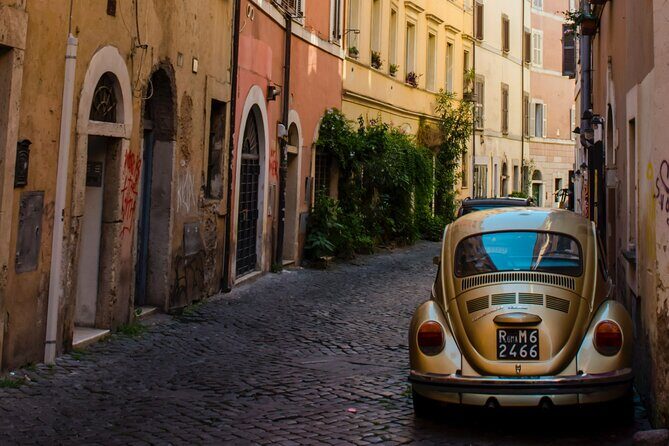
You’ll hear that the Jewish community in Rome is among the oldest in Europe. What you’ll notice as you walk the streets nearby is the blend of influences: Jewish culture and traditions expressed within the grandeur of Roman architecture. It’s also described as being tucked between the Tiber and Piazza Venezia, which makes it feel slightly tucked away even though it’s still central.
This is a good stop if you like to slow down for a moment and just observe. Look for restaurants, church exteriors, and synagogue-related landmarks from the street level. Because the tour keeps it outside-only, you won’t be rushed through an interior script—you can take in the street-level atmosphere.
Campo de’ Fiori: market energy without the pressure
From there, you roll into Campo de’ Fiori, a square known for its lively street market vibe. This isn’t a “museum stop.” It’s more of a sensory pause, where you can glance at stalls, check out the colors and produce, and pick up small souvenirs if you want.
Even the time allocation here feels sensible. Ten minutes is long enough to get the feel, but not long enough to force you into slow shopping. If you’re the kind of traveler who likes to wander after the tour, this is a nice way to plant a flag in an area you might revisit.
Piazza Navona and Bernini’s Four Rivers
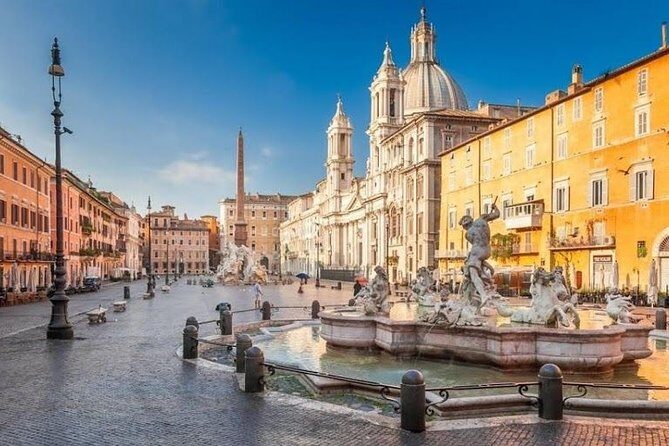
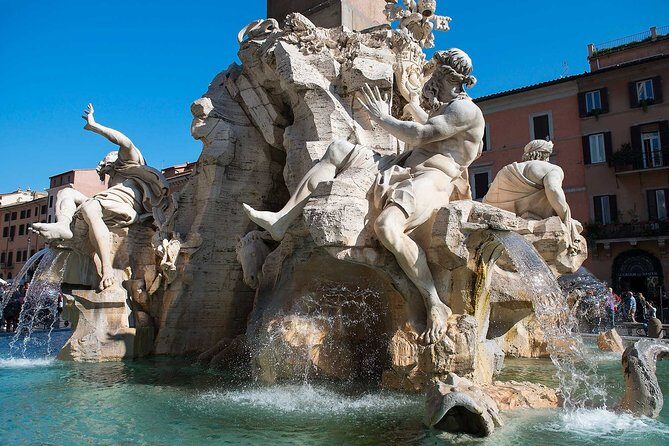
Piazza Navona is the kind of square people remember even after they’ve left Rome. Baroque architecture does most of the heavy lifting here, but you’ll also get the key historical angle: the origins trace back to ancient Rome, when the area hosted a stadium.
The star attraction is Fontana dei Quattro Fiumi by Bernini. Standing near it, you’ll understand why this fountain is a big deal. It’s not just a pretty centerpiece—it’s a statement piece, tied to symbolism and the style of power Rome loved to display.
You’ll also see the church Santa Agnese in Agone in the same area. Even from outside, it helps you connect the dots between baroque design and the way churches are woven into public life.
One practical tip: Piazza Navona is popular. If you want photos without constant jostling, wait for a small lull and adjust your angle rather than pushing closer.
The Pantheon area: why it still looks like Rome
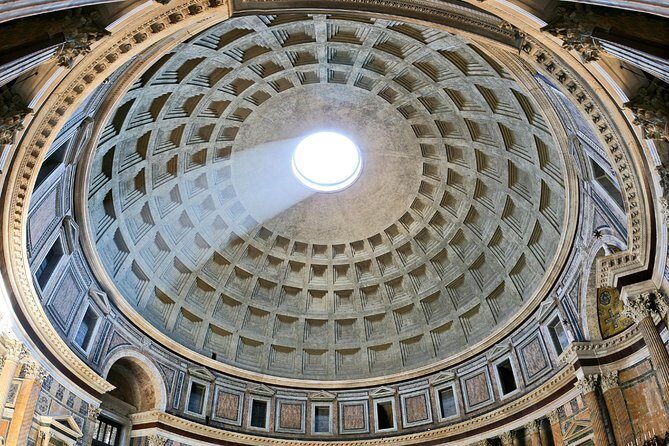
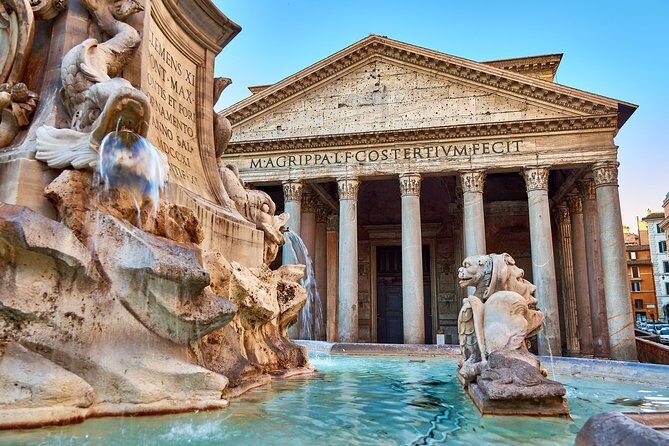
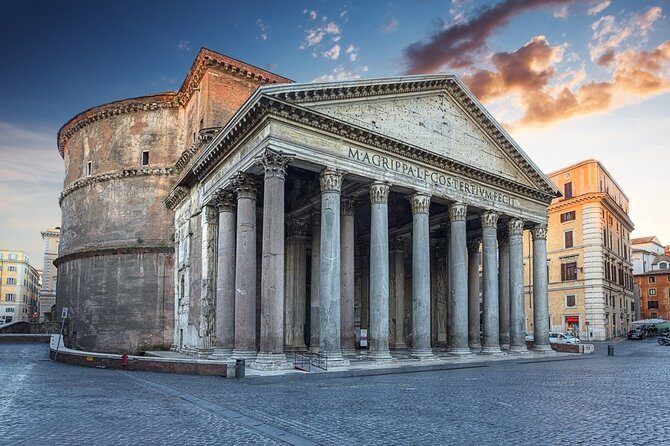
Now you reach the Pantheon area, and this stop is a real Rome cheat code. The Pantheon is famous for its engineering and for how incredibly well it’s preserved.
You’ll learn that it began as a temple dedicated to all the gods, then was converted into a church by the 7th century. That’s why it looks so much like what you’re imagining from ancient Rome, while still functioning as a church. Even without entry, you’ll feel the scale and solidity that make people stop and stare.
Important practical note: the tour does not include entry here. So if you want to see the interior up close, you’ll need a separate ticket plan. The advantage is that you still get the context and a chance to orient yourself before you decide.
Piazza di Pietra and the Temple of Hadrian
Next is Piazza di Pietra and the nearby Temple of Hadrian. This stop is valuable because it adds another “ancient Rome” layer without turning the walk into a long museum day.
You’ll learn that it was dedicated to Emperor Hadrian. That quick line is enough to make the structure make sense when you’re looking at it from the outside. With the Pantheon earlier, and Trajan’s monuments before that, your brain starts building a pattern: Rome kept celebrating leaders and achievements in stone.
This is also a good moment to catch your breath. The stops are compact, and you don’t feel like you’re trudging for long stretches without a payoff.
Trevi Fountain: the final big finish (and what to do after)
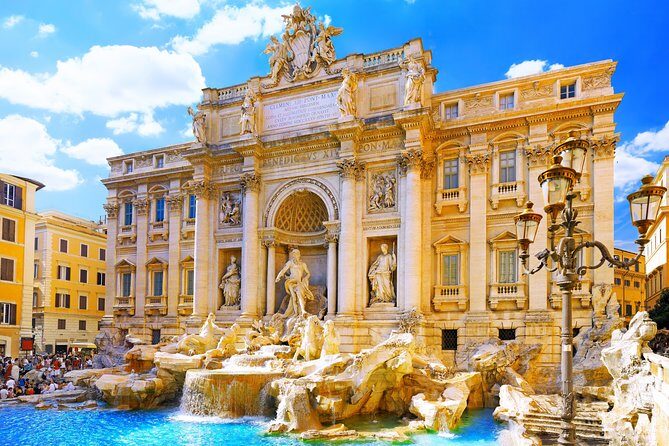
Finally, you reach Trevi Fountain, described as Rome’s largest baroque fountain and arguably the most famous in the world. This last stop is timed so you can actually enjoy it instead of treating it like a sprint-through line.
The tour ends at Trevi’s square. That ending location is smart because it gives you an immediate plan for the next hour or two: wander nearby streets, grab gelato, and keep exploring central Rome at your own pace.
Trevi is crowded, so go in with realistic expectations. You don’t need the perfect spot to enjoy it. Look for the overall shape, the scale, and the way the fountain anchors the surrounding scene.
The guide factor: why the experience lands well
This kind of tour lives and dies on the guide. The best moments here are not just the facts, but the way the guide connects them into something you can hold in your head while walking.
I love the recurring theme from guides who lead this route: clear explanations, good pacing, and extra attention to comfort. Brian is specifically mentioned for placing people in shade on a hot day and staying friendly and informative. You’ll also see praise for guides like Alessandra and Suzanna, including keeping kids and adults engaged and being professional and communicative.
That matters for your experience because Rome is a place where you can either feel lost or feel oriented. A great guide helps you do the second—and keeps the group moving in a way that doesn’t feel rushed.
What to wear and bring for comfort
This is a walking tour, so give yourself the best chance to enjoy it:
- Wear comfortable shoes with grip.
- Bring water, especially if you’re going in warmer months. One of the guide strengths is finding shade, but you still need to stay hydrated.
- Light layers help, because you’re moving between open squares and shaded areas.
Also, because monuments are mostly viewed from the outside, you don’t need a museum outfit. You do need the right shoes for cobblestones and uneven pavement.
Should you book this Rome churches, squares, and fountains tour?
Book it if you want:
- A fast, friendly overview of central Rome in 2½ hours
- A route that hits famous landmarks like Trajan’s Column, Piazza Navona, the Pantheon area, and Trevi Fountain
- An experience led in English with radio headsets and a small group
Skip it (or pair it with other plans) if you:
- Want lots of inside visits and guided entries, because this walk is outside-only
- Prefer slower pacing with longer stops at one site rather than short, information-packed segments
My take: this is a strong first-day or first-full-day style tour. It won’t replace deeper tickets, but it will give you the mental map that makes everything else in Rome make more sense.
FAQ
How long is the Rome walking tour?
It runs about 2 hours 30 minutes (approx.).
What does the tour cost, and what’s included?
The price is $42.17 per person. It includes a tour guide and radio headsets.
Is the tour in English?
Yes, it’s offered in English.
How big is the group?
The tour is capped at a maximum of 15 travelers.
Where does the tour start and end?
It starts at Foro Traiano, 84, 00187 Roma RM, Italy and ends in Trevi’s square at Piazza di Trevi, 00187 Roma RM, Italy.
What time does it start?
The start time is 10:00 am. You should arrive about 20 minutes early at the meeting point.
Are tickets or entry fees included?
No. The tour explains monuments from the outside and does not include entry into buildings. Some stops note that admission tickets are not included.
Do I need a high fitness level?
The tour calls for a moderate physical fitness level.
What if I need to change my plans?
Free cancellation is available up to 24 hours in advance for a full refund.
Is there private transportation included?
No private transportation is included. It is near public transportation.