REVIEW · TREVI FOUNTAIN TOURS
Rome: Trevi Fountain Underground Aqueduct Walking Tour
Book on GetYourGuide →Operated by Live Virtual Guide · Bookable on GetYourGuide
That underground water story is a game changer. This small-group Trevi Fountain Underground Aqueduct walk turns the usual Trevi stop into a full explanation of where the water comes from and why Rome grew around it. You start at Piazza di Spagna, learn the naming story behind the Spanish Steps, then follow the aqueduct mostly underground until it reaches Trevi—and past it too, to lesser-seen water spaces.
I especially like the way the tour gives context, not just sights. The ancient supply link is a highlight: the first fountain is fed today by an aqueduct built in 19 BC, and you’re shown how the system still matters in modern Rome. Another big plus is the intimate size—no more than 12 people—which makes it easier to ask questions when the guide is answering in detail (and several guides, including Sabrina and Federica, are praised for storytelling and clear explanations).
One possible drawback: with a 2-hour format, you’ll spend time moving and standing. If you prefer slow pacing or long stops for photos, you might feel the timeline a bit tight, especially when you’re heading in and out of underground areas.
Key things I’d flag before you book
- A small-group walk (up to 12) that keeps questions and conversation realistic.
- Aqueduct water with real-world timing: the 19 BC-fed fountain starts the story right at Piazza di Spagna.
- Underground access more than once, so you see the system up close rather than only hearing about it.
- Trevi Fountain plus what’s usually missed, including an underground reservoir space after you leave the main crowd angle.
- Vicus Caprarius entry, adding Roman ruins context beyond the famous postcard sites.
- Guides like Sabrina and Federica get repeatedly praised for passion, humor, and good answers.
In This Review
- Where the aqueduct story starts: Piazza di Spagna and the Spanish Steps
- Following the aqueduct through streets, shops, and surprising ruins
- Going underground: seeing the aqueduct and water flow up close
- Trevi Fountain with context: more than the famous coin-throw spot
- Vicus Caprarius: ruins that make the city feel real
- The guides make or break it: Sabrina and Federica’s storytelling style
- Value check: is $59.22 worth it for 2 hours?
- Logistics you’ll actually care about
- Who should book this tour
- Should you book Rome: Trevi Fountain Underground Aqueduct Walking Tour?
- FAQ
- How long is the Trevi Fountain Underground Aqueduct Walking Tour?
- What language is the tour in?
- How big is the group?
- Where do I meet the guide?
- What’s included in the price?
- Does it run in bad weather?
Where the aqueduct story starts: Piazza di Spagna and the Spanish Steps
Most Trevi visits start with a photo and a quick legend. This tour starts smarter: at Piazza di Spagna (meeting at Piazza di Spagna, 15), then right at the Spanish Steps area where you get the backstory. You’ll learn why they’re called the way they are, and that small naming lesson sets the tone: Roman Rome is full of layers, and the guide helps you notice them.
Then comes the first turning point. Near the meeting area, you meet the first fountain tied to the tour’s main theme. The big detail here is practical and specific: this fountain is still fed today by an ancient Roman aqueduct built in 19 BC. That means you’re not just hearing that Rome had water infrastructure. You’re watching an active connection between ancient engineering and what’s in front of you now.
I like this approach because it changes how you walk. Instead of treating the area as a backdrop for Trevi photos, you start looking for the water thread. And once you’ve got that thread, the rest of the route makes more sense—especially when the aqueduct starts appearing between modern buildings.
Following the aqueduct through streets, shops, and surprising ruins
After the starting fountain, the walk becomes a “trace-the-line” experience. You’ll follow the aqueduct for the most part along a route that’s largely underground, but the tour is built to keep you alert to where it shows itself above ground. You’ll see parts of the aqueduct suggested by the urban fabric—signals you wouldn’t notice without context.
One reason this tour gets strong praise is how it manages the contrast between tourist landmarks and everyday city spaces. You’re not only moving between famous names; you’re also walking by less expected infrastructure and ruins. Even the idea of aqueduct remains turning up where you wouldn’t guess is part of the fun. In particular, you can expect an underground section tied to a shopping mall area as part of the “you’re standing on top of Roman systems” story line.
Here’s what I’d watch for: the guide’s explanation is the point. The aqueduct isn’t visible like a Roman bridge. It’s hidden, routed, and engineered. So when you’re standing at street level, you’ll benefit from listening closely to what the guide points out—because small cues are doing a lot of work.
Also, the route is intentionally manageable. It’s a walking tour, and the underground visits are occasional rather than constant. That rhythm matters: you get enough time topside to orient yourself, then enough time below to make the underground stops feel worth it.
You can also read our reviews of more walking tours in Rome



Going underground: seeing the aqueduct and water flow up close
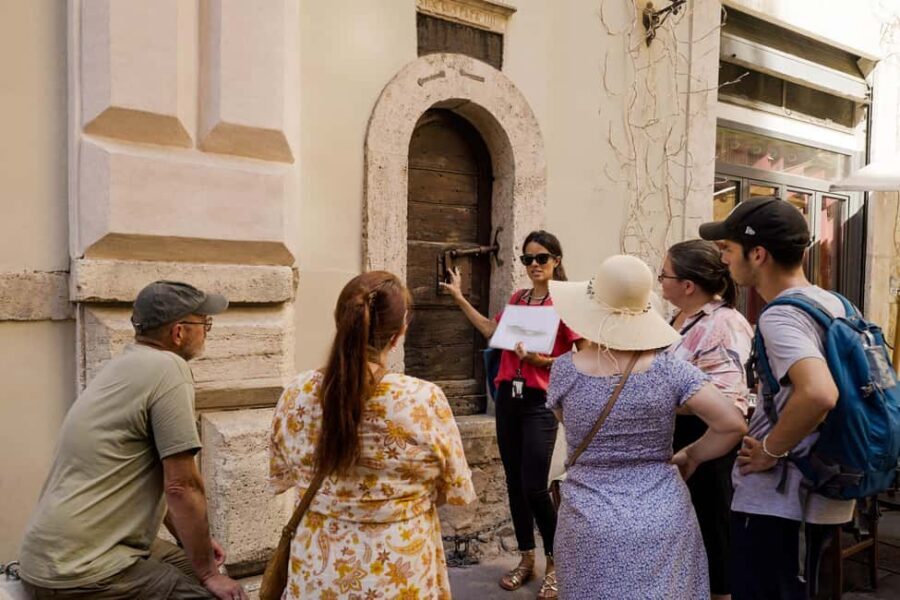
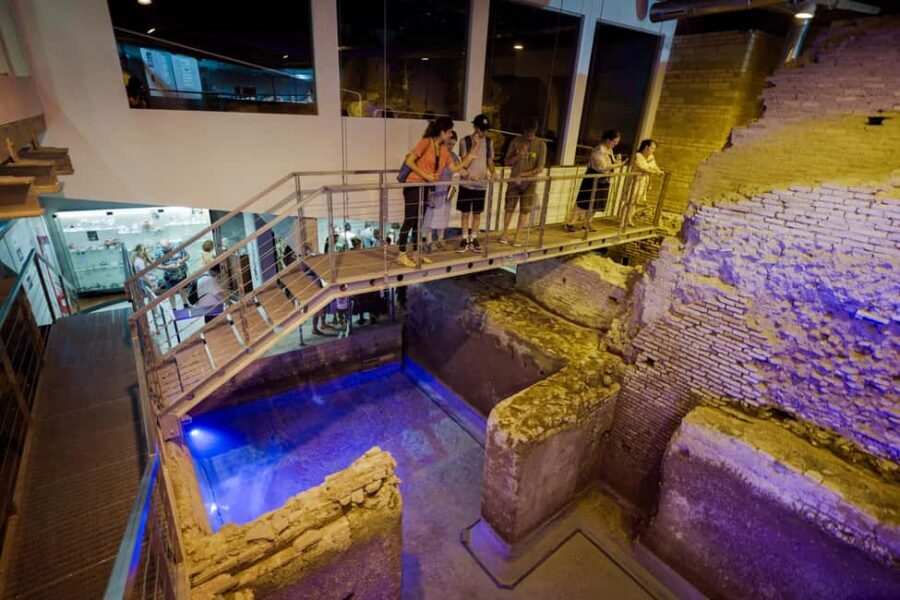
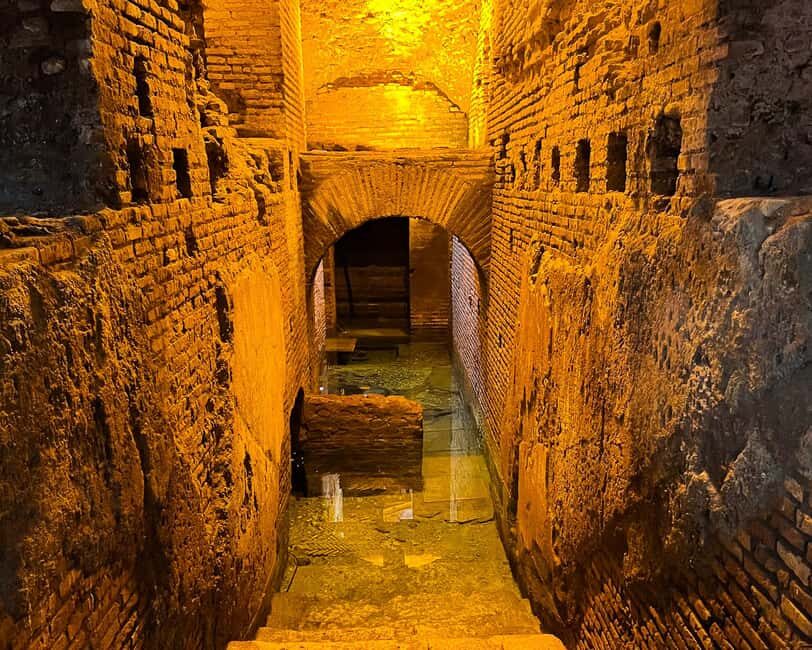
The underground portions are where this tour earns its title. You’ll get to go underground a couple of occasions so you can see the aqueduct up close and spot the water still moving through it. This is a huge difference from tours that only show a plan or a model and then send you away with a story.
I like tours that make Roman engineering physical. Water channels, stonework, and the way these spaces are shaped aren’t something you can fully understand from photos. Seeing it in person gives you that quick mental upgrade: you stop imagining the city as an artifact and start seeing it as a working system.
In the underground spaces, the guide’s job is to translate what you’re looking at into a bigger picture. That’s where the tour’s design really shines: you’re shown the aqueduct’s path, but you’re also told why Romans built it this way, how it connected parts of the city, and what it meant for neighborhoods.
One practical note: because the tour runs rain or shine, you’ll want shoes with solid grip and comfortable socks. Even if the underground areas are controlled, the outside approach and exits can be slippery.
Trevi Fountain with context: more than the famous coin-throw spot
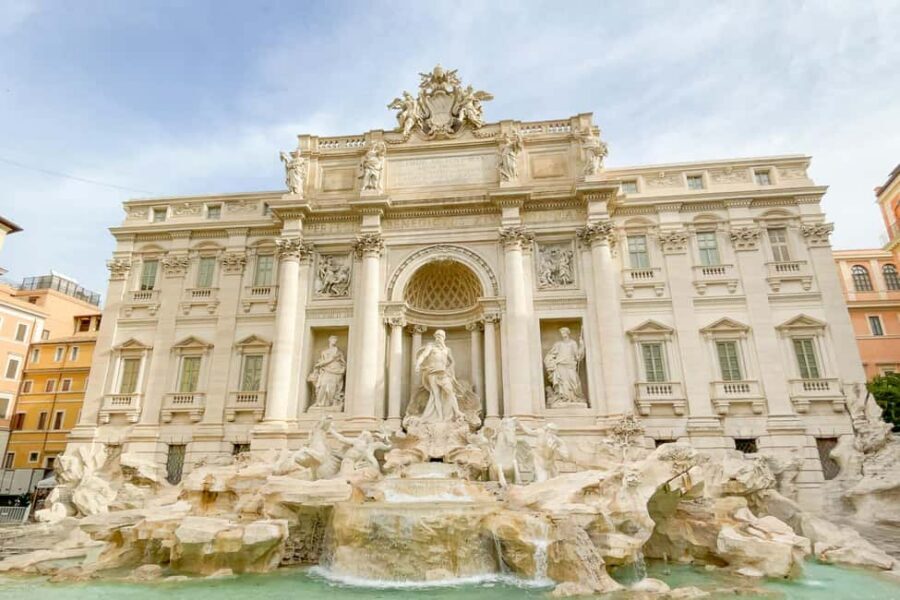
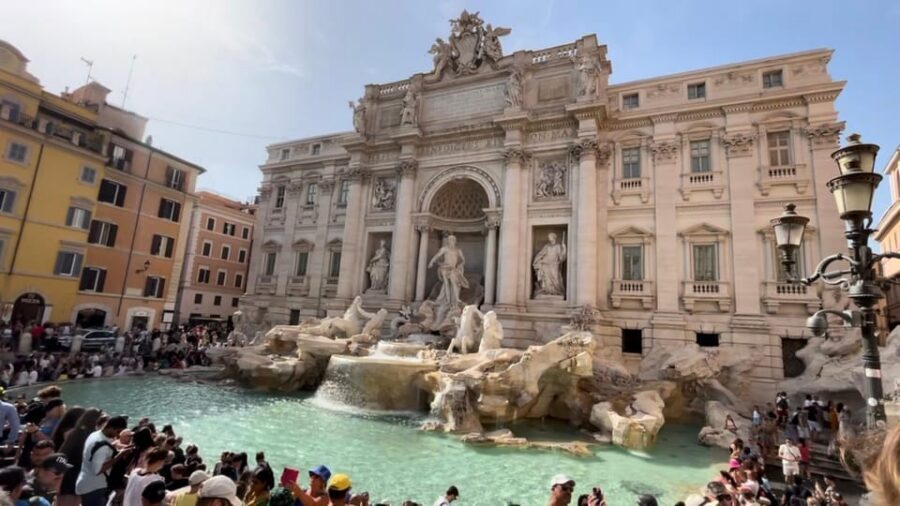
Yes, you end up at Trevi Fountain, and you get a guided explanation there. But the tour doesn’t treat Trevi as the finish line. The way it’s structured helps you understand the fountain as the visible endpoint of a much bigger water plan.
You’ll reach Trevi by following the aqueduct until its monumental arrival point. That matters because when you know the supply route, Trevi stops being only a baroque masterpiece you recognize from postcards. You start viewing it as an end-of-line feature—an engineered statement powered by a network.
Then the tour adds a smart twist: you don’t stop right at the main crowd flow. You’ll turn the corner away from the busiest area and discover an underground water reservoir built over 2,000 years ago. This is the part that makes the tour feel different from a standard Trevi walkthrough: it connects the visible fountain to an older system beneath street level.
This also helps with photos, in a practical way. You may not get the most famous angle exactly at the peak moment, but you’re more likely to get a more thoughtful view and better time for learning. And if you care about architecture, engineering, or how cities function, this is the segment that clicks.
Vicus Caprarius: ruins that make the city feel real
The last major scheduled stop is Vicus Caprarius, with entry included. This is one of those Roman areas that fills in the city around the big icons. Instead of only focusing on the showpieces, Vicus Caprarius gives you a sense of how Roman life sat in the middle of the water story.
You’ll also get guided context here, which is important because Roman ruins can look like scattered stone without explanation. With the aqueduct theme still fresh in your mind, the ruins stop feeling random. They become part of the same question: how did infrastructure shape where people lived, worked, and built?
This stop rounds out the experience nicely for anyone who likes their sightseeing with meaning. If you’re the type who reads signage and turns away when something is just a pretty facade, Vicus Caprarius is likely to keep your attention.
The guides make or break it: Sabrina and Federica’s storytelling style
This tour’s high score makes sense. The guides are consistently described as passionate and eager to answer questions. Names that come up include Sabrina and Federica (and one review spells it Fredrica, but the praise is clearly about the same guiding energy). Across the feedback, the common thread is not only knowledge, but the ability to explain it in an engaging way, often with humor.
That matters because aqueduct routes and underground engineering can turn dry if the guide treats it like a lecture. Here, the tone seems to stay story-driven, with enough structure that you still come away understanding the system, not just hearing facts.
I also like the small group dynamic: when you have up to 12 people, you’re less likely to feel like you’re in a one-way conveyor belt. The feedback specifically points to how easy it is to interact and ask questions in a small group, which is exactly what you want for a tour like this.
If you’re traveling solo or want to avoid large-group crowd control, this setup is a real perk.






Value check: is $59.22 worth it for 2 hours?
At $59.22 per person for a 2-hour English tour, you’re paying for three things: a good guide, guided access to underground aqueduct areas, and entry for Vicus Caprarius (not just a walk-by). That’s the key value math.
If you were to do this on your own, you’d likely spend time figuring out what’s accessible, where water structures are, and what you’re actually looking at. This tour packages that work into a single route with context. In a city like Rome—where the streets are crowded and the landmarks are obvious but the engineering details aren’t—paying for interpretation can be money well spent.
Also, the tour is rain or shine. That reduces the risk of losing your day’s plan to weather, which is another quiet value factor.
Is it for everyone? Not if you only want the biggest photo spots with minimal walking. But if you like learning how Rome functions—literally how water moved through the city—this is a strong match.
Logistics you’ll actually care about
You’ll meet near the Diesel store. Your guide will have a sign with the Live Virtual Guide logo. The tour begins at Piazza di Spagna, 15, and the walk finishes near Vicolo del Puttarello, 00187 Roma RM, Italia.
Because the tour is called Trevi Fountain Underground Aqueduct, it’s smart to expect a route that mixes famous streets with less famous detours. You’ll likely cover a good distance on foot in a short window, plus a couple of underground entrances. So treat it like an active sightseeing plan, not a slow museum loop.
And because it’s English, it’s aimed at travelers who want clear explanations in a language they can follow without stress. That helps the tour land as a true learning experience rather than a vague history walk.
Who should book this tour
This tour is especially worth it if you:
- Want Trevi Fountain explained through engineering and water systems, not just mythology.
- Like small-group walking (up to 12 people) and talking with the guide.
- Care about seeing Roman remnants where you’d least expect them, including underground spaces and ruins tied to real city life.
- Prefer guided context that helps you understand what you’re looking at in street-level ruins.
If you only care about ticking off famous landmarks and don’t want underground stops, you might find it more structured than you need. But if Roman infrastructure turns your brain on, this is a great use of time.
Should you book Rome: Trevi Fountain Underground Aqueduct Walking Tour?
I’d book it if you want a Trevi visit that feels like a story with a beginning, middle, and payoff. The combination of a 19 BC-fed fountain, mostly underground aqueduct tracking, underground close-ups, and a follow-on look at Vicus Caprarius makes it more than a standard landmark stop.
Skip it if you’re hunting for maximum free time near the fountain itself or if you strongly dislike walking and underground entrances. The pace is built into the format.
If you’re on the fence, ask yourself one question: do you want to understand how Rome worked? If yes, this tour is one of the best ways to connect the dots between Piazza di Spagna, Trevi Fountain, and the water system beneath your feet.
FAQ
How long is the Trevi Fountain Underground Aqueduct Walking Tour?
The tour lasts 2 hours. Starting times depend on availability.
What language is the tour in?
The tour is guided in English.
How big is the group?
It’s a small group with no more than 12 people.
Where do I meet the guide?
Meet next to the Diesel store. The guide will have a sign with the Live Virtual Guide logo.
What’s included in the price?
Included: guide, walking tour, underground aqueduct entry, and Vicus Caprarius entry.
Does it run in bad weather?
Yes. This experience runs rain or shine.