REVIEW · PRIVATE
Rome: Private Walking Tour of Highlights & Secret Spots
Book on Viator →Operated by Local CoolTour · Bookable on Viator
Rome has a secret sense of rhythm. This private walking tour threads together major sights and quieter spots, with a local guide’s storytelling and built-in street-food breaks. It’s designed as a fast, friendly way to get your bearings without feeling like you’re chasing a checklist.
I especially love the personal pace. The route is compact, the stops are timed, and the guide can slow down when you ask questions. I also love the food component: you’ll try a supplì tasting at Piazza S. Eustachio and get a chance to sample delicacies at the market stop tied to Giordano Bruno.
One drawback to plan for: a few top sights don’t include admission in the tour price. If you’re budgeting tightly (or you hate ticket lines), you’ll want to factor that in.
In This Review
- Key highlights at a glance
- The value of a 3-hour private walk through Rome’s real “neighborhood layers”
- Starting at Chiesa di Sant’Ignazio di Loyola: baroque splendor for free
- Pantheon without getting stuck in the wrong mindset
- Piazza S. Eustachio: supplì time and the art of street snacks
- Piazza Navona: the famous square that’s still worth your eyes
- Giordano Bruno market stop: learn food culture by tasting
- Largo Argentina: archaeology plus the drama of Roman history
- Il Portico di Ottavia: the Jewish Ghetto feeling that time slowed down
- Teatro di Marcello: why this theatre mattered in the 1st century
- Temple of Portunus: a Tiber-side view into the 2nd century
- Temple of Hercules Victor: marble still standing from long ago
- Mouth of Truth: legend, laughter, and a quick test of courage
- Circo Massimo: where chariot races and performances once ruled the day
- Tiber Island: end with a view and a sense of closure
- What I think makes this tour work: pacing, guide energy, and practical choices
- Where the timing can feel tight
- Finding your guide
- Should you book it?
- FAQ
- How long is the Rome Private Walking Tour of Highlights & Secret Spots?
- What language is the tour offered in?
- Is this experience private?
- What’s the price per person?
- Is admission included for the Pantheon?
- Which stops have admission listed as free?
- Are there sites where admission is not included besides the Pantheon?
- Where does the tour start and end?
Key highlights at a glance
- Private, only your group: you’re not squeezed into a large crowd.
- Baroque intro at Sant’Ignazio: a free stop that sets the mood fast.
- Street-food moments: supplì plus market tastings built into the walk.
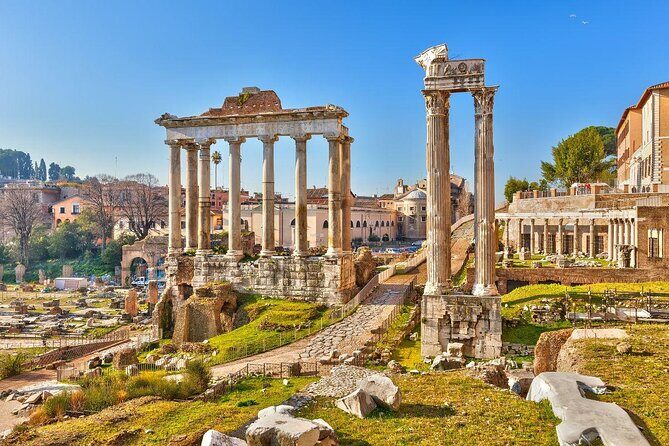
- Ancient Rome in close bites: Largo Argentina, Teatro di Marcello, Portunus, and more.
- Big legends and big views: Mouth of Truth, Circo Massimo, and Tiber Island.
The value of a 3-hour private walk through Rome’s real “neighborhood layers”
Rome can feel overwhelming fast. This tour tackles that problem with smart timing: it’s about 3 hours, and the stops are short enough that you stay sharp, not tired. Instead of treating Rome like a museum hallway, the guide connects each place to how Romans lived, worshipped, and ruled—often in the same breath.
At $117.62 per person, the price isn’t cheap, but you’re paying for two things you can feel immediately: a guide who can tailor the rhythm to your group, and a route that hits famous names and off-the-main-walk corners. It’s also offered in English, and you get a mobile ticket, which makes the day easier once you’re out on the streets.
You should also know this tour is private, so if you’re traveling as a couple or small group, it can feel like a “make Rome make sense” investment rather than just another sightseeing add-on. Booking seems to be popular, with many people reserving well ahead—so if your dates are firm, don’t wait until the last week.
You can also read our reviews of more walking tours in Rome


Starting at Chiesa di Sant’Ignazio di Loyola: baroque splendor for free
You begin at Chiesa di Sant’Ignazio di Loyola in Piazza S. Ignazio. The big draw here is the frescoed ceiling and the strong baroque atmosphere—this isn’t the kind of church stop where you rush in and out. Even with a short time on the schedule, it’s the perfect warm-up: a taste of drama and artistry before the tour shifts into archaeology mode.
Best use of your minutes here: look upward and let your guide point out the details you’d likely miss on your own. The tour lists this stop as free admission, so you’re not burning budget before you even reach the headline monuments.
Possible consideration: churches are still working spaces in many cases. You may want to keep your voice low and watch your footing inside.
Pantheon without getting stuck in the wrong mindset
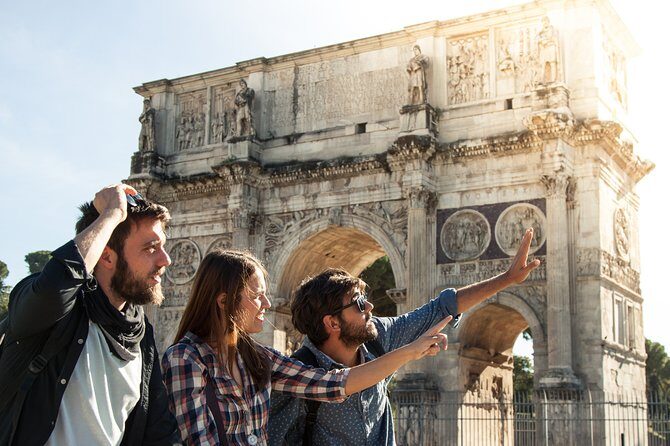
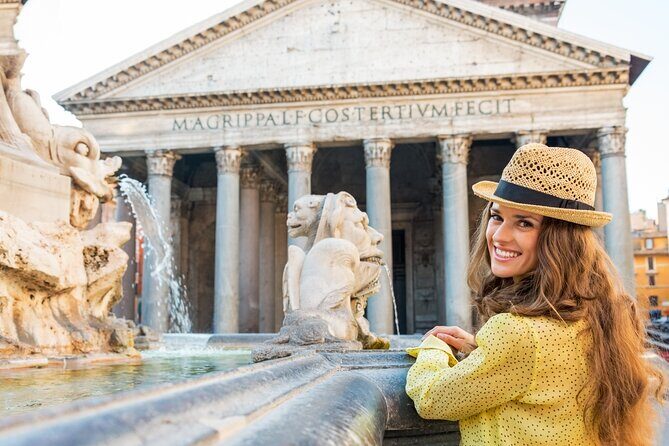
Next up is the Pantheon, one of the most impressive architecture and engineering feats in the city. Your time here is brief—about 10 minutes—and admission for the Pantheon is listed as not included in the tour.
That’s actually a good setup for most visitors. The Pantheon is so instantly recognizable that you don’t need a long explanation to enjoy it. What you do want is the right framing: this place was linked to emperors dedicating it to the gods, and your guide will help you see it beyond the postcard angle.
Practical tip: because entry isn’t included, plan your budget accordingly and expect the timing to depend a bit on how you enter.
Piazza S. Eustachio: supplì time and the art of street snacks
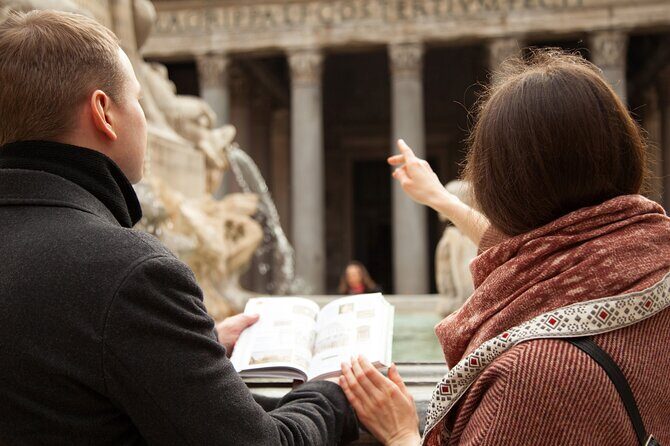
At Piazza di S. Eustachio, you get a supplì tasting. Supplì is one of those Roman snacks that feels simple until you realize how regional it is—crispy outside, gooey comfort inside, and part of the city’s everyday food culture.
This stop also matters because it breaks the rhythm of monuments. After the Pantheon, you’re likely mentally stuffed with ancient stone. Food resets you. If you’ve ever wished Rome came with a built-in lunch plan, this does that.
One more smart thing: the tour positions this as authentic flavors you don’t usually stumble upon by accident.
Piazza Navona: the famous square that’s still worth your eyes
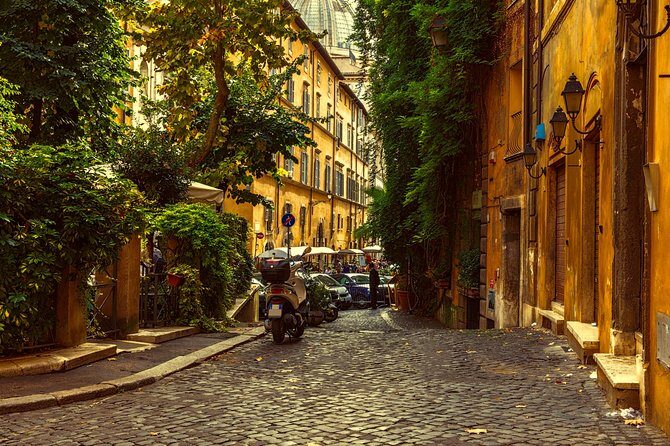
Then you walk into Piazza Navona, Rome’s big baroque stage. This is where you’ll see fountains, palaces around the square, and that lively street-art vibe.
The key is how you approach it. If you treat Piazza Navona like a quick photo op, you’ll miss the point. With a guide, you’ll start noticing the layout and how the square functions like a stage for everyday life—street culture right next to serious architecture.
Admission is listed as free, and your stop is about 10 minutes, which keeps you from overcooking in tourist crowds.
You can also read our reviews of more private tours in Rome



Giordano Bruno market stop: learn food culture by tasting

At Monumento a Giordano Bruno, you’ll switch gears to a local food market setting. The tour invites you to try delicacies and learn why Italian food products are considered among the best in the world.
I like this type of food stop because it doesn’t pretend food is an abstract concept. You’re learning through taste, and your guide can connect what you’re eating to how Romans shop and snack. It’s also short—about 15 minutes—so you get the experience without losing your afternoon to browsing.
A possible consideration: market food can be messy in the best way. Wear shoes you can walk in and don’t wear your favorite “only for museums” outfit.
Largo Argentina: archaeology plus the drama of Roman history
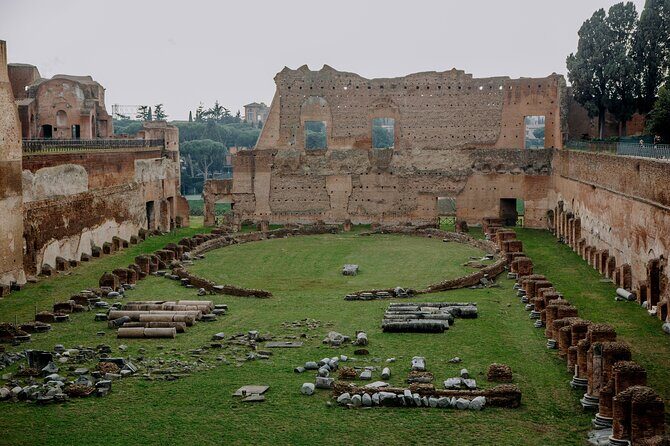
Next is Area Sacra di Largo Argentina, where you’ll encounter archaeological ruins and the famous story of the fatal spot where Julius Caesar was murdered.
This is one of the most emotionally charged stops on the route because the space feels both ancient and strangely close. The ruins are there, the story is there, and your guide helps connect the dots so you don’t just see stone—you understand why people still talk about this location.
Admission is listed as free here, and your time is about 15 minutes, which is a solid pace for absorbing a site like this.
Il Portico di Ottavia: the Jewish Ghetto feeling that time slowed down
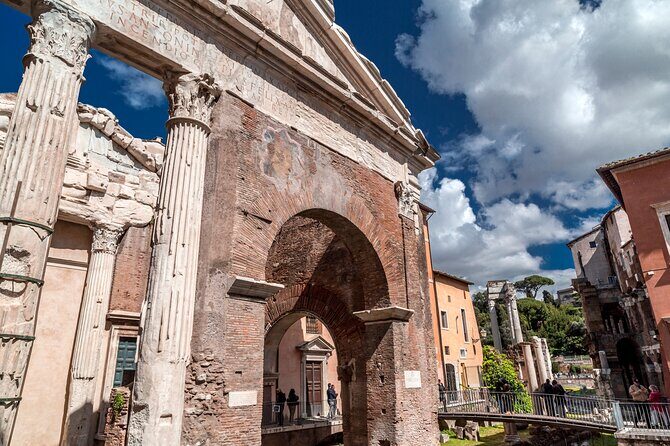
At Il Portico di Ottavia, you’ll step into the area associated with the Jewish Ghetto. The tour description leans into an important idea: it feels like a secret neighborhood that’s “frozen in time,” keeping its authenticity.
This stop works best when you don’t rush through it. The “secret neighborhood” vibe isn’t only about what you see—it’s about the mood. Look at the street scale and how the area functions like a lived-in part of Rome, not just a background for photos.
Your time here is about 20 minutes and admission is listed as free. It’s one of those pauses that makes the rest of the ancient stops land harder.
Teatro di Marcello: why this theatre mattered in the 1st century
Then comes Teatro di Marcello, the theatre building that was among the largest and most important in Rome during the 1st century. Your stop is about 15 minutes, and admission is listed as not included.
Even when you only have a short look, the site gives you a real sense of scale—how public performance and political life were stitched together. Your guide will help you connect the theatre to how the city used entertainment as part of Roman culture.
Practical consideration: since admission isn’t included, your experience may depend on how you access the space during your visit.
Temple of Portunus: a Tiber-side view into the 2nd century
At the Temple of Portunus, you’ll learn about a sanctuary built in the 2nd century for Portunus, the god of the harbors, connected to the Tiber Port. Your time is about 15 minutes, and admission is listed as not included.
This stop is valuable because it’s a different type of ancient site than you might expect in a highlights walk. It’s smaller than the big names, but it gives you a clearer picture of Roman religious life and how the city’s waterfront mattered enough to build sacred space for it.
If you’re the kind of visitor who likes “why was this here?” questions, you’ll probably enjoy this one.
Temple of Hercules Victor: marble still standing from long ago
Next is Temple of Hercules Victor, described as the oldest building made of marble still preserved in Rome. Your stop is about 15 minutes, and admission is again listed as not included.
I love this stop for one simple reason: it’s old without being abstract. It’s still there. And with only a short visit, your guide’s job becomes pointing you to what’s visually meaningful—so you understand what makes this marble survival noteworthy.
Possible consideration: you’ll likely want to plan a bit of extra time for entry logistics if your access depends on tickets you handle separately.
Mouth of Truth: legend, laughter, and a quick test of courage
At Mouth of Truth, the tour mixes myth with a physical moment. You’ll learn the legend of the famous antique marble mask and you’ll see if you dare to try the famous gesture.
This is a fun break that works even if you don’t usually care about legends. Your guide can explain the story so it’s not just a gimmick. And with about 15 minutes here, it doesn’t eat your day.
Admission is listed as free, which makes it one of the best “short stop, big mood” moments on the whole route.
Circo Massimo: where chariot races and performances once ruled the day
At Circo Massimo, you’ll visit the circus where ancient Romans organized games, performances, and chariot races. Your stop is about 15 minutes and admission is listed as free.
This is another place where the guide’s framing changes the experience. Without context, you might see open space. With context, you imagine motion: crowds, contests, cheering. It’s one of the best ways to feel how Rome was built for public spectacle.
Practical tip: wear comfortable shoes. This stop is open and you’ll be standing and walking.
Tiber Island: end with a view and a sense of closure
Your tour ends on Tiber Island, after crossing the bridge and admiring views of the island, described as boat-shaped. Time here is about 15 minutes and admission is listed as free.
Ending with a viewpoint is smart. It gives you a breather after ancient stops and market moments, and it helps your brain connect the dots across the city’s different “eras” and locations.
What I think makes this tour work: pacing, guide energy, and practical choices
The best thing about this experience is the way it stays human. People have talked about guides such as Daniel, Enzo, Juan, and Claudio—and the common theme is clear: they keep you moving at a pace that works, answer questions without rushing you, and stay professional and courteous.
That matters because this route is packed with major stops in about three hours. You’re not doing a long deep-scan of one site. Instead, you’re getting a structured sampler. If you prefer slow, hours-long museum-style pacing, you might want to add a separate follow-up for your two favorite places. But if you want a smart overview that feels lively and grounded, this tour is set up for that.
Also, the food moments aren’t tacked on. They’re placed where you likely need a reset: after big architecture, mid-tour, and around market culture.
Where the timing can feel tight
Because several sites listed as major attractions have admission not included—like the Pantheon and also stops such as Teatro di Marcello, Temple of Portunus, and Temple of Hercules Victor—your real-world time can depend on how entry works on your day. Short stops mean you’ll see a lot, but you won’t linger for long lines.
Finding your guide
Like most meeting-point city walks, the biggest day-of challenge can be simply spotting your guide at the start. The good news: if you’re flexible and communicate if needed, it’s manageable, and once you’re matched up, you’re in good hands.
Should you book it?
Book it if you want:
- A private way to see Rome’s big highlights plus places that feel more lived-in.
- A route that blends ancient ruins, baroque art, and food moments.
- A guided pace that helps you connect the stories without turning Rome into an exhausting sprint.
Skip or consider alternatives if:
- You hate tours where some major sights require you to handle admission separately.
- You want one site you love to get a long, slow, in-depth visit rather than several short, strong stops.
If your goal is to return from Rome feeling like the city makes sense—where you can say what you saw and why it mattered—this is a very solid choice.
FAQ
How long is the Rome Private Walking Tour of Highlights & Secret Spots?
It’s approximately 3 hours.
What language is the tour offered in?
The tour is offered in English.
Is this experience private?
Yes. It’s a private tour/activity, and only your group participates.
What’s the price per person?
The price is $117.62 per person.
Is admission included for the Pantheon?
No. Pantheon admission is listed as not included.
Which stops have admission listed as free?
Chiesa di Sant’Ignazio di Loyola, Piazza di S. Eustachio, Piazza Navona, Monumento a Giordano Bruno, Area Sacra di Largo Argentina, Il Portico Di Ottavia, Mouth of Truth, Circo Massimo, and Tiber Island are all listed as free admissions.
Are there sites where admission is not included besides the Pantheon?
Yes. Admission is also not included for Teatro di Marcello, Temple of Portunus, and Temple of Hercules Victor.
Where does the tour start and end?
It starts at Chiesa di Sant’Ignazio di Loyola in Piazza S. Ignazio and ends at Tiber Island.