REVIEW · PANTHEON TOURS
Rome Private Walking Tour including Pantheon access
Book on Viator →Operated by Travelling Italy · Bookable on Viator
Want to hit Rome’s icons fast? This private 3-hour walk strings together the big sights most people cram into a full day, led by a local guide like Valerio (or Serena) who answers questions in a plain, useful way. I especially like how you get a clear route for first-time orientation, and how the Pantheon visit lands as the big payoff.
I also like the mix of postcard stops and real architectural details: you’ll pause at Trevi Fountain for the wish-coin moment, then move on to major squares and churches that feel different when you’re walking with context. One thing to plan for: ticket notes vary—several churches list admission as not included, and the Pantheon entry ticket is also marked not included—so you’ll want to confirm what you’re responsible for paying.
In This Review
- Key takeaways before you book
- Why this 3-hour private Rome walk feels efficient
- Piazza del Popolo: Obelisco Flaminio and Santa Maria dei Miracoli
- Via del Corso straight through the old center
- Via dei Condotti and the Spanish Steps: street life to views
- Trevi Fountain wish moment, then Sant’Ignazio of Loyola
- Piazza Navona and Castel Sant’Angelo: big open space energy
- Pantheon: what makes it the centerpiece stop
- Price and value: $161.77 per person for a private route
- Who this Rome private tour suits best
- Practical tips for a smoother walk
- Should you book this Rome private walking tour?
- FAQ
- FAQ
- How long is the Rome private walking tour?
- Is this a private tour or a group tour?
- What language is the tour offered in?
- Where does the tour start?
- Where does the tour end?
- Is there a mobile ticket?
- Is Pantheon admission included?
- Are the other admissions included?
- How far in advance do people usually book?
- Are service animals allowed?
Key takeaways before you book
- A true private experience: only your group participates, so you can set a comfortable pace.
- Pantheon is on the route: you’ll see it near the end of the walk, even though the entry ticket may be separate.
- Trevi Fountain + Spanish Steps are built in: including the wish-coin tradition at Trevi.
- You’re guided through major squares and major streets: Piazza del Popolo, Via del Corso, Via dei Condotti, and Piazza Navona.
- You get specific architectural stops: the Flaminio Obelisk, Santa Maria dei Miracoli, and Sant’Ignazio of Loyola.
- Mobile ticket and English: confirmation arrives at booking time, and the tour runs in English.
Why this 3-hour private Rome walk feels efficient
This tour is designed to cover a lot of ground without turning into a sprint. With a private guide for your group, you can ask questions when something catches your eye instead of waiting for the group to catch up.
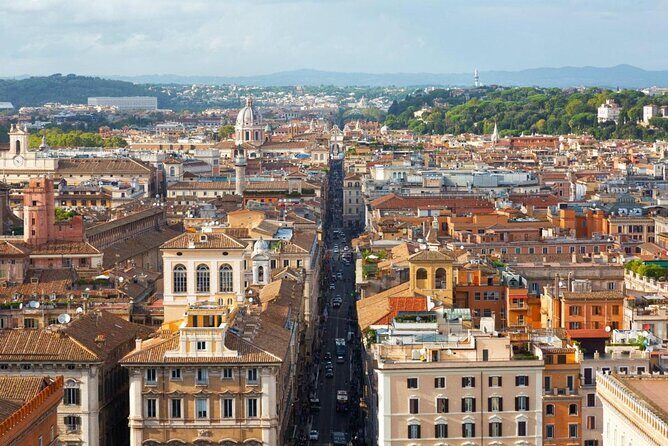
You’ll also be walking Rome’s “connective tissue.” It’s not just monuments in isolation. You get the feel of how Piazza del Popolo connects into the wider straight street of Via del Corso, then into the lively shopping and street-life stretch toward the Spanish Steps and Trevi.
You can also read our reviews of more walking tours in Rome


Piazza del Popolo: Obelisco Flaminio and Santa Maria dei Miracoli
The tour starts at Flaminio Obelisk, in Piazza del Popolo. This one matters because it’s part of the set of ancient obelisks in Rome. The Flaminio Obelisk is 24 meters high (and with the base and cross reaches 36.50 meters), and it gives you a strong first visual marker for the area.
Next you move to Chiesa Santa Maria dei Miracoli, begun in 1675 and finished in 1681. I like this stop because it’s not a giant “big name” church—it’s smaller, circular in plan, and it includes an 18th-century bell tower by Girolamo Theodoli plus an octagonal cupola. You get to notice details without feeling rushed.
A quick follow-up is Santa Maria in Montesanto, built over an earlier church and occupied by Carmelite monks. Even if you don’t “hunt” architecture for fun, these stops give you a sense of how layers of religious life shaped the streets you’re walking today.
Drawback to consider: the church admissions at these first stops are marked as not included, so it’s worth budgeting a little for entry if you want to go inside everything.
Via del Corso straight through the old center
From Piazza del Popolo you transition into Via del Corso, Rome’s main historical street. It’s a long, straight line—about 1.5 kilometers—and roughly 10 meters wide. That may sound like a boring measurement, but in Rome it actually helps you understand why the center feels the way it does.
When you walk Via del Corso, you’re also seeing a contrast with the rest of the area—Rome’s narrow lanes and small piazzas. This road feels different: wider, more direct, and built for movement between major points.
The tour also keeps things practical. If you’re in Rome for just a few days, this kind of “how the city flows” walking helps you get your bearings fast for later solo exploring.
Via dei Condotti and the Spanish Steps: street life to views
Next comes Via dei Condotti, one of Rome’s fashionable streets, where you’ll also pass Caffè Greco at Via Condotti 86. The café is noted as having been established in 1760, which is a nice anchor when you’re walking among modern storefronts.
You’ll have plenty of visual energy here. The street is known as a shopping corridor with many major brands listed along the way, and it’s also simply a good “people-watching” street because it’s busy and central.
Then you hit the Spanish Steps. You’ll walk the steep slope between Piazza di Spagna at the base and Piazza Trinità dei Monti at the top. A practical detail: the top is dominated by the Trinità dei Monti church, so you’re not just climbing to a view—you’re climbing toward a landmark.
Tip: wear shoes that handle uneven stone. This is where “comfortable” matters more than “cute,” because the steps themselves are part of the experience.
Trevi Fountain wish moment, then Sant’Ignazio of Loyola
Trevi Fountain is next, and it’s worth slowing down for even if you’ve seen photos. The fountain is 18th century, designed by Nicola Salvi and completed by Giuseppe Pannini and others. It’s also huge by any city-standard scale: 26.3 meters high and 49.15 meters wide.
This stop includes the classic tradition: toss a wish coin into Trevi Fountain. I like that the tour doesn’t treat Trevi as only a photo spot. It builds in enough time—around 20 minutes—so you’re not just snapping and sprinting.
After Trevi you visit Chiesa di Sant’Ignazio di Loyola. This is a Latin Catholic titular church dedicated to Ignatius of Loyola, built in Baroque style between 1626 and 1650. I find this a smart contrast after Trevi: you go from a public spectacle to a focused religious interior type of stop.
Possible consideration: Trevi and the surrounding area can feel crowded simply because the site is famous. Having a guide helps you spend your time better instead of feeling trapped in the middle of the crowd.
You can also read our reviews of more private tours in Rome





Piazza Navona and Castel Sant’Angelo: big open space energy
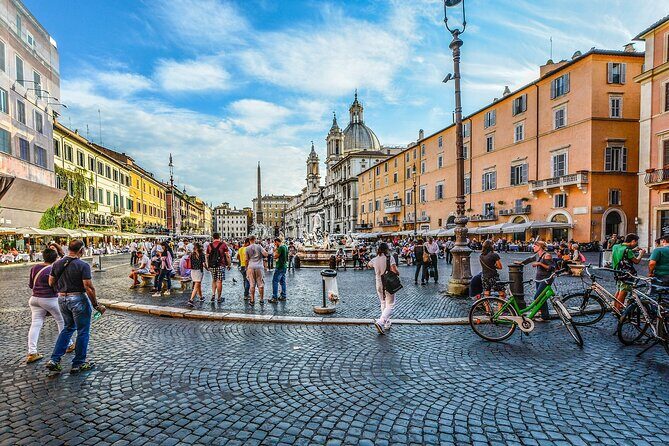
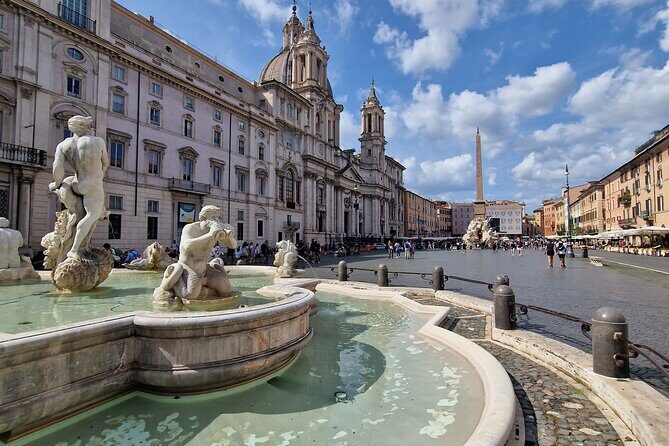
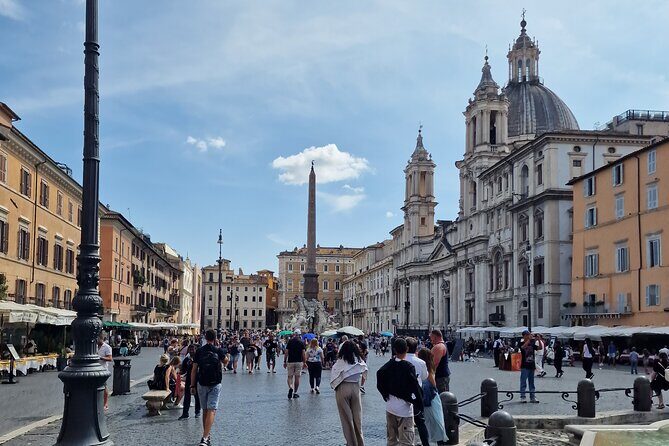
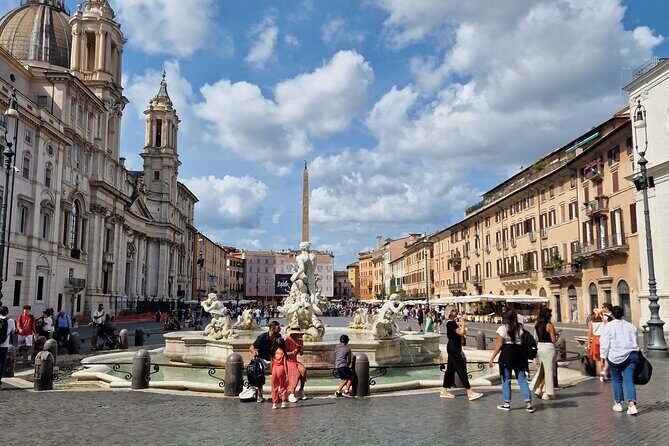
The route continues to Piazza Navona, built on the site of the Stadium of Domitian from the 1st century AD. The square follows the oval form of that ancient stadium layout, so the shape isn’t random—it’s carrying forward a Roman plan.
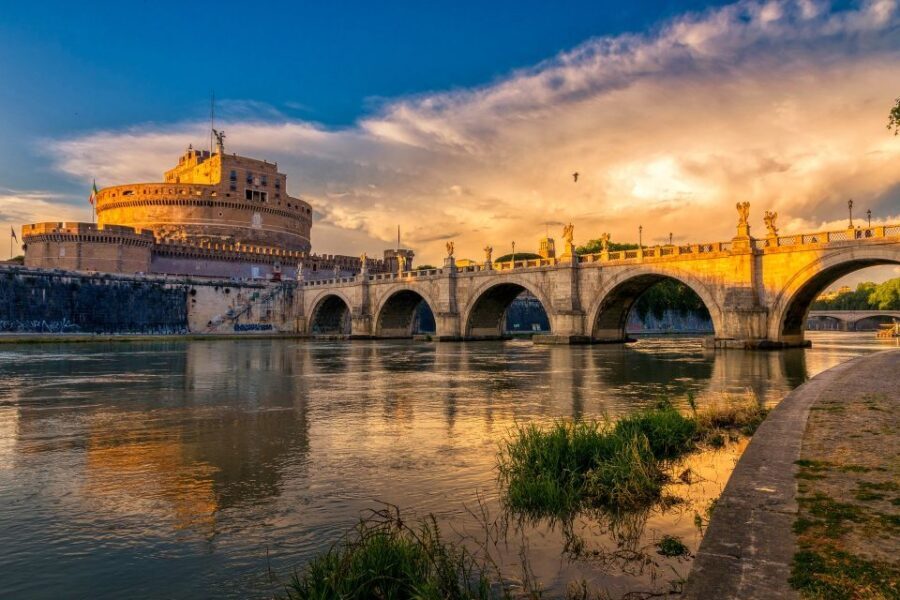
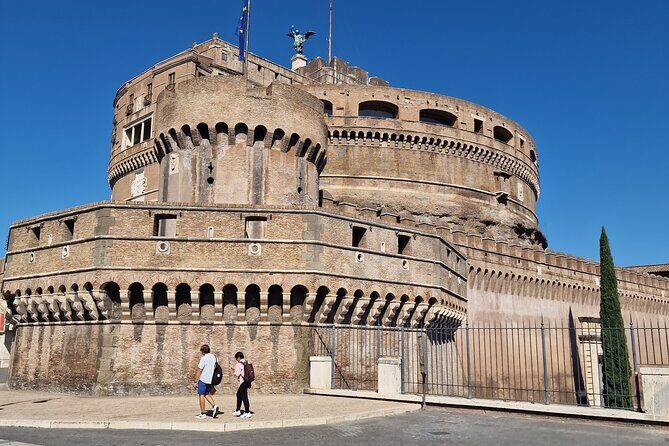
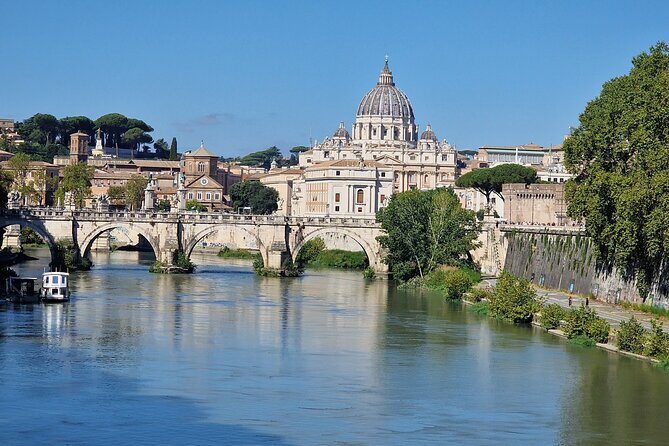
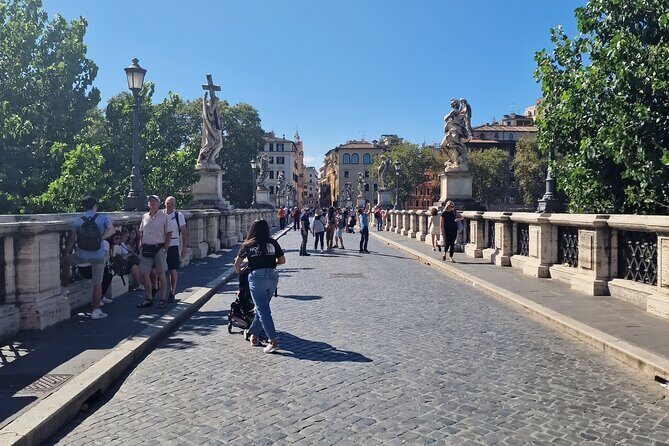
Then you head to Castel Sant’Angelo, a towering cylindrical structure in Parco Adriano. This is the kind of stop where the backstory makes the building easier to read. It was commissioned by Emperor Hadrian as a mausoleum, later used by the popes as a fortress and castle, and today it’s a museum. The data also notes it was once the tallest building in Rome.
If you’re walking with kids or family, this is a good moment to take a breather. Castel Sant’Angelo also gives you a more dramatic sense of “Rome beyond the street corners,” compared with the church-and-square pattern earlier.
Pantheon: what makes it the centerpiece stop
The tour ends with the Pantheon, described as the Temple of all the gods and now a Catholic church since 609 AD. The Pantheon is also named as Basilica di Santa Maria ad Martyres (Basilica of St. Mary and the Martyrs).
This stop is listed for about 20 minutes, and it’s the one most people remember. Even if you’ve read about it before, seeing it in person tends to hit differently because it’s such a major landmark—Roman and Christian history fused in one place.
One important planning note: Pantheon admission is marked as not included on this tour’s details. If you want to go in fully, you’ll want to confirm your entry arrangement and whether you’ll purchase the ticket separately.
Price and value: $161.77 per person for a private route
At $161.77 per person for about 3 hours, the price is in the “private guide” range—so it only feels like value if the tour does what you need it to do.
Here’s the value logic that makes sense for this specific walk:
- You’re paying for a private pace, not a group shuffle.
- The route hits multiple top destinations—Spanish Steps, Trevi Fountain, Piazza Navona, and Pantheon—plus supporting stops around Piazza del Popolo.
- You also get time at each major area (often 15–25 minutes), which helps you actually enjoy the space instead of just checking boxes.
Where it might feel less simple: some churches along the way list admission as not included, and Pantheon admission is also marked as not included. So your final cost could be a bit higher than the base price depending on what you choose to enter.
Who this Rome private tour suits best
This is a smart fit if you want a “great first day in Rome” approach—using walking to get your bearings and learn how the city’s major points link together. The stops are arranged in a way that keeps you moving forward through Rome’s core.
It also suits families and pairs who want a guide who will answer questions and adjust to your pace. The tour is private, so if your group includes people who move slower (or someone who needs extra photo time), you’re not stuck with a rigid group tempo.
If you’re the kind of traveler who likes structure—start at one clear meeting point, walk a focused route, end near a landmark—this format will feel comfortable.
Practical tips for a smoother walk
- Plan for walking time even though the stop durations are short. The breaks between points are part of the experience.
- Bring a small bottle of water, and keep snacks simple. Piazza-to-Piazza walking can add up quickly.
- If Pantheon matters a lot to you (and it usually does), confirm the Pantheon ticket situation before the day.
- Keep your questions ready. A strong part of the guide experience is how easily questions get answered during the walk.
- Use the provided mobile ticket so you’re not scrambling at the meeting point.
Should you book this Rome private walking tour?
Book it if you want a guided route that hits the highest-demand Rome sites without feeling like you’re lost in the city. The private setup is a real advantage when you care about context and want help moving between major areas efficiently.
I’d think twice if you’re trying to keep every admission cost at zero, because several churches and the Pantheon are marked as not included for admission. If you’re okay budgeting for a few entries (or confirming what’s covered), this tour’s mix of streets, squares, churches, and the Pantheon is a strong way to use just one morning or afternoon.
FAQ
FAQ
How long is the Rome private walking tour?
It runs for about 3 hours.
Is this a private tour or a group tour?
It’s a private tour/activity, so only your group participates.
What language is the tour offered in?
The tour is offered in English.
Where does the tour start?
It starts at the Flaminio Obelisk, Piazza del Popolo, 21, 00187 Roma RM, Italy.
Where does the tour end?
It ends at Castel Sant’Angelo, Lungotevere Castello, 50, 00193 Roma RM, Italy.
Is there a mobile ticket?
Yes, the tour uses a mobile ticket.
Is Pantheon admission included?
The Pantheon stop notes admission ticket not included, so you should plan for separate entry costs unless your booking confirmation says otherwise.
Are the other admissions included?
Some stops list admission as free (such as the Flaminio Obelisk, Piazza del Popolo, Via del Corso, Trevi Fountain, and Piazza Navona), while churches like Santa Maria dei Miracoli and Santa Maria in Montesanto list admission not included.
How far in advance do people usually book?
On average, it’s booked about 70 days in advance.
Are service animals allowed?
Yes, service animals are allowed.