REVIEW · HISTORICAL TOURS
Rome in Golf Car a Private Trip between History and Beauty
Book on Viator →Operated by Exclusive Experience · Bookable on Viator
Big Rome sights, minus the walking grind. This private golf-car route strings together Trevi, the Spanish Steps, Piazza del Popolo, and the Pantheon with short stops that help you take it all in. It’s a smart way to see the main highlights in about 3 hours, without turning your trip into one long ankle test.
I especially like the hotel pickup option (when available) because it removes the hassle of finding the meeting spot. I also like that your guide works in multiple languages, and you can get a tour that’s explained clearly in English—plus guides like Max and Mauricio are often praised for being flexible and good at finding the right moments for photos.
The main drawback to plan around is weather. The tour needs good conditions, and even with a golf car you’ll still hit crowded areas around Trevi and the Spanish Steps.
In This Review
- Key things I’d highlight before you book
- A golf cart is the smartest shortcut for Rome highlights
- Trevi Fountain: baroque drama, coin tradition, and a photo window
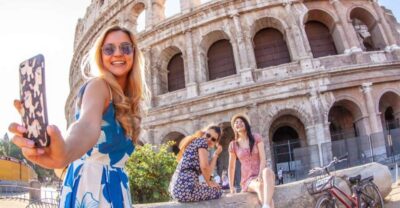
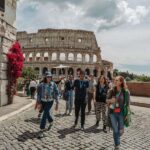
- Piazza Venezia and the Colosseum area: getting your bearings fast
- Piazza di Spagna and the Spanish Steps: 135 steps and the Barcaccia Fountain
- Piazza del Popolo and Via del Corso: Rome’s northern gateway and main street
- Trinità dei Monti at the Pincio: Renaissance church views and quick art stops
- Bocca della Verità: a quick Roman tradition stop
- Via dei Condotti: luxury street energy without a long detour
- Pantheon: the dome trick you can’t stop looking at
- Imperial Fora and Theater of Marcellus: the city’s power in stone
- Villa Borghese and Giardino degli Aranci: a break from monuments
- Guide quality is the real value add
- Price and logistics: is $131.81 worth it?
- Should you book the Rome in Golf Car private trip?
- FAQ
- How long is the Rome in Golf Car private trip?
- What does the tour cost?
- Is pickup from my hotel included?
- Is the guide available in English?
- Are admission tickets included?
- Is this a private tour?
- What’s the cancellation rule and does weather matter?
Key things I’d highlight before you book
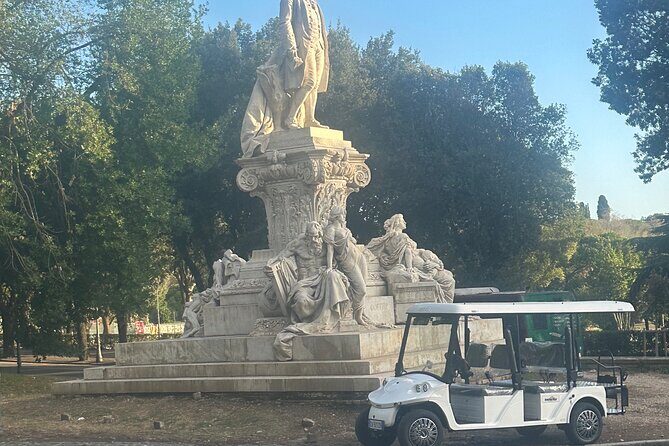
- Hotel pickup and quick drop-off to keep your day efficient
- English-speaking guiding, plus several other languages available
- Admission included at select stops, including Trevi Fountain and the Pantheon
- Plenty of photo breaks instead of a rushed bus-style drive-by
- Private group means you’re not stuck with a pace you didn’t choose
- A route built for orientation if it’s your first or only short day in Rome
A golf cart is the smartest shortcut for Rome highlights
Rome’s top sights are packed close on a map… and wildly far apart on foot. With a golf car, you trade some walking for better timing and easier movement between neighborhoods. In practical terms, you can spend your energy looking, not just transporting yourself.
This tour also works because it’s designed for short, focused stops. You don’t have to sit through long transfers or scramble to regroup after crossing traffic. Instead, your guide keeps the day moving in a way that’s friendly for families, first-timers, or anyone who just wants to see a lot without suffering.
You can also read our reviews of more private tours in Rome


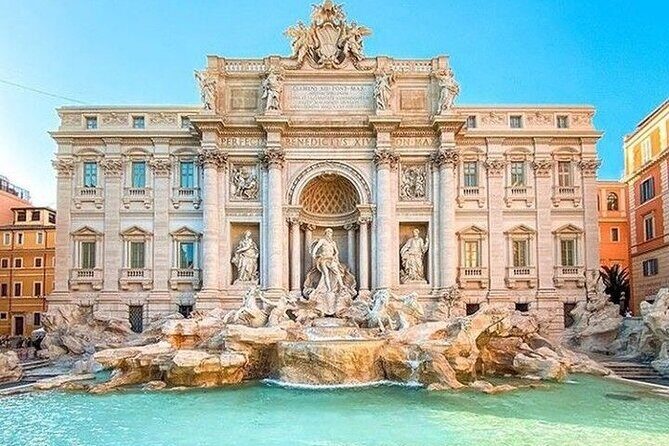
Trevi Fountain: baroque drama, coin tradition, and a photo window

Trevi Fountain is the kind of place that looks different every time you see it—up close, at the right angle, and with the water moving the way it’s supposed to. The fountain’s grand baroque design was by Nicola Salvi and completed in 1762, and the whole composition is built to impress: a huge semicircular basin, columns, and statues packed into the scene.
At the center is Oceanus, driving a shell-shaped chariot pulled by sea horses and tritons. Allegorical sculptures around the fountain represent the four seasons, health, and wealth, so there’s always something to spot while you’re waiting for your turn to take photos.
This stop includes an admission ticket, and it’s timed for about 20 minutes. You’ll want to use that time well: arrive facing the fountain, then rotate your position slowly so you don’t waste your best photo moments.
Piazza Venezia and the Colosseum area: getting your bearings fast
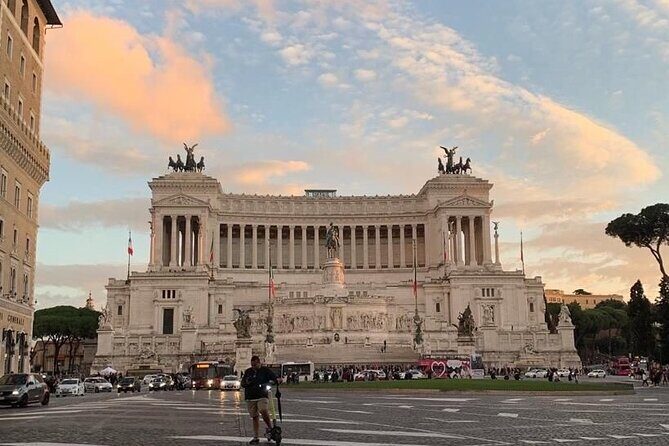
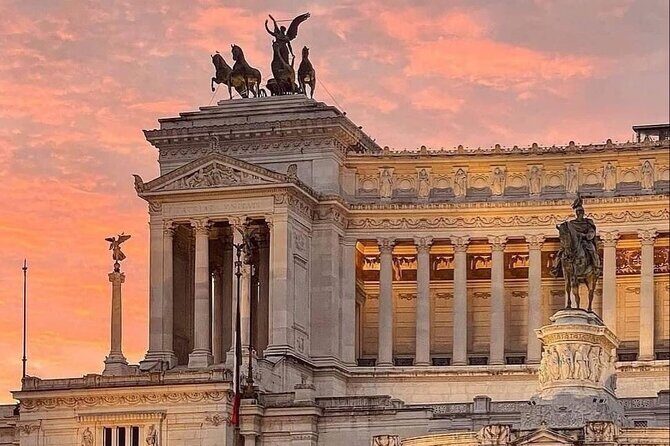
If you want to understand where everything is in Rome, Piazza Venezia is a powerful first reference point. It’s busy and central, with big landmarks and major road connections radiating outward. It’s also where you’ll see the monumental white marble structure dedicated to Vittorio Emanuele II—often called the Altare della Patria.
This square matters because it sits like a hub. From here you can connect toward major historic zones and understand how Rome’s main corridors line up. Your stop is short, but the context helps when you later plan walking routes or decide what to revisit.
Your time here is about 10 minutes, with no admission ticket required. Expect the area to be active with traffic and pedestrians, so having a driver do the maneuvering helps more than you might think.
Piazza di Spagna and the Spanish Steps: 135 steps and the Barcaccia Fountain

Piazza di Spagna is one of those Roman scenes that feels like it belongs in a film. The Spanish Steps stretch with 135 steps, leading up from the square and giving you classic views over the area.
In the center sits the Barcaccia Fountain, a baroque masterpiece by Pietro Bernini and his son Gian Lorenzo. It represents a boat about to sink, tied to the symbolism of the rising waters of the Tiber—so even the fountain has a story, not just good looks.
This is also a shopping-and-strolling zone, which is why it can feel crowded. High-end boutiques line the area, and street life brings energy to the square. When you’re on a golf car route, you get the advantage of seeing it without having to fight for positioning for long stretches.
Piazza del Popolo and Via del Corso: Rome’s northern gateway and main street
Piazza del Popolo is dramatic in a different way than the fountains. It’s an elliptical square with a strong sense of symmetry and a clear focal point: the Flaminian Obelisk, an ancient Egyptian obelisk erected in 10 BC. It rises above decorative fountains, so it’s easy to spot from multiple angles.
Three churches flank the square, including Santa Maria del Popolo, which is noted for works by Caravaggio. If you’re into art, this stop is a good clue for what you can look up next while you’re wandering independently.
From here the tour links into Via del Corso, Rome’s long, central artery. It runs about a kilometer between Piazza del Popolo and Piazza Venezia and is packed with shops, cafes, and restaurants. You also get some historical texture as you pass churches and historic buildings; one named example is Palazzo Doria Pamphili, known for a major private art collection.
Both Piazza del Popolo and Via del Corso are quick stops, and admission is free at the square. Think of this part as your “Rome map in motion,” showing you how the city’s flow connects major areas.
You can also read our reviews of more historical tours in Rome


Trinità dei Monti at the Pincio: Renaissance church views and quick art stops

One of the nicest things about this route is it climbs without making you do all the climbing. Trinità dei Monti sits at the summit of the Pincio, facing the Spanish Steps below, which makes it a natural viewpoint moment.
The church was built between 1502 and 1585 and is a Renaissance-style stop with an elegant façade and an interior that includes frescoes and paintings. It’s dedicated to the Holy Trinity, and the design features two twin bell towers and an imposing portico.
Inside, you might see works associated with artists such as Francesco Salviati and Daniele da Volterra. This is a good pause if you want a change of pace from the street crowds and a calmer, more architectural moment.
This stop is about 10 minutes with no admission ticket required, so use it to look outward first, then inward for the art details.
Bocca della Verità: a quick Roman tradition stop
You’ll also stop at Bocca della Verità, one of the city’s most recognizable symbols. The tour gives it a brief window (about 10 minutes), which is ideal if you want to see it without turning it into a whole production.
Because time is tight, the best move is simple: take a photo, then ask your guide what’s worth noticing about the spot before you roll on. It’s one of those places where the story you hear can be the difference between seeing it and actually getting it.
Via dei Condotti: luxury street energy without a long detour

If Via del Corso is the mainstream shopping spine, Via dei Condotti is the luxury runway. It stretches from Piazza di Spagna to Piazza del Popolo and is lined with high-fashion boutiques and designer stores.
It’s also a restaurant and café corridor, so even if you don’t shop, you can enjoy the atmosphere while you’re there. A few brand names called out include Gucci, Prada, Valentino, and Bulgari, which tells you the vibe immediately.
Your time is about 20 minutes, and admission isn’t required. This is a nice contrast stop after the bigger monuments—Rome’s style side gets a moment here.
Pantheon: the dome trick you can’t stop looking at
The Pantheon is one of the best-preserved ancient buildings in Rome, and you feel that the moment you step inside. It was built in the 2nd century AD under Emperor Hadrian and is famous for its dome, including the 43-meter diameter of the unreinforced concrete dome.
The interior is shaped by geometry and symmetry, and then there’s that single oculus in the center. Light pours in through the opening, and you get a dramatic effect that makes photos look better than you expect.
It also has a religious layer that helped preserve it over time. In the 7th century it was transformed into a Christian church, which is part of why it’s still standing in such impressive form.
This stop includes an admission ticket and lasts about 20 minutes. The key here is pacing: let your eyes adjust outside-in, then spend a little time looking up before you start snapping down-the-hall shots.
Imperial Fora and Theater of Marcellus: the city’s power in stone
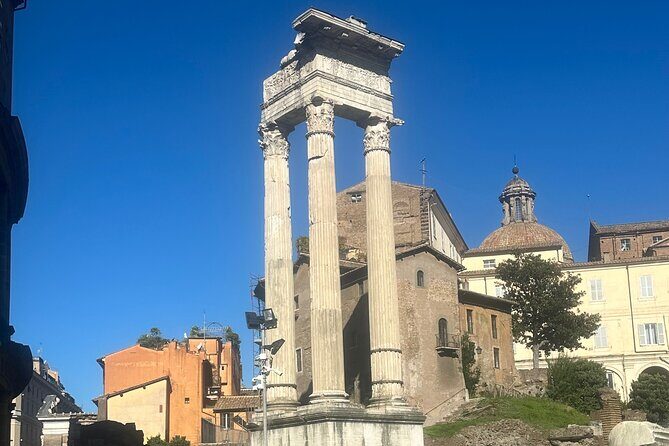
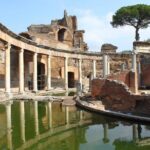
Rome’s ancient “center of gravity” isn’t just one building. The Imperial Fora area is a complex of squares and monuments that served as a political, social, and economic heart during the Roman Empire.
Built between the 1st century BC and the 3rd century AD, it includes forums associated with emperors like Julius Caesar and Trajan. You’ll see the idea of power expressed through temples, basilicas, columns, and triumphal arches—like the city was arguing with itself in marble.
This portion of the tour is about 20 minutes with no admission ticket required. It’s short, so focus on orientation and major forms, not on trying to read every detail.
Then the route also connects to the Theater of Marcellus area, another reminder of how loud and large Roman culture could be. The theater was built between 13 and 11 BC on Augustus’s request for his nephew Marcellus, with an estimated capacity of about 20,000 spectators. Much of it is still visible, but some structures are partially incorporated into modern buildings.
It’s a great stop if you want ancient Rome without spending hours inside museums. Think of it as a “you are here” lesson in how the city was designed to hold people.
Villa Borghese and Giardino degli Aranci: a break from monuments
After all the monumental stone, it helps to have green space. Villa Borghese is a large public park in central Rome, and it’s known for scenic walking paths, gardens, ponds, fountains, and statues. It began as a private villa in the early 17th century and later became a recreation and culture area.
One reason people love it is the mix of outdoors and art options, since it’s also where you’ll find the Galleria Borghese (though your tour stop here is described more as a park moment). This kind of pause can make the day feel less frantic, more like sightseeing than sprinting.
Then there’s Giardino degli Aranci (Orange Garden), also called Parco Savello, on the Aventine Hill. It’s known for orange trees, aromatic plants, and shaded paths, plus a classic panoramic view over Rome and the Tiber River. This spot is about 10 minutes on the schedule, no admission ticket required.
If you’re the type who likes one good “breather view” during a busy itinerary, this is that moment.
Guide quality is the real value add
The tour isn’t just about moving between landmarks. A lot of the payoff comes from the guide’s delivery and how they manage your time.
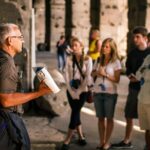
Guides such as Max and Mauricio are praised for being knowledgeable and flexible, and for explaining history clearly enough that you leave with context. Others like Alex and Alessandro are noted for enthusiasm and adjusting the route based on what you want to see.
In plain terms, if you show up curious, you’ll get more back than if you treat the day like a photo checklist. Even small choices—standing in the right place, timing a stop for a better angle—change your whole experience.
Price and logistics: is $131.81 worth it?
At about $131.81 per person for roughly 3 hours, this isn’t the cheapest way to tour Rome. But it’s also not a generic sightseeing ride. You’re paying for convenience, a private group setting, a guide, and a transport method that can cut down on time lost between neighborhoods.
You also get admission tickets included at select stops—specifically called out for Trevi Fountain and the Pantheon. That alone helps the math feel more fair, especially if you were already planning to visit those sites.
Plus, pickup is offered from hotels for tourists (when available), and the tour uses a mobile ticket. That reduces friction on travel day, which is worth money in a city where minutes matter.
So who is it best for? People with limited time, anyone who wants to see several big landmarks without hours of walking, and couples or families who’d rather control the pace than join a crowded bus.
Should you book the Rome in Golf Car private trip?
I’d book it if you’re doing a short Rome visit and want a focused highlights plan with less strain. This tour is built for first-time orientation: you’ll see major classics like Trevi, Spanish Steps, Piazza del Popolo, Pantheon, and multiple ancient sites, plus a couple of calm breaks in parks.
Skip it if you’re a die-hard “walk everywhere, explore slowly” traveler. Rome has plenty to wander on your own, and you can certainly do these sights without a golf car if your schedule is flexible.
If you do book, pick one or two stops you care about most—then spend your best effort there. The day is short by design, and the best results come when you show up with intention.
FAQ
How long is the Rome in Golf Car private trip?
It’s about 3 hours.
What does the tour cost?
The price is listed as $131.81 per person.
Is pickup from my hotel included?
Pickup is offered from hotels for tourists, so you can start the day with less hassle.
Is the guide available in English?
Yes. The guide is offered in English, and also listed for Spanish, Italian, Russian, Ukrainian, and Polish.
Are admission tickets included?
Admission tickets are included at Trevi Fountain and the Pantheon. Other stops in the schedule are listed as free.
Is this a private tour?
Yes. It’s private, meaning only your group participates.
What’s the cancellation rule and does weather matter?
You can cancel up to 24 hours in advance for a full refund. The experience requires good weather, and if it’s canceled due to poor weather, you’ll be offered a different date or a full refund.