REVIEW · HISTORICAL TOURS
Rome: Historic Squares Guided Walking Tour
Book on GetYourGuide →Operated by Estaalia · Bookable on GetYourGuide
Rome’s best-squares tour is efficient and fun. You start at Piazza del Popolo, then roll through Rome’s most iconic public spaces with a licensed guide keeping the stories clear and the pace moving. Guides you might get include Antonio or Sarah, and both show up in real trip feedback for being patient, question-friendly, and happy to share extra tips for how to enjoy your stay.
I especially like two things: the tour hits the big visual hits—Piazza di Spagna and Fontana di Trevi—without wasting your time, and the guide adds practical local guidance on where to go and what to look for, not just dates and names. One consideration: it’s a walking tour with a moderate amount of walking, and it’s not a great match for wheelchair users or people with mobility impairments.
In This Review
- Key highlights you’ll care about
- Rome’s Historic Squares in 2 Hours: What You’re Really Buying
- What you should know before you go
- Starting at Santa Maria del Popolo: Easy Meet-Up, Real Rome Energy
- Piazza del Popolo: Getting the “Secrets” in a Practical Way
- Piazza di Spagna and the Spanish Steps: Why This Stop Works
- Fontana di Trevi: The Baroque Masterpiece and the Coin Ritual
- The Pantheon: Ancient Engineering You Can Read in Your Head
- Piazza Navona: Ending With Bernini’s Fountains and Street Life
- How the 2-Hour Format Helps (and When It Doesn’t)
- When this tour is a great match for you
- When you should rethink it
- Price and Value: Is $29 Worth It?
- What to Expect From the Guide (and Why It Matters)
- Should You Book This Rome Historic Squares Walking Tour?
- FAQ
- Where does the tour start?
- What are the main stops on the tour?
- How long is the walking tour?
- Is entry to attractions included?
- What languages are available?
- Is this tour suitable for wheelchair users?
Key highlights you’ll care about
- A tight 2-hour route through five headline squares in central Rome
- Meeting right at Santa Maria del Popolo so you don’t have to hunt for a group
- Spanish Steps and Trevi with time to actually look, not just pose for photos
- Coin-toss moment at Trevi as a built-in ritual for the experience
- Pantheon focus on engineering and what makes it impressive
- Finish in Piazza Navona with Bernini’s fountains and lively street energy
Rome’s Historic Squares in 2 Hours: What You’re Really Buying

This is the kind of tour that helps when you’re short on time but still want the Rome that people talk about. In about two hours, you move through the kind of spaces Romans and visitors gravitate toward every day: broad piazzas, famous stairways, landmark fountains, and one of the most influential ancient interiors in the city.
At $29 per person, the value comes from the combination of three things: a licensed English-speaking guide, a walk that strings together multiple must-see stops, and zero need to plan the order yourself. It’s not a museum day. It’s a “get your bearings fast” day, where the guide helps you connect what you’re seeing with how Rome works—visually and culturally.
You can also read our reviews of more walking tours in Rome


What you should know before you go
Bring comfortable shoes and water. You’ll want a light, practical outfit too: no sleeveless shirts, and the tour doesn’t allow luggage or large bags. Also, this route isn’t suitable for wheelchair users or people with mobility impairments, so plan accordingly.
Starting at Santa Maria del Popolo: Easy Meet-Up, Real Rome Energy
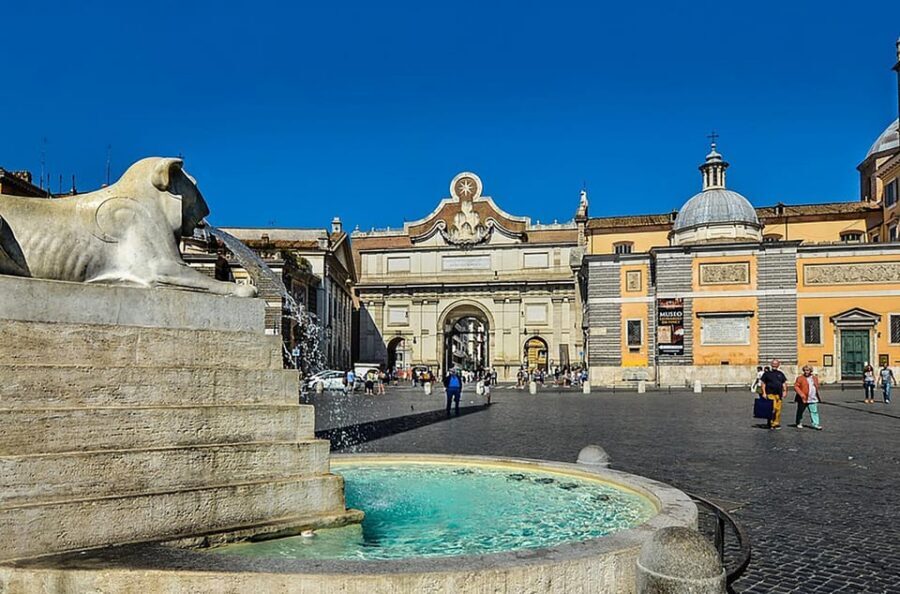
Your tour begins where you can actually find it: in Piazza del Popolo, right in front of the Church of Santa Maria del Popolo. The guide will be holding a sign with the company name, so you’re not left guessing.
This matters more than you’d think. Rome can be confusing at first—streets curve, piazzas shift your sense of direction, and people stand in ways that make “meeting spots” tricky. Starting in a clear, central landmark area makes the whole experience less stressful, especially if this is your first day in Rome.
From this starting point, you get the tour’s rhythm: short guided windows, then walking and looking, then another quick interpretation at the next major stop.
Piazza del Popolo: Getting the “Secrets” in a Practical Way
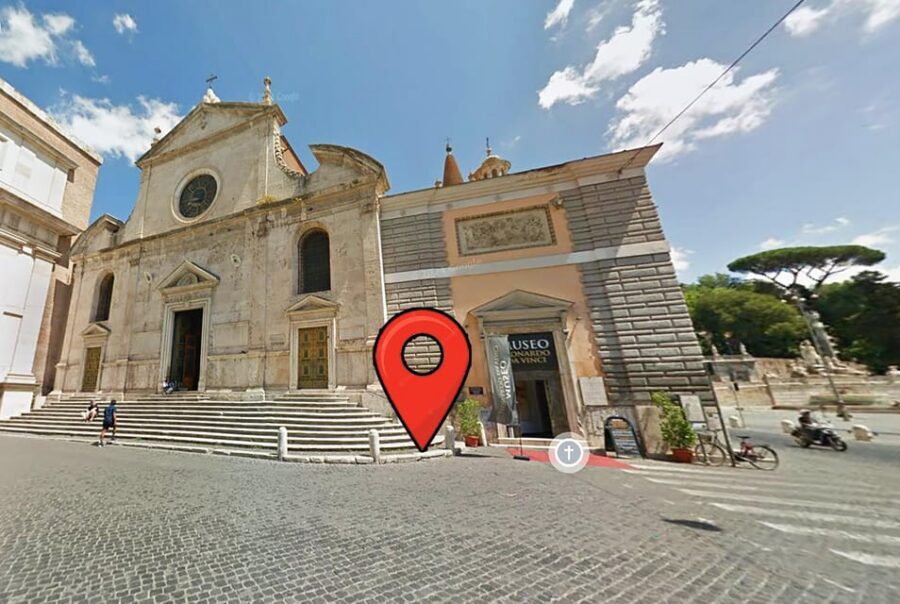
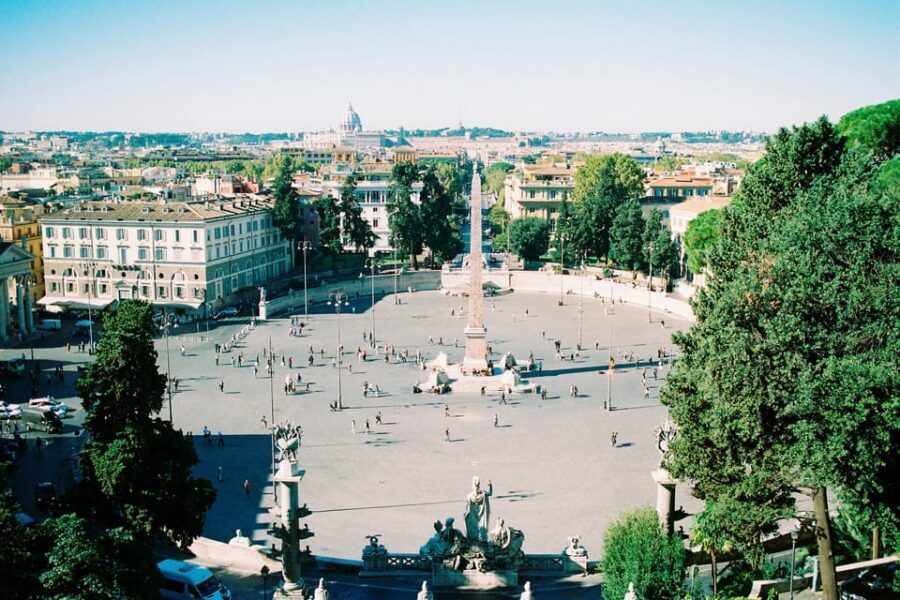
The first stop is Piazza del Popolo, with about 20 minutes of guided time, sightseeing, and walking. The wording for this stop leans into secrets and history, but what you’ll feel on the ground is different: the guide is there to help you read the square instead of just stare at it.
You’ll learn what makes the place significant and how the layout and surroundings connect to the rest of Rome’s city center. Think of it like a map you don’t have to hold: the guide points out what matters, then you absorb it while you’re still there.
A tip based on how the guides are described in real feedback: if you ask questions, you’re likely to get straight answers and follow-ups. Antonio is specifically mentioned as patient and willing to respond, which is exactly what you want in the early part of a tour. You set the tone for the day.
Piazza di Spagna and the Spanish Steps: Why This Stop Works
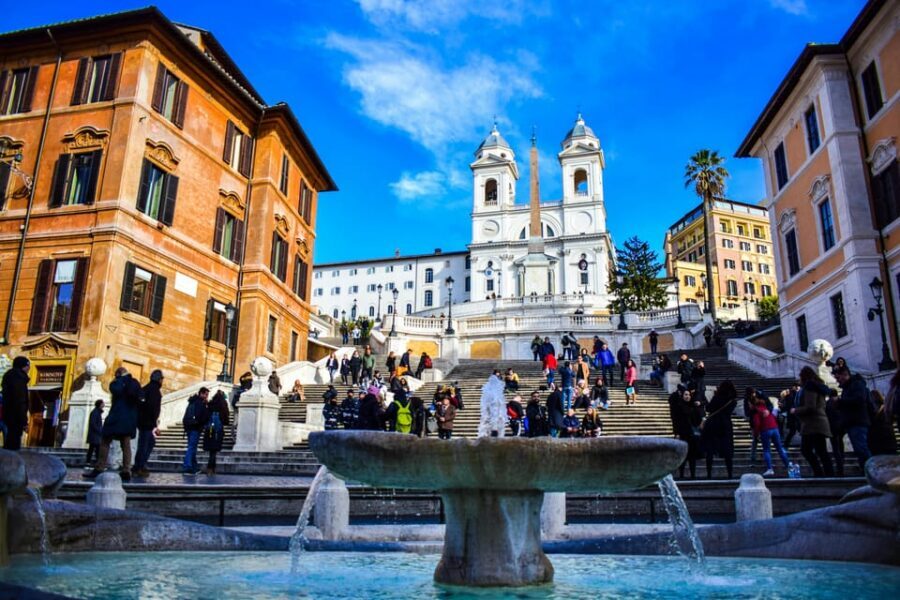
Next is Piazza di Spagna and the Spanish Steps, again with roughly 20 minutes for guided sightseeing and walking.
This is a perfect stop for two reasons. First, it’s one of those places where your photos will always look like something official and historic, even if your shot angle changes. Second, the guide helps you understand why the stairway is so famous, so it feels more than just a backdrop.
The tour’s timing is also smart. You’re not stuck wandering for ages. You get enough time to look up and around, then you’re on your way, keeping momentum. If you’re the kind of person who likes to pause and people-watch for a minute, this stop gives you room to do it without breaking the schedule.
You can also read our reviews of more guided tours in Rome




Fontana di Trevi: The Baroque Masterpiece and the Coin Ritual
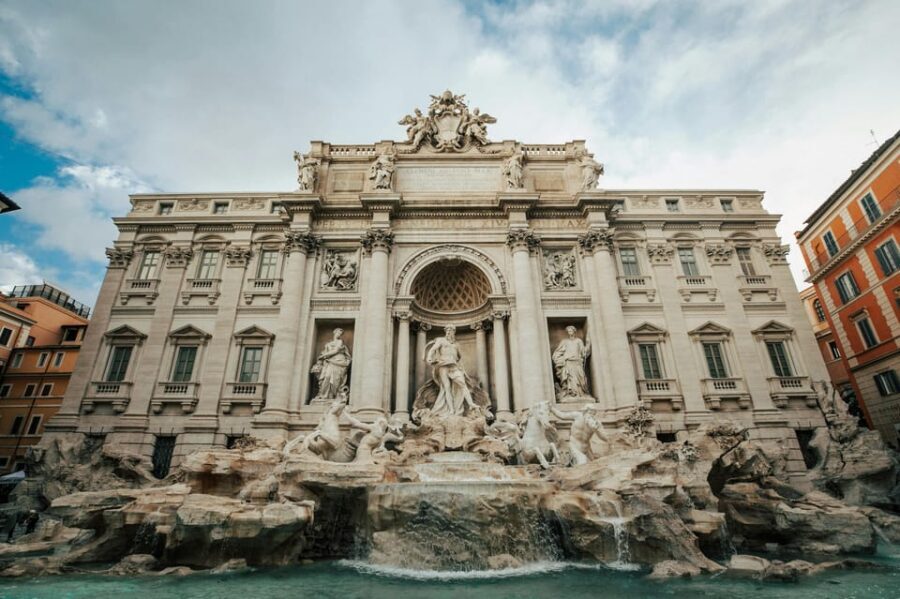
Then comes the stop everyone can picture instantly: Fontana di Trevi. You get about 20 minutes of guided time here as well, including sightseeing and walking.
This is where the tour becomes more than an efficient route. The guide frames the fountain as the dramatic Baroque masterpiece it’s known for, and you participate in the tradition of tossing a coin into the fountain, a ritual tied to the idea that you’ll return to Rome.
Even if you’ve seen Trevi in photos a hundred times, you’ll still want a little time to take it in at human scale. The guide helps you focus on what you’re actually seeing, which makes the coin-toss moment feel like part of the experience rather than a quick tourist checkbox.
If you’re planning your own day in Rome afterward, this is also a great moment to reset. You’ll have seen the biggest wow-factor visuals by this point, so the rest of your day can be calmer and more personal.
The Pantheon: Ancient Engineering You Can Read in Your Head
After Trevi, you head to the Pantheon for another 20 minutes of guided sightseeing and walking.
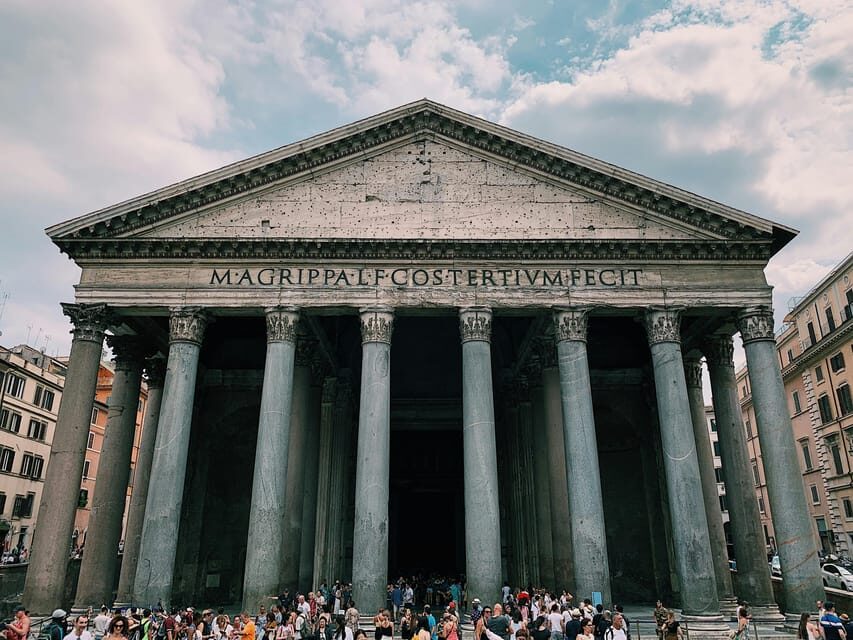
Here’s the key: the tour doesn’t just give you the headline. It specifically points you to what makes the Pantheon impressive—ancient Roman engineering and architectural genius. That’s a big promise, and in practice it means you’re guided to notice proportions, structure, and why this building has such lasting pull.
Even without extra entry time mentioned, the guided explanation helps you make sense of what you see from your position. If you’ve ever felt overwhelmed by big monuments, this kind of guided framing helps you understand them faster. You start to recognize the logic instead of getting only the wow-factor.
Piazza Navona: Ending With Bernini’s Fountains and Street Life
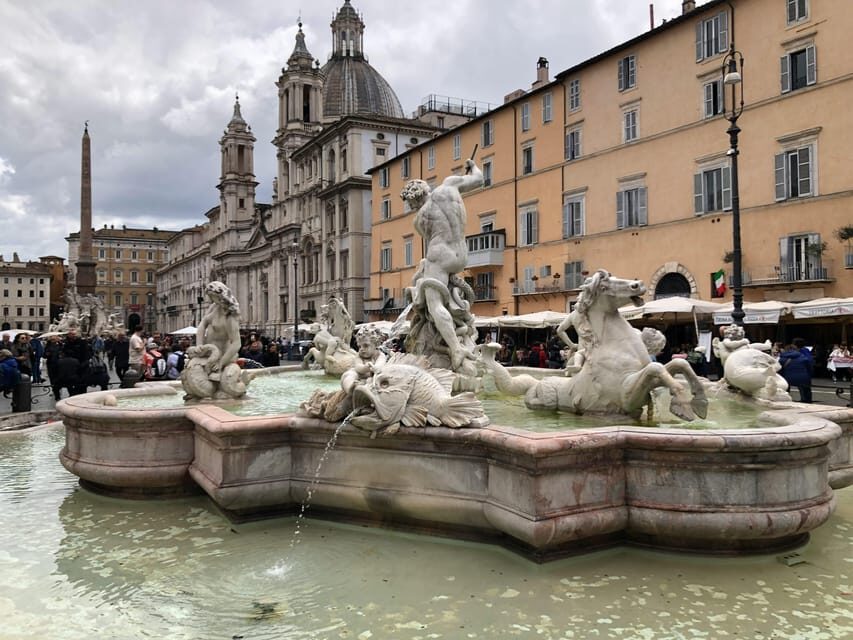
The last stop is Piazza Navona, with about 20 minutes of guided sightseeing and walking to wrap the day.
This is a smart ending. You leave the heavier architectural focus of the Pantheon and finish in a piazza that feels socially alive. You’ll see Bernini’s fountains, and you’ll be surrounded by cafes and lively street performers—exactly the kind of energy that makes a tour feel like it ends naturally, not abruptly.
It also gives you an easy transition to the rest of your evening. When a tour ends right in a place where you can grab a drink, snack, or just keep walking, you don’t have that awkward “what now?” feeling.
How the 2-Hour Format Helps (and When It Doesn’t)
This tour’s format is its strength. With about 20 minutes per stop, you get a guided story at each major landmark, plus time to look and orient yourself. It’s a practical way to see a lot without spending half a day in transit.
When this tour is a great match for you
- You want the best-known Roman public squares without building your own plan.
- You like short guided explanations and prefer moving from stop to stop.
- You value a guide who can answer questions and add practical suggestions for your trip.
Some real guide moments stand out in the feedback: Sarah, for example, is mentioned as giving guests extra advice about how to enjoy their stay, including ideas for visits and places to shop and eat. That kind of add-on can be more useful than another 10 minutes at any single stop.
When you should rethink it
- If you need long, slow time inside sites or prefer one-location depth, this route may feel too quick.
- If your mobility is limited, it’s not set up for wheelchair use and not designed for people who need minimal walking.
Price and Value: Is $29 Worth It?
At $29 per person, you’re paying for a specific kind of value: a licensed English-speaking guide, a tightly organized route, and the work of turning landmarks into something you understand quickly.
Entry fees are not included, so you should expect that any costs to enter attractions are separate. But the tour’s focus is on the squares and major landmarks you can experience as a walk-through, with explanations that make them click without needing museum-style time.
If you’re comparing options, ask yourself this: would you rather spend your time reading maps and guessing which details matter, or would you rather have a guide point out what’s worth noticing and keep you on track? For many first-timers, the guide + route is the real bargain.
What to Expect From the Guide (and Why It Matters)
This tour doesn’t just promise “history.” It’s built around the guide’s role in how the city feels.
The best examples from real experiences are simple but important:
- Antonio is mentioned as having good knowledge, being patient, and answering questions without getting annoyed.
- Sarah is mentioned as pleasant and interesting, and also giving extra trip advice for enjoying Rome—helpful when you’re trying to build your own plan after the walk.
You can expect a licensed guide to keep the flow going and to point out the kinds of details that help you remember what you saw. If you take the chance to ask questions, you’ll likely get more out of the tour than if you treat it like background noise.
Should You Book This Rome Historic Squares Walking Tour?
Book it if you’re trying to see the classic Rome route without turning your day into a puzzle. It’s a strong fit for first-timers, couples, and people who like a guided framework—especially if you want those major anchors: Piazza del Popolo, Spanish Steps, Trevi, the Pantheon, and Piazza Navona.
Skip it (or look for a different style) if you need wheelchair-friendly access, want a slower pace, or expect lots of included entry tickets. This is about the walk and the public-space experience, not a long deep-dive inside attractions.
If you only have a couple of hours and you want to walk away feeling oriented and impressed, this tour is a solid choice.
FAQ
Where does the tour start?
The guide waits in Piazza del Popolo, in front of the Church of Santa Maria del Popolo, holding a sign with the company name.
What are the main stops on the tour?
You’ll see Piazza del Popolo, Piazza di Spagna (Spanish Steps), Fontana di Trevi, the Pantheon, and end in Piazza Navona.
How long is the walking tour?
The tour lasts 2 hours.
Is entry to attractions included?
No. Entry fees to attractions are not included.
What languages are available?
The tour includes live guiding in French, English, and Spanish.
Is this tour suitable for wheelchair users?
No. It’s not suitable for people with mobility impairments and wheelchair users.