REVIEW · CITY TOURS
Rome Golf Cart Tour: Highlights of the Eternal City
Book on Viator →Operated by ROME GOLF CART TOUR · Bookable on Viator
Rome is too big to see slowly.
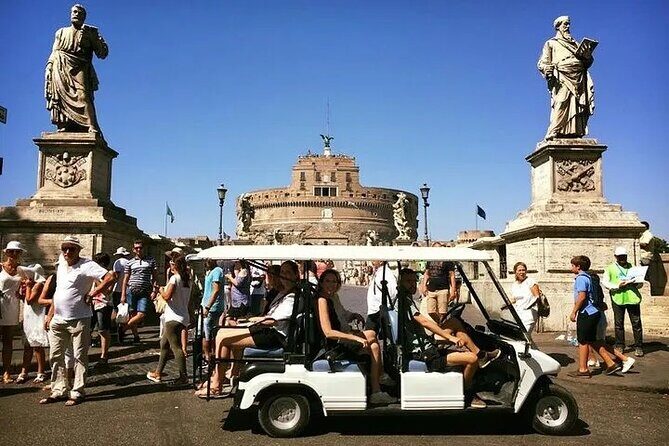
This private golf cart or eFiat tour is built for a quick, easy orientation: you glide between icons without wrestling city traffic, and you get routed through quieter backstreets. I especially like the relaxed hotel pickup in central Rome and the way the whole route is paced for seeing a lot without wearing your legs out.
The one thing to keep in mind is that the stop times are short, so you will need to be ready to move, look, and snap your photos fast—especially at Trevi and the Spanish Steps.
In This Review
- Key points before you go
- Why a golf cart is a smart way to tour Rome fast
- How the 3-hour route works (and why the timing matters)
- Stop-by-stop: Pantheon and Piazza Navona in quick bites
- Pantheon
- Piazza Navona
- Trevi Fountain, Spanish Steps, and Campo de’ Fiori photo moments
- Trevi Fountain
- Spanish Steps
- Campo de’ Fiori
- Villa Borghese and Palatine Hill: Rome beyond the postcard loop
- Villa Borghese
- Palatine Hill
- Circo Massimo to Piazza del Popolo: arenas and city gates
- Circo Massimo
- Aventine Hill
- Piazza del Popolo
- Chiesa di Sant’Ignazio di Loyola: a short stop with big architectural clues
- What makes the guides matter on this cart tour
- Comfort and practical tips for your cart ride
- Price and value: is $163.26 per person worth it?
- Who should book this Rome golf cart tour
- Should you book this Rome golf cart tour
- FAQ
- How long is the Rome Golf Cart Tour?
- Do I get hotel pickup?
- What language is the driver?
- Are entry tickets included?
- Is this tour private?
- Are there multiple departure times?
- Can I cancel for a full refund?
Key points before you go
- Backstreet routing helps you dodge traffic and keep the pace moving
- Short, punchy stops make it ideal for a first visit or a tight schedule
- Hotel pickup from central Rome makes the whole thing feel low-effort
- English-speaking driver plus strong on-the-road narration keeps it lively
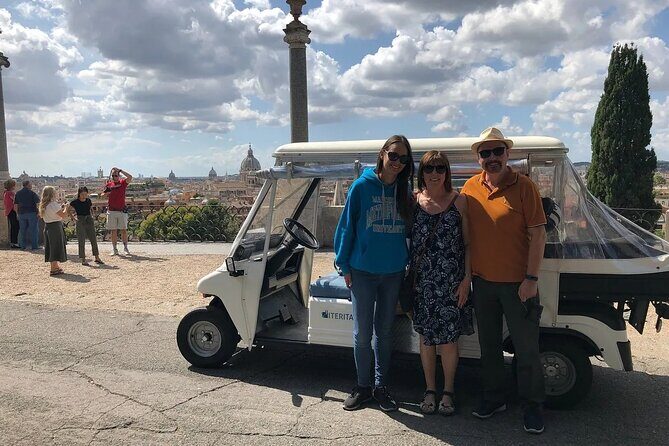
- Comfort-focused ride (including seatbelts noted on some carts) helps when the cobblestones hit
- A private group means your time and questions stay with your crew only
Why a golf cart is a smart way to tour Rome fast
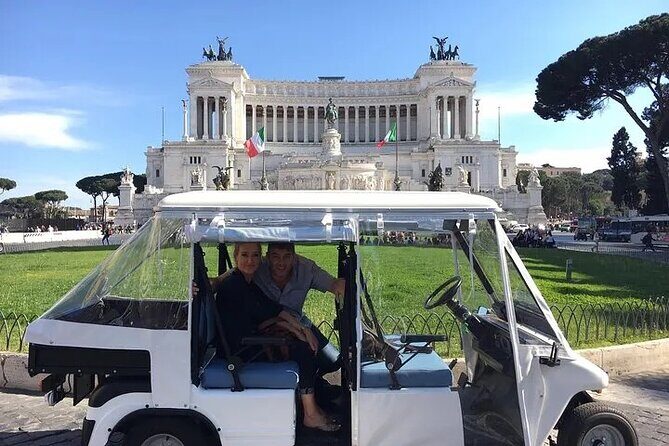
Rome rewards people who arrive with a plan. This tour gives you that plan, but without the stress. You start in a car-like comfort level and then shift into a very Roman rhythm: quick stops at big sights, then back onto the cart to keep the momentum.
What makes it work is the mix of major landmarks and side-street driving. Instead of only lining up at the same crowded blocks, you spend time in calmer lanes. That changes the feel of the day. You still get the famous Rome moments, but you also get little breaks where you can actually hear your guide and take in the streets around you.
And because the ride is easy, you’re not spending your energy on walking hills between stops. Even if you have no mobility issues, you’ll still appreciate the saved time. If you do have limits (heel pain, knee issues, heat fatigue), this is the kind of tour that keeps your sightseeing vacation from turning into a pain contest.
You can also read our reviews of more city tours in Rome

How the 3-hour route works (and why the timing matters)
This is about 3 hours, with multiple departure times so you can fit it into your day. It is also designed to be simple: you meet at Pic Nic – Just Amir srl, and the tour ends back at the meeting point.
If you book the private experience, you get free pickup from your central Rome hotel. If your hotel is outside Rome center, you contact the provider so they can arrange a private car if needed. That detail matters because Rome can be awkward to coordinate—getting picked up removes the biggest hassle.
Also note the tour is private, so it is only your group. That tends to make it easier to ask questions, adjust your photo pace, and handle minor delays without the whole schedule getting wrecked.
Finally, tickets for entries aren’t included. The itinerary highlights a lot of stops that are marked as admission ticket free (like the Pantheon and Piazza Navona), but if you plan to add anything extra once you arrive, budget for that separately.
Stop-by-stop: Pantheon and Piazza Navona in quick bites
Pantheon
Your first stop is the Pantheon, where you’re looking at a former Roman temple that became a Catholic church in 609 AD. Even when you only have about 15 minutes, the building hits you fast: it is one of those Rome monuments where the details reward a second glance. With a short visit, I’d focus on lining up your photos first, then take a quick scan of the scale and layout.
Admission is listed as free here, so you can use your time to enjoy the experience rather than shopping around for ticket counters.
Piazza Navona
Next is Piazza Navona, framed as one of Baroque Rome’s most characteristic squares. It sits on the remains of the Stadium of Domitian—so even if you mainly care about the square today, you’re also seeing layers of the city.
At roughly 15 minutes, you want to make your visit count: grab your best angle, then look for street-level details that explain why this place has been a gathering spot for centuries. If you only do one “I’m learning what Rome is” stop early in your trip, this is a solid one.






Trevi Fountain, Spanish Steps, and Campo de’ Fiori photo moments
Trevi Fountain
Trevi Fountain is next, with about 10 minutes. It is an 18th-century fountain designed by Nicola Salvi and completed by Giuseppe Pannini and others. That name list matters because it gives you something concrete to remember when the crowd noise fades.
Ten minutes can still be plenty if you work the timing. If you want photos without losing your whole visit, I’d treat this as a grab-and-go moment: pick your shooting spot, take your key shots, then move on before the light or the lines change.
Spanish Steps
The Spanish Steps get around 5 minutes. That is fast, yes, but it is also the right kind of fast if you already know you want to see them and keep rolling. From Piazza di Spagna up toward Piazza Trinità dei Monti, you can still get a sense of the steep climb and the church presence at the top.
If you’re traveling with kids or anyone who hates standing still, this timing is actually a win.
Campo de’ Fiori
Campo de’ Fiori is another brief stop (about 5 minutes). The square centers on the statue of philosopher Giordano Bruno, burned alive in the middle of the piazza. That detail changes how you experience the area. It’s not just a pretty square; it is a place with a very specific historical weight.
For a short stop, I like it because it adds contrast. After the fountains and viewpoints, this feels like a real slice of Rome’s lived-in past.
Villa Borghese and Palatine Hill: Rome beyond the postcard loop
Villa Borghese
You’ll also pass by Villa Borghese, described as a large public garden complex with buildings, museums, and attractions. It is also noted as the third-largest public park in Rome. Even if you don’t go deep into any specific museum during a cart tour, this stop gives you relief from the heavy stone density of the center.
It is a good “reset” moment. If your day is starting to feel like nonstop monuments, a park stop changes the pace and makes the rest of the route more enjoyable.
Palatine Hill
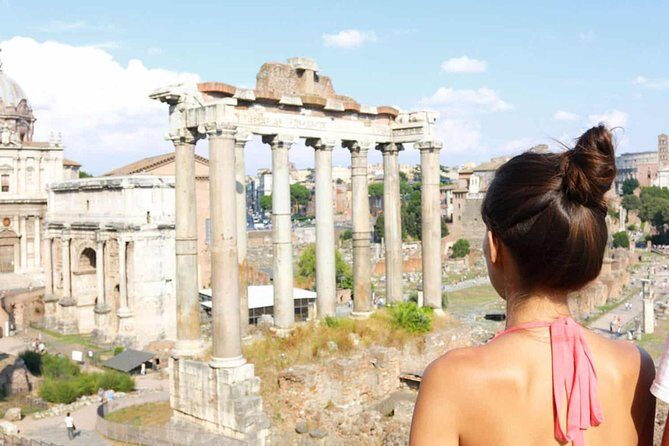
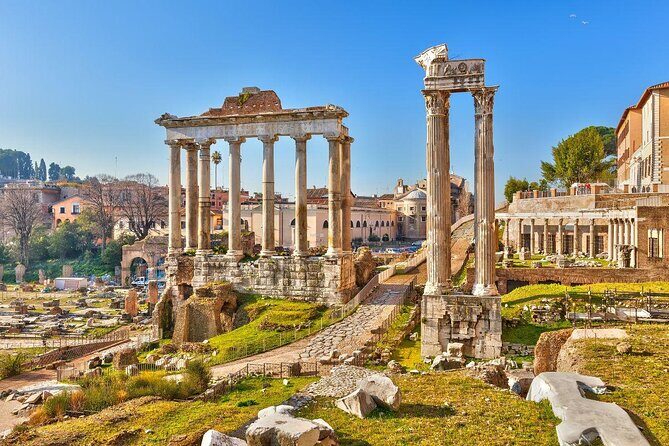
Then you’re on Palatine Hill. It is presented as the center-most of Rome’s seven hills and described as the first nucleus of the Roman Empire. That framing is why Palatine is worth your attention: you’re not just looking at old buildings; you are standing on a location tied to Rome’s origin story.
Because your time here on a cart tour is limited, I’d think of it as a orientation stop. You’re collecting the feeling of where “the beginning” is, so later, if you add a museum or longer walk, you’ll understand what you’re looking at.
Circo Massimo to Piazza del Popolo: arenas and city gates
Circo Massimo
Circo Massimo is a short stop (about 5 minutes) but it’s a big concept. You’re looking at an ancient Roman chariot-racing stadium and mass entertainment venue. It is described as the first and largest stadium in ancient Rome, and even into the later Empire.
This is one of those Rome sights where imagination does half the work. Even without a long guided walk, you can get a feel for how much entertainment mattered in Roman public life.
Aventine Hill
You also visit the Aventine Hill, one of the seven hills of ancient Rome. It is described as belonging to Ripa, the modern twelfth rione (ward) of Rome. This is a quieter-sounding stop on paper, but hills are part of Rome’s identity, and cart tours are one of the easier ways to understand that geography without a full day of hiking.
Piazza del Popolo
Piazza del Popolo is another quick one (about 5 minutes). It sits inside the northern gate of the city, once called Porta Flaminia. That “gate” framing helps here. Instead of treating the square like a random open space, you see it as part of how Rome managed movement in and out.
For photo timing, quick stops are fine as long as you go in with a plan: one or two angles, then you’re done.
Chiesa di Sant’Ignazio di Loyola: a short stop with big architectural clues
The tour also includes Chiesa di Sant’Ignazio di Loyola for about 5 minutes. This church is loaded with names and design references, starting with Orazio Grassi, a Jesuit mathematician who worked from plans attributed to Carlo Maderno and others.
You also get a sense of how the Jesuits used architecture for statement-making: the description notes two orders of pilasters and Corinthian columns, plus details like large windows, niches with tympanum, and carved elements on the facade.
This is the type of stop that can turn into a favorite if you like details. If you don’t, it still works because it gives your eyes a break from fountains and outdoor crowds.
What makes the guides matter on this cart tour
The big pattern here is the driver/guide experience. Many carts run like a simple shuttle, but this one clearly aims higher: you’re not just passing buildings, you’re getting context.
I saw names come up again and again, including Francesco, Yvonna, Hadi, Mario, Alexxis, Ivanka, Claudio, Pietro, Alessi, and Sabrina. The common thread is that the best guides keep the day fun and understandable, in clear English, with enough storytelling to make the monuments stick.
You’ll also appreciate the human moments. For example, Francesco was mentioned as waiting when people had trouble hailing a cab. That kind of patience matters in a city where plans can slip. Other guides were also described as flexible about your interests and quick at answering questions. And if you’re traveling with kids, there’s a clear preference for guides who can keep the tour upbeat instead of turning it into a lecture.
One caution: the overall experience depends on your guide. The cart is the vehicle, but the tour is the narration. If you care a lot about stories while you ride, you’re betting on the driver’s style as much as the route.
Comfort and practical tips for your cart ride
This tour is built to be less tiring than walking. People described it as comfortable and a smart way to cover ground in the heat or when you don’t have time for long hikes between sites.
Still, Rome carts aren’t magic bubbles. You will roll over cobblestones, and one reviewer called out that the ride can be bumpy. That’s not a reason to skip it. It’s a reason to dress for it. Wear grippy shoes. If you’re sensitive to jolts, keep your phone secure and hold on when you’re on rough stretches.
Seatbelts are worth noting. One person specifically mentioned being glad the cart had them, which is a nice reassurance if you’re worried about safety. Don’t assume every cart is identical, but it’s a good sign.
For photos, think efficiency:
- Do your main photos at the first good viewpoint you get at each stop.
- Once you move, you may not loop back.
- Use the cart ride itself for wide city views rather than burning all your time on the perfect close-up.
Finally, bring water. Even if you’re not walking much, you’ll be outside for multiple short stops.
Price and value: is $163.26 per person worth it?
At $163.26 per person for about 3 hours, you’re paying for three things: the private cart experience, the guide time, and the transportation efficiency.
Here’s how that value can work for you:
- You get hotel pickup in central Rome (for the private experience), which saves you time and avoids awkward logistics.
- You see a concentrated set of top sights plus Roman sites that help you place ancient Rome on a modern map.
- Many key stops are marked free for admission in the tour flow, which keeps your day from turning into a ticket-buying marathon.
- You’re not spending energy walking long distances between separate attractions.
Where the value can slip:
- If you want long time inside museums, guided entries, or deep museum visits, this may feel a bit like you’re seeing the outside shell of Rome’s best-known places. It’s designed for breadth, not long immersion.
- Lunch isn’t included, so you’ll still need a meal plan.
If you’re a first-timer, a couple with limited time, a family managing kids, or anyone who wants to learn the city fast without suffering for it, the pricing often feels fair. If you already know Rome well and want deep dives, you might prefer a longer, stop-by-stop museum tour.
Who should book this Rome golf cart tour
This tour is a strong match if any of these sound like your trip style:
- You want a fast first look at Rome and want your bearings without a big walking day.
- Your group includes someone who struggles with long uphill walks or uneven streets.
- You’re traveling with kids and want shorter stops, more motion, and a calmer pace.
- You want to see both the postcard icons and a few major ancient sites in one run.
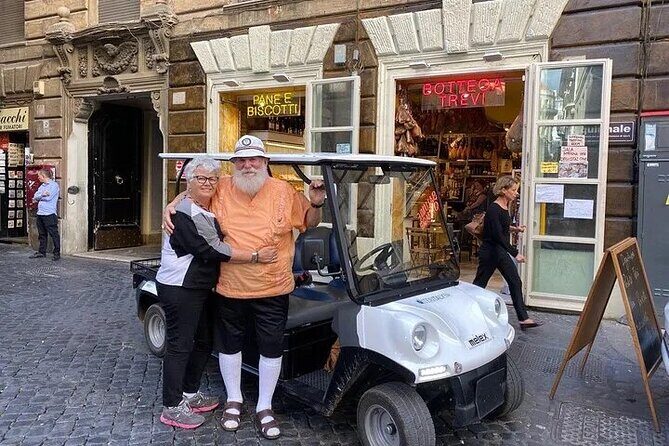
- You prefer a private group experience, with an English-speaking guide-driver who can answer questions as you go.
It may be less ideal if you already planned to spend half your day in museums and don’t want quick stop timing. Also, if you hate being rushed at photo spots, this might test your patience at Trevi and the Spanish Steps.
Should you book this Rome golf cart tour
I think you should book it if you want a practical Rome plan that hits the big classics, adds ancient context, and keeps your day comfortable. The best reason is the combination of efficient routing, central pickup, and a private setup that makes the time feel yours.
I would not book it if your dream Rome day is long museum time, slow wandering, and multiple deep indoor stops. This is a cart tour for momentum and orientation, not a replacement for thorough museum visits.
If you are deciding between this and a full walking route, this is the smarter choice for most first-timers and mobility-sensitive travelers. Rome is already tiring on its own. Let the cart do the heavy lifting.
FAQ
How long is the Rome Golf Cart Tour?
The tour lasts about 3 hours.
Do I get hotel pickup?
Yes. Free hotel pickup is offered if you book the private experience.
What language is the driver?
The driver provides the tour in English.
Are entry tickets included?
Entry tickets are not included. Some stops in the route are listed as admission ticket free, but you should plan for any extras you choose to add.
Is this tour private?
Yes. It is a private tour/activity, and only your group participates.
Are there multiple departure times?
Yes. Numerous departure times are available, which can make it easier to fit the tour into your schedule.
Can I cancel for a full refund?
Yes. You can cancel for a full refund up to 24 hours in advance.