REVIEW · ROME
Ancient Rome: Archeological area Largo Argentina
Book on GetYourGuide →Operated by TOURISTATION · Bookable on GetYourGuide
Julius Caesar’s last walk is nearby. Largo Argentina is one of those Rome stops that turns big names and ancient drama into something you can actually stand over, thanks to the excavations and temple remains. I like the way the site gives you both old architecture and the exact spot tied to Julius Caesar’s assassination, the Ides of March 44 BC.
The main catch is that this is not a full live-guided experience. You’ll rely on an English audio guide and a short multimedia presentation, and if you’re expecting a huge museum, the indoor part is limited.
In This Review
- Key highlights worth your time
- Largo di Torre Argentina: Rome’s “underfoot” assassination site
- Starting at Touristation Aracoeli: quick intro, then out to the site
- The “one hour” structure: multimedia + excavations entrance + audio
- Four temples from the 4th–1st centuries BC
- Curia of Pompey tuff base: finding the Julius Caesar reference point
- The multimedia video: why it helps more than you expect
- Audio guide + WiFi + map: making a self-guided visit feel easy
- Price and value: does $23 make sense?
- Practical tips for a calm visit
- Who this experience suits best (and who should pass)
- Should you book this Largo Argentina visit?
- FAQ
- How long does the Largo Argentina experience take?
- Where do I redeem my voucher?
- What’s included in the ticket?
- Is a guided tour included?
- Can I skip the ticket line?
- What language is the audio guide?
- What do I need to bring, and what’s not allowed?
- What are the cancellation and reserve rules?
Key highlights worth your time
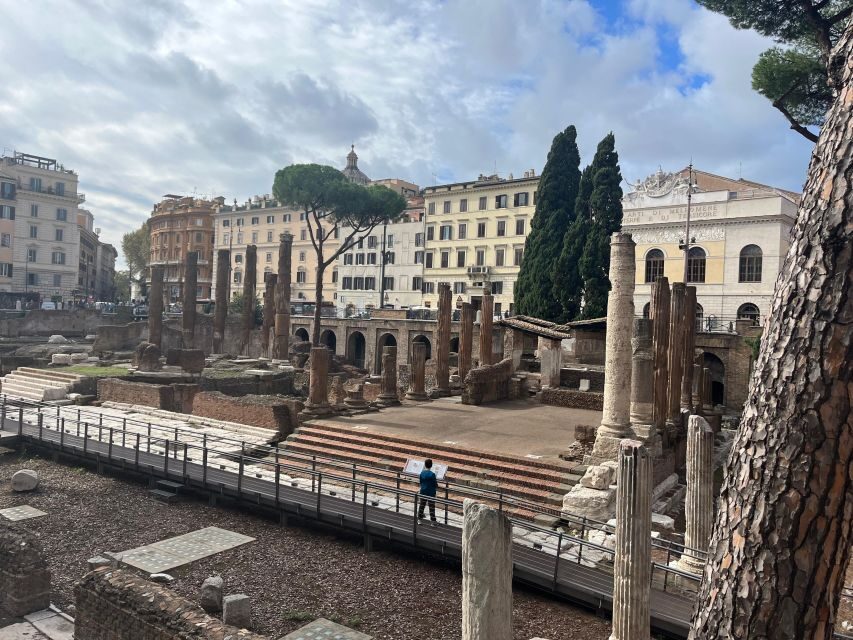
- Four temples (4th–1st centuries BC) you can connect to the sacred history of the area
- The Curia of Pompey tuff base, linked to where Julius Caesar was killed
- Two thousand years of layers, including imperial phases and medieval structures
- A 30-minute multimedia video that helps the ruins make visual sense
- Reserved excavations entrance, plus an audio app in English
Largo di Torre Argentina: Rome’s “underfoot” assassination site
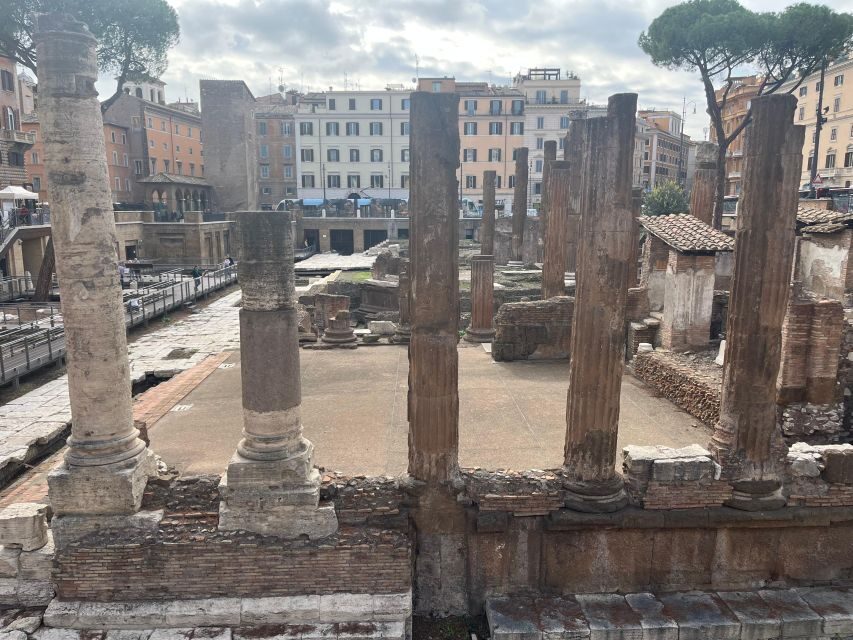
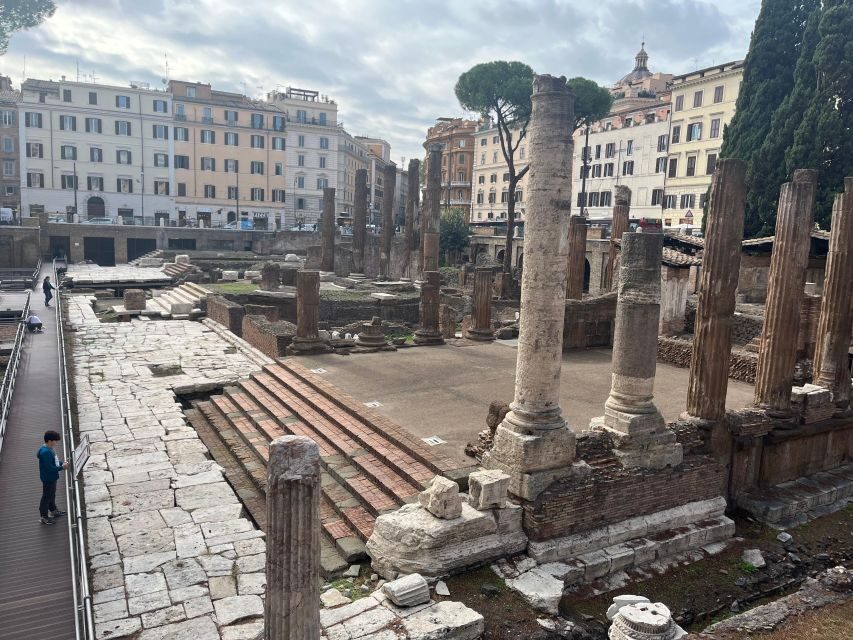
Largo di Torre Argentina is a sacred area that’s been lived in for about 2,000 years. In Rome terms, that means you’re looking at layers: ancient temple foundations on top of older stories, then later building phases, and then medieval-era structures that kept the place meaningful long after the Republic fell.
What makes it extra interesting is how the site mixes worship spaces with political violence. You’re not just admiring ruins; you’re also orienting yourself around the setting connected to Julius Caesar’s death. The excavations preserve the remains around the tuff base of the Curia of Pompey, the location tied (in ancient accounts) to the assassination on the Ides of March in 44 BC.
And yes, it’s also one of those places that can feel oddly intimate. You’re in modern Rome, cars and streets all around, but the archaeology puts you face-to-face with structures dating back to the 4th century BC.
You can also read our reviews of more tours and experiences in Rome.



Starting at Touristation Aracoeli: quick intro, then out to the site
Your booking time is for the Touristation office at Piazza d’Aracoeli 16—so don’t roll up exactly at the “time on your ticket” and expect to be at the excavations already. A key detail: there’s a fountain and orange flags in front of the office entrance, which makes it easier to spot.
I like this setup because it front-loads the experience. You get the intro materials and equipment before you’re standing in the archaeological area trying to figure out what you’re looking at.
Also, you get assistance at the meeting point, which is useful when Rome’s ticket logistics can be a little chaotic. From there, you’ll move from the office area to the Largo Argentina excavations.
The “one hour” structure: multimedia + excavations entrance + audio
This experience is listed as 1 hour, and you should think of it as: intro at the office, then the on-site archaeology visit. The inclusions point you to a self-paced flow rather than a long lecture.
What you can expect in that hour:
- A 30-minute multimedia video in the Touristation office
- Entry reserved for the Largo Argentina excavations
- An English audio guide (via the app) as you walk
- A paper city map and WiFi to help you get set up
There is no guided tour included. That doesn’t make it bad. It just means your experience depends on whether you’re happy reading ruins with a guided audio track and letting the multimedia do the heavy lifting.
A practical note: the “skip the ticket line” piece is real in spirit. You’re not trying to wrestle a standard queue while trying to catch your time slot. Still, keep in mind that you may spend time walking between the office and the archaeological area, so build in a few minutes of cushion.
Four temples from the 4th–1st centuries BC
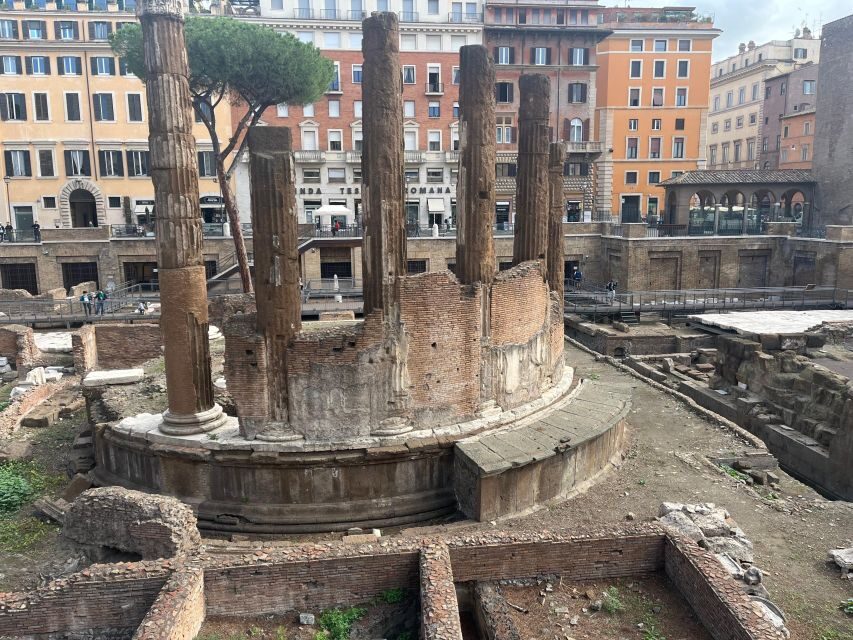
One of the strongest reasons to come here is the set of four temples dating from between the 4th and 1st centuries BC. That range matters. It lets you see Rome’s sacred world stretching across generations, not just a single monument freeze-framed in time.
This is the kind of stop where the value isn’t that every stone is labeled like a theme park. It’s that the audio guide and presentation help you connect architectural choices—temple spaces, construction layers, and later phases—to the idea that this was a sacred site long before the assassination made headlines.
If you like archaeology that feels “real,” not sanitized, this is a good match. You’re looking at ruins that were exposed and reinterpreted through excavations and demolitions affecting the area between 1926 and 1930, and you can feel that 20th-century excavation layer sitting inside the story.
Curia of Pompey tuff base: finding the Julius Caesar reference point
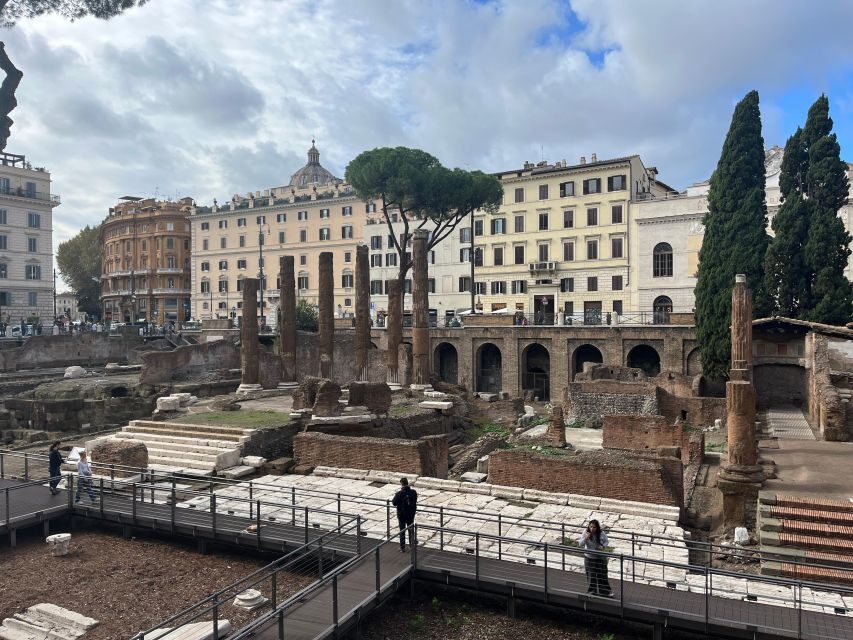
The most dramatic part of Largo Argentina is the preserved tuff base of the Curia of Pompey, tied to the place of Julius Caesar’s assassination on the Ides of March 44 BC, as reported by ancient sources.
Even if you already know the story, seeing the physical anchor is what makes it click. You’re not just thinking about betrayal as a headline. You’re standing near the archaeology that tradition links to the turning point.
Here’s how to get the most out of this section without getting lost:
- Use the audio guide to frame what the space is believed to represent
- Take a few minutes to watch your surroundings—Rome’s modern streets are right there, which makes the historical setting feel startlingly close
- Don’t rush the stop. The assassination reference point is powerful, but it takes a minute to align the story with what you’re actually seeing
This is also where the “2,000 years of life” angle becomes more than a slogan. The area preserved multiple phases: imperial phases of the temples and medieval age structures that signal the site never really stopped being significant.



The multimedia video: why it helps more than you expect
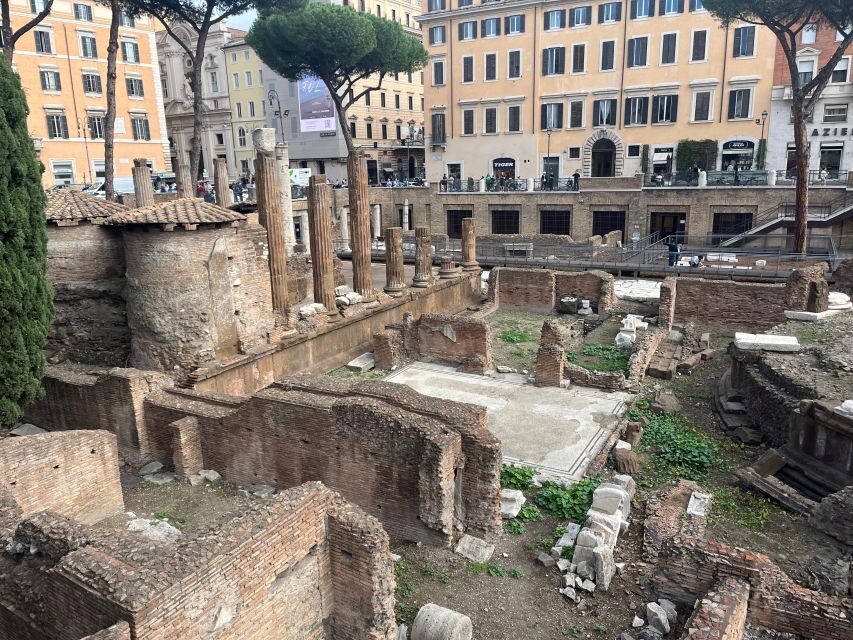
Included in the price is a 30-minute multimedia video. If you’ve ever walked into a ruin and thought, I’m not sure what I’m looking at, this is built for that problem.
The movie functions like a “visual translator.” It helps you understand how the temples and structures might have looked when the sacred area still had meaning in daily life, not just as archaeology.
One reason this addition works well: it gives you context before you reach the excavations. That means your walking time is more about recognition than guessing.
If you’re short on time in Rome, this also keeps your learning efficient. You get a structured intro before you spend the hour on-site.
Audio guide + WiFi + map: making a self-guided visit feel easy
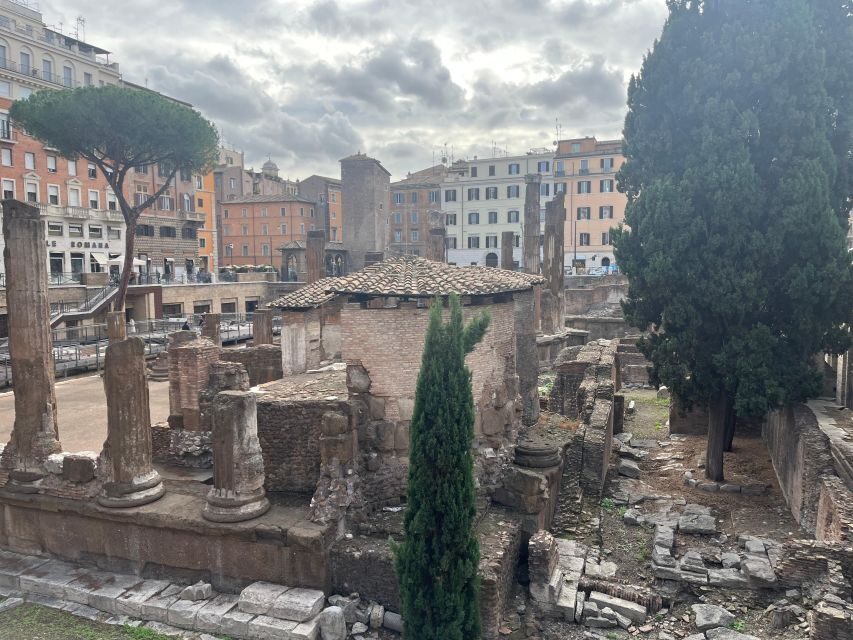
The experience is designed for a self-guided format with an English audio guide. That means you have control over pace: slow down where you want, fast-forward if you’re already confident about Roman temple basics.
What I like about pairing the audio with the excavations:
- The audio guide can turn “a pile of old stones” into named spaces and explained functions
- You can revisit points in your mind while you’re still there, not hours later when it’s harder to remember what you saw
- The app format keeps you from hunting for signage in a multilingual city
You also get WiFi and a paper city map, which can be handy if you’re using the audio app and want to stay connected while you set up.
Pro tip: download or make sure your audio guide is ready before you step into the excavations area. The best tours feel smooth, and this is one easy way to avoid stress.
Price and value: does $23 make sense?
At $23 per person, you’re not paying for a private guide. You’re paying for a package that includes: reserved entry to the excavations, an English audio guide, and the 30-minute multimedia presentation, plus support at the office.
So is it worth it? Here’s the value logic I’d use:
- If you want an organized intro and clear wayfinding, this price is more than fair. The multimedia + audio combination is doing real work for you.
- If you only want a quick peek and you’re the type who reads architecture at street level without needing interpretation, you might feel the time is tighter than expected. Much of the overall area can be seen from outside, and the indoor museum component is relatively small.
In other words: you’re paying for understanding, not just access.
Practical tips for a calm visit
A few rules and details matter here because the site is archaeological and controlled:
- Bring a passport
- Avoid pets, glass objects, and large bags/luggage
- Skip alcohol and drugs on-site
Also remember the timing: your selected slot refers to when you should be at the Touristation office at Piazza d’Aracoeli 16. Don’t interpret the time as “arrive at the ruins.” That mismatch is where people waste energy.
Finally, if your schedule is tight, consider doing this earlier rather than later in the day. Rome’s walking and heat can pile up, and you’ll enjoy the audio more when you can concentrate.
Who this experience suits best (and who should pass)
This is a strong fit for you if:
- You want a compact, high-impact Rome stop in one hour
- You like archaeology but prefer help interpreting what you’re seeing
- You’re interested in the Julius Caesar story tied to the Curia of Pompey tuff base
- You’d rather learn via audio and visuals than sit through a live guided talk
It may not be the best fit if:
- You want a full, talk-at-you guided lecture. A guided tour is not included.
- You expect a big, time-consuming museum. The indoor option is limited, and a lot of the experience is built around the excavations and interpretation tools.
Should you book this Largo Argentina visit?
Book it if you want an efficient Rome archaeology stop that connects the drama of Julius Caesar to physical remains you can stand near, without spending extra time figuring out what’s what. The combo of reserved entry, an English audio guide, and the 30-minute multimedia intro is a solid value for the time.
Skip it only if you’re aiming for a quick external photo stop and you already feel confident reading Roman ruins on your own. In that case, the self-guided nature might feel a little heavy for the time spent.
If you want your hour in Rome to feel purposeful, this one is hard to beat—temples, assassination setting, and 2,000 years of continuity, all in one tight visit.
FAQ
How long does the Largo Argentina experience take?
The duration is 1 hour.
Where do I redeem my voucher?
Redeem your voucher at TOURISTATION ARACOELI, Piazza d’Aracoeli 16. Look for a fountain and orange flags in front of the office.
What’s included in the ticket?
You get a 30-minute multimedia video, reserved entrance to the Largo Argentina excavations, an English audio guide (app), assistance at the meeting point, a paper city map, and WiFi.
Is a guided tour included?
No. A guided tour is not included, so you’ll use the audio guide to explore.
Can I skip the ticket line?
Yes, the experience includes skip-the-ticket-line access / reserved entrance for the excavations.
What language is the audio guide?
The audio guide is available in English.
What do I need to bring, and what’s not allowed?
Bring your passport. Pets, glass objects, luggage or large bags, and alcohol or drugs are not allowed.
What are the cancellation and reserve rules?
You can cancel up to 24 hours in advance for a full refund. You can also reserve now and pay later.