REVIEW · ROME
Rome: Fun Golf Cart Tour with Music and Gelato
Book on GetYourGuide →Operated by NotBoringTours · Bookable on GetYourGuide
Rome on a golf cart feels weirdly perfect.
You zip between landmarks while a guide connects ancient Rome to the modern streets, and I love the classic Italian tunes that ride along with you and the final gelato stop that keeps the vibe light. The only drawback is that it moves fast—there’s not a lot of quiet time at every spot, and audio can feel a bit uneven depending on where you’re seated.
Guides such as Salvo (Salvatore) and Domenico are repeatedly praised for keeping the talk fun but clear, so the stories land without turning into a lecture. You’ll cover big-picture Rome in about 2.5 hours, with short photo windows at standout viewpoints like Pincio Terrace. One key planning note: the route skips the Trevi Fountain on purpose because it’s too crowded, so you’ll want a separate plan if Trevi is your top must-see.
In This Review
- The Most Worth-It Parts
- Why a Golf Cart Works So Well in Rome
- Start at Via Santamaura, Then Let the City Lead
- Drive-Bys That Set the Scene: St. Peter’s to Castel Sant’Angelo
- Largo di Torre Argentina and Piazza Venezia: Small Stops, Big Stories
- Colosseum Time: Photos, A Guided Moment, and Better Pacing
- San Pietro in Vincoli and Pincio Terrace: Two Kinds of Wonder
- Pantheon and Santa Maria Sopra Minerva: Rooflines and Symbol Clues
- Campo de’ Fiori Finish: Music, Gelato, and a Smooth Landing
- Music, Hearing Your Guide, and Photo Timing Reality
- Who This Tour Fits Best (and Who Might Want a Different Style)
- A Quick Word on Wheelchairs and Getting Around
- Should You Book This Golf Cart Tour in Rome?
- FAQ
- How long is the Rome golf cart tour with gelato?
- Is the tour guided in English?
- Where does the tour start and where does it finish?
- Does the tour include Trevi Fountain?
- Is gelato included?
- Is alcohol allowed during the tour?
The Most Worth-It Parts
- Music-on-the-drive energy that makes the whole route feel like an event, not a checklist
- Gelato at the end in the Campo de’ Fiori area, a sweet payoff after concentrated sightseeing
- Photo stops built into the schedule so you get time to actually frame shots, not just “pass by” moments
- A route that teaches the city as one story, linking sites instead of treating them like isolated monuments
- Scenic viewpoint time at Pincio Terrace, where you can see Rome’s timeline in one glance
- Real guide personality, with guides like Salvo and Domenico often praised for balancing jokes and facts
Why a Golf Cart Works So Well in Rome
Rome has two speeds: the one your feet want, and the one your schedule demands. This golf cart style is a smart middle option. You still get up close at major stops, but you’re not wrestling the city’s traffic and crowds for every transfer.
The biggest win is pacing. Instead of spending a long day hopping between neighborhoods and then losing time to lines, you get a route that keeps you moving and still gives you stop-and-look moments. The music also helps. It turns the drive time into part of the experience instead of dead transit.
And then there’s the payoff: gelato at the end. It’s not just dessert—it’s a built-in moment to land the day, compare photos, and ask the guide what to do next.
You can also read our reviews of more tours and experiences in Rome.



Start at Via Santamaura, Then Let the City Lead
You meet at Via Santamaura, 12 and spend the next 2.5 hours working through a very concentrated loop. That start matters because it’s set up for efficient movement through Rome’s core, not for a slow stroll tour.
Once you’re seated, you’ll get into a rhythm. The tour is structured around quick scenic drives plus short guided stops. That means you get context while you’re looking at the real thing, especially at the places that make first-time visitors think: Wait, this is right here?
I’d also plan your expectations around the pace. This is not a “sit and stare” tour. It’s built for seeing a lot, learning key connections, and collecting photo moments you can later build into deeper visits on your own.
Drive-Bys That Set the Scene: St. Peter’s to Castel Sant’Angelo
You don’t start by sprinting into a museum or waiting at a long line. You glide past St. Peter’s Basilica for a quick look, then continue on scenic drives past Castel Sant’Angelo and the Church of Saint Andrew.
These short pass-by segments do two helpful things for you. First, they give you the geographic context of where you are in the city. Second, they help you mentally “map” Rome before the tour turns toward the ancient core.
It’s also a practical win in hot weather or when you’re coming off travel. Being in a cart with breaks built into the schedule can make the first hour feel easier than starting with a foot-heavy plan.
Largo di Torre Argentina and Piazza Venezia: Small Stops, Big Stories
After the early drives, the tour hits Largo di Torre Argentina. You get a photo stop and a guided visit here, with enough time to absorb what you’re looking at rather than treating it like a quick photo selfie stop.
Largo di Torre Argentina is one of those places where Rome feels layered—modern street life right beside ancient significance. The guided component matters because it helps you connect what you see to the bigger historical picture, instead of leaving you to guess.
Then comes Piazza Venezia, where you get another guided moment and a quick pass-by. This area is important because it acts like a hub for understanding Rome’s “monumental mindset.” It’s the kind of square where the city’s power and symbolism become obvious fast.
Colosseum Time: Photos, A Guided Moment, and Better Pacing
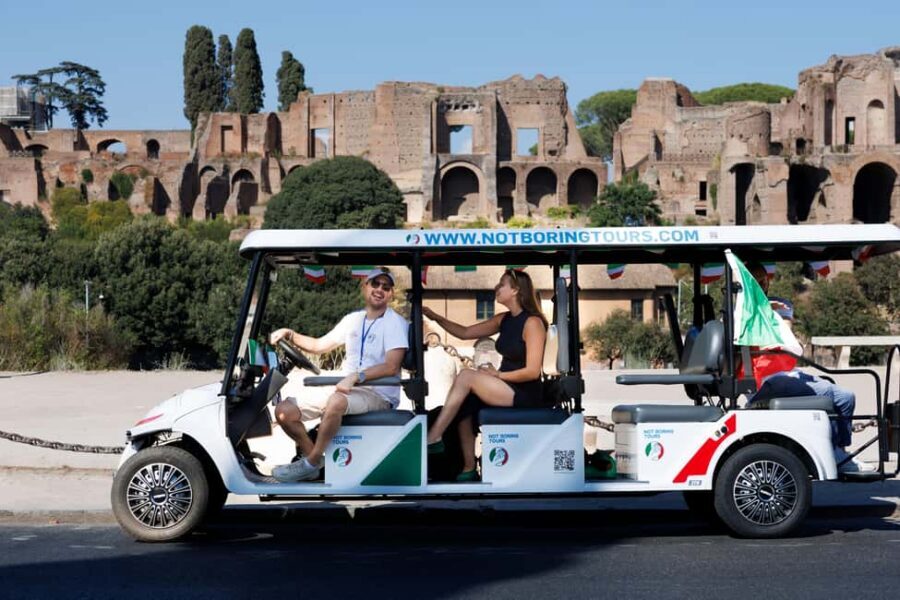
The Colosseum is the headline, and the tour treats it like one. You’ll have a photo stop and guided time here, plus a longer hop-on-style window (about 20 minutes) so you can get pictures without the feeling that someone is constantly rushing you.
What I like about this approach is that it reduces the common first-time Rome problem: you arrive, it’s impressive, you take photos, and then you leave without understanding what you just photographed. A guided explanation during your Colosseum moment gives the structure for later deeper reading, whether it’s about Roman engineering, public spectacles, or how this space fits into the city’s evolution.
One practical tip: plan to take a couple of “wide” shots first, then one or two angles that show scale. With the time limit, that saves you from getting stuck in perfecting one photo while everyone else keeps moving.
Also, remember this tour is designed to keep the day light. You’ll be close to other stops soon after, so don’t burn all your energy on just one angle.



San Pietro in Vincoli and Pincio Terrace: Two Kinds of Wonder
Next up is San Pietro in Vincoli. You get a photo stop plus guided time, and this is a nice contrast to the Colosseum. Instead of raw public spectacle, you’re looking at religious Rome and a different kind of significance tied to the way people remembered history.
After that, the tour heads to Pincio Terrace for an aerial-style view and photo time, with a hop-on-style window (around 15 minutes). This is where the tour earns its “short but memorable” reputation. A viewpoint like this helps you understand why Rome sprawls the way it does, and it gives your photos that high-value “Rome in one frame” feeling.
If you’re the type who wants at least one scene you can show friends later and instantly explain, Pincio is the moment. It’s also a good breath point if the morning felt intense.
Pantheon and Santa Maria Sopra Minerva: Rooflines and Symbol Clues
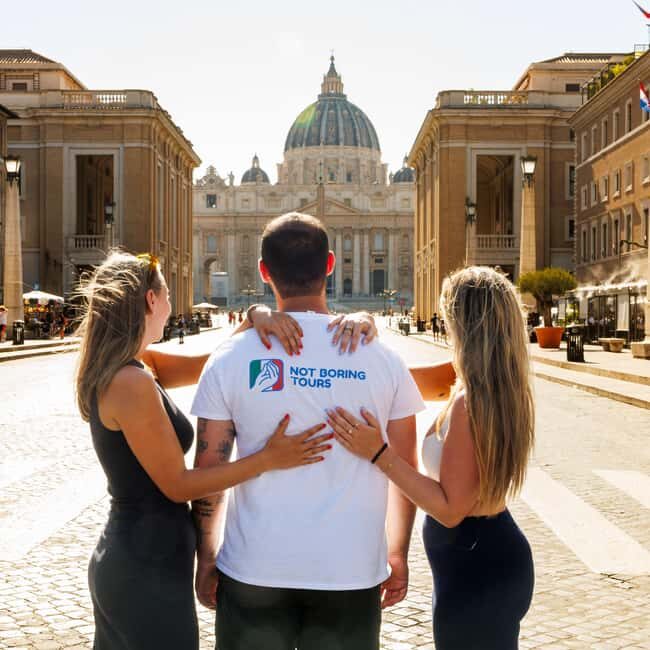
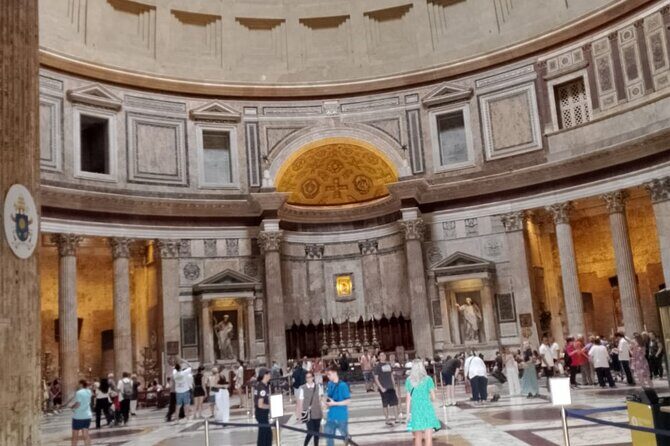
The route then moves into two major architectural stops: the Pantheon and Santa Maria Sopra Minerva. For both, you get photo time and guided explanation, plus hop-on-style windows of about 10 minutes each.
The Pantheon is one of those places that rewards careful looking. Even if you’ve seen photos before, being there lets you notice proportions and details that don’t land through a screen. The guided part helps you know what to notice first—so you don’t wander around trying to figure it out alone.
Santa Maria Sopra Minerva adds a different texture. You’re seeing another important Rome site, and the tour keeps it connected to the bigger storyline of how the city kept reusing and reinterpreting its own space. This is a good spot if you’re traveling with teens or kids who like “quick facts.” You get enough information to spark interest, and then you get the visual to back it up.
If you want to make these stops pay off later, take a moment to photograph one main facade view and then one close detail. That second shot gives your future-self something to study.
Campo de’ Fiori Finish: Music, Gelato, and a Smooth Landing
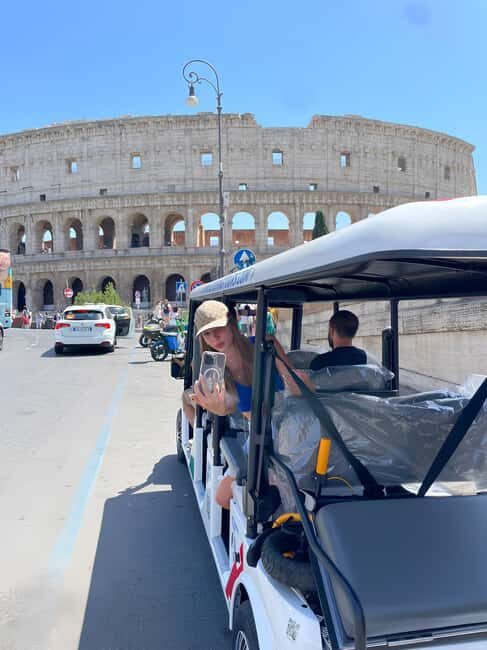
The day ends at Campo de’ Fiori. You’ll have a photo stop and guided time here as well, plus the gelato moment wraps things up.
Campo de’ Fiori is a great finish because it’s lively and easy to orient yourself afterward. You can keep walking, grab a drink, or use the guide’s stories as a springboard for whatever you feel like exploring next. It also means the tour doesn’t leave you stranded in the middle of nowhere—it puts you in a neighborhood where it’s simple to keep the evening going.
The gelato at the end is consistently praised as a highlight, and that makes sense. After a concentrated loop of Rome’s big monuments, something creamy and sweet feels like a reset button.
If you’re traveling with kids, this ending is especially helpful. It turns the day into a reward moment rather than an abrupt stop.
Music, Hearing Your Guide, and Photo Timing Reality
Music is part of the format here, and it can make the ride feel more relaxed. It also helps the tour feel like a real experience rather than a rushed transport service between stops.
That said, audio can be tricky. One issue that comes up is that if you’re in a cart where the guide is speaking from a certain angle, you might not catch every word. If you care a lot about hearing everything, try to seat yourself where you can face the guide more directly.
Photo timing is another practical reality. There are hop-on-style windows at several stops, so you’re not just moving through the scenery with no chance to stop. Still, you’ll want to set a plan for yourself: pick two or three must-get shots per stop, then move on. That keeps you from burning your time and helps the group stay on track.
And if you want more control, ask your guide for a short recommendation near where you’ll be afterward. Several guides, including Salvo, are praised for pointing people toward dinner spots based on what they like.
Who This Tour Fits Best (and Who Might Want a Different Style)
This tour is a great match if you want Rome’s highlights without turning the day into a marathon. It’s also well-suited for families. Kids often enjoy the cart itself, and the format keeps everyone from getting stuck in one long place.
It can also work well for people visiting Rome for the first time because the stops connect into a coherent storyline: Vatican-area lookouts, then ancient power centers, then iconic architecture, then a livelier neighborhood finish.
If you’re the type who wants long, slow exploring at just one site, you might find the pace a bit brisk. And if Trevi Fountain is your top priority, this route won’t solve that for you since it intentionally avoids it.
Finally, there are a couple of rules that affect the vibe. Alcohol and drugs are not allowed. If you’re sensitive to strong sun or heat, consider planning your day so you’re not doing this at the hottest stretch of time.
A Quick Word on Wheelchairs and Getting Around
Wheelchairs are allowed, but space is limited. The wheelchair can’t be brought on the golf cart and must be left at the office. If you rely fully on a wheelchair, you’ll need to stay on the cart throughout the tour.
So if accessibility is a deciding factor, it’s worth confirming the exact setup with the operator before you go. Rome tours can be very different depending on the vehicle and escort plan, and this one has specific vehicle-space constraints.
Should You Book This Golf Cart Tour in Rome?
I’d book it if you want maximum sights in a short time with guided context and photo stops built in. It’s also a smart choice when you’re tired from travel, dealing with heat, or trying to get a “lay of the land” understanding quickly. The combination of music, fast pacing, and gelato at the end hits that sweet spot for many groups.
I’d skip it (or pair it with other plans) if Trevi is a must-see for you, or if you prefer deep, slow time at a single monument over a packed highlight loop. Also, if you’re very picky about hearing every word of the guide, you may want to pay attention to your seating position so you can face the guide better.
If you want a Rome tour that feels fun without sacrificing the meaning of what you’re seeing, this one is easy to recommend.
FAQ
How long is the Rome golf cart tour with gelato?
The tour lasts 2.5 hours.
Is the tour guided in English?
Yes. There is a live tour guide speaking English.
Where does the tour start and where does it finish?
The tour starts at Via Santamaura, 12 and finishes in Campo de’ Fiori.
Does the tour include Trevi Fountain?
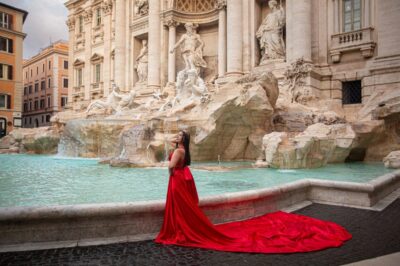
No. Trevi Fountain is not part of this tour because it’s too crowded.
Is gelato included?
Yes. Gelato is included at the end of the tour.
Is alcohol allowed during the tour?
No. Alcohol and drugs are not allowed.