REVIEW · FOOD
Private Rome Food Tour in the Historic Centre with 8+Tastings
Book on Viator →Operated by Secret Food Tours · Bookable on Viator
A street-food meal with real Rome energy. This private food tour mixes landmark sightseeing with 8+ tastings, so you eat your way through the historic center while learning what you’re looking at. You’ll get a guide who helps with Italian culture and also handles ordering, which makes it way easier to try dishes you might not pick on your own.
I especially love the food mix: pizza, supplì, pastas, cannoli, and gelato, plus an extra Secret Dish for good measure. I also love the way the guide turns stops into practical stories, from the Campo de’ Fiori area to Largo di Torre Argentina, so the walk feels like more than just a string of restaurant visits. One consideration: you’re walking for a little over 3 hours, so comfortable shoes matter, even if the pace feels relaxed.
In This Review
- Key highlights you’ll actually feel
- A private Rome food walk that links landmarks to flavors
- Starting near Piazza Navona: Sant’Agnese in Agone to Campo de’ Fiori
- The High Renaissance palace that is now the French embassy
- Inside the Jewish ghetto: history dated to 1555
- The Four Rivers fountain: 17th-century Rome with a Roman obelisk
- 2nd-century B.C. walkway remains: links between Roman temples
- Largo di Torre Argentina: Pompey’s Theatre and four Republican temples
- What you eat on the tour: 8+ tastings that cover the Roman basics
- The guide factor: Rocio, Ludovica, Massi, Edoardo, and Robbie
- Timing, walking, and how to make the 3.5-hour mark feel easy
- Price and value: $405.14 for a private, multi-tasting meal
- Who this tour suits best
- Should you book this private Rome food tour?
- FAQ
- How long is the private Rome food tour?
- Where does the tour start and end?
- What’s included in the tastings?
- Is the tour offered in English?
- Is pickup and drop-off included?
- Do I need to worry about walking?
- Can the menu change during the tour?
- What if I have a dietary requirement?
Key highlights you’ll actually feel
- 8+ tastings built around classic Roman flavors, not just one long meal
- A guide who helps with ordering, so you don’t get stuck translating menus mid-snack
- Stops tied to real landmarks: Campo de’ Fiori, the French embassy palace, the Jewish ghetto, and Largo di Torre Argentina
- Food and sight stories in the same route, so you connect dishes to the neighborhoods they come from
- Private setup means it’s only your group on the tour
- Surprise factor with a Secret Dish plus the option to ask the guide for extra dining tips
A private Rome food walk that links landmarks to flavors
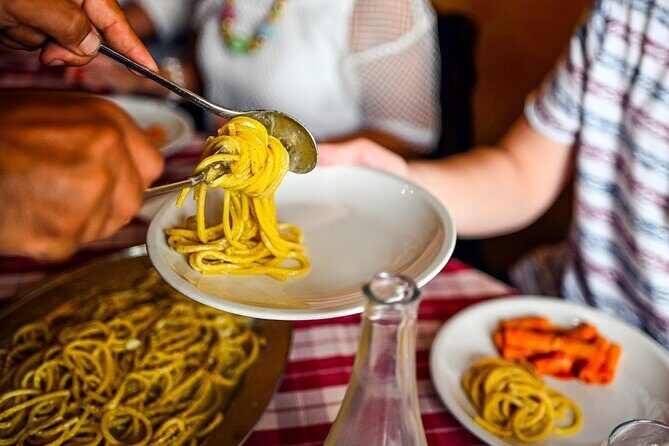
Rome has a million ways to eat. This tour’s trick is that it keeps the food connected to the city around you. You’re not bouncing randomly between eateries; you’re moving through landmark areas south of Piazza Navona, through one of Rome’s most historically layered districts, then toward the ancient Campus Martius zone. The result is simple: you taste classic Roman food and also understand where you are and why the neighborhood matters.
It’s also private, so the pace and focus can stay on your group instead of getting diluted. And because the tour includes tastings like homemade pizza, supplì, two Roman pastas, and cannoli, you get a full spectrum of what people mean by Roman comfort food. The guide also picks for you, which is a big deal in Rome, where ordering can feel awkward if your Italian is shaky.
You can also read our reviews of more food & drink experiences in Rome


Starting near Piazza Navona: Sant’Agnese in Agone to Campo de’ Fiori
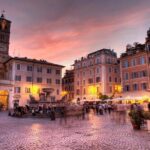
The meeting point is Sant’Agnese in Agone, Piazza Navona (14). From there, you’ll work your way toward a rectangular square south of Piazza Navona: Campo de’ Fiori.
Campo de’ Fiori literally means field of flowers. It’s the kind of phrase that sounds poetic, but the payoff is that you’ll start noticing how Rome’s squares often carry layers of meaning. In this part of town, the streets and corners around Piazza Navona make it easy to get oriented fast. You’ll feel like you’re learning Rome’s map in real time.
Practical tip: arrive a few minutes early. This area is crowded and loud, and you’ll want a calm start before you start eating. If you’re the type who likes to get your bearings fast, this first stretch helps.
The High Renaissance palace that is now the French embassy
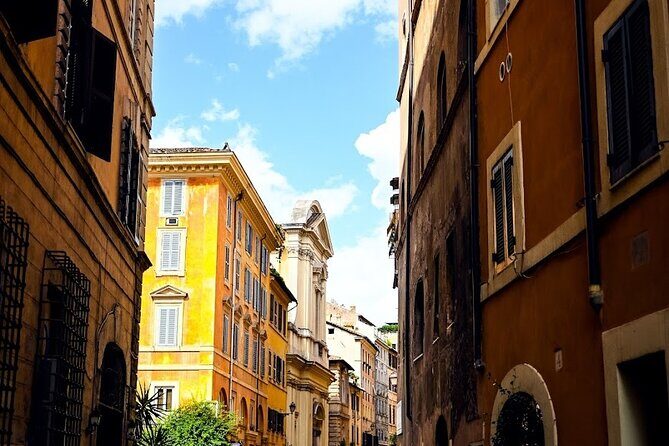
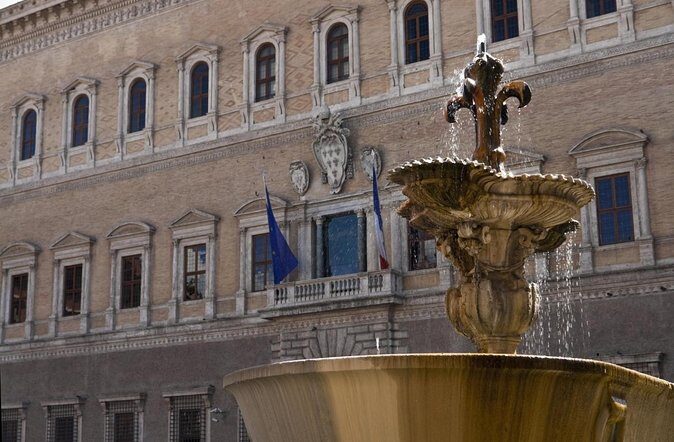
One of the stops is a major High Renaissance palace in Rome, currently serving as the French embassy in Italy. Even if you don’t go inside, you’ll still get the value of seeing how power, architecture, and diplomacy show up in the streets.
Why it matters for a food tour: Rome’s food culture isn’t separate from its institutions. Beautiful buildings and grand spaces shape who lives nearby, where people gather, and what kinds of meals become routine. When your guide ties what you see to everyday city life, the tastings feel less random.
Also, this is the moment where the tour’s pacing usually shifts from orientation to story mode. You’re starting to connect faces of Rome—art, politics, and everyday eating—into one walk.
Inside the Jewish ghetto: history dated to 1555
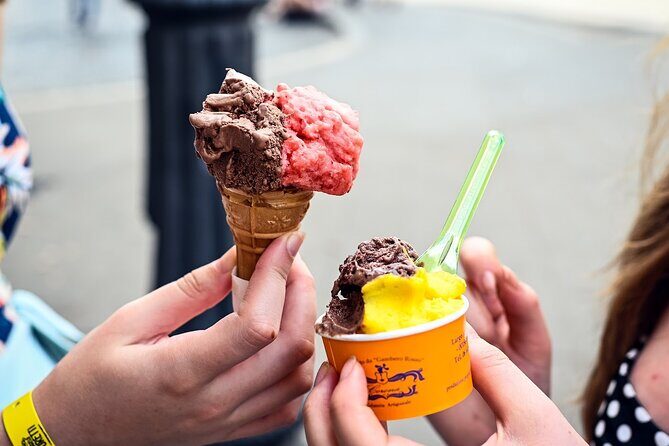
Next comes a neighborhood that’s one of the city’s most distinctive: the Jewish ghetto, established in 1555, in the Rione Sant’Angelo area. This is described as full of history, culture, and great food, and that combination is the point.
The practical value here is mindset. You’ll be walking through a district shaped by centuries of community life, not just wandering past pretty streets. A good guide helps you notice the difference between generic sightseeing and real place-based understanding. You’ll likely also get the kind of context that makes the food feel more grounded.
This stop can be emotionally heavier than some of the others, just because the dates are stark. If you’re the type who likes history, you’ll appreciate the tone. If you prefer lighter stories, just remember that Rome’s food neighborhoods often carry real human weight.
The Four Rivers fountain: 17th-century Rome with a Roman obelisk

The tour includes a classical 17th-century fountain, a homage to four rivers, with a Roman obelisk topped by a dove. This is one of those spots that works for both photographers and people who like symbolism.
Fountains in Rome aren’t only decorative. They mark civic identity. They show how Romans and later patrons wanted the city to be understood—through mythology, geography, and art. And because you’re on a food tour, you’re getting a built-in reminder that Rome treats public art like a daily backdrop, not a once-a-week museum trip.
If you want to pause and take photos, this is a good place to do it. Just keep one eye on your shoes and your timing—Rome sidewalks can be uneven, and the tour is long enough that you’ll appreciate not rushing.
You can also read our reviews of more tours and experiences in Rome


2nd-century B.C. walkway remains: links between Roman temples
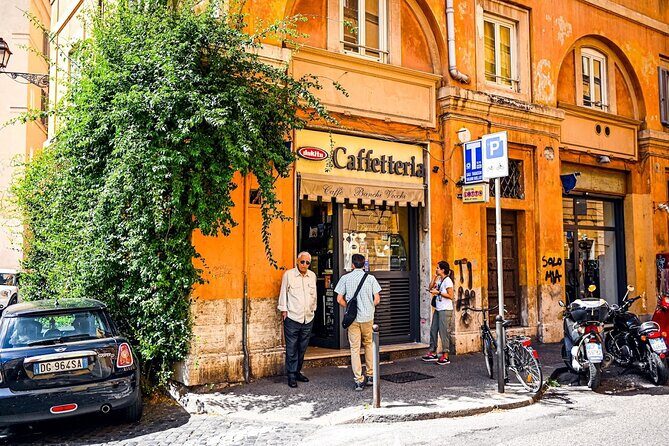
Another stop covers the remains of an ancient walkway originally built in the 2nd century B.C. to link two Roman temples. Even as ruins, these kinds of details help you understand how the city was designed for movement and ritual.
Why it belongs on a food tour: Rome’s food culture lives on top of infrastructure. Streets, squares, and temple routes affected traffic patterns, where people gathered, and what kinds of nearby food services developed. You may not be able to picture the original setting perfectly, but once you understand there was once a functional connection between temples, the site stops feeling like random stones.
If you like archaeology but also hate long lectures, you’re in luck. The tour format keeps it moving. You get just enough context to make sense of what you see, then you head onward.
Largo di Torre Argentina: Pompey’s Theatre and four Republican temples
The tour ends at Largo di Torre Argentina. Along the way, you’ll visit a square connected to the ancient Campus Martius, with four Roman Republican temples and the remains of Pompey’s Theatre.
This end point is a strong finish because it turns your walk into something bigger than food. Pompey’s Theatre is one of those names that carries weight in Roman storytelling, and seeing it in the open air helps it click. It’s also a location where the city feels very layered: modern streets meet ancient decisions about power, worship, and public life.
If you plan to keep exploring after the tour, this is an easy place to re-enter Rome’s sightseeing flow. Just note that by the time you arrive, you’ll likely be hungry for a sit-down rest—because the tour includes enough eating to make that very normal.
What you eat on the tour: 8+ tastings that cover the Roman basics
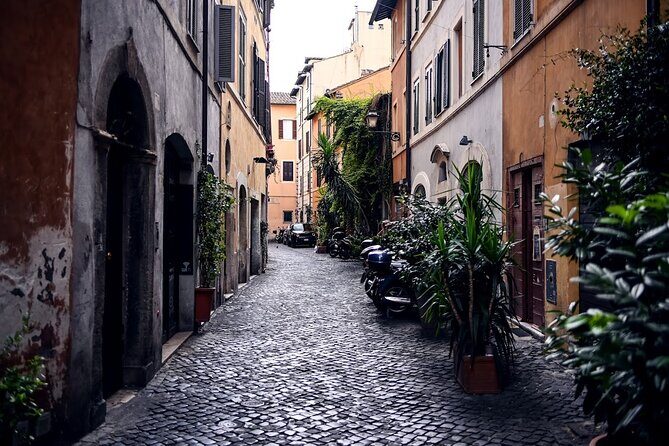
This tour is built around a practical mix of classic Roman foods. You should expect a sequence of tastings that feel like mini meals rather than small bites.
Included tastings are:
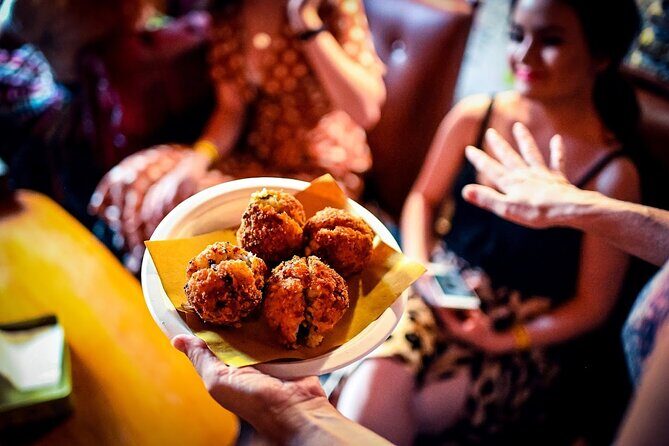
- Two different types of homemade pizza
- Supplí (fried risotto balls)
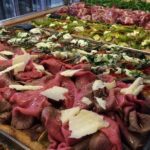
- Italian cold cuts and cheeses
- Two Roman pastas
- Cannoli
- Artisanal gelato
- A Secret Dish (you don’t know what it is until you reach that course)
The big advantage is balance. Pizza and supplì cover the street-food side of Rome—handheld, crunchy, and satisfying. Cold cuts and cheese add a more classic antipasto pace. The pastas bring the weight and comfort you expect from Roman meals, and dessert is handled properly with cannoli plus gelato.
One underrated benefit: the guide selects the dishes for you. That solves two problems at once. First, language. Second, choice overload. Rome menus can be long and confusing even when you can read them. When someone who knows the local scene picks for you, you get variety without risk.
Also, you’ll get to ask your guide for extra eating recommendations afterward. That matters because one of the most useful souvenirs in Rome is knowing where to go next.
The guide factor: Rocio, Ludovica, Massi, Edoardo, and Robbie
A food tour lives or dies on the guide’s storytelling and pacing. The reviews tied to this tour highlight guides like Rocio, Ludovica, Massi, Edoardo, and Robbie, and the common thread is how they make the stops feel fun and useful.
- Rocio is described as well-informed and delightful, with an easy humor style.
- Robbie is mentioned for adding lots of food and history plus jokes.
- Massi is praised for enthusiasm, charm, and keeping things enjoyable.
- Ludovica is credited with excellent guiding and standout food knowledge.
- Edoardo is noted for being friendly and helpful, while covering food and area context.
Even if you end up with a different guide, it tells you what you should expect from the experience design: explanations that connect landmarks to the food you’re eating, plus a sense of humor so you don’t feel like you’re stuck in a lecture.
Timing, walking, and how to make the 3.5-hour mark feel easy
The tour runs about 3 hours 30 minutes (and the guidance says it runs a little over 3 hours). That’s a real amount of walking, even though it’s not all hard pace. Think “slow stroll plus stops,” not “marathon.”
Here’s how to make it smoother:
- Wear comfortable walking shoes. The tour explicitly recommends it, because the time on your feet adds up.
- Bring a light layer. Rome weather shifts fast, and the itinerary and menu can change based on availability and weather.
- Keep your appetite in check for the Secret Dish and dessert. If you graze all day before the tour, you might miss the best part.
Also, the tour is offered in English and works for most travelers. It’s private, so it’s designed for your group only, not strangers.
Price and value: $405.14 for a private, multi-tasting meal
At $405.14 per person, this isn’t a budget snack crawl. But the price starts to make sense when you compare what you’re getting:
- A private guide experience
- 8+ tastings that include both savory and dessert
- Multiple neighborhood stops tied to major landmarks
- A guide who selects what you order, which saves time and prevents ordering mistakes
If you tried to recreate this on your own, you’d end up spending money on multiple stops, translations, and reservations. You’d also lose the storytelling thread that helps you understand the city while you eat.
Booking demand is also a clue: this tour is commonly booked around 143 days in advance. That doesn’t guarantee anything, but it often signals that people see value in the format: food plus Rome context, in a private setup.
So the decision comes down to one question: do you want someone else to handle the choosing and timing? If yes, the cost feels more justified.
Who this tour suits best
This private Rome food tour works especially well if you:
- Want classic Roman food without guessing what to order
- Like pairing sightseeing with eating, not choosing one over the other
- Prefer a guide who can explain what you’re seeing while keeping the mood fun
- Plan to spend your time in the historic center and want a structured route
It’s also a strong fit for couples and families who want a smaller, calmer experience. And because it’s private, you don’t have to worry about your group being stuck with pacing that doesn’t match your style.
If you have strong dietary needs, check first. The tour notes that many tours cannot accommodate certain restrictions and asks you to contact them in advance so they can see what’s possible.
Should you book this private Rome food tour?
Book it if you want your Rome day to feel organized without feeling stiff. You’ll get a lot of food for one outing, plus landmark stops that give the tastings context. The ordering help is also a real advantage in Rome.
Skip it or message first if:
- You don’t like walking for a little over 3 hours
- You have dietary restrictions you need to be sure about, since the tour says accommodation depends on advance contact and availability
If you can handle comfortable walking and you want a guided route where the food choices are handled for you, this is a smart way to eat your way through Rome’s core neighborhoods in one go.
FAQ
How long is the private Rome food tour?
It lasts about 3 hours 30 minutes.
Where does the tour start and end?
It starts at Sant’Agnese in Agone, Piazza Navona, 14, 00186 Roma RM, Italy. It ends at Largo di Torre Argentina, 00186 Roma RM, Italy.
What’s included in the tastings?
Included items are two types of homemade pizza, supplì, Italian cold cuts and cheeses, two Roman pastas, cannoli, artisanal gelato, and a Secret Dish.
Is the tour offered in English?
Yes, it’s offered in English.
Is pickup and drop-off included?
No, hotel pick up and drop off are not included.
Do I need to worry about walking?
Yes. The tour runs a little over 3 hours, and the guide strongly advises comfortable walking shoes.
Can the menu change during the tour?
Yes. The itinerary and menu are subject to changes based on location availability, weather, and other circumstances.
What if I have a dietary requirement?
Contact the provider in advance of the tour. The tour notes that many tastings may not be able to accommodate certain dietary restrictions, so it’s best to check before booking.