REVIEW · WALKING TOURS
Rome Fountains & Squares Walking Tour–Small Group w/ Local Expert
Book on Viator →Operated by ROMAETRAVEL · Bookable on Viator
Rome’s fountains tell stories—fast. This 2-hour small-group walk strings together some of the city’s most famous squares and fountain scenes, with a local guide to explain the why behind the wow. I like that you get personal attention instead of getting shoved along with a big bus crowd.
I also like the stop choices: you’ll move from Piazza Navona and its Bernini fountain math, to the Pantheon’s ancient-to-Christian makeover, then into the Spanish Steps area and Trevi. One drawback to keep in mind: at least one review noted the pace felt rushed at the fountains, so if you want extra lingering time for photos, you may want to ask your guide to slow down when you arrive.
In This Review
- Key highlights worth planning around
- Small-group walking pace in Rome’s center
- From Piazza Barberini to Piazza Navona: how the route helps you
- Piazza Navona and the Stadium of Domitian effect
- Fontana dei Quattro Fiumi: Bernini’s fountain symbolism
- Campo de’ Fiori and Giordano Bruno’s statue
- Stadio di Domiziano underneath Navona: seeing Rome in layers
- The Pantheon stop: from ancient temple to royal Italy shrine
- Fontana della Barcaccia and Trinità dei Monti above the Steps
- Piazza di Spagna and Trevi: the walk’s big finishes
- Price and value: is $67.29 worth it?
- Who this tour fits best (and who should adjust expectations)
- Should you book this Rome fountains and squares walking tour?
- FAQ
- How long is the Rome Fountains & Squares Walking Tour?
- What’s the price per person?
- Is the tour offered in English?
- How big is the group?
- Where do I meet and where does the tour end?
- Do I need entrance tickets?
- What should I wear?
- Are service animals allowed?
- Can I cancel for a full refund?
Key highlights worth planning around
- Max 15 people means you can ask questions and still see what’s in front of you
- Central start/end makes this easy to fit into a first day in Rome
- Piazza Navona on ancient stadium remains gives you an instant history lesson under your feet
- Fountain symbolism decoded at Fontana dei Quattro Fiumi so you understand the statues, not just see them
- Local guide stories include practical tips beyond the monuments
Small-group walking pace in Rome’s center
This tour is built for a sweet spot: long enough to cover major landmarks, short enough to stay enjoyable. You’re looking at about 2 hours, and the group size is capped at 15, so the guide can actually talk to you, not just talk at you.
The walk format matters in Rome. You get close to details like carvings, fountain basins, and the way buildings frame a piazza. It also helps you get your bearings fast—useful if you’re still figuring out which streets connect where.
English is offered, and a big part of the value is the guide’s explanations. In the guide lineup, names like Felice, Luisa, Federico, Gigi, Valentina, Isa, and Louisa show up in past experiences, and the common thread is a strong focus on the sites and how to look at them.
You can also read our reviews of more walking tours in Rome

From Piazza Barberini to Piazza Navona: how the route helps you
You’ll meet at Piazza Barberini (P.za Barberini, 00187 Roma) and end at Piazza Navona (00186 Roma). That center-to-center structure is handy because it keeps you near transit and keeps the day from feeling like a long commute.
Timing is straightforward: you get a confirmation at booking, and the day before the tour you should receive an email with the exact meeting point and time. It’s a small detail, but it prevents the usual Rome morning scramble.
This is also a good tour length if you’ve got dinner plans later. If your schedule is tight, you can do this early and then branch out on your own with a better sense of what’s around each square.
Piazza Navona and the Stadium of Domitian effect
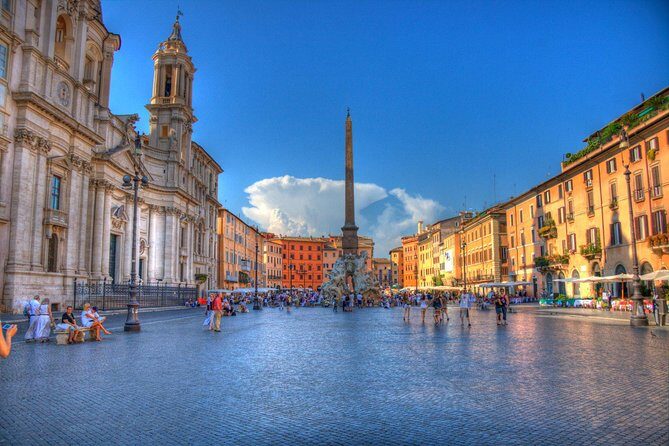
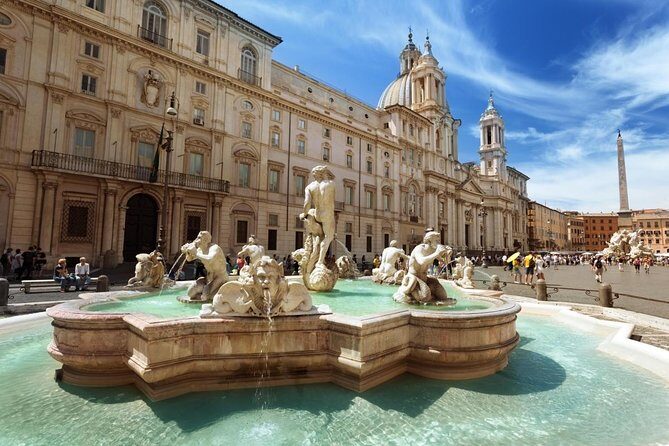
Piazza Navona is one of the places where Rome feels theatrical, and this tour helps you read the stage. The square’s shape comes from the former Stadium of Domitian, a horseshoe arena for racing from the 1st century AD. That means you’re not just admiring Baroque fountains—you’re standing over an older Rome layer.
What I like here is the way the guide connects the dots: the buildings embracing the piazza aren’t random. They follow the stadium’s older geometry, and that makes the whole scene feel intentional instead of just pretty.
You’ll also get your first fountain focus here. The piazza is known for multiple famous fountains, and the tour sets you up to see them as a set—rather than one-off photo stops.
One practical note: there’s a lot going on visually. If your goal is perfect pictures, arrive ready to pause quickly and adjust as the group moves—this is more of a story walk than a slow museum crawl.
Fontana dei Quattro Fiumi: Bernini’s fountain symbolism
Fontana dei Quattro Fiumi is the fountain stop that turns surface beauty into real understanding. Designed in 1651 by Gian Lorenzo Bernini for Pope Innocent X, it sits in Piazza Navona and is packed with meaning.
The fountain’s structure is part of the lesson: a basin supports travertine rocks, then four river gods rise from there. Above them is an obelisk-style element with the Pamphili dove-and-olive symbol—small details that become memorable once you know what they’re signaling.
The guide’s explanation helps you understand the theme of global reach through papal authority. The four river gods represent major rivers linked to four continents: the Nile (Africa), the Danube (Europe), the Ganges (Asia), and the Río de la Plata (the Americas). Suddenly the statues feel like a “map,” not just marble figures.
If you care about architecture and history, this is a highlight because it shows how art, politics, and religion can be coded into a fountain. It’s the kind of moment where you’ll look twice after the story lands.
Campo de’ Fiori and Giordano Bruno’s statue
Campo de’ Fiori shifts the mood. By day, it’s known for a market energy, and later it becomes a spot people head to at night—so the square plays two roles depending on the hour.
This is also where the walk gets more serious. The site was historically tied to executions, and that context matters because the statue in the center commemorates Giordano Bruno. The statue, created in 1888, is placed at the location of his execution.
This stop is short in time, but it’s powerful in meaning. You’ll learn how a public square can serve everyday life and also hold a darker memory beneath it. It’s the kind of contrast that makes Rome feel less postcard-like and more human.
If you’re the type who likes stopping just long enough to understand what you’re looking at, this is a well-sized chapter. If you’re hoping for a long reflection, plan extra time on your own after the tour.






Stadio di Domiziano underneath Navona: seeing Rome in layers
One of the smartest parts of this tour is that it doesn’t keep you on the surface the whole time. Piazza Navona sits over the Stadium of Domitian area, and the tour includes the Stadio di Domiziano / Navona Square Underground connection.
The key idea is that the surrounding buildings incorporate older features, including the stadium’s original lower arcades. Once you hear that, you can start spotting “why this building curves” or “why that facade feels like it’s hugging a hidden structure.”
Even if you don’t go deep into underground areas for long, the framing makes the above-ground scene click. Rome is full of overlays, but not every tour helps you notice them.
Short stop times can be a mixed bag. Here, it’s usually fine because the goal is recognition: you want to leave knowing what the piazza is sitting on, not spending your whole afternoon underground.
The Pantheon stop: from ancient temple to royal Italy shrine
The Pantheon is one of the best-preserved ancient monuments in Rome, and it gets the right level of respect here. The tour frames it as a reuse story: a sacred building dedicated to all gods, later reused from a Christian perspective.
You’ll also get the location context: it sits in the heart of the ancient Campus Martius area and anchors Piazza della Rotonda with its imposing facade. This is one of those “you need to see it in person” moments, because the scale and proportions are hard to grasp from photos.
In more recent history, the Pantheon became the shrine of the kings of Italy in 1870. It also holds the mortal remains of Victor Emanuel II, Humbert I, and Margaret of Savoy. The tour also points out that Raffaello Sanzio (Raphael) is buried here.
This stop earns its value because it ties eras together. You’re not just looking at an old building; you’re understanding how Rome kept using its own bones.
Fontana della Barcaccia and Trinità dei Monti above the Steps
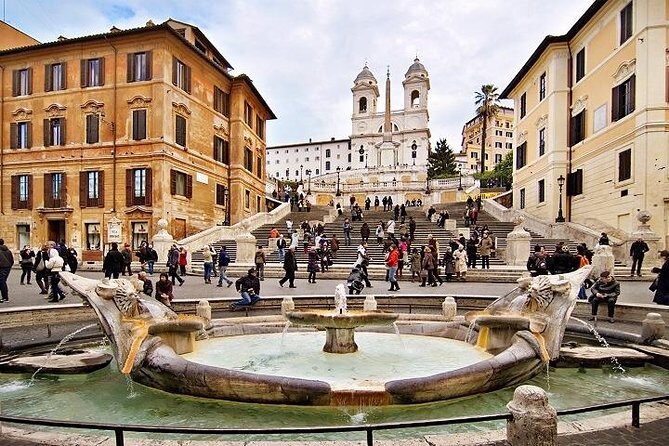
When you reach the Spanish Steps area, the tour shifts from grand monuments to classic Baroque framing. Fontana della Barcaccia sits near the foot of the Spanish Steps in Piazza di Spagna. It’s decorated with papal coats of arms and features water spilling from two mouths shaped like suns—another nod to the Barberini symbol.
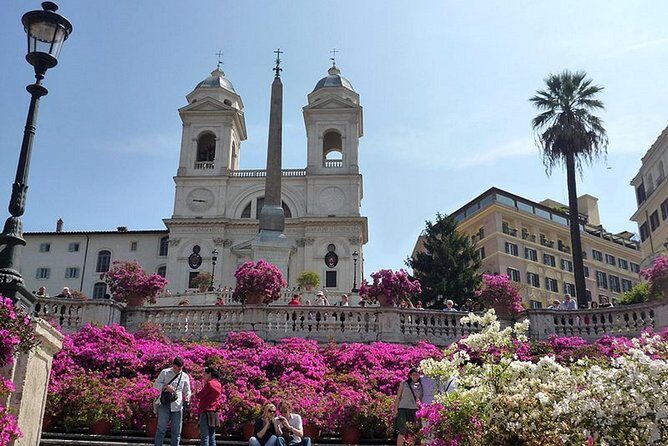
Then you’ll head toward Trinità dei Monti (the church of Santissima Trinità dei Monti). The tour highlights its commanding position above the Spanish Steps and notes that the church and surrounding area (including Villa Medici) are French State property.
Even if you’re not planning to go inside, the view point matters. The Steps area is a natural stage for Rome’s height differences, and the tour helps you place what you’re seeing in the right “map” of the neighborhood.
If you’re sensitive to time, remember this area can be popular. The tour’s short stop windows mean you’ll likely get viewing time more than extended wandering—so if stairs and photo angles are your thing, keep your camera ready and be ready to move when the group does.
Piazza di Spagna and Trevi: the walk’s big finishes
Piazza di Spagna is where the tour turns famous-sight intensity up. The name comes from the Palazzo di Spagna, which was the seat of the Embassy of Spain to the Holy See. Nearby you can also spot the Column of the Immaculate Conception of the Blessed Virgin Mary.
The tour keeps Fontana della Barcaccia in your line of sight during this area, and that helps you connect the fountain to the Steps instead of treating it like a random stop. It’s the kind of context that makes your photos feel more meaningful later.
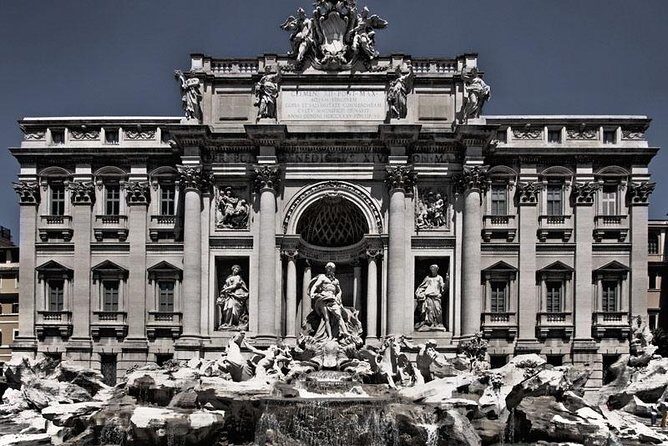
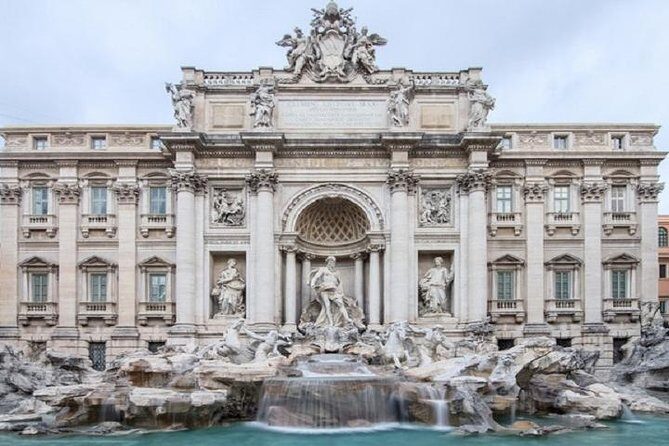
Finally, you reach Trevi Fountain, Rome’s big Baroque headline. It’s an 18th-century fountain designed by Nicola Salvi and completed by Giuseppe Pannini in 1762 (with other contributors noted in its completion). It’s about 26.3 meters high and 49.15 meters wide, and it’s described as the city’s largest Baroque fountain and one of the world’s most famous.
Trevi is also where you’ll feel the “icon pressure.” You might find it crowded when you arrive, so go with a flexible plan: get your key shot, then look from the edges. The guide story helps here too—once you understand the scale and Baroque ambition, the fountain becomes more than a photo target.
Price and value: is $67.29 worth it?
At $67.29 per person for about 2 hours, the value comes from what’s included—not just from the sights. You’re paying for a local expert, a small group (max 15), and guided stories that explain symbolism and history behind the fountains and squares.
You’re also getting built-in “how to look” help. The tour spends time on the meanings of major pieces—like the river gods at Fontana dei Quattro Fiumi and the Pantheon’s role across eras. That’s hard to replicate quickly if you’re trying to DIY with a phone in the middle of Rome’s crowds.
Admission tickets aren’t included in the price. That said, each listed stop notes free admission, so for these specific parts of the route, you’re unlikely to get hit with entry fees during the walk.
If you’re on your first trip, this is the kind of tour that saves you time later. You’ll learn what to prioritize when you return, and you’ll understand enough to enjoy repeat visits more.
Who this tour fits best (and who should adjust expectations)
This tour is ideal if you like architecture and history, and you want a guide to translate what you’re seeing into something you can remember. It also works well as a first Rome introduction because it helps you learn the city’s structure through piazzas and walking routes.
It’s less ideal if your number-one goal is slow, uninterrupted photo time at every stop. One account noted the guide moved through fountains and squares quickly, and another mentioned English understanding was tricky for them. If that matters to you, plan to arrive with the expectation that you’ll get guidance first, then photos second.
Still, the strongest pattern in feedback is about the guide experience itself. People praised Felice for making history feel alive and offering practical help like gelato suggestions and transit safety tips. Luisa and Valentina were described as very engaging, and guides like Federico and Gigi were credited with making the two hours fly by while pointing out details others might miss.
Should you book this Rome fountains and squares walking tour?
If you want a focused, 2-hour orientation through Rome’s most iconic squares and fountains, I’d book this. The small group size, the guide-led storytelling, and the route through Piazza Navona, the Pantheon area, the Spanish Steps, and Trevi make it a high-impact use of time.
I’d hesitate only if you know you need lots of extra photo time at each fountain or if you’re worried about understanding English at a fast pace. In that case, you can still book—but go in ready to ask for one or two extra minutes at your most important stop.
FAQ
How long is the Rome Fountains & Squares Walking Tour?
It lasts about 2 hours.
What’s the price per person?
The price is $67.29 per person.
Is the tour offered in English?
Yes, it’s offered in English.
How big is the group?
It’s a small group with a maximum of 15 participants.
Where do I meet and where does the tour end?
You start at Piazza Barberini and end at Piazza Navona.
Do I need entrance tickets?
Entrance tickets are not included. The tour’s listed sights show free admission for the stops included.
What should I wear?
Wear comfortable shoes. During summer months, it’s recommended to bring a hat and sunglasses.
Are service animals allowed?
Yes, service animals are allowed.
Can I cancel for a full refund?
Free cancellation is available up to 24 hours in advance for a full refund. Canceling less than 24 hours before the start time does not get a refund.